Subscribe now for full access and no adverts

Most people interested in archaeology have heard of the Piltdown skull fraud. Far fewer are aware of the Glozel controversy, which raged for much of the 20th century.
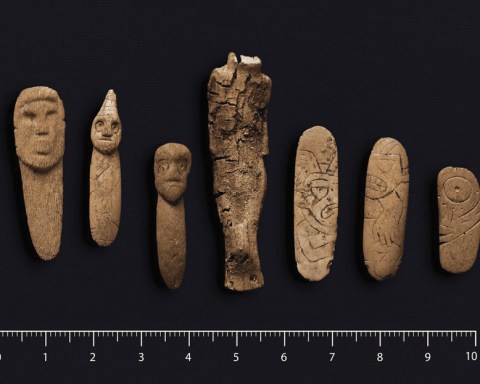
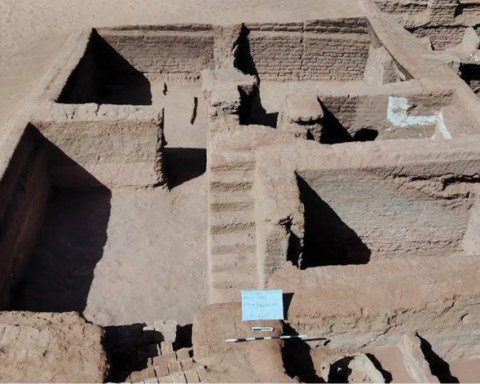
The story began in 1921, when a French farmer and his grandson, called Émile Fradin, found a brick chamber with clay floor tiles, along with a few human bones and ceramic fragments, while ploughing. They reported the find to the local teacher, who contacted the Ministry of Education. A second teacher, with no archaeological experience, visited in 1924 and reported it as a burial site. Two local amateur archaeologists then excavated the site and described it as Gallo-Roman in the learned society journal for the region. Antonin Morlet, a local doctor and amateur archaeologist, saw the report, paid for access to the land, and started excavating in May 1925. Morlet believed the material to be Neolithic and published the finds in a French journal dedicated to that period. He listed Fradin as his co-author. His reported finds included ‘tablets, idols, bone and flint tools, and engraved stones’ according to French prehistorian André Vayson’s 1930 Antiquity article, which identified them as frauds.
The conclusions of the amateurs were opposed by the ranks of the professionals, who were almost unanimous in identifying most of the artefacts as forgeries, particularly the ceramic tablets. These had an apparently alphabetic script in an unknown language, supposedly from the Neolithic period, in an area where nothing similar had been found. Philologists worked on the tablets, and claims of decipherment were made for at least ten languages, none of which were ever confirmed. The results of further excavations in 1927 by three experts reconfirmed their finds as frauds, and René Dussaud, the curator of the Louvre, denounced Fradin as a forger. Fradin sued Dussaud for defamation. The president of the French Prehistoric Society, Félix Regnault, filed a formal fraud complaint in 1928, after reviewing the artefacts on display in the local museum. As a result, the material was confiscated by the police. A new group of experts reviewed the items and declared the Glozel finds to be a fraud. Fradin was found guilty of fraud in 1929, though the verdict was overturned in 1931. This allowed the defamation suit against Dussaud to proceed, and he was found guilty in 1932.
Neither side ever backed down, but the matter faded until the advent of scientific dating techniques. In the mid-1970s, thermoluminescence results appeared to show that one of the tablets was, indeed, ancient, but the results were not replicated. Instead, later radiocarbon dating confirmed the artefacts to be 20th-century frauds.
Final resolution only came when the French Ministry of Culture re-excavated the site in 1983, publishing a summary report in 1995. This indicated the site was medieval with some genuine, possibly Iron Age, artefacts along with numerous forgeries. Despite this, a yearly Glozel colloquium of supporters continued from 1996 to 2009. Glozel material can still be seen in a local museum.
Image: HEIR Resource ID 68421