

Subscribe now for full access and no adverts
Archaeology is commonly thought of as a Western science. Certainly, the archaeology practised by university-trained professionals and enthusiasts around the world today has its intellectual roots in northern and central Europe. Historians of archaeology such as Bruce Trigger have explored how this methodical, earthy science emerged in the 19th century from the antiquarianism of previous centuries. Alongside other key developments, Danish scholar Christian Jürgensen Thomsen (1788-1865) was among the first to develop relative chronologies using artefacts alone (without the aid of written records). Archaeology became professionalised across much of the globe during the 20th century, spurred on by major scientific developments such as radiocarbon dating.
Today, archaeology is a globalised discipline with diverse cultural influences. In countries such as Australia, Canada, New Zealand, and the USA, many research projects are directed by Indigenous community members, who may incorporate cultural protocols and rituals to engage with their ancestors during excavations or surveys. While the archaeological work is conventional, ‘the past’ is treated as a living dimension of the present. The narratives that are then written about the past may incorporate Indigenous oral traditions and ecological knowledge. These diverse cultural perspectives enrich archaeology: they contribute new angles from which to see the evidence and new ways of telling stories about the past.
The Western origins and recent transformations of archaeology are well known. But just how novel is using the traces of earlier activity to develop understanding of the roots of current societies? Are there other forms of what could be considered archaeology – on the basis that they are ways of reading the past through things and landscapes – that developed independently?
Reading the subsurface
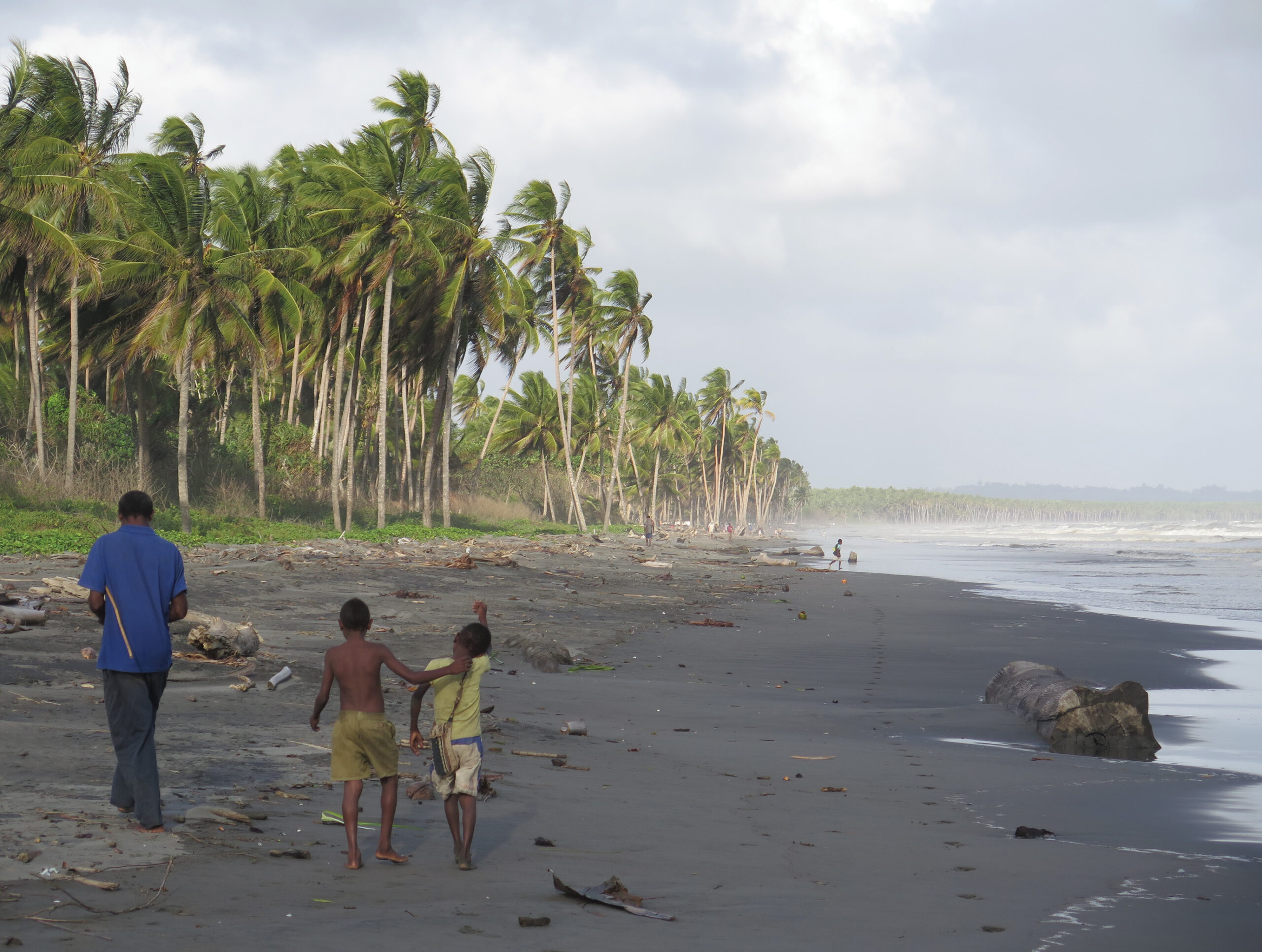
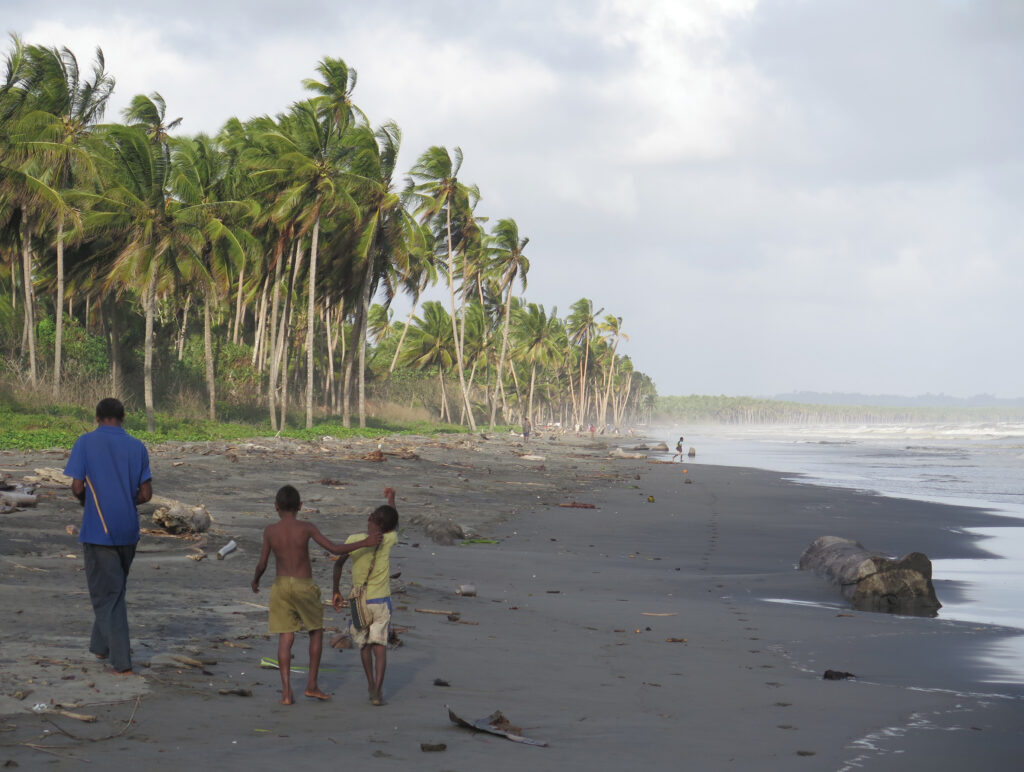
My journey of discovery with this topic began in 2015, while at Monash University. Alongside colleagues from the Papua New Guinea National Museum and Art Gallery, I arrived by dinghy at a place called Orokolo Bay in the Papuan Gulf. Thanks to the work of Francis Edgar Williams, this long and gently curved grey-black beach is already famous in the field of anthropology. While he was the government anthropologist for the Australian Territory of Papua, Williams spent months documenting ceremonies performed by the peoples of Orokolo Bay.
Today, the ceremonies are gone but the shoreline is no less busy. It is still the main highway of foot traffic between the coastal villages, which are located just beyond the beach behind a line of hibiscus and coconut trees. This was our second trip to the bay. Earlier that same year, we had spent time discussing and developing our research program with village elders and members. This time, we were due to commence an archaeological project with the village communities of Larihairu and Kaivakovu. The plan was to excavate some of their past village sites, which are today situated 2 or 3km inland, on beach ridges that would once have been coastal.
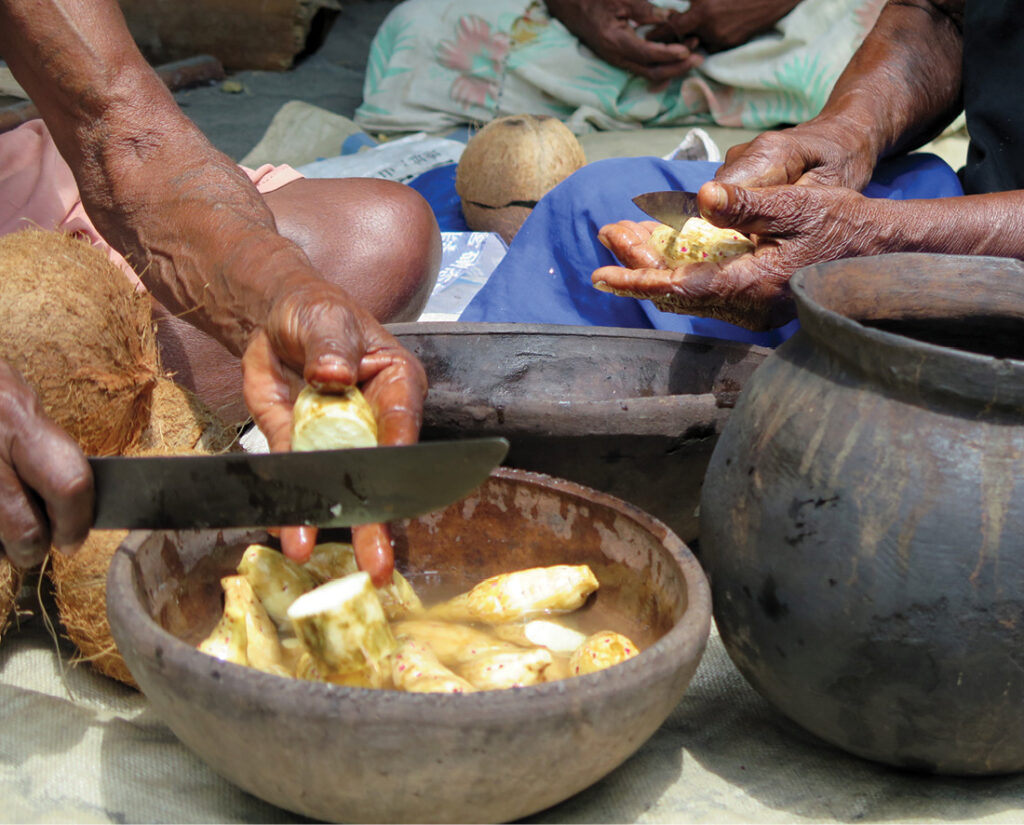
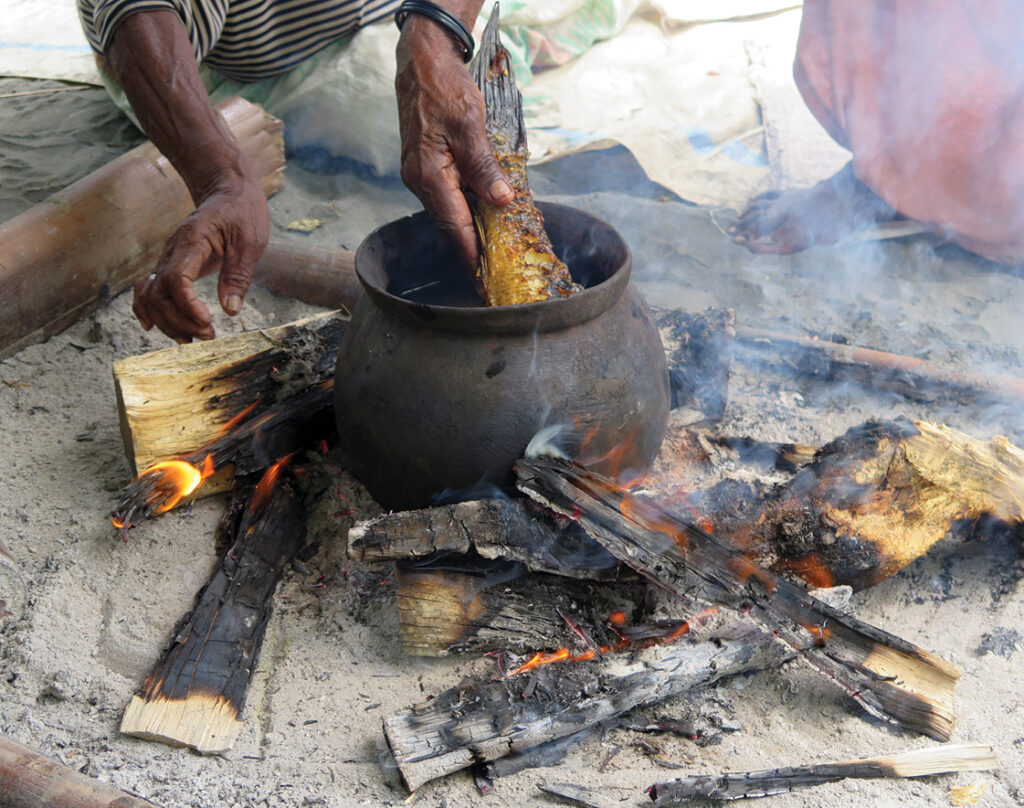
In the weeks that followed, we surveyed the Orokolo Bay hinterland. Local experts in oral tradition graciously introduced us to their ancestors’ village sites, most of which were littered with cultural materials. Scatters of pottery sherds, shellfish remains, animal bones, and stone artefacts spoke of the varied activities of village life. The pottery sherds are also evidence of exchange, as there is no tradition of pottery-making in this part of Papua New Guinea. The pottery was almost certainly traded into the region by seafarers living along the coast to the east. In the late 19th and early 20th centuries, coastal exchange on Papua New Guinea’s south coast was in full swing. Each year, Motu people would sail 400km to the west from the Port Moresby region into the tropical Papuan Gulf region. They brought tens of thousands of earthenware pots and shell artefacts to exchange for canoe hulls and a local food: a type of flour made from the trunks of sago palm trees.