
Subscribe now for full access and no adverts
William the warrior
I enjoyed Graham Goodlad’s two articles on the Glorious Revolution and William III (MHM June/July 2025) – a monarch who rarely receives attention today outside Northern Ireland, where his image on horseback is a fixture of street art in Protestant Unionist neighbourhoods.
In his lifetime, William’s image as a manly warrior was keenly debated. His supporters made much of his bravery and drew attention to the fact that his great opponent Louis XIV was careful to avoid risking his own life in battle. William’s martial qualities were emphasised to counter his less appealing characteristics – his Dutch origins, unprepossessing personal appearance, and awkward public manner. In a bid to damage his reputation, his opponents spread unsubstantiated rumours that he was homosexual. Innuendoes about his preference for the company of male courtiers and his childlessness were circulated in support of the claim.
A number of statues of William were erected from the 18th century onwards. They can be seen in places as far apart as the grounds of Kensington Palace, Bristol, Petersfield in Hampshire, and my hometown of Hull.
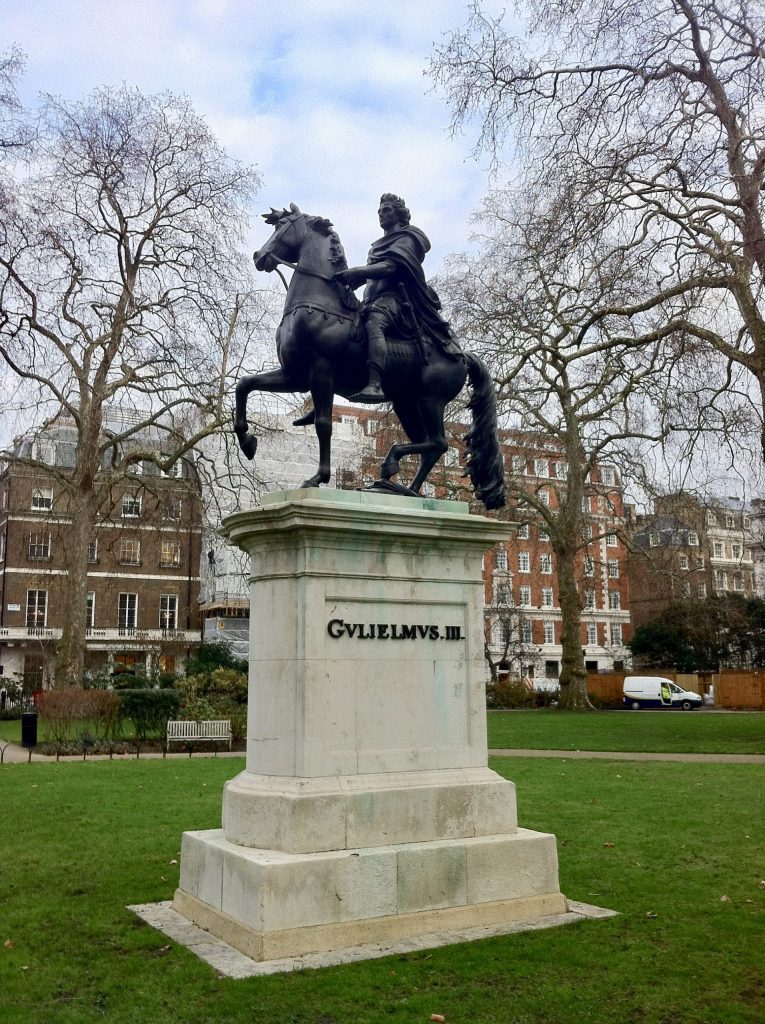
Interestingly, the equestrian statue of William in St James’s Square, London (pictured below), hints at the cause of his death. Under one of the hooves is a small mound – possibly a reference to the molehill on which the horse stumbled, throwing its royal rider, and giving his Jacobite foes the opportunity to toast ‘the little gentleman in black velvet’.
Norman Maw, Kingston upon Hull
The ultimate turncoat
I enjoyed reading the article in your recent issue by Nigel Jones about turncoats (MHM June/July 2025). However, there was a surprising omission in the section about the British Civil Wars. At a time when, as Jones demonstrates, loyalties might sometimes be fickle, Sir John Urry (or Hurry) takes the award for changing sides the most.
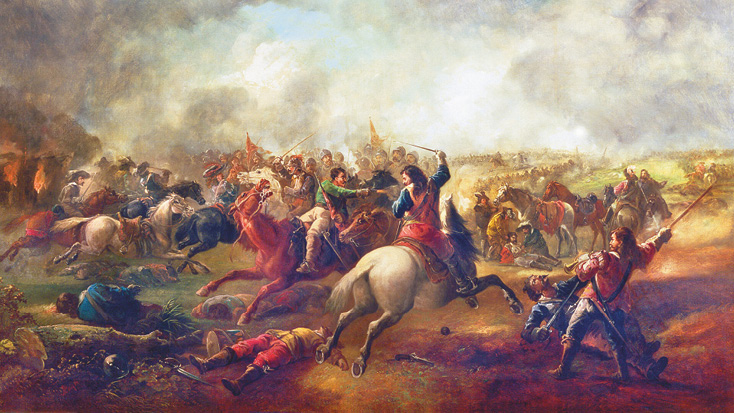
Born in Aberdeenshire, Urry served as a mercenary during the Thirty Years War (1618-1648) before returning to Scotland where he fought against the king during the Bishops’ Wars of 1639 and 1640. He served with the Parliamentarian armies in the opening months of the British Civil Wars, but, having been overlooked for promotion, decided to swap sides and fight for the king at Marston Moor in July 1644 (pictured). Following this defeat, he changed sides again, this time joining the Scottish army, then allied to Parliament, in which he commanded a force fighting Scottish Royalists.
In 1648, Urry was captured following the Scottish defeat at Preston, although he subsequently escaped and rejoined the Scottish Royalists. But his luck had finally run out. Captured following the defeat at Carbisdale, he was executed in Edinburgh on 29 May 1650.
Urry is perhaps the ultimate example of the professional soldier who, as his biography said, ‘followed the fortunes of war as opposed to maintaining firm allegiance to a cause’.
David Flintham, Whittlesey, Cambridgeshire
Arnold’s revolution
I was pleased to read Nigel Jones’ excellent piece on turncoats (MHM June/July 2025), which was enlightening and gives one great food for thought. His points were driven firmly home as he described the Earl of Warwick’s humiliation and being ‘made to look a fool’ following the revelation of Edward IV’s secret marriage.
I look forward eagerly to the promised second part of the series about the factors that turned Benedict Arnold from the American Revolution’s foremost combat leader into an embittered and vengeful enemy of the republic. Nor is this an ancient affliction, as we have seen recently, with a tech giant turned against the current American president. It is, as Alice said in her Adventures in Wonderland, ‘curiouser and curiouser’.
William Russell, San Francisco
Hood’s arm
In his otherwise informative article on the closing months of the American Civil War (‘A long shadow’, MHM April/May 2025), Fred Chiaventone repeats the myth that Confederate General John Bell Hood lost his left arm during the Battle of Gettysburg.
A few years ago, the late Richard D Schroeder, a retired orthopaedic trauma surgeon and Gettysburg battlefield guide, researched the official medical records of Hood’s wound, treatment, and recovery. Schroeder’s conclusions, published in Gettysburg Magazine, were that Hood was in fact able to achieve nearly 100% use of his arm after treatment.
Sam Ketterman, Timonium, Maryland

All images: Wikimedia Commons