Subscribe now for full access and no adverts
‘Sacrificial’ burial uncovered in Ecuador
The remains of a woman who suffered a violent death between AD 771 and AD 953 have been excavated in Buen Suceso, a site in coastal Ecuador. The woman was aged 17-20, and was between seven- and nine-months pregnant, when she died – apparently from a blow to the front of her head. Her hands and left leg were subsequently removed, and these aspects, together with a series of notable grave goods, have led to suggestions that this individual may represent a rare example of human sacrifice in prehistoric Ecuador. The research has been published in Latin American Antiquity (https://doi.org/10.1017/laq.2024.20).
Lost pharaoh’s tomb discovered
The tomb of Thutmose II, fourth pharaoh of Egypt’s 18th Dynasty, has been identified in the Theban mountains. First uncovered in 2022, the burial place was originally thought to have belonged to a consort of one of the Thutmosian kings, but the discovery of a starry blue ceiling, found only in the tombs of pharaohs, and inscriptions bearing Thutmose II’s name, revealed the tomb’s true occupant. Having only ruled for a few years around 1493-1479 BC, the king is best known as the husband and half brother of Hatshepsut, one of Egypt’s only female pharaohs.
High-status baths excavated at Pompeii
Further portions of Pompeii, the Roman town famously buried during an eruption of Mount Vesuvius c.AD 79, have been revealed during ongoing excavations, with the discovery of a sumptuous private bathhouse in an area of the town known as Insula 10, Regio IX. The complex includes expected features such as a caldarium (hot room), a tepidarium (warm room), and a frigidarium (cold room), as well as an apodyterium (changing room) decorated with red walls and a mosaic floor and containing benches that could accommodate up to 30 people. The facilities form part of a large house that was possibly owned by the influential Pompeiian politician Aulus Rustius Verus. The impressive residence’s ornate black banquet hall was uncovered by archaeologists last year, and as that space is connected directly to the baths, it is likely that guest diners would have been invited to enjoy the luxurious baths as part of their visit to the house.
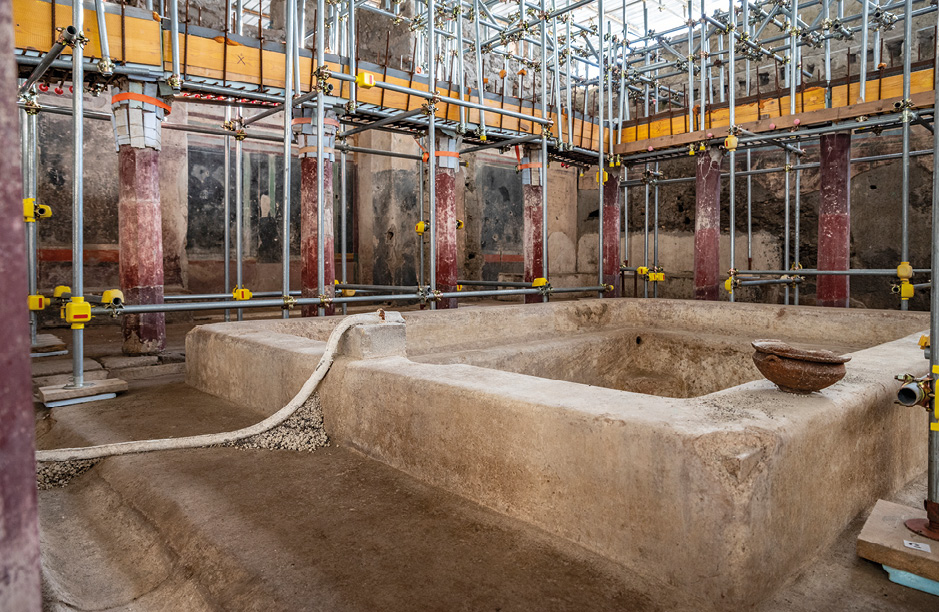
Text: Rebecca Preedy / Image: courtesy of the MIC – Archaeological Park of Pompeii