
Subscribe now for full access and no adverts
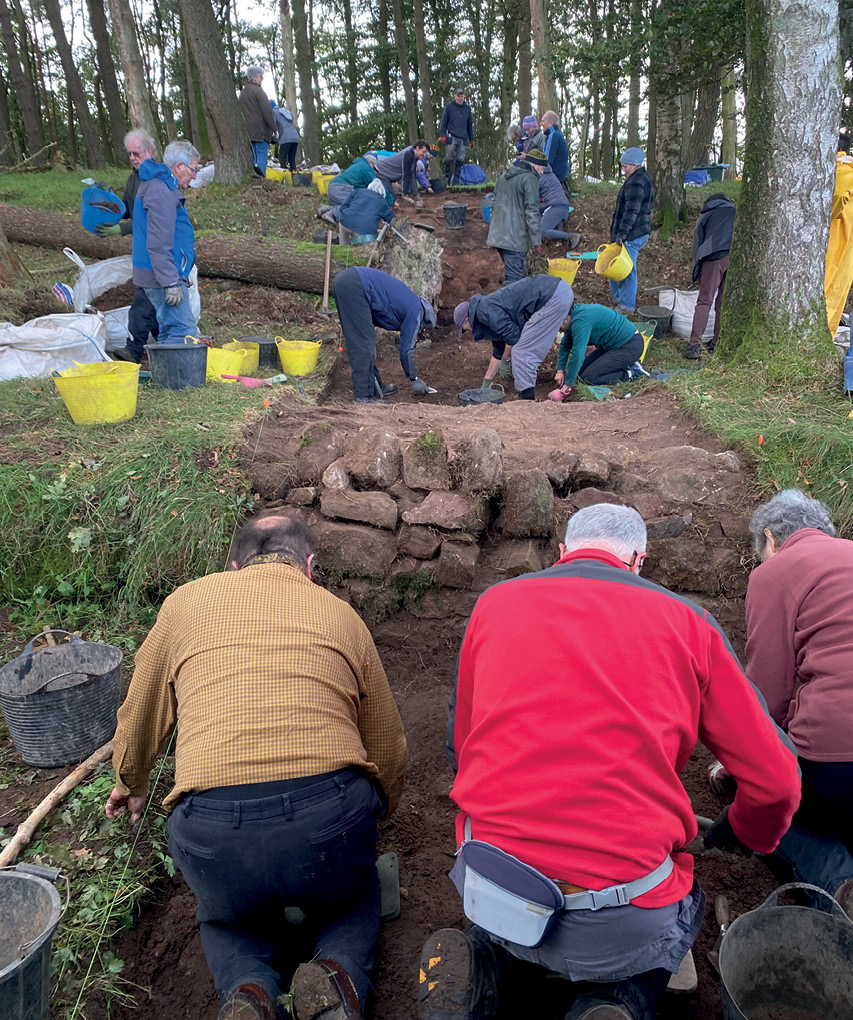
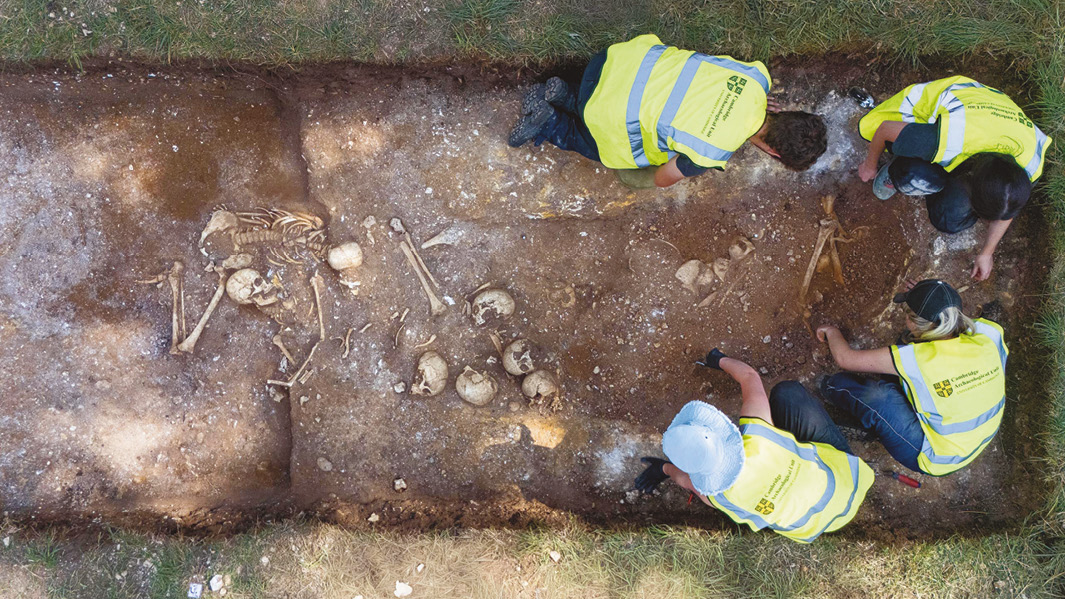
Excavations at Wandlebury Country Park, just south of Cambridge, have uncovered a large burial pit containing the remains of at least ten individuals who died violently in the 8th- to 9th-century AD (below).
The Department of Archaeology at the University of Cambridge and the Cambridge Archaeological Unit (CAU) have been conducting student training digs in the country park for several years, hosted by the local charity Cambridge Past, Present, and Future. The site is home to Wandlebury Camp, an Iron Age hillfort and Scheduled Monument, and the pit had been dug just outside this prehistoric ringwork.
Measuring 4m by 1m (13ft by 3ft), the pit contained the remains of at least ten individuals, though this number may change following further analysis, as there were both complete skeletons and individual body elements including clusters of skulls and legs. All appear to have been buried haphazardly, with little care for the deceased individuals, and all showed signs of extreme violence. It is hoped that future study might reveal whether they represent battle casualties, or the victims of mass execution or some other form of punishment. Radiocarbon dating of the human remains places the burials in AD 772-891 (though further work will hopefully refine this span), a period when this area formed a ‘frontier’ zone between the Anglo-Saxon kingdoms of East Anglia (which was annexed by the Viking Great Army c.AD 870) and Mercia.
One of the more notable skeletons was that of a man, aged 17-24 at the time of his death, who had been flung face-down into the pit. He was exceptionally tall, measuring at least 6ft 5in (1.96m) in height, and the team identified a 3cm-wide (1.2in) hole that had been deliberately created on the back left side of his skull. Evidence of this kind of procedure, known as trepanation, has been documented all over the world, with examples dating back to the Palaeolithic; it is thought to have been intended to relieve medical issues such as migraines or seizures. Given the unusual height of this particular individual (who had survived his surgery: the wound showed signs of healing), it is possible that he had a pituitary tumour.
Dr Trish Biers, curator of the Duckworth Collections at the University of Cambridge, said: ‘The individual may have had a tumour that affected their pituitary gland and caused an excess of growth hormones. We can see this in the unique characteristics in the long shafts of their limb bones and elsewhere on the skeleton. Such a condition in the brain would have led to increased pressure in the skull, causing headaches that the trepanning may have been an attempt to alleviate: not uncommon with head trauma today.’
The pit represents only the latest discovery on a site whose archaeological significance is becoming increasingly clear – and it is possible that it represents only part of a larger burial site. In 1976, a storm uprooted a tree close to where the current excavations are taking place, revealing another mass grave containing five individuals. To learn more, Historic England have commissioned a new geophysical survey of the area which it is hoped will, together with ongoing post-excavation analysis of the burial pit, reveal more information.
Text: Kathryn Krakowka / Photo: Cambridge Archaeological Unit/David Matzliach