
Subscribe now for full access and no adverts
A series of 2,000-year-old footprints have been unexpectedly revealed on an Angus beach following a barrage of winter storms. They add to only a handful of ancient human tracks that have been found across Britain to-date, and are the first to be recorded in Scotland.
The footprints were discovered by locals Ivor Campbell and Jenny Snedden, who were out walking their dogs in Lunan Bay when Ivor noticed unusual markings on a fresh layer of clay that had been revealed by a storm’s destruction of nearby dunes. Recognising their possible importance, Ivor and Jenny called council archaeologist Bruce Mann, who then brought in a team of archaeologists, led by Professor Kate Britton from the University of Aberdeen, to examine the site.
Time was of the essence, as Kate explained: ‘We knew we were dealing with a really rare site and that this discovery offered a unique snapshot in time – but it was also clear that the sea would soon take back what had so recently been revealed. We had to work fast in the worst conditions I’ve ever encountered for archaeological fieldwork – the sea coming in fast, with every high tide ripping away parts of the site, while wind-blown sand was simultaneously damaging it. We were effectively being sand-blasted and the site was too, all while we were trying to delicately clean, study, and document it, so it became a race against the elements.’

Sure enough, almost the entire clay surface was destroyed less than 48 hours after the work to record it started, but in that time the team were able to record and map the site, capture 3D models, and create physical casts of the prints. They were able to collect samples, too, from the deposits immediately underneath the footprints for radiocarbon dating, which confirmed that the tracks were left around or just after 2,000 years ago. While the full analysis of the prints is ongoing, and further dating of deposits capping the site is needed, the team have been able to identify several species, including red deer and roe deer, as well as humans, who appear to have walked barefoot through what would have been, at the time, a muddy estuary (above).
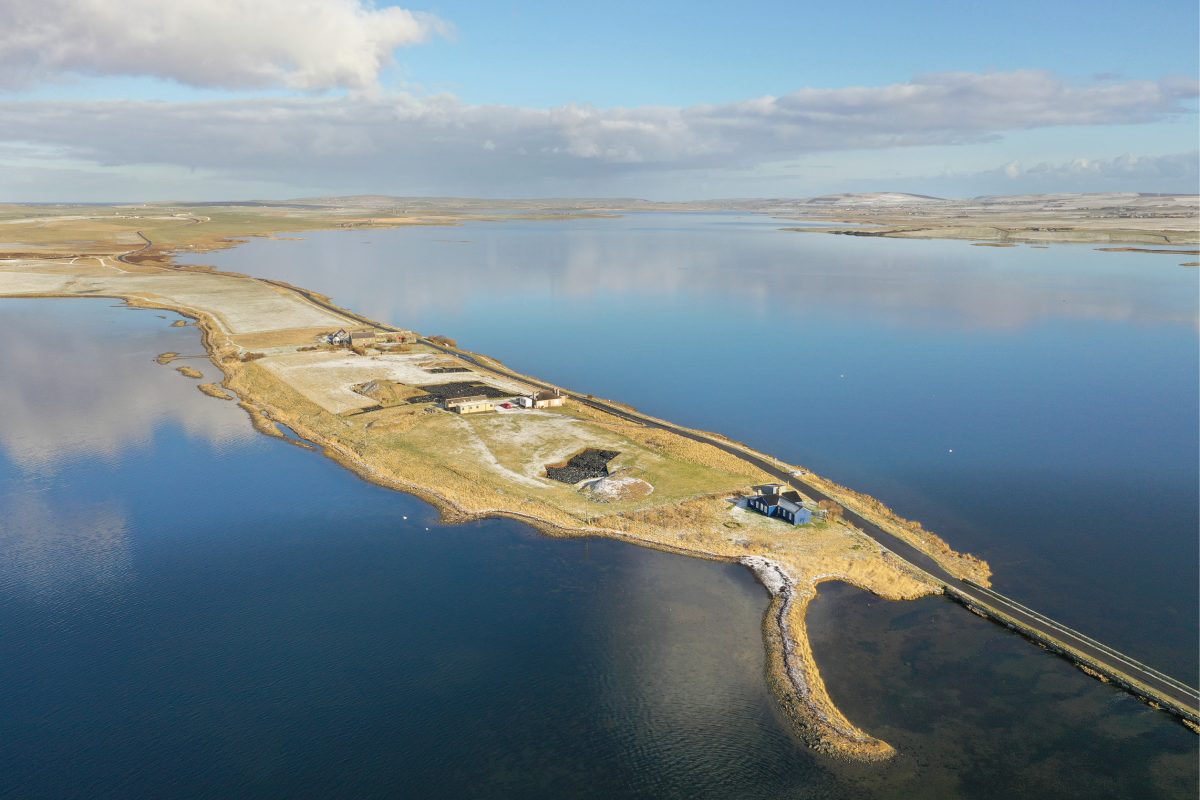
Drone surveys undertaken as part of the initiative have captured the site in full, allowing the team to map the footprints with millimetre accuracy, and to establish a baseline for rates of coastal erosion and assess risk to other potential sites.
Text: Kathryn Krakowka / Image: University of Aberdeen