Subscribe now for full access and no adverts
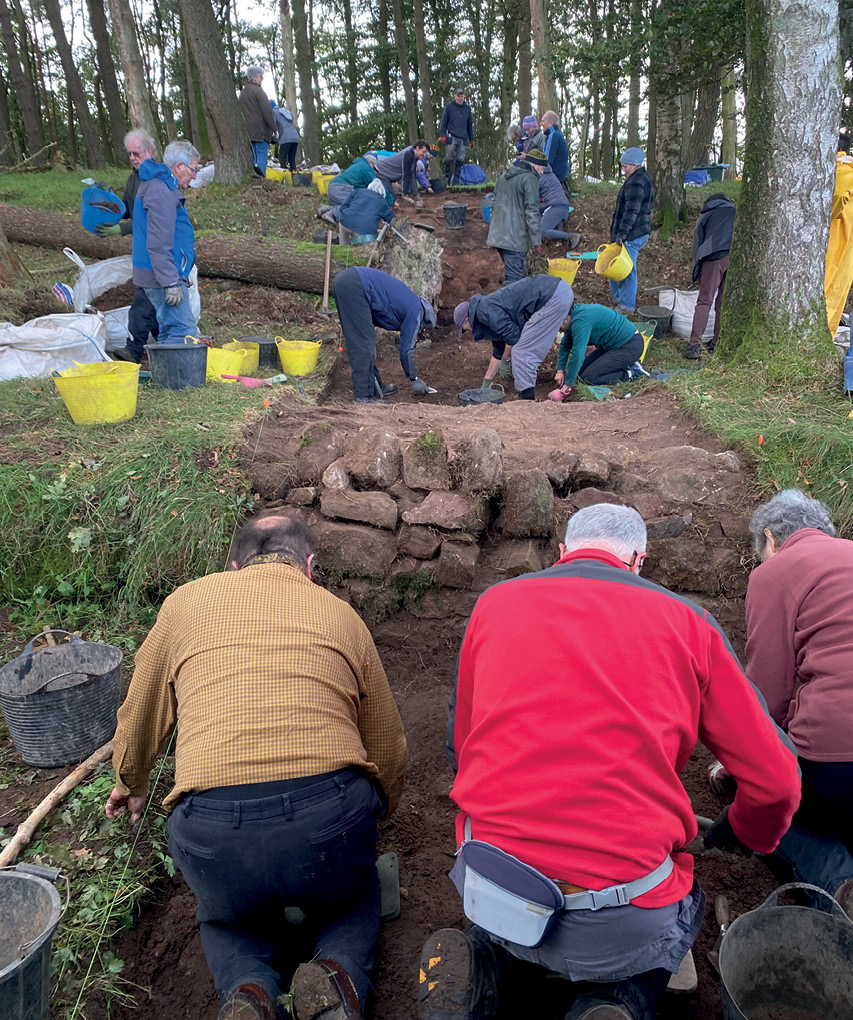
Excavations at Oxford University’s Oriel College have helped to confirm the limits of the city’s Anglo-Saxon defences.
Oxford first appears in the Anglo-Saxon Chronicle in AD 911/912. It was a burh, a fortified settlement, and while this entry does not mention the creation of formal defences, it is thought that the settlement may have had a rampart at this time. In the early 12th century, the town seal depicts Oxford surrounded by a stone wall, which was extensively rebuilt during the first half of the 13th century. Exactly how these defences developed, however, has long been the subject of debate.
Understanding of the defences’ location and extent has evolved as various portions have come to light. In the late Victorian period, wall remains were discovered close to the Bodleian Library, and a further find of foundations nearby led to the excavation of the Clarendon Quadrangle in 1899 – possibly the first modern excavations in the city. An earlier wall revealed beneath the late medieval town boundary was subsequently interpreted as the north-east corner of the original Anglo-Saxon burh.

For 125 years, this was the only evidence for the east side of Oxford’s early defences, but recent boreholing by Oxford Archaeology – undertaken during works on Oriel’s bar and kitchens – has uncovered tantalising traces in the form of a substantial ditch.
Spanning 20m in width and 3m deep, the ditch runs in line with the old parish boundary, approaching from the High Street to the north/north-east. It is hoped that analysis of small amounts of charred plant material recovered from the ditch’s sample deposits will shed more light on the feature’s date.
Ben Ford – Senior Project Manager for Oxford Archaeology – explained that the initial results confirm that the ditch formed part of the same early defences found in the Clarendon Quadrangle dig. ‘It is likely the basal fill of the ditch dates to the late 9th or early 10th century, consistent with the construction of a primary burh by King Alfred [the Great, d. 899],’ he commented. As the proposed date range is still relatively broad, however, the team haven’t ruled out the possibility that the ditch could instead be part of a Mercian foundation under Alfred’s son-in-law, Æthelred (d. 911), or his daughter Æthelflæd (Æthelred’s wife; d. 918).
It is hoped that more will be revealed during post-excavation analysis.
Text: Rebecca Preedy / Photo: Emma Winter, Oxford Archaeology