Subscribe now for full access and no adverts
The hotel suite in which Oscar Wilde stayed shortly before his arrest for gross indecency has been rediscovered during recent archaeological work at the Royal Albion Hotel in Brighton.
The room was identified by Dr Michael Shapland from UCL Archaeology South-East, who was brought in by Britannia Hotels, the owner of the site, ahead of a restoration of the historic building, which had been significantly damaged by fire in July 2023. After analysing the original floorplans for the hotel along with the fabric of the actual building, Michael was able to identify a suite that matched Wilde’s testimony from his trial.
In 1894, Wilde was at the height of his fame, and had been working on The Importance of Being Earnest while on holiday with his family in nearby Worthing, when he embarked on a relationship with a newspaper-seller named Alphonse Conway. In September of that year, the pair took a boat to Brighton in order to spend a night at the Royal Albion Hotel, but the following spring Wilde was arrested on charges relating to homosexual practices and Conway, as well as other men with whom Wilde was associated, was called as a witness.
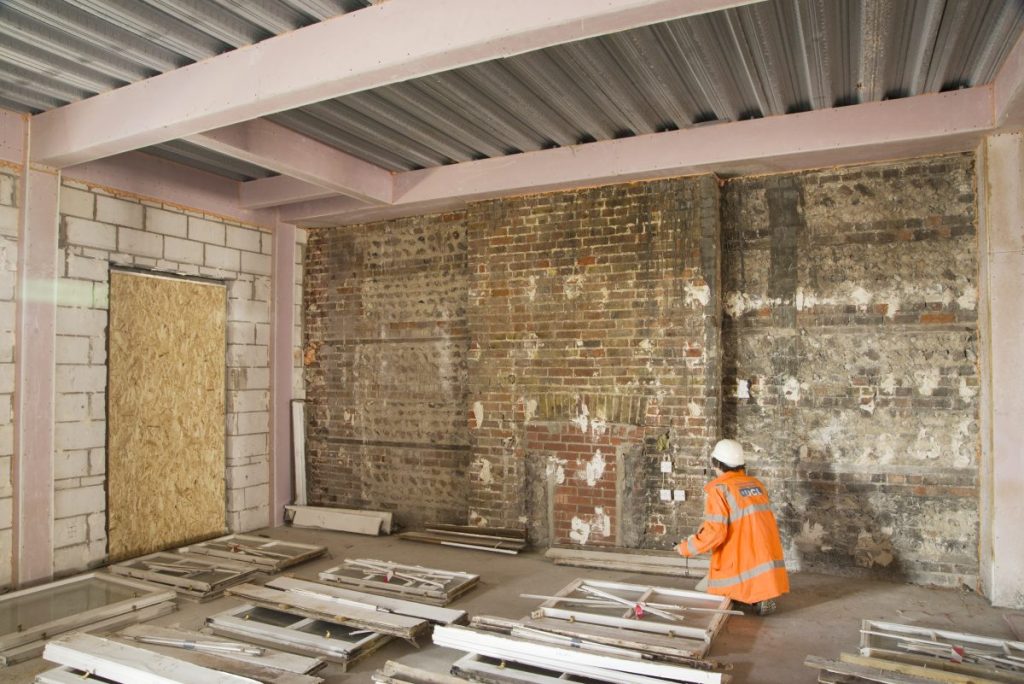
During his trial at the Old Bailey in London, Wilde testified that he and Conway had stayed in a suite of rooms comprising two bedrooms and a sitting-room that were likely connected by green fabric-covered doors, on the first floor. As part of the recent work, the walls of the hotel were fully stripped back, allowing Michael Shapland to appreciate fully which parts of the building were original, and which doorways had been inserted after the hotel was refurbished in the 20th century. After comparing this evidence with the historic floorplans, Michael established that there was only one suite on the first floor that matched Wilde’s description – at the south end of the western range, with a balcony overlooking the sea.
This part of the building had been almost completely destroyed during a previous fire in 1998 but, as Michael described, to his delight ‘we discovered a wall from Oscar and Alphonse’s bedroom suite had been spared, and we even found the original blocked fireplace’.
Text: Kathryn Krakowka / Image: UCL Archaeology South-East