Subscribe now for full access and no adverts
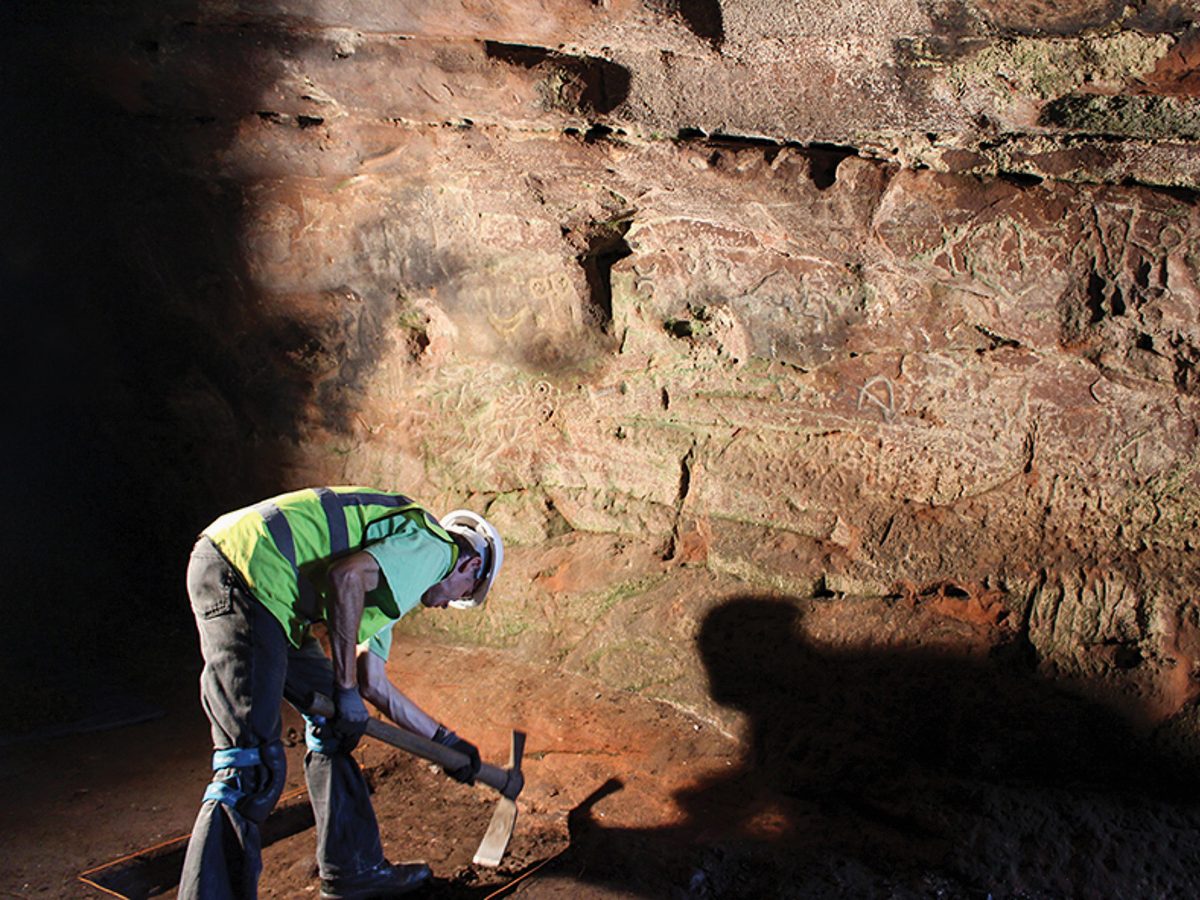
Testing on organic matter discovered by archaeologists from Wardell Armstrong has identified it as the first example of Tyrian purple pigment found not just in the UK, but in the whole of northern Europe. This exciting find was unearthed during 2023 excavations on the site of the Carlise Cricket Club, where a Roman bath complex dating to the Severan period was first discovered in a survey in 2017.
Tyrian purple was the most sought-after colour in the Roman empire, and indeed the ancient world. Created using the mucus from Murex mussel shells, the famous hue was first developed by the Phoenicians in the 2nd millenium BC, with its name referring to the ancient city of Tyre on the ancient Levantine coast. Due to the painstaking process of extracting the dye from the glands of the mollusc, as described by Pliny the Elder in his Natural History, the colour was extremely expensive and gained a reputation in the ancient world for being highly luxurious. As such, sumptuary laws introduced in ancient Rome permitted only senators to wear the colour, a privilege that was later granted solely to the emperor himself.
The colour could be bought as a paint pigment, however, which was available to any Roman wealthy enough to decorate their property in the imperial colour. The Carlisle sample would have been intended for such a purpose; it contains beeswax, an ingredient used as a binder in Roman paint. Levels of bromine associated with the shellfish used in Tyrian purple manufacture were also found in the pigment, which was tested by Newcastle University with the support of the British Geological Survey.
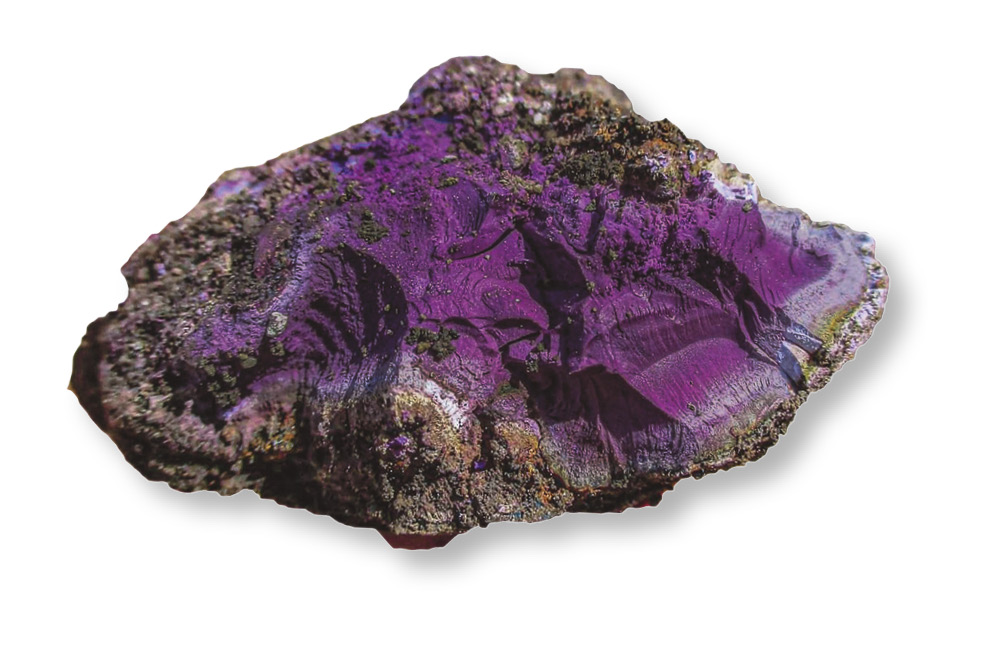
With an estimated 12,000 molluscs needed to create 1g of the colour, the golf- ball-sized sample from Carlisle would have been very valuable indeed. It is therefore quite a surprise that it was found in the demolition layer of the Severan bathhouse. How it ended up there remains unclear. One possible explanation, suggested by Wardell Armstrong’s technical director Frank Giecco, is that it could have been mislaid during the tumultuous times that characterised Britain at the end of Septimius Severus’ reign, to which the bathhouse can be dated.
Due to a lack of waterlogging, the Cricket Club site is not anaerobic. As a result, no other organic finds have been uncovered during the excavations, making the find of the Tyrian purple pigment even more remarkable.
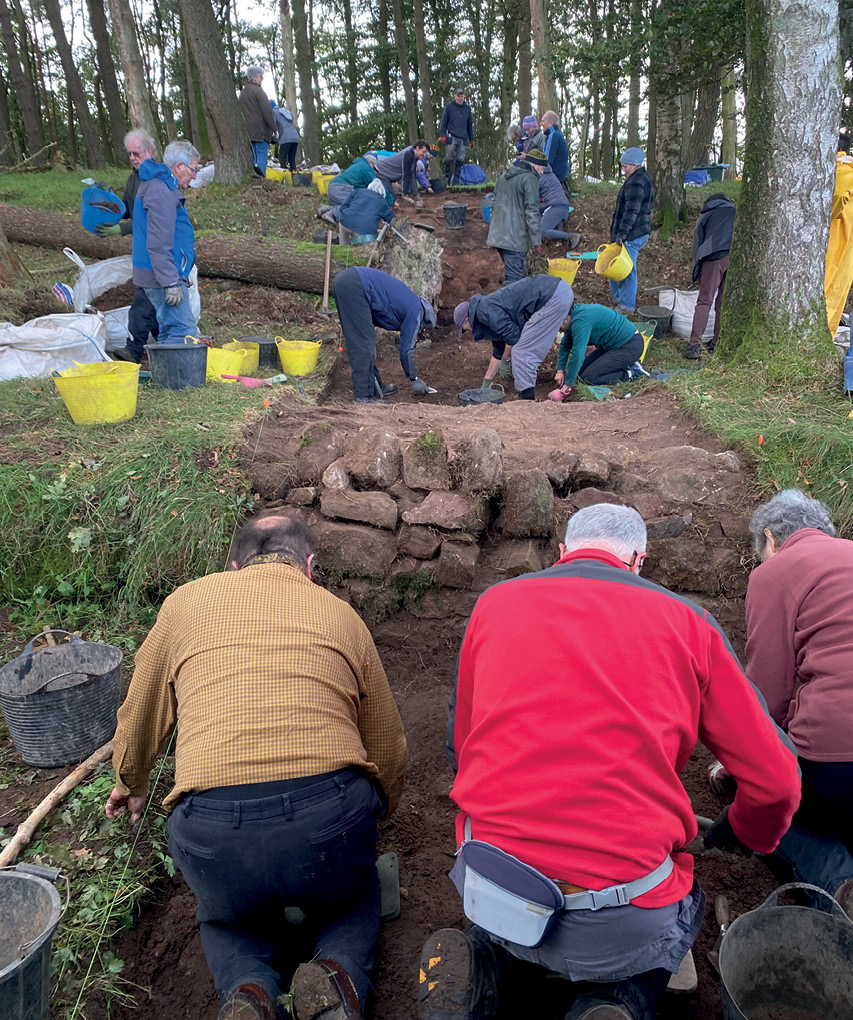
Excavations at the Cricket Club are currently in full swing as part of the award-winning community archaeological dig Uncovering Roman Carlisle, with archaeologists and volunteers alike working to uncover more of the site until 15 June. The latest campaign aims to reveal more of the building in order to expose a site plan, which Giecco said is probably symmetrical and has tantalising suggestions of possible 5th-century wooden structures.
Whether belonging to a wealthy Roman, or to the emperor himself, the presence of Tyrian purple at the Cricket Club site has confirmed that it is one of extreme significance in the Romano-British landscape. ‘Its presence in Carlisle combined with other evidence from the excavation all strengthens the hypothesis that the building was in some way associated with the Imperial Court of the Emperor Septimius Severus, which was located in York and possibly relates to an imperial visit to Carlisle,’ Giecco stated.
Text: Rebecca Preedy / Photo: Anna Giecco