Subscribe now for full access and no adverts
Standing just outside the walls of Winchester, Hyde Abbey was one of the most important royal monasteries of its day. It boasted a distinctly high-status founder – Henry I – and was also the resting place of the relocated remains of members of the ruling dynasty of early medieval Wessex, including such celebrated names as Alfred the Great (see CA 288 to read about the discovery of human remains thought to be those of Alfred or his son). Such prestigious associations did not spare the Benedictine site from the same fate as so many religious communities during the Dissolution of the Monasteries, however, and in 1539 the abbey was disbanded and its buildings demolished. Much of their fine stonework was recycled in the construction of later, secular buildings, and today only a few portions of surviving masonry can be seen above ground in Winchester (notably the 15th-century gatehouse, the medieval church that was used by parishioners and lay staff at the abbey, and the remains of the almoners hall and guesthouse).
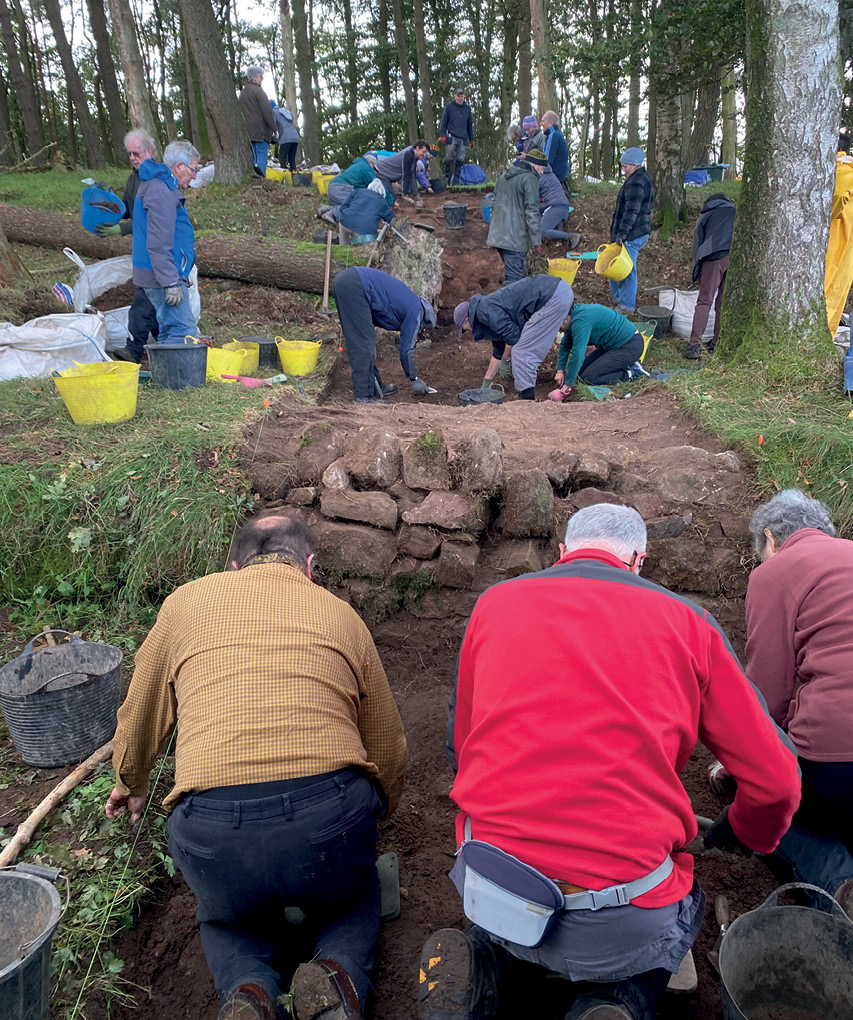
In the 18th century, a small prison – or bridewell – was built on the site, but this institution was only short-lived and was soon replaced by a series of Victorian terraces. Today these houses are known to cover part of the abbey’s church and cloisters, the abbot’s lodging, and the monks’ refectory, and since 2016 the Hyde900 community project has been carrying out back-garden excavations in this area to try to piece the religious complex’s layout back together. These investigations have involved hundreds of local volunteers, assisted by Hyde900’s Archaeology Advisor Dr David Ashby of the University of Winchester, and the local history/archaeology society WARG. They have already helped to redraw our understanding of the claustral buildings and have also uncovered illuminating evidence of how some of those structures would have looked, including a series of finely worked 12th-century voussoirs (wedge-shaped stones from a cloister arch); load-bearing stones from columns; and hundreds of fragments (weighing almost 5kg in total) of painted medieval window glass.
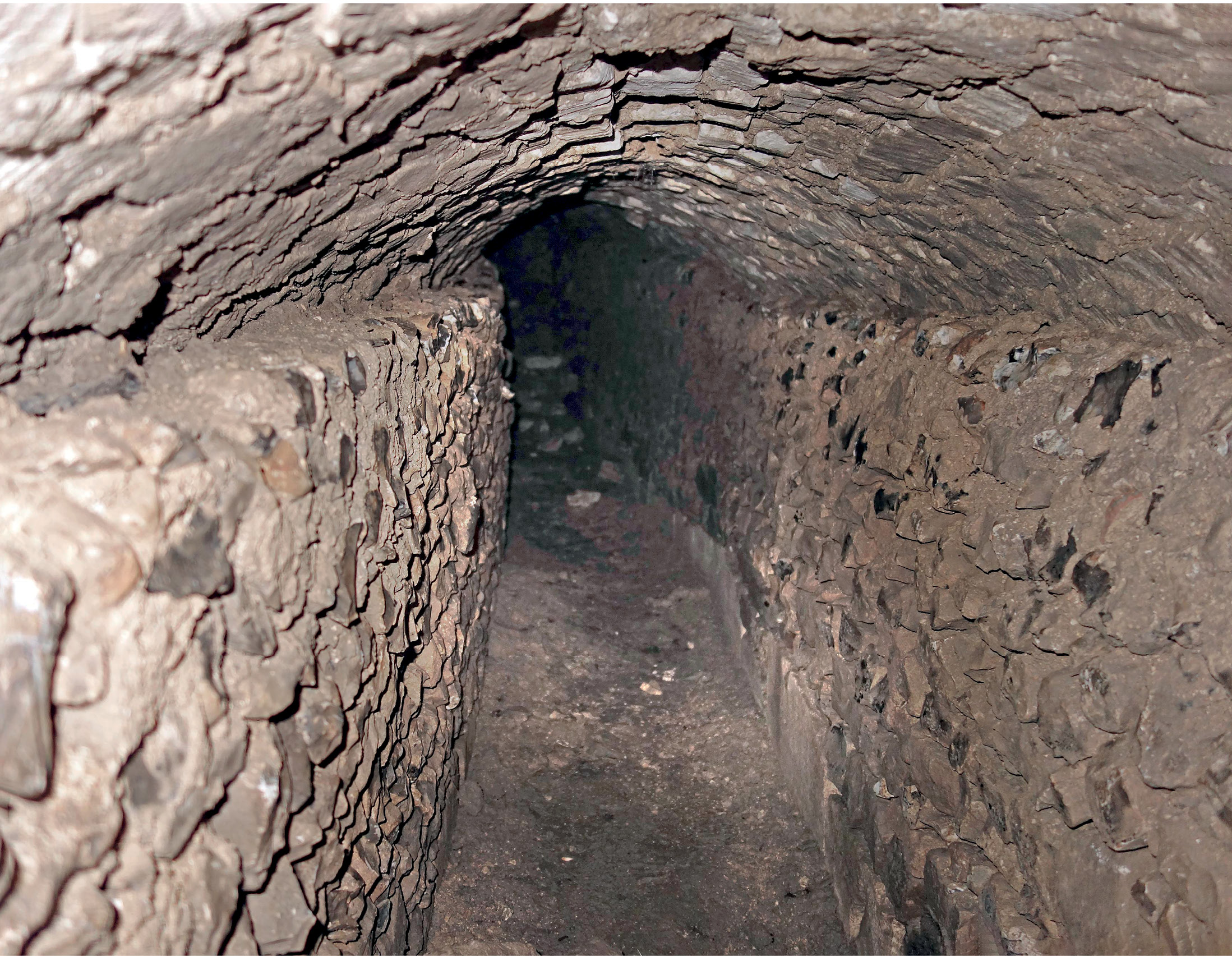
CA’s last visit to the project was in 2021, when the team had uncovered three more previously unknown abbey walls, as well as the fragmentary remains of a black-and-yellow tiled floor (CA 380). A highlight of the 2022 investigations, meanwhile, was the discovery of a sophisticated vaulted culvert, dating to the 12th century and thought to have served as a foul water drain. This summer, CA returned to Winchester to learn about the latest developments in the hunt for Hyde Abbey.
Cloister clues
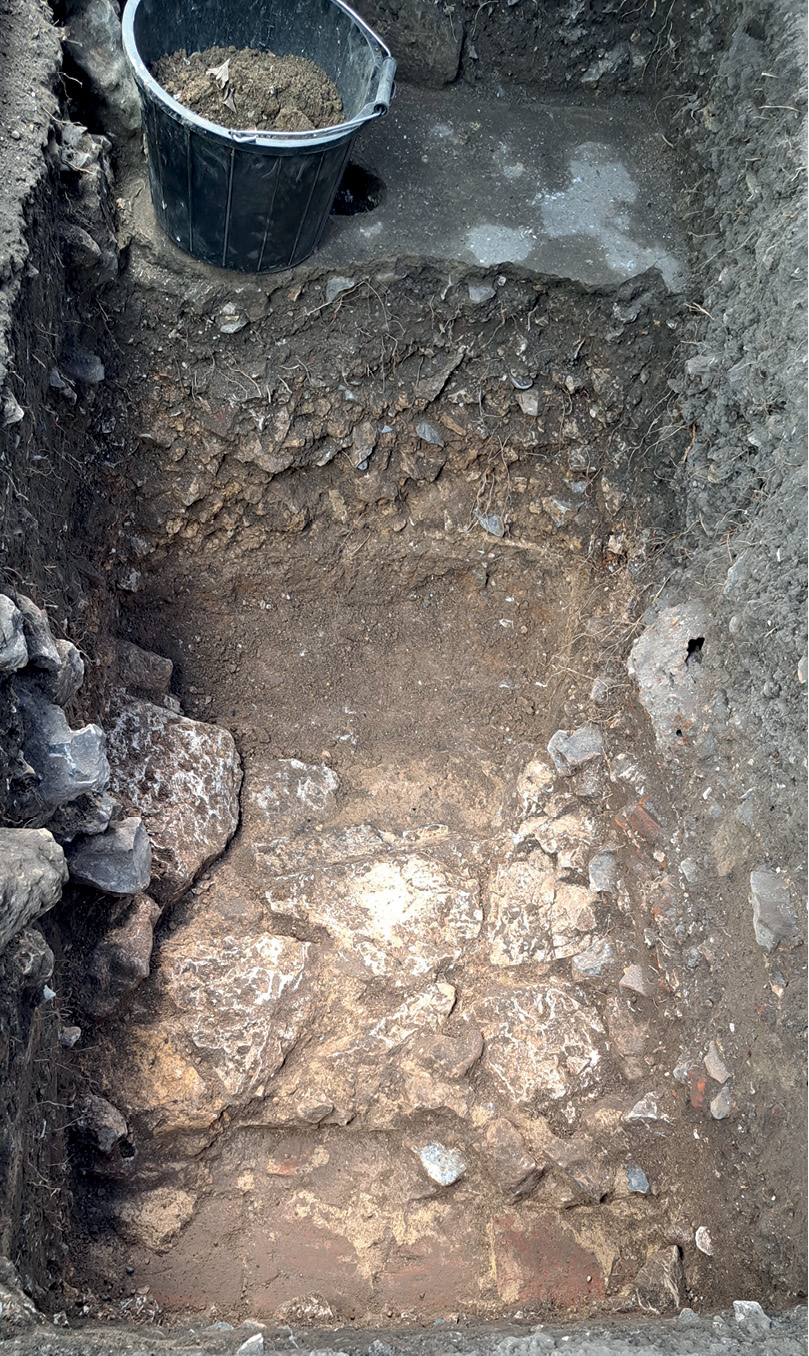
This year’s excavations involved three back gardens and a total of five trenches, all of which got down to medieval layers. In one, I found David Ashby investigating the remains of a chalk and flint raft that had been built to provide support for the great weight of the abbey foundations, which would otherwise have sunk into the underlying clay.
The raft is thought to have possibly formed part of a western or south-western wall or tower associated with the abbey church, whose western end is believed to have been located in this area, though it has not yet been pinned down precisely. The medieval remains had, however, been truncated by the construction of the bridewell, with a brick wall cutting into the medieval remains. Further evidence of the prison could be seen in a second trench within the same garden, which was full of brick and slate, together with 17th-/18th-century pottery fragments, chalk that might represent part of a wall, and possible traces of clay sub-flooring.
Over in a second garden, the team had uncovered remains from what has been interpreted as part of a free-standing service building on the south side of the abbey’s refectory, possibly associated with the kitchen. This comprised a robbed-out wall surviving mainly as rubble core, and a finely tooled chamfered stone which may have been some kind of plinth.
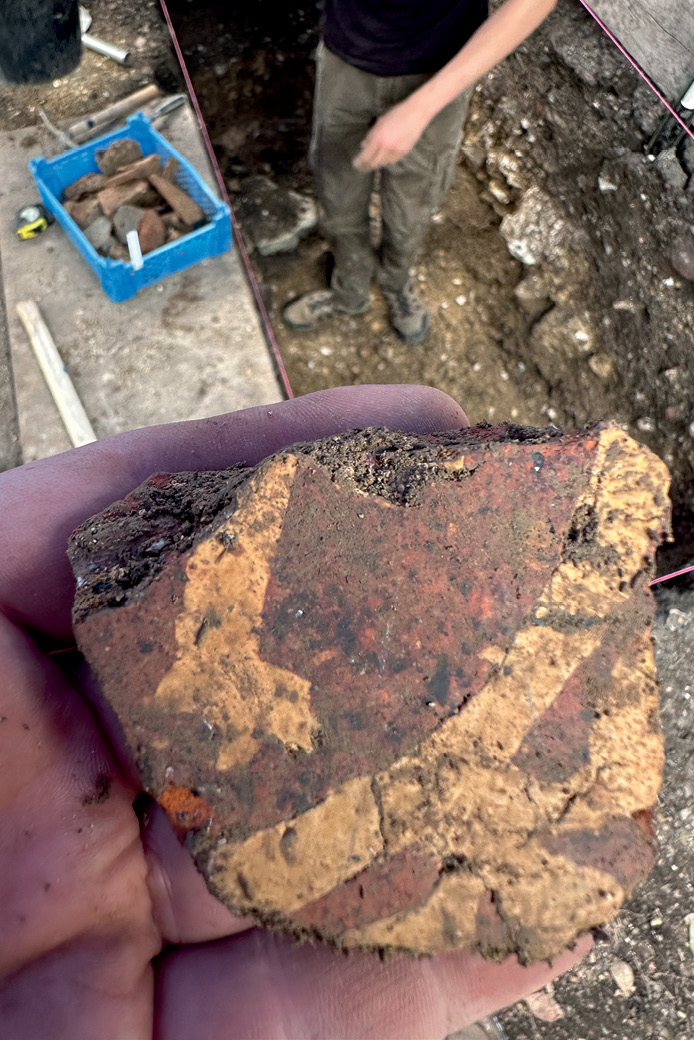
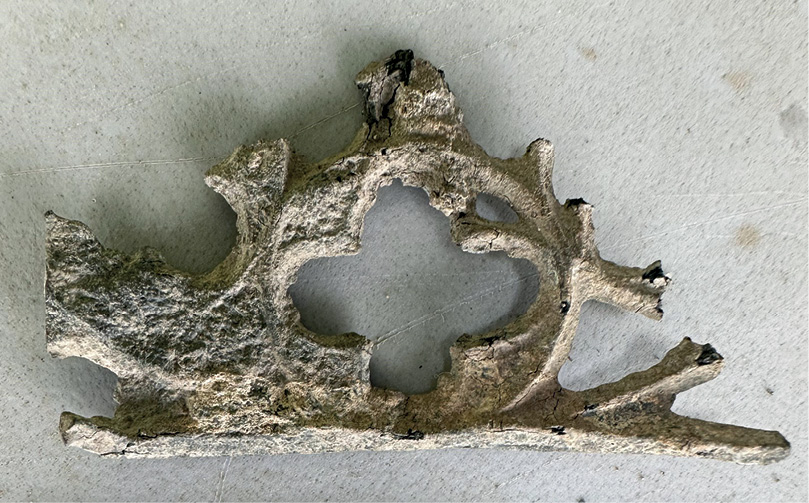
The most colourful find, however, came from the third garden involved in this year’s investigations, where the north trench yielded a large fragment of 13th- to 14th-century decorated tile of a pattern not so far found amongst the 50-odd different tile patterns seen to-date. The south trench, meanwhile, provided a fragment of a medieval lead grille, likely to have been part of a covering of a ventilation panel in an opening to one of the cloister buildings. Structural remains have been interpreted as the major foundations of one of the south walls of the refectory, and Hyde900’s Architectural Advisor, Dr John Crook, suggests that part of a semicircular wall foundation might represent the remains of a lavabo.
Further information: For more details of the Hyde Abbey project and its excavations, see http://www.hyde900.org.uk.