Subscribe now for full access and no adverts
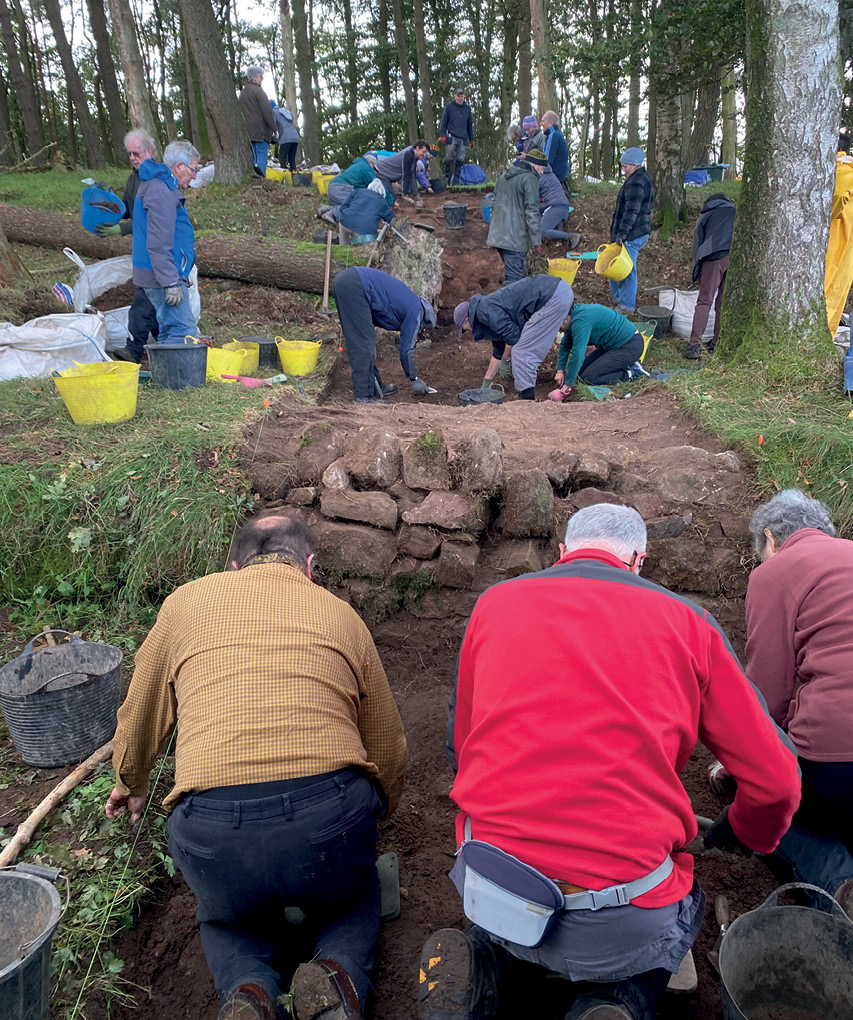
A research team from the University of Reading, led by Professor Martin Bell, has been working for the last 33 years to record eroding Mesolithic archaeology from the seabed of the Severn Estuary at Goldcliff, near Newport (see CA 331 and 367). One of the most recent developments was the discovery of the remains of a 7,000-year-old fish trap – the first of this period to be discovered in Britain.
With swiftly moving tides rushing in and out of the estuary each day, the team – working as part of a project partly funded by the National Geographic Society – have only a small window during their visits in which to get to the site, record any exposed archaeology, and excavate any finds. In the spring of last year, a line of wooden stakes was found, but the team did not have the time to document them in detail. The estuary bed is a constantly changing environment, so they had to hope that, when the site was exposed at the next extreme low tide, the fragile archaeology would still be there and not have been covered by silt or worn away by rushing water in the intervening weeks. Luck was on their side.
When the team were finally able to return, they were able to record the feature in its entirety, as well as to excavate several of the stakes for further analysis. They were then able to confirm that the line of stakes was probably part of a fish trap and would have once formed a V-shaped wattle fence in the middle of a river, where fish and eels, coming down with the retreating tide, would have become trapped.

Further finds emerged last autumn when a series of storms helped to expose a large number of previously unrecorded Mesolithic footprints, including those of cranes, deer, and aurochs (an extinct wild cow), as well as many humans. These add to the 350 human footprints that have been identified at Goldcliff over the years, each providing unique insights into how Mesolithic communities used the landscape, and showing how they moved between the waterside and temporary campsites on a neighbouring island. Several of these camps have been excavated over the years, including the remains of hearths laid with heat-fractured stones.
Commenting on the discovery (which features in the latest series of Digging for Britain), Martin said: ‘Many footprints belonged to children, some as young as four, showing that they played an active part in the daily life of Mesolithic communities. In places, lines of footprints moving in both directions mark footpaths leading from campsites at the island edge to the channel where the traps were located. The footprints show how individual camps and activity areas are connected as parts of a living landscape.’
A longer article on the recent discoveries will appear in a future issue of CA.
Text: Kathryn Krakowka