
Subscribe now for full access and no adverts
Ongoing excavations at Leicester’s market are uncovering new details about the city, stretching from its role as an important Roman settlement through to the post-medieval period.
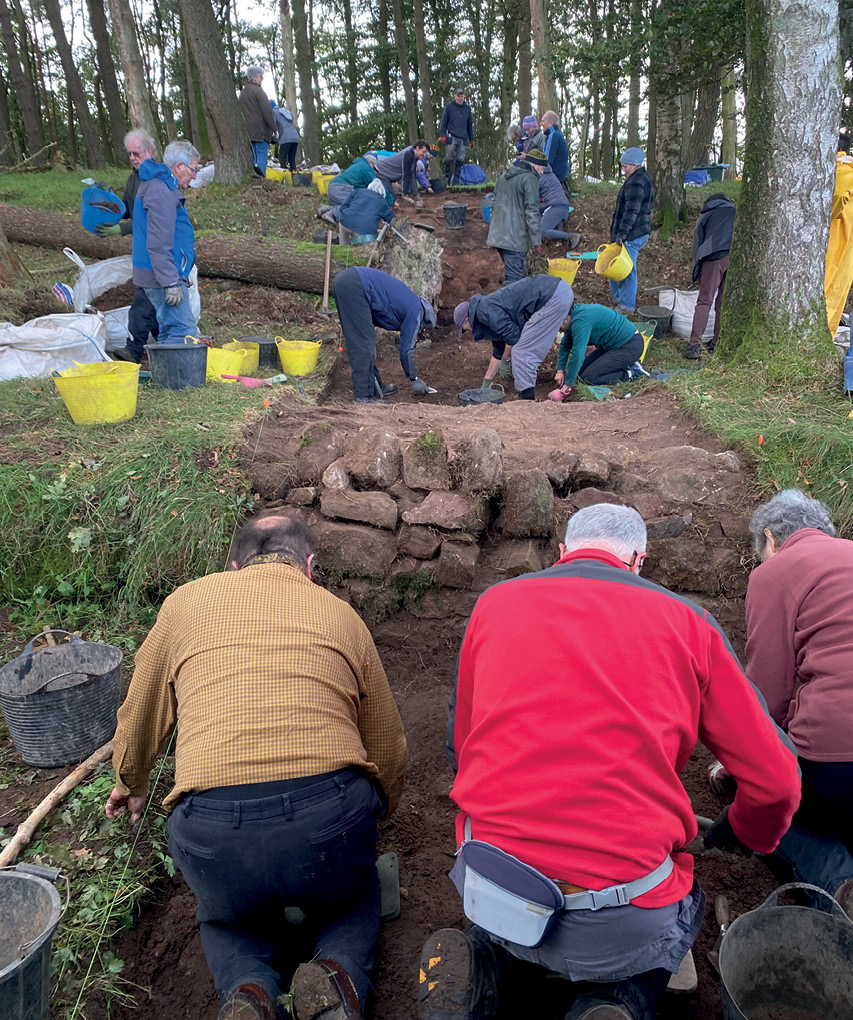
Redevelopment of the marketplace began in July of this year, and the University of Leicester Archaeological Services (ULAS) were contracted to carry out a watching brief of the site. As more and more finds were uncovered, however, this was expanded into a more comprehensive excavation, growing from a sole archaeologist to a team of 12 on the site. Although still limited to the areas that will be affected by development, their investigations have produced illuminating insights into Leicester’s past.
The earliest discoveries date to the Roman period. They include the remains of two timber structures (possibly built as early as the 1st century AD, although analysis is ongoing), one of which had an infant burial beneath its wooden floor. Several Roman pottery kilns found nearby, along with pits and ditches, are thought to be contemporary with these buildings – then, a century or two later, a more solidly built stone structure, probably domestic in function, was superimposed over its timber predecessors. These finds add welcome new details to our map of south-east Leicester in the Roman period; previously, most of our evidence had come from the north-west areas of the city.
The Roman layers were covered by a thick layer of dark, organic soil across the entire excavated area. Containing sherds of possible early Stamford ware, it is thought that this layer dates from the early medieval period; sediment cores have been taken to explore any surviving environmental evidence. While a few early to middle Anglo-Saxon buildings, and late Anglo-Saxon structures and burials, have been identified during previous archaeological work in the north of the city, this period of Leicester is still little understood, and it is hoped these samples will enhance our understanding of settlement activity at this time.

The site first became a marketplace in the medieval period, as early as the 13th century, and continued in this role for the next 700 years. ULAS has uncovered many layers of market flooring representing this long lifespan, from tightly packed pebbles to more solidly metalled surfaces. Dense distributions of post-holes also speak of many generations of bustling market stalls. Surprisingly, there were few small finds from these layers, suggesting that the market had been kept tidy.
One of the biggest finds (both in terms of size and significance), however, was the footprint of the Gainsborough Chamber, a civic building that was used for judicial proceedings, mayoral business, and celebrations. Historical records suggest that it was in use from at least 1533 to 1748, when it was demolished, but some evidence indicates that it could date back as early as the 14th century. The team uncovered the subterranean walls of the part of the Chamber that was used as the dungeon, which was described in the mid- 16th century as ‘a most vile prison’. Its walls were found to be 1.5m thick and made of substantial granite-facing stone with a sandstone core – a solid construction to keep any prisoners from escaping.
Text: Kathryn Krakowka / Photo: Speller Metcalfe