
Subscribe now for full access and no adverts
Excavations on the National Trust’s Attingham Estate in Shropshire have uncovered the remains of a Roman industrial complex and shrine, adding to our knowledge of the early northern fringes of Viroconium Cornoviorum (Wroxeter).
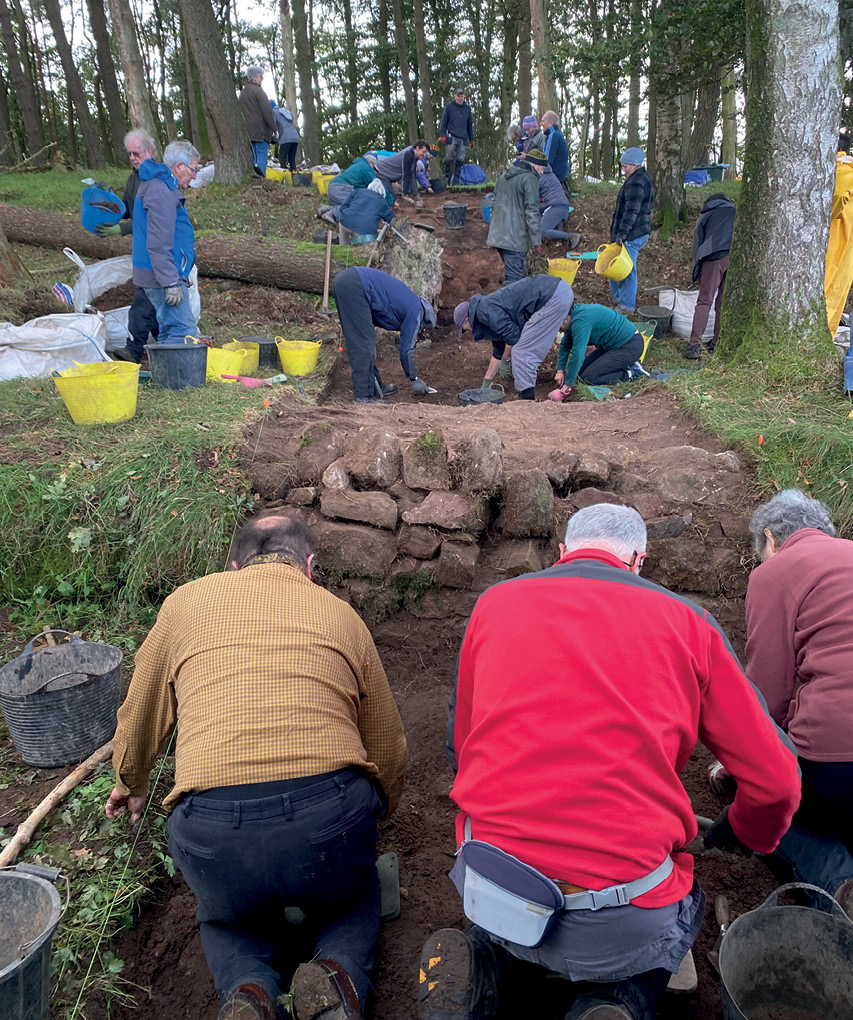
A comprehensive geophysical and metal-detecting survey was conducted across the Attingham Estate in 2023/2024, encompassing more than 1,000ha (2,470 acres) and identifying a number of areas of interest (see CA 414), one of which has formed the focus on ‘Attingham Unearthed’, a project recently launched by the National Trust as part of an initiative to help the public engage with archaeological excavations. Led by National Trust Archaeological Project Manager Suzy Watts, the dig ran for two weeks in September of this year, and involved both members of the public and professional archaeologists.
The initiative opened three trenches and several test-pits, revealing finds dating not only to the Roman period, but the Iron Age as well. The first trench was placed over a series of unusual features identified during the earlier surveys, with initial interpretations ranging from a high-status domestic dwelling to a cemetery. Once the topsoil was stripped back, however, it became apparent that they in fact represented a Roman industrial complex, including quantities of slag and other evidence of metal-working. There were no formal kilns or furnaces found, however, and while post-excavation work will hopefully reveal more details, it could be that this either was a temporary site housing only transient structures, or its building materials may have been heavily robbed over subsequent centuries. Pottery sherds recovered from the same trench date to between the 1st and 2nd centuries AD, and it is thought that this complex was probably abandoned sometime before AD 190, when the defensive wall of Roman Wroxeter was formalised to the south of the Attingham Estate.
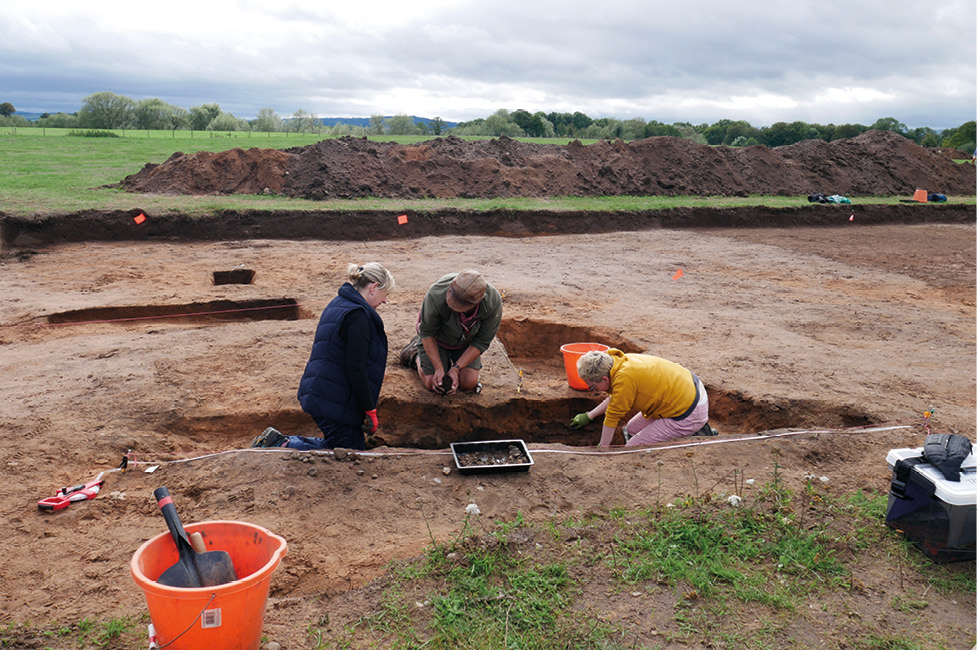
A second trench was located over a feature that was thought to be a possible shrine. In geophysical survey images it looked similar to a confirmed shrine that had been excavated previously in another nearby field, and following closer investigation this new structure also appears to have had a religious function. Although only shadows of the actual structure remained in the soil, a decorated incense bowl was found at its heart. Close-by, the team found traces of a possible post-built structure as well as four cremations and two areas of redeposited pyre debris located outside the walls of the shrine. Evidence from the previous surveys indicates that there could still be two or three more shrines in the immediate area, speaking of a ritual complex that probably dated to between the 1st and 2nd centuries AD.
The last trench was opened where surveys had picked up traces interpreted as either an Iron Age roundhouse or an area associated with a Roman marching camp. Excavation revealed that both may be the case. A quarter of an Iron Age ring-ditch, measuring approximately 8-10m in diameter, was revealed, preserving two clear phases of occupation (one with wattle-and-daub features, and a later incarnation picked out with post-holes). The same trench revealed the (heavily plough-truncated) remains of a ditch containing 1st- to 2nd-century Roman pottery as well.
In tandem with the excavation work, which was led by Matt Williams with expert advice from Dr Roger White, National Trust volunteer Paul Hemmingway undertook a metal-detecting survey of the excavation site, recovering a number of artefacts including an unusual acorn-shaped object that was found near the Iron Age roundhouse and Roman ditch. It has not yet been formally identified, but might be a weight or furniture decoration. Post-excavation analysis is expected to commence soon; once this work is complete, the finds will then be included in the overall programme for the Attingham property and hopefully the discoveries displayed for visitors to view.
Text: Kathryn Krakowka / Photo: National Trust, Jayne Gough