Subscribe now for full access and no adverts
A second excavation season at Buckler’s Hard, a private ship- building hub on the River Beaulieu, 12 miles (20km) south of Southampton in the New Forest, has fully revealed the wooden slipway where 55 ships for the Royal Navy – including Admiral Nelson’s favourite, the 64-gun HMS Agamemnon – were built during the 18th and early 19th centuries.
Shipbuilding at Buckler’s Hard was first established by James Wyatt in the early 18th century, but really took off in the middle of the century, when it came under the control of Henry Adams, a master shipwright. Between him and his son, Balthazar Adams, they oversaw shipbuilding at Buckler’s Hard for more than 60 years, before the industry began to decline in the 19th century following the end of the Napoleonic Wars.

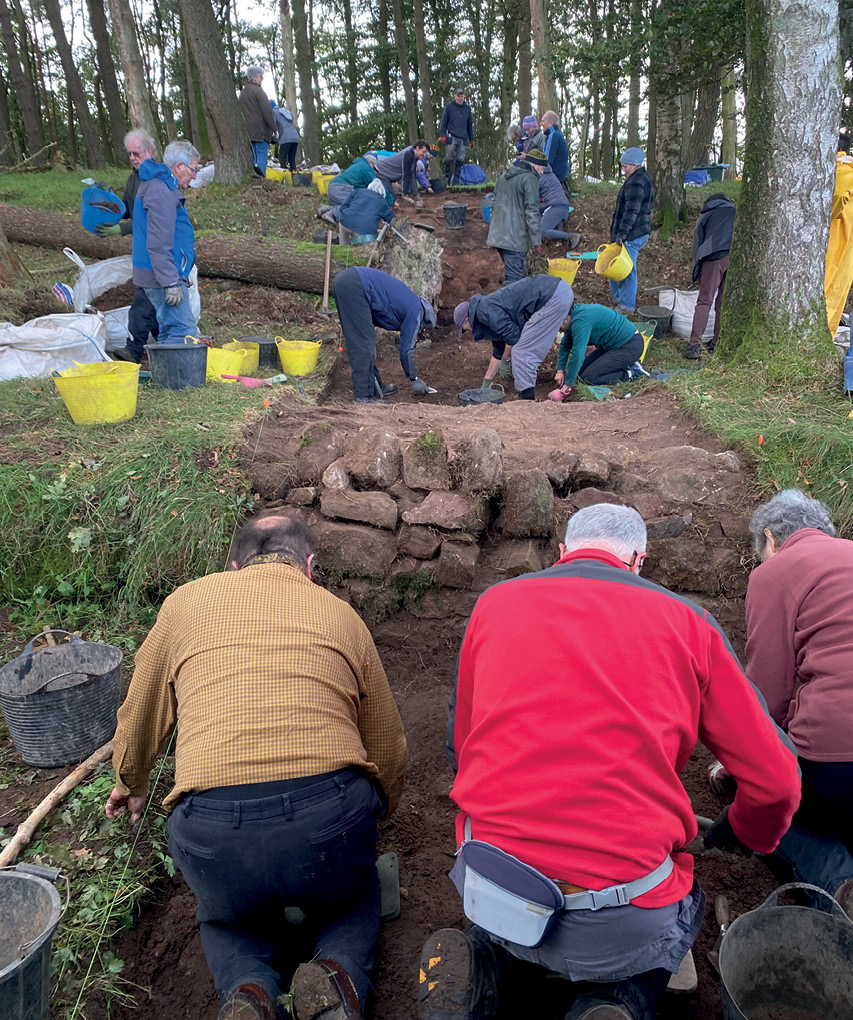
To highlight the important history of this now rather quiet hamlet, the Buckler’s Hard Shipyard Trust was established last year. One of their first initiatives was to fund a new excavation of the shipyard, the first since the 1990s. With the help of archaeologists from the University of Southampton, the New Forest National Park Authority, and the Maritime Archaeology Trust, excavations began in July last year, when the team uncovered the upper part of the main slipway, known as Slipway 2 – the largest of the five known to have been located at Buckler’s Hard (above).
This year the team has returned to continue excavating the slipway down into the intertidal area. Archaeological investigations, led by the Maritime Archaeology Trust, with help from the Army dive unit from 17th Port and Maritime Regiment and around 50 volunteers over three weeks, have continued into the river itself to uncover the very edge of the submerged slipway. This work has helped reveal the structure, including its huge wooden groundways, wharf walls, and slideways for the first time since the 19th century. Many of the timbers are massive, which suggests that the siting of the shipyard near the New Forest was no accident, with old-growth wood needed to construct not only the slipways but the ships themselves.
Once the slipway has been fully recorded, the aim of the excavation is to provide a more precise idea of how such intricate structures were able to be built in unstable mud and still be effective at holding the weight of enormous wooden ships during their construction. Buckler’s Hard is one of the only shipbuilding hubs from the period to remain virtually untouched, providing an excellent opportunity to learn more about an industry central to the burgeoning British Empire.
The team opened up another four trenches – in addition to the slipway – on the adjacent shipyard area this year. These were sited over areas highlighted during geophysical survey and from archive maps. This work has revealed some tantalising clues of some of the shipyard buildings that would have made Buckler’s Hard a thriving place, which it is hoped can be unpicked during post-excavation analysis. Meanwhile, many small finds speak to the number of industries that had to come together to build such large ships, including heaps of iron nails, staples, and copper plates, as well as more personal items such as drink bottles and clay pipes.
The year’s excavation has now concluded, but the interpretative work is just beginning, with many details yet to emerge from this intriguing site.
Text: Kathryn Krakowka / Photo: Buckler’s Hard Shipyard Trust