Subscribe now for full access and no adverts
A recent excavation at Glendaruel’s Stronafian Community Forest on the Cowal Peninsula in Argyll has uncovered evidence of prehistoric occupation of the site.
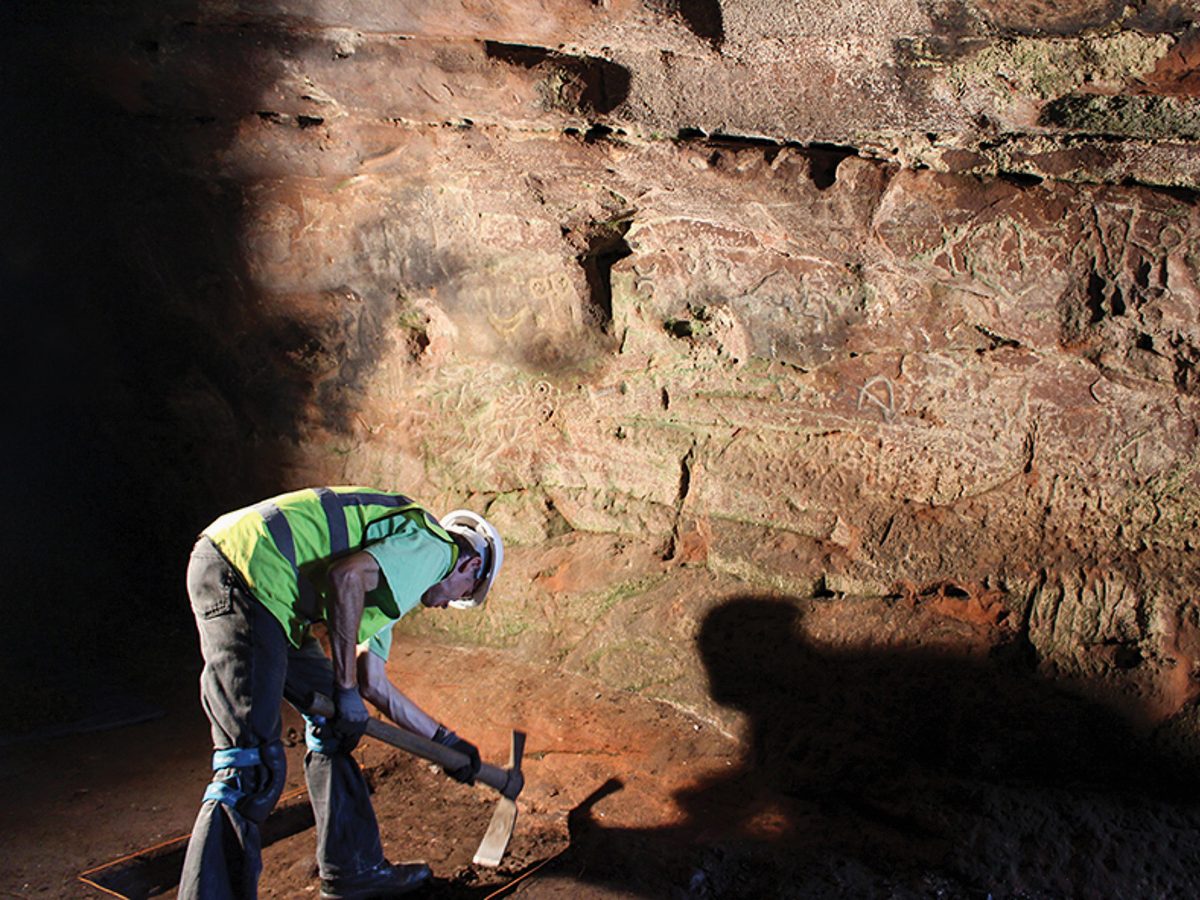
It had long been thought that a pattern of unusual cell- like features found at a site known as Creag Liath (or Grey Stones), near Glendaruel, could be of archaeological importance. This would fit with the local landscape, which is rich in Neolithic and Bronze Age sites, including nearby Auchategan: a complex multi-phase site comprising Neolithic domestic layers as well as a Bronze Age cairn and cists, which was first excavated by Dorothy Marshall in the late 1960s. To determine whether similar activity could be discovered at Creag Liath, last year a team from Archaeology Scotland’s Adopt-a-Monument, along with volunteers from the Stronafian Heritage Project (SHiP), opened a few test-pits over some of the site’s features.
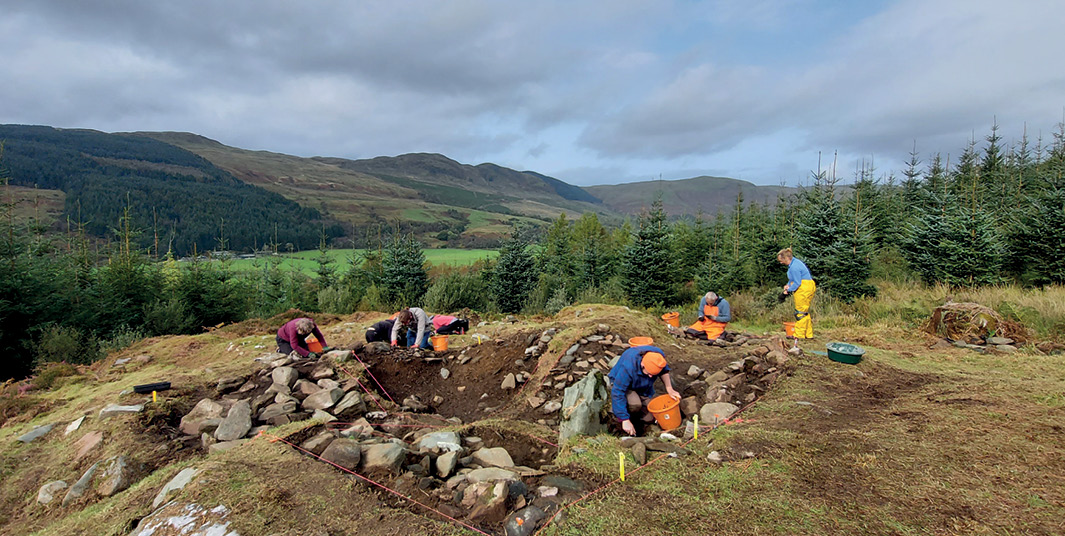
Sufficient evidence, including possible stone walling, was found to warrant a larger excavation this past autumn, led by Andrew Jepson from Archaeology Scotland’s ‘Adopt-a-Monument’ programme and aided by a number of local volunteers and children from nearby primary schools. The dig also hosted an Open Day as part of Scottish Archaeology Month.
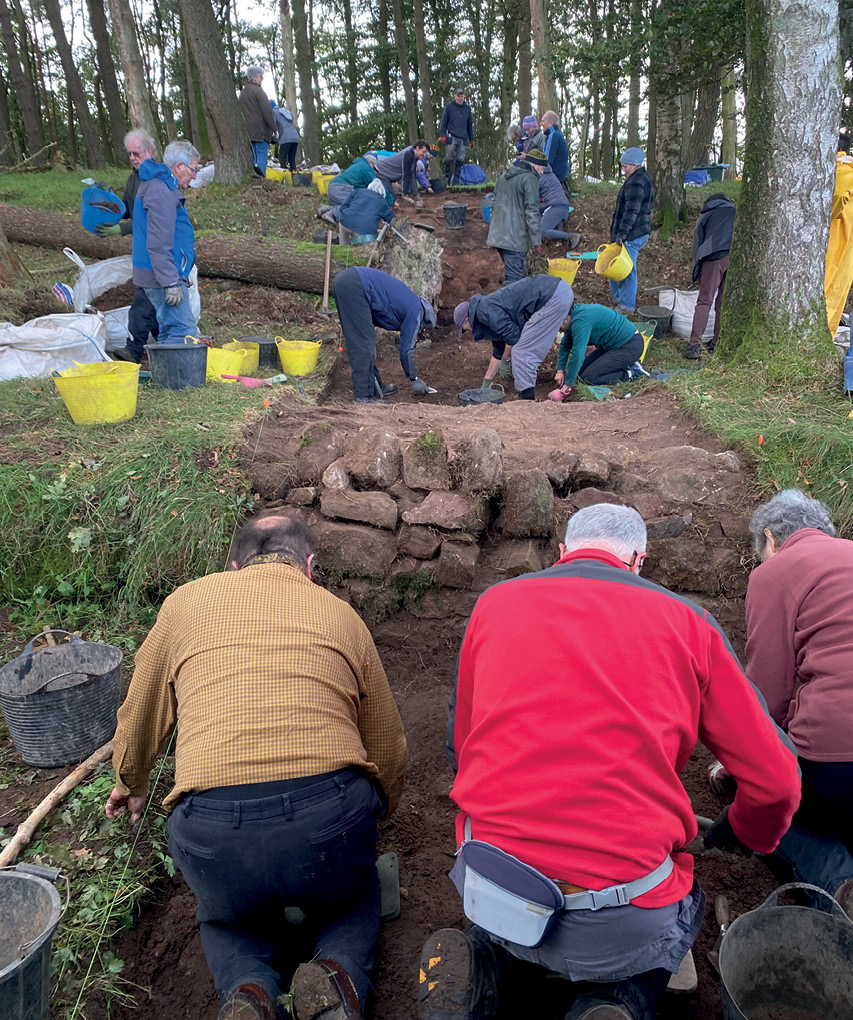
As part of this second phase of excavation, the team started by reopening and widening one of the original test-pits, which had been found to contain possible stone walling. They quickly found evidence to confirm it was indeed a wall, and a substantial one at that, measuring approximately 1m in width and forming the foundations of a structure that appears to have been sub-rectangular in shape. This trench revealed a few sherds of reddish-brown gritty ware, too, probably either Neolithic or Bronze Age in date.
Two other trenches revealed further stone walls, possibly forming the boundary of one of the cells (although further work is needed to determine this), as well as a potential sunken path that could lead to the entrance of the main structure. The phasing of the site is still unclear, nor is it established how the different ‘cells’ may relate to one another. It is hoped, however, that another season of excavation next year could help answer some of these questions. For the moment, though, it seems that previous speculation was correct, and Creag Liath did see extensive prehistoric occupation.
Text: Kathryn Krakowka