
Subscribe now for full access and no adverts
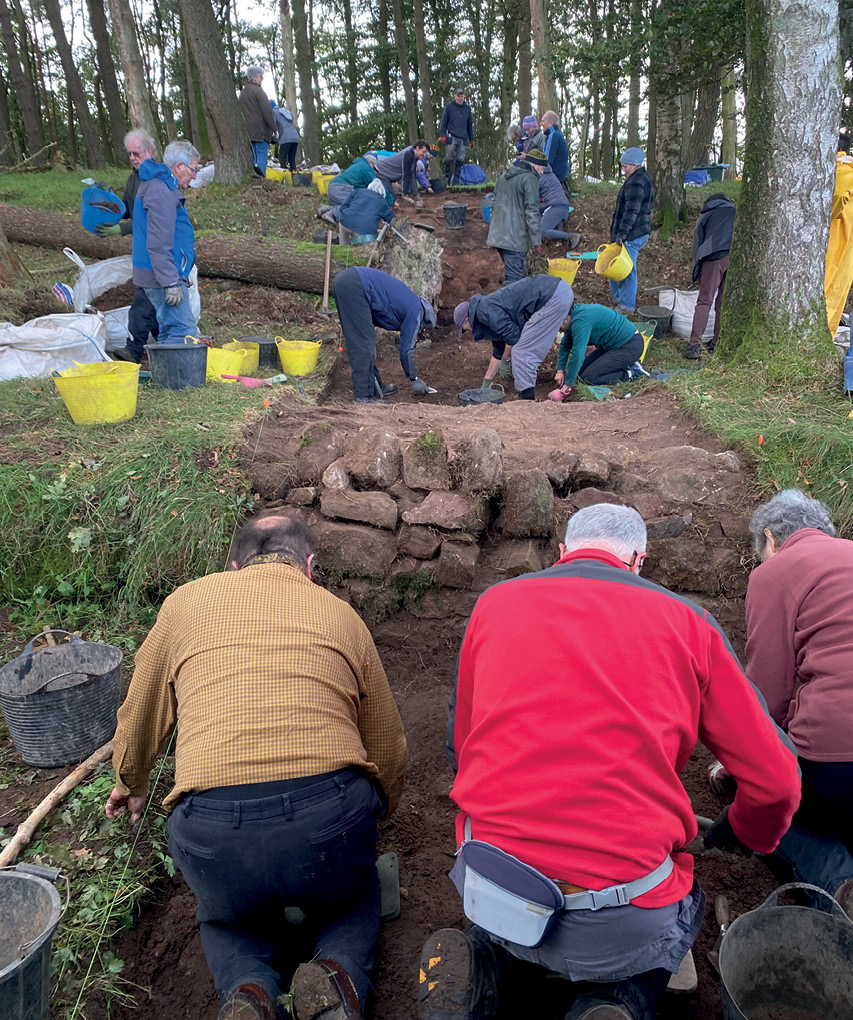
The remains of a late Iron Age and Roman farmstead have been revealed during works by Archaeological Research Services Ltd which, since late February, have been investigating archaeological remains identified during topsoil stripping for Leicestershire County Council’s new road scheme at Melton Mowbray.
Agricultural boundaries and enclosures dating back to at least the Roman period had already been recorded during previous archaeological survey and evaluation fieldwork undertaken when the road scheme was being designed. These most recent excavations at one of the enclosure complexes uncovered more evidence of occupation, including a series of Roman cultivation rows that may once have been a vineyard.
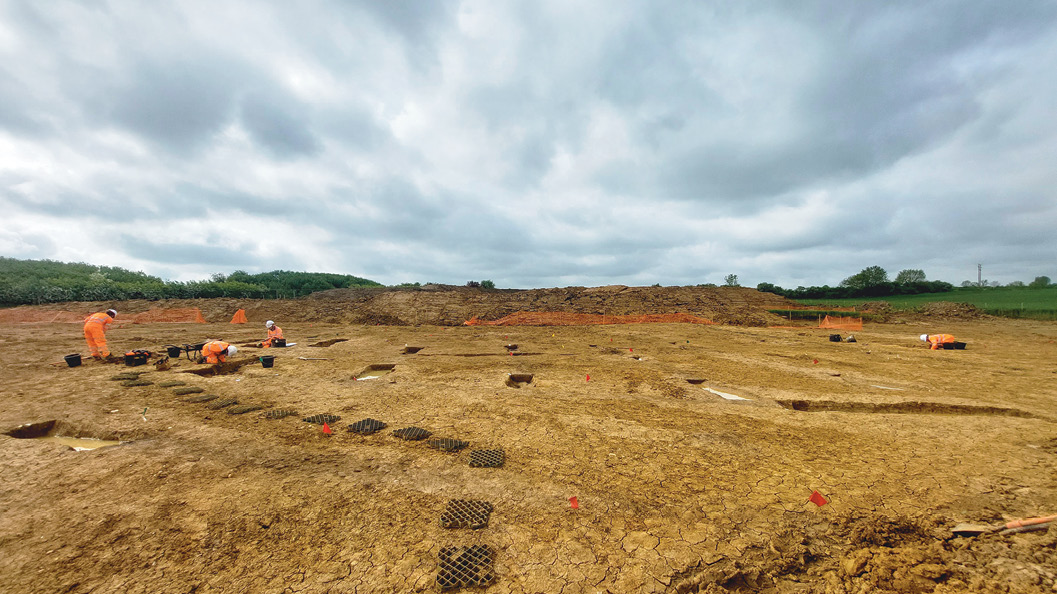
A 90m by 30m section of parallel-running planting trenches, spaced at about 4m intervals on a gentle slope at the foot of a valley, had been preserved by a medieval headland, and some of their fills included abraded fragments of 1st- to 2nd-century pottery, including greyware. One set of the planting trenches, comprising at least 11 rows, was aligned north–south, following the hillslope and bounded to the west by an earlier ditch. This abutted two other sets of planting trenches running north-west to south-east across the slope. These appear to be separated by a gulley and enclosed on the north side by a boundary ditch containing Roman pottery. The ditch is situated near the bottom of the slope and overlies the remains of an Iron Age enclosure. The base and sides of the planting beds have irregular indentations, likely to have been formed as a result of root growth, and although they have been heavily truncated by medieval ridge-and-furrow and later ploughing, the beds could cover an area of at least a hectare.
The planting trenches are similar to excavated examples from elsewhere in the Roman world, and are considered to be associated with plantation agriculture such as viticulture, the production of other fruit-bearing plants, or vegetables. In Britain, Roman sites where plantation agriculture was practised, potentially as a commercial endeavour, have previously been found in East Anglia, Buckinghamshire, and Northamptonshire, as well as one in Rutland, 15km to the east of this site, at Thistleton. In all probability, this last example was connected to the current site via Sawgate Lane, believed to be a former Roman road. Pollen analysis undertaken at Wollaston in Northamptonshire produced further evidence for viticulture, and the Melton Mowbray site is the furthest north of those that have been investigated. A range of scientific techniques, including geochemical analysis, is now being deployed to find out as much as possible about the use and development of the site.
Image: Archaeological Research Services Ltd / Text: Robin Holgate