Subscribe now for full access and no adverts
It has long been assumed that the advent of agricultural and pastoral practices during the Neolithic saw a major shift in human eating patterns, focusing more on a terrestrial diet than a marine-based one. Numerous isotopic analyses from across Europe have seemed to support this view, showing that, on the whole, from the Neolithic onwards people appear to have consumed less fish. In this month’s ‘Science Notes’, however, we explore new research that has looked into whether other types of marine-based cuisine have been overlooked in these analyses – specifically whether seaweed and other aquatic and freshwater plants formed any part of people’s diet in the past.
Due to its unusual isotopic profile and the facts that it contains less protein than other food sources and will often represent less than 20% of a person’s diet, identifying seaweed consumption through isotope analysis can be difficult, particularly when researchers are not specifically looking for it. By examining specific biomarkers extracted from human dental calculus (organic build-up around the teeth made up of food particles), however, researchers are able to identify direct evidence of what a person consumed during their lifetime, including any seaweed or other aquatic and freshwater plants.

Led by Stephen Buckley from the University of York and Karen Hardy from the University of Glasgow (above), an international team examined human remains representing 74 individuals from 28 European archaeological sites spanning northern Scotland to southern Spain, using sequential thermal desorption-gas chromatography-mass spectrometry (TD-GC-MS) and pyrolysis-gas chromatography-mass spectrometry (Py-GC-MS). While these techniques may sound complicated, they straightforwardly extract organic compounds from a sample using heat, in contrast to other types of sample preparation prior to chromatography-mass spectrometry, which use solvents. These methods are both simple and efficient, as only very small samples sizes (<0.1mg of organic residue) are needed, meaning that virtually no destruction is required.
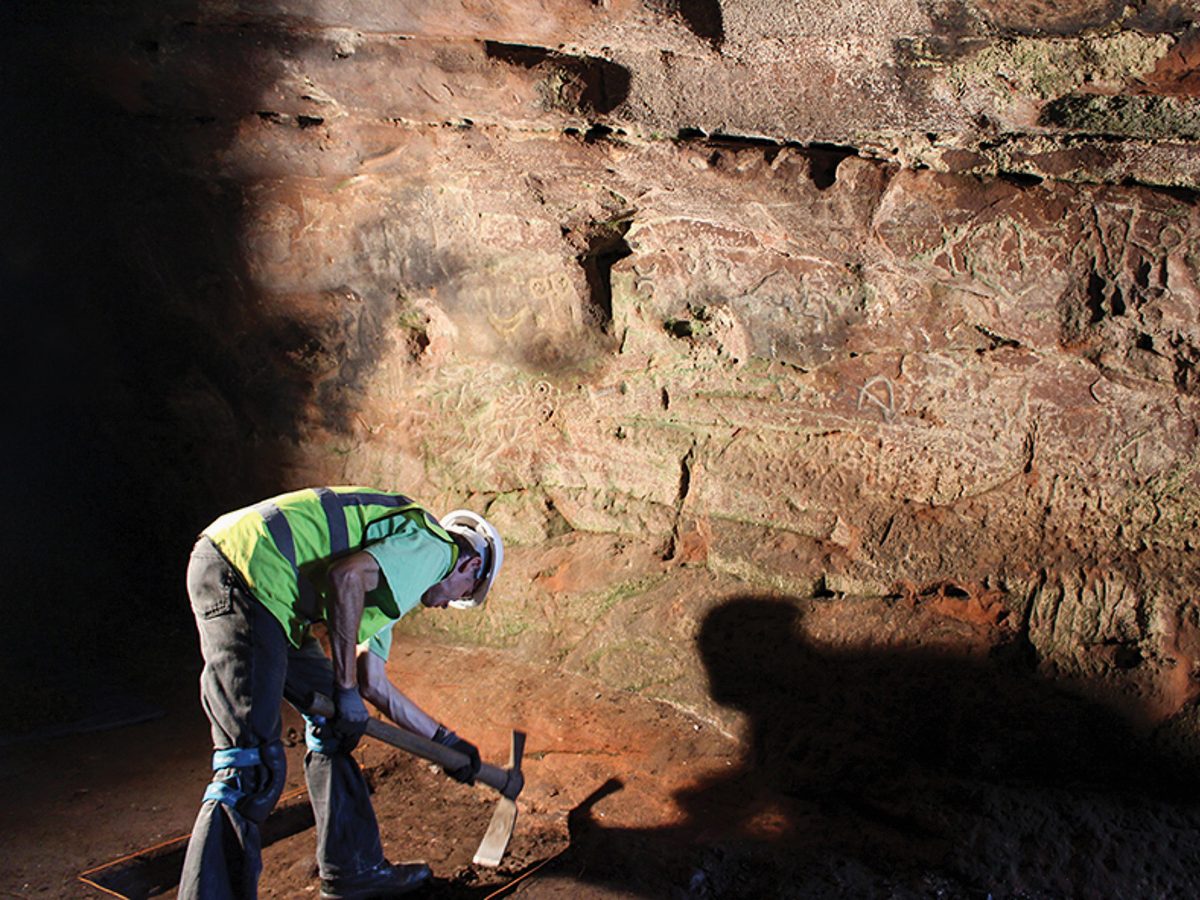
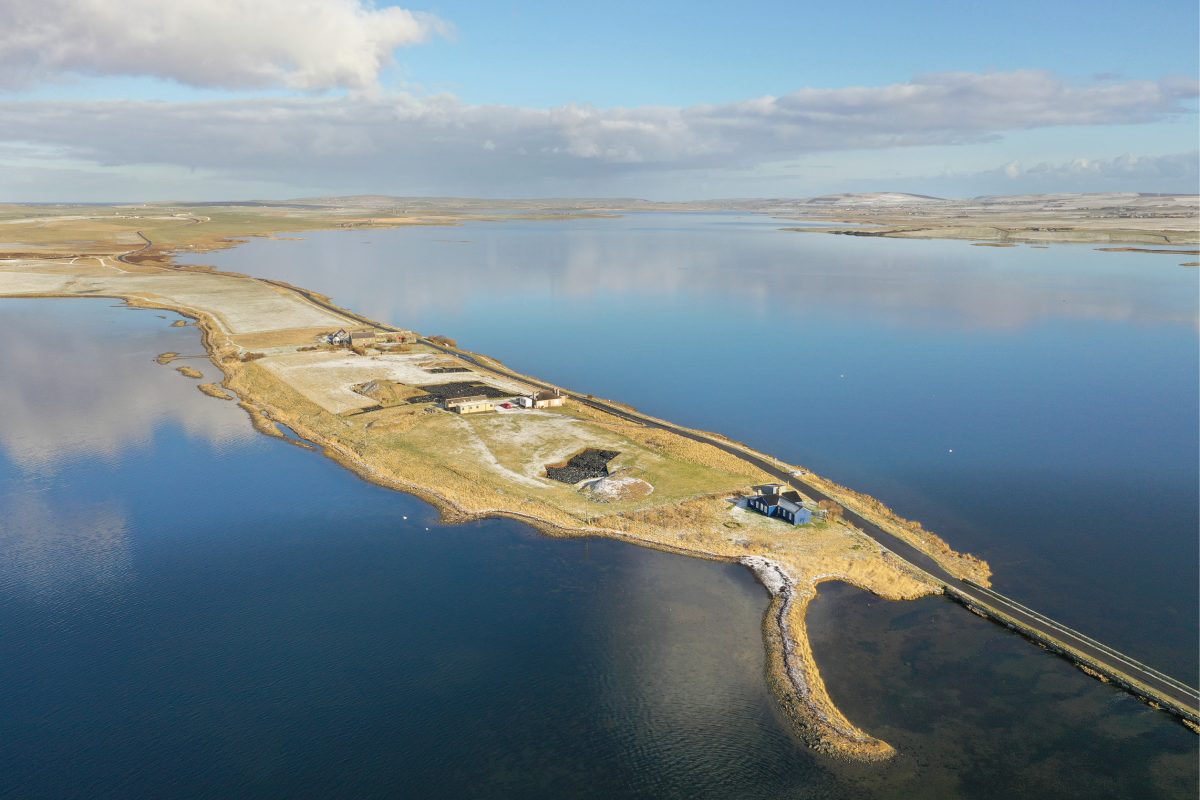
Results were able to be obtained from 37 samples, representing 33 individuals, which showed that 26 individuals had chewed, and presumably ingested, either seaweed, freshwater algae, or other aquatic plants. Thirteen people appear to have consumed marine seaweed. They came from the Mesolithic (6059-5849 cal BC) site of La Corona in south-east Spain, as well as Neolithic sites in Scotland, specifically from Distillery Cave in Oban, and Isbister and Quanterness in Orkney. In particular, the Scottish profiles suggest that they probably ate red seaweed. There was evidence, too, for the possible consumption of Crambe maritima (a sea-based member of the brassica family) at Isbister – a plant which, in Orkney, is only found on the beaches of South Ronaldsay, adjacent to Isbister.
Freshwater plant consumption was also found in samples from several sites. Four samples from Lithuania, dated to the early medieval period, suggest that freshwater algae may have been a part of the diet, although it cannot be ruled out that their biomarkers may have resulted from drinking water from the local lakes. More convincingly, biomarkers from freshwater aquatic plants were discovered in individuals from Portugal, Scotland, and Lithuania. Pondweed (Potamogeton spp.) appears to have been eaten at the Mesolithic site of Cabeço do Pez (Portugal), while plants from the genus Nymphaea were probably consumed at the early Bronze Age sites of Boatbridge Quarry and Juniper Green (both in Scotland), as well as the early medieval site of Obeliai (Lithuania).
While many of the sites analysed had previously undergone isotope analyses, none had identified seaweed as a possible part of the diet. As mentioned above, this is largely due to the complexities of being able to identify it, but the data show that – once researchers knew what they were looking for – the evidence was there all along. All of the isotopic results are compatible with seaweed consumption in the diet, but because it wasn’t expected, it was overlooked in the original analyses.
Highlighting this point, the team, in a paper recently published in Nature Communications (https://doi.org/10.1038/s41467-023-41671-2), said: ‘Our results therefore raise questions over the uncritical use of C&N [carbon and nitrogen] stable isotope data in some studies, currently the dominant force in palaeodietary reconstruction, and suggest this research may offer a powerful additional and complementary scientific approach. Recovery and identification of characteristic biomolecules in dental calculus is one of the few ways to obtain direct evidence of ingestion of plant species in prehistoric populations and can be used to identify specific items that may not be visible otherwise.’
This project has demonstrated that water plants and algae continued to be consumed after the agricultural revolution and even into the early medieval period. It is hoped that future diet studies will take this into consideration in their analyses, and help further to determine how widespread the practice was.
Text: Kathryn Krakowka