
Subscribe now for full access and no adverts
Excavations close to Exeter Cathedral have uncovered echoes of the city’s medieval and Roman past.
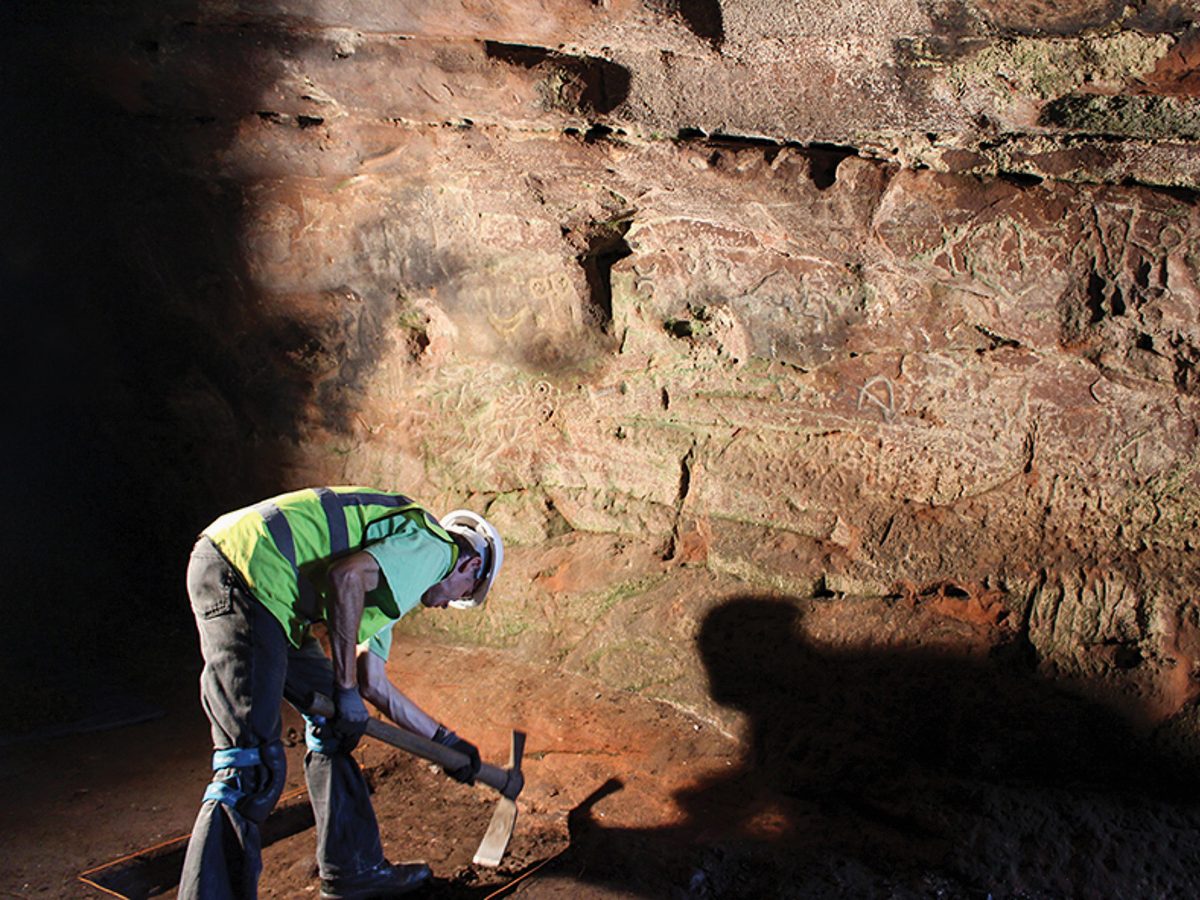
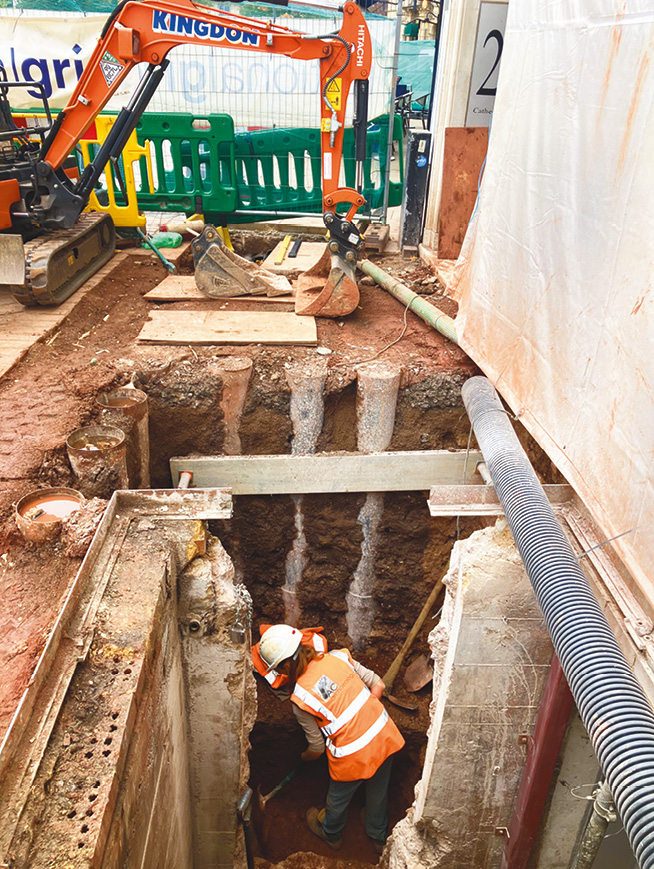
Archaeologists from Devon-based AC Archaeology were excavating in Cathedral Close ahead of the installation of a replacement substation and associated infrastructure by the National Grid, when they uncovered layers of early medieval streets, together with a clay weight and disarticulated human bones which, although they are still undergoing radiocarbon dating, are thought possibly to represent the remains of some of Exeter’s early medieval citizens.
The area now occupied by the cathedral was once associated with an Anglo-Saxon monastery founded in the 7th century, which was later replaced by a late 9th- or early 10th-century minster church. It is known that the land now known as Cathedral Close formed part of a cemetery from as early as the 6th century, however, and it is thought that the recently recovered human remains may belong to this burial ground. ‘Although the bones were not in situ, if an early date is returned then it would be very useful in adding to the relatively small amount of existing information on the extent of burials through time,’ Simon Hughes, archaeologist and director of AC Archaeology, explained. ‘It provides a rare glimpse into early medieval Exeter in this important location. The results of radiocarbon dating are eagerly awaited and are hoped to fit into [this] fascinating narrative’.
Older finds were in evidence, too, including pieces of Roman pottery, among them a rim sherd from a Black Burnished Ware conical flanged bowl dating from the later 3rd or 4th century, as well as Greyware that was produced locally over an extended time period. These finds add to a growing understanding of Roman Exeter (which was a regional capital known as Isca Dumnoniorum), particularly in the area around the cathedral: for example, excavations in the 1970s revealed a Roman bathhouse (CA 39), while in 2023 archaeological investigations ahead of building works in the cloister garden uncovered the remains of a Roman townhouse, as well as early medieval burials (CA 401).
See CA 379 for a fuller exploration of archaeological evidence for Roman and medieval Exeter.
Text: Rebecca Preedy