Subscribe now for full access and no adverts
In 1984, geneticist Svante Pääbo made the first attempt to extract DNA from ancient human remains, using samples from Egyptian mummies. Ultimately, his efforts were unsuccessful, but over the last 40 years the field has developed rapidly (aided in no small part by Pääbo, who won a Nobel Prize in 2022 for his pioneering ancient DNA research). Various bioarchaeological studies have since been carried out on ancient Egyptian remains. However, these have been limited by the poor preservation of ancient DNA in Egypt’s warm climate, and it has never been possible to examine a person’s entire DNA sequence until now.
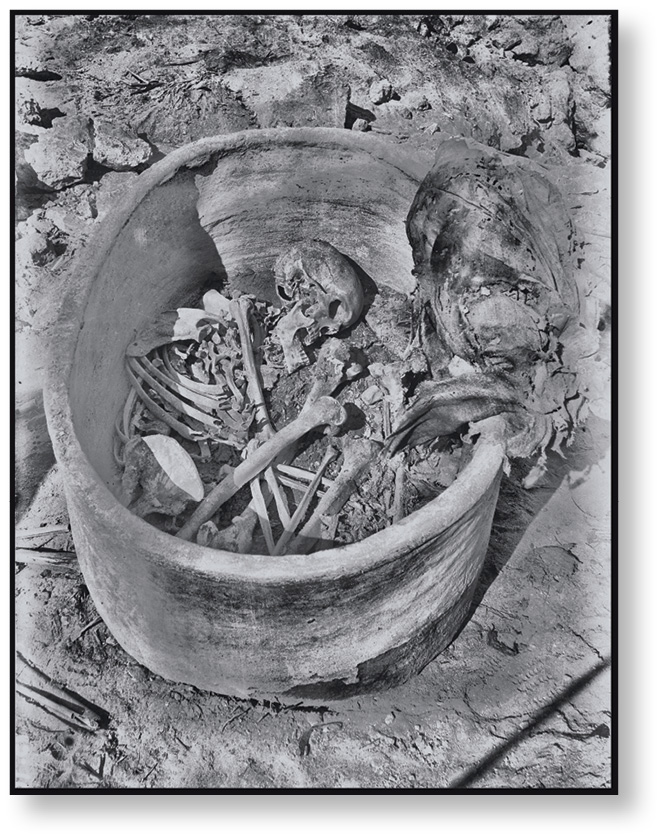
The latest research, carried out by a team from the Francis Crick Institute and Liverpool John Moores University, focused on an individual buried in a large pottery vessel in a rock-cut tomb in the necropolis at Nuwayrat, 265km south of Cairo. The burial was excavated in 1902 and donated to the Liverpool Institute of Archaeology. It later ended up in the city’s World Museum after the majority of the museum’s collection of human remains was destroyed by bombing during the Blitz. Radiocarbon analysis has dated the burial to 2855-2570 BC, placing it in an important time of cultural change during the transition between Egypt’s Early Dynastic period and the beginning of the Old Kingdom.
Examination of the remains in the vessel reveals that the individual in question was an adult male, between 44 and 64 years old at the time of death, and probably towards the upper end of that age bracket. He was c.160cm tall and is believed to have had dark skin, brown hair, and brown eyes. The man’s teeth are heavily worn and his skeleton displays signs of physical labour involving extended periods of sitting while looking down, with extensive back-and-forth movement of the arms. Interestingly, there is also substantial evidence of arthritis in the right foot, but not the left. These osteological indicators are consistent with depictions of ancient Egyptian potters, who stabilised their wheels using one foot, or those involved in similar craft activities such as basketmaking. However, the researchers stress that these interpretations are merely hypothetical. They are complicated, too, by the high-status nature of the burial, which would have been unusual for a craftsman. Perhaps, it is suggested, he was exceptionally talented and gained favour and status through his skills.

Isotope analysis of the man’s teeth indicate that he probably grew up in Egypt: the results are consistent with a childhood in the hot, dry climate of the Nile Valley, and a diet based on terrestrial animals and plants like wheat and barley, with the possible inclusion of Nile fish, as was typical for Egyptians in this period. To find out more about the man’s ancestry, the team took seven dental extracts, which turned out to contain enough ancient DNA to carry out whole genome sequencing: a process that makes it possible to examine an individual’s entire genetic code. This genetic material was then compared with genomes from other populations, both modern and ancient, which can provide information about migration, evolution, and population changes over time.
The results determined that the man’s ancestry was predominantly consistent with people from Neolithic North Africa, as might be expected. However, around 20% was more closely aligned with Neolithic individuals from around the eastern Fertile Crescent, particularly the region of Mesopotamia (approximately corresponding to modern-day Iraq) c.9000-8000 BC. The archaeological record contains evidence of cultural connections between Egypt and the Fertile Crescent starting at least as early as the 6th millennium BC with the adoption of the Neolithic package, and this contact continued and expanded through the 4th millennium BC, with new technological innovations such as writing systems and the pottery wheel being introduced to Egypt from the Middle East. The full genome sequencing of the man from Nuwayrat provides the first genetic proof that cultural exchange between Egypt and the Fertile Crescent was not limited to objects and ideas, but that people were moving between these regions from the Neolithic period onward as well.
These findings offer the first insight into the ancestry of a person living in ancient Egypt during a key period in time, revealing links to earlier North African groups and the populations of the eastern Fertile Crescent. The research also demonstrates that full genome sequencing is possible on remains from the earliest stages of Dynastic Egypt, and raises the possibility that other individuals buried in the same way could provide ancient DNA suitable for full genome sequencing in the future. The results of the study have been published in Nature (https://doi.org/10.1038/s41586-025-09195-5).
Text: Amy Brunskill / Images: courtesy of the Garstang Museum of Archaeology, University of Liverpool, as in A Morez Jacobs et al. (2025) Nature 644: 714–721