Subscribe now for full access and no adverts
New analysis of an ancient Egyptian ritual vessel is shedding light on the complex concoction it once held.
Bes vases are a type of ceramic vessel decorated with the head of Bes, an ancient Egyptian guardian figure associated with protection, fertility, and healing, among other things. Many examples in museums and private collections today lack firm provenances, and those that have been found in context come from a wide variety of locations and span a long period of time, from the New Kingdom (16th-11th century BC) up to the Roman Imperial period (30 BC-AD 486). There is, therefore, considerable debate surrounding the contents of these vessels and the role they played in ritual ceremonies.
A new study, recently published in Scientific Reports (https://doi.org/10.1038/s41598-024-78721-8), has analysed a Bes-shaped mug in the collections of the Tampa Museum of Art in Florida in an effort to answer these questions. The origins of this object are uncertain, but it has been dated tentatively to the 2nd century BC and was said to have been found in the Fayum district.
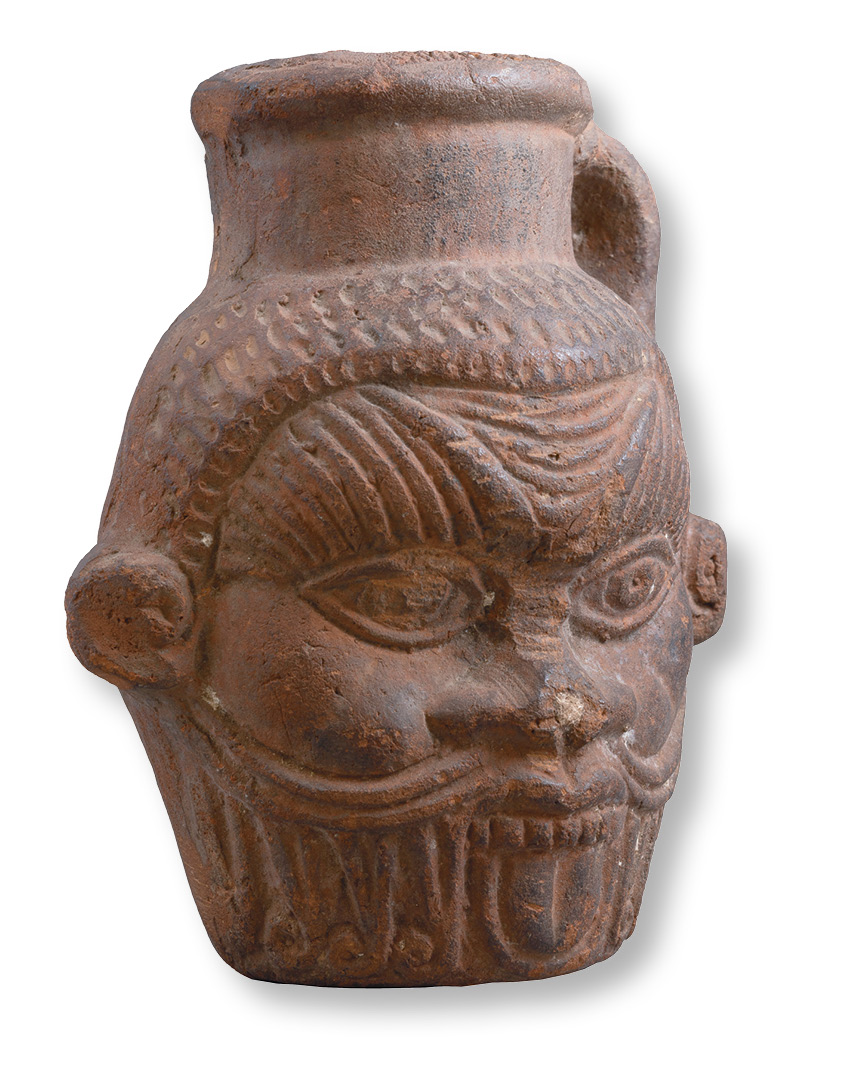
A combination of chemical and DNA analyses revealed that the vessel once held a mixture containing several plants with hallucinogenic and medicinal properties, including wild rue (Peganum harmala), blue water lily (Nymphaea nouchali), and at least one plant of the Cleome genus. Many of these plants are known to have uses related to childbirth and pregnancy. The researchers also identified a high level of human proteins, suggesting that human fluids of some sort had been added deliberately to the blend, as well as a fermented alcoholic liquid, probably derived from grapes. Evidence was found, too, of honey or royal jelly, sesame seeds, wheat, and possibly liquorice root, as well as other plants probably used to flavour the mixture.
Based on these findings the researchers conclude that the cup contained a blend of medicinal, psychotropic, and biological substances that were part of an otherwise unattested ritual associated with Bes, such as, possibly, an incubation ritual in the ‘Bes Chambers’ at Saqqara. Further study is needed to determine whether this discovery is unique or reflects a widespread use of Bes cups, at least in the Ptolemaic period.
Text: Amy Brunskill /Image: Tampa Museum of Art.; photograph by Philip LaDeau