
Subscribe now for full access and no adverts
Time Team set to dig at Sutton Hoo
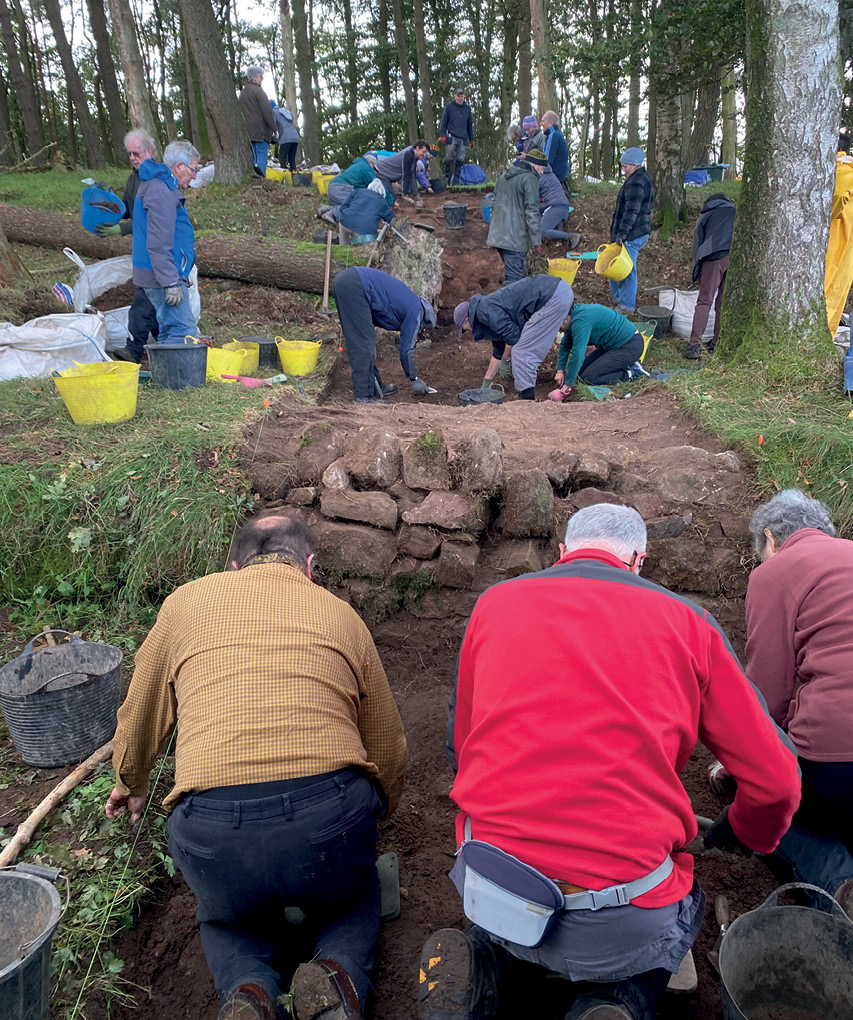
Time Team is entering a partnership with the National Trust to carry out an excavation of geophysical anomalies that they first identified in Garden Field at the famed Anglo-Saxon cemetery back in 2021 and 2022.
Angus Wainwright, Regional Archaeologist for the National Trust, said: ‘Time Team’s geophysical survey identified several mysterious features in Garden Field. We want to determine if they are archaeology or geological features. To do this, we are carefully planning for an archaeological dig in June. Garden Field has an extraordinary amount of archaeology in it, from prehistoric fields and possible burial mounds through to Roman settlements and an Anglo-Saxon cemetery, but who knows what else may be hidden there.’
Combating crimes against cultural heritage
Historic England and the National Police Chiefs’ Council have recently published a report highlighting the outcome of research into the scale and extent of heritage and cultural property crime in England. They found that there is a continued rise in the theft of historic stone for profit – particularly from walls and paving in Yorkshire and Cheshire, and granite cattle troughs and fountains from Kent and London – as well as in the theft of cultural objects from art galleries, museums, and stately homes.
There has, however, been a decrease in metal theft from historic places of worship, and in unlawful metal-detecting (also known as nighthawking), following a spike in both practices during the COVID-19 pandemic. This shows that targeted prevention and enforcement plans to curb both practices have been effective.
Skatepark scheduled
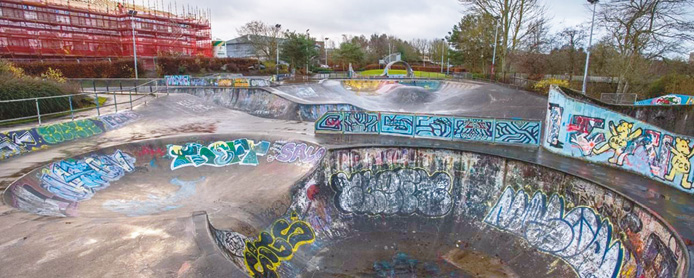
Historic Environment Scotland (HES) has added Livingston (‘Livi’) Skatepark to its list of scheduled buildings. Opened in 1981, it is the earliest purpose-built skatepark in Scotland, and is becoming a rare survivor, as many have been filled in or demolished in recent years.
As the skate scene began to gain traction in Scotland during the 1970s and 1980s, skateboarder Kenny Omond approached Livingston Development Corporation with the idea of a skatepark. Architect Iain Urquhart came up with the design, which included a very deep Double Bowl and finely tuned transitions that quickly became internationally renowned.
Text: Kathryn Krakowka