Subscribe now for full access and no adverts
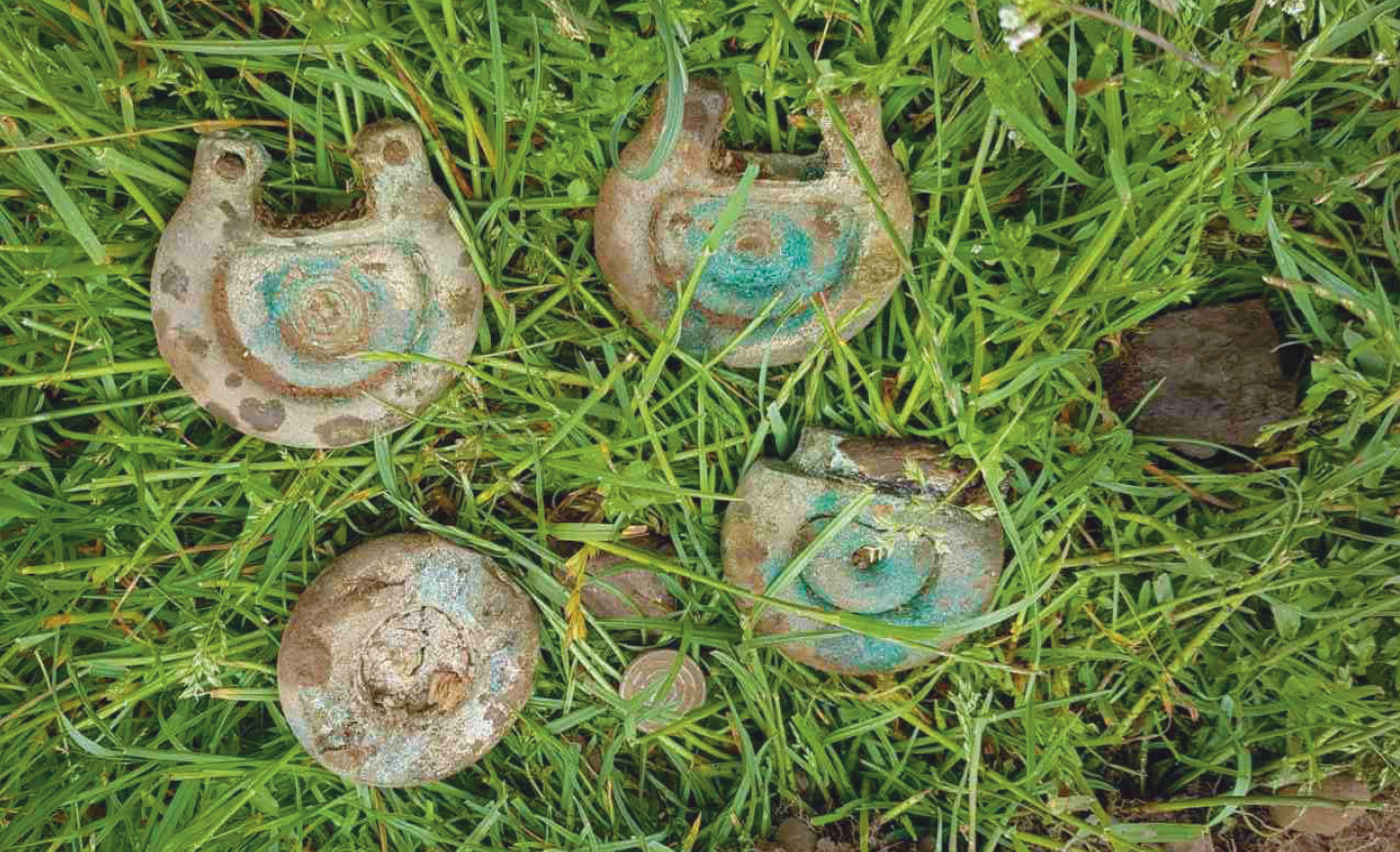
In June 2020, as restrictions associated with the first COVID-19 lockdown began to ease, Mariusz Ste˛pien´ contacted the Treasure Trove Unit. He had been metal-detecting in a field near Peebles, in the Scottish Borders, and had found a good signal. After investigating further, he recovered some strange bronze disc-shaped objects, decorated with concentric circles, as well as other fragments of bronze and wood – and, crucially, he noted that there was more still in the ground that he had resisted digging. This restraint proved more valuable than we could have imagined – and those strange objects were our first glimpse of what has become known as the Peebles Hoard.
An archaeologist’s dream
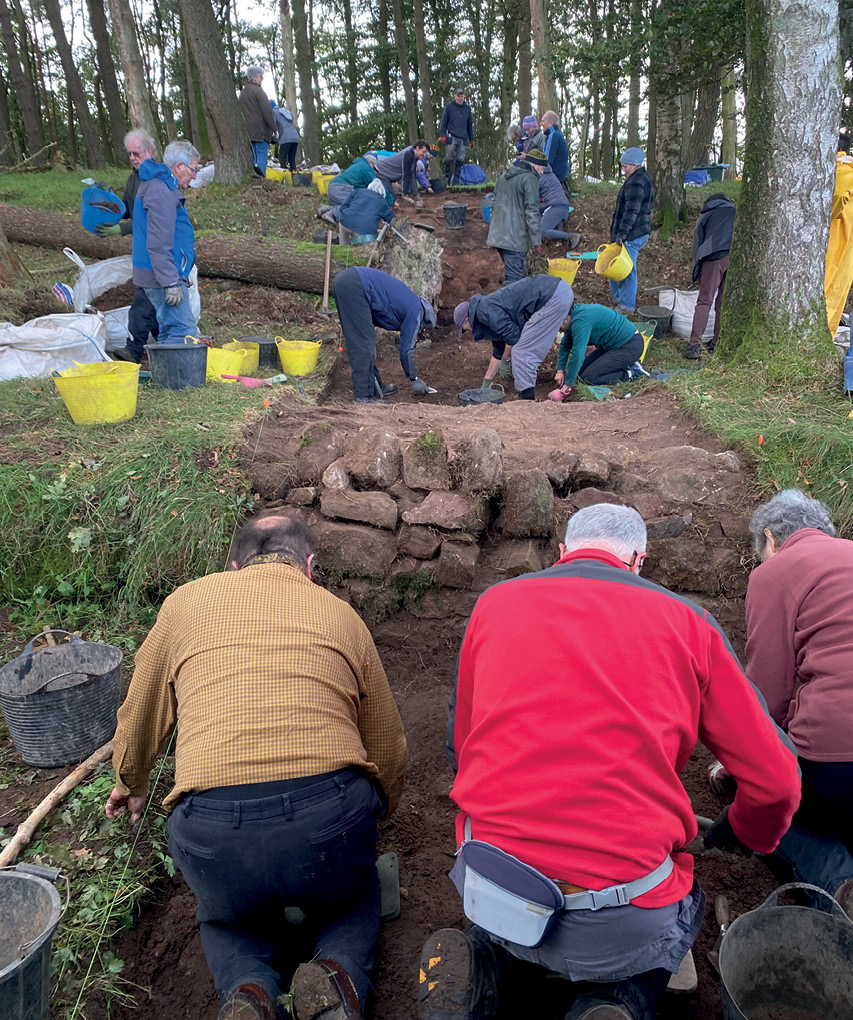
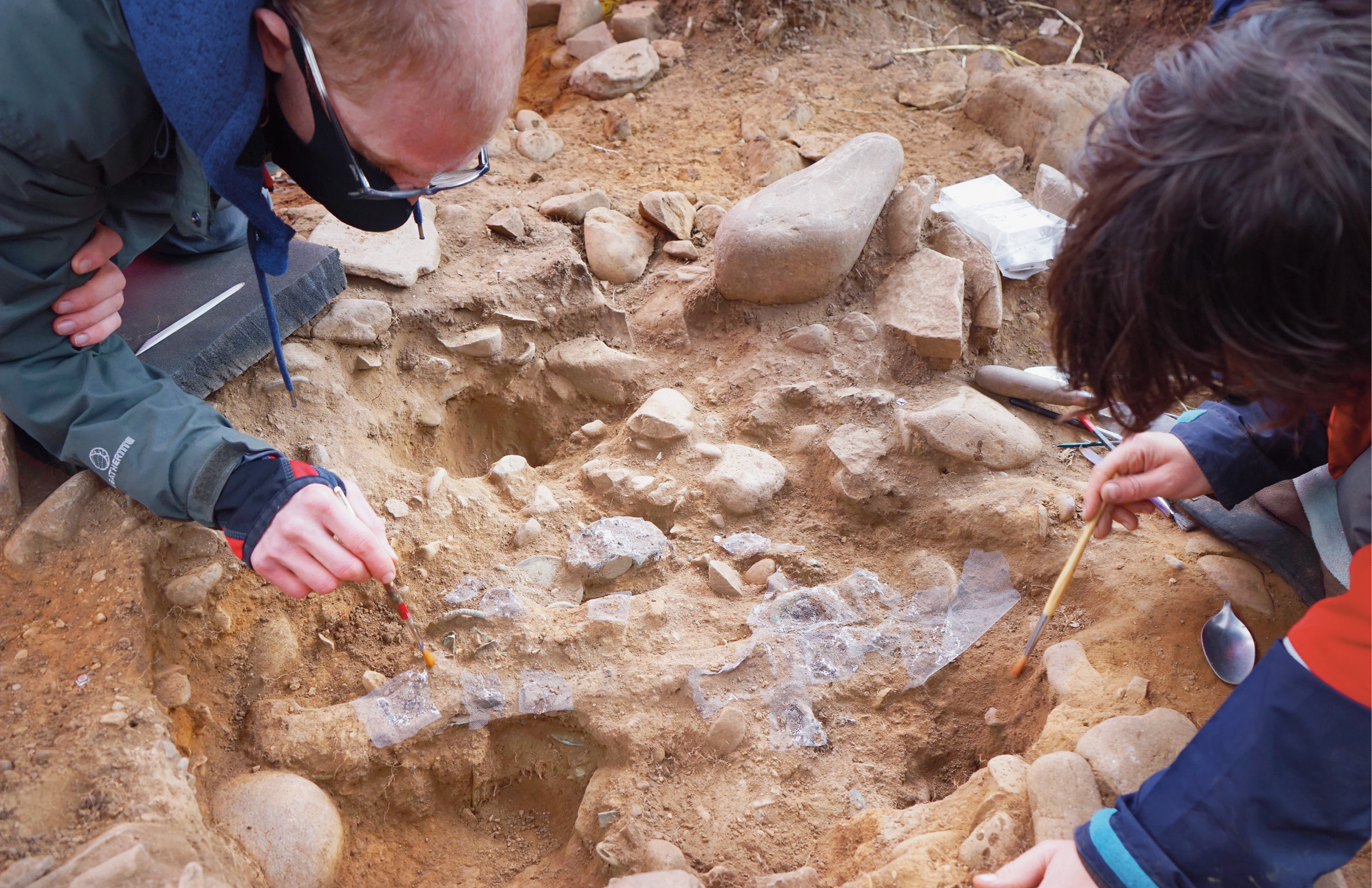
As is standard practice, a small team of archaeologists from the Treasure Trove Unit and National Museums Scotland went to investigate the find, expecting to recover what was left of the hoard within a day or two. It quickly became apparent, though, that this was no simple task. The more we investigated, the more we realised that this deposit of bronze objects had lain undisturbed for 3,000 years. Everything was still largely intact and in its original position – an archaeologist’s dream.
More than that, the objects had been so densely packed into the ground that even some organic material, including leather, wood, and plant matter, had been preserved where they were in close proximity to the bronzes. Early on in the excavation, we uncovered a complete bronze sword still in its wooden scabbard, as well as minute bronze pins and studs still embedded in partially decayed wood and leather. Large components, including disc-shaped fittings, seemed interlinked by the remains of straps within the pit. As for their date, the sword allowed us to place this collection in the Late Bronze Age, c.1000-800 BC.
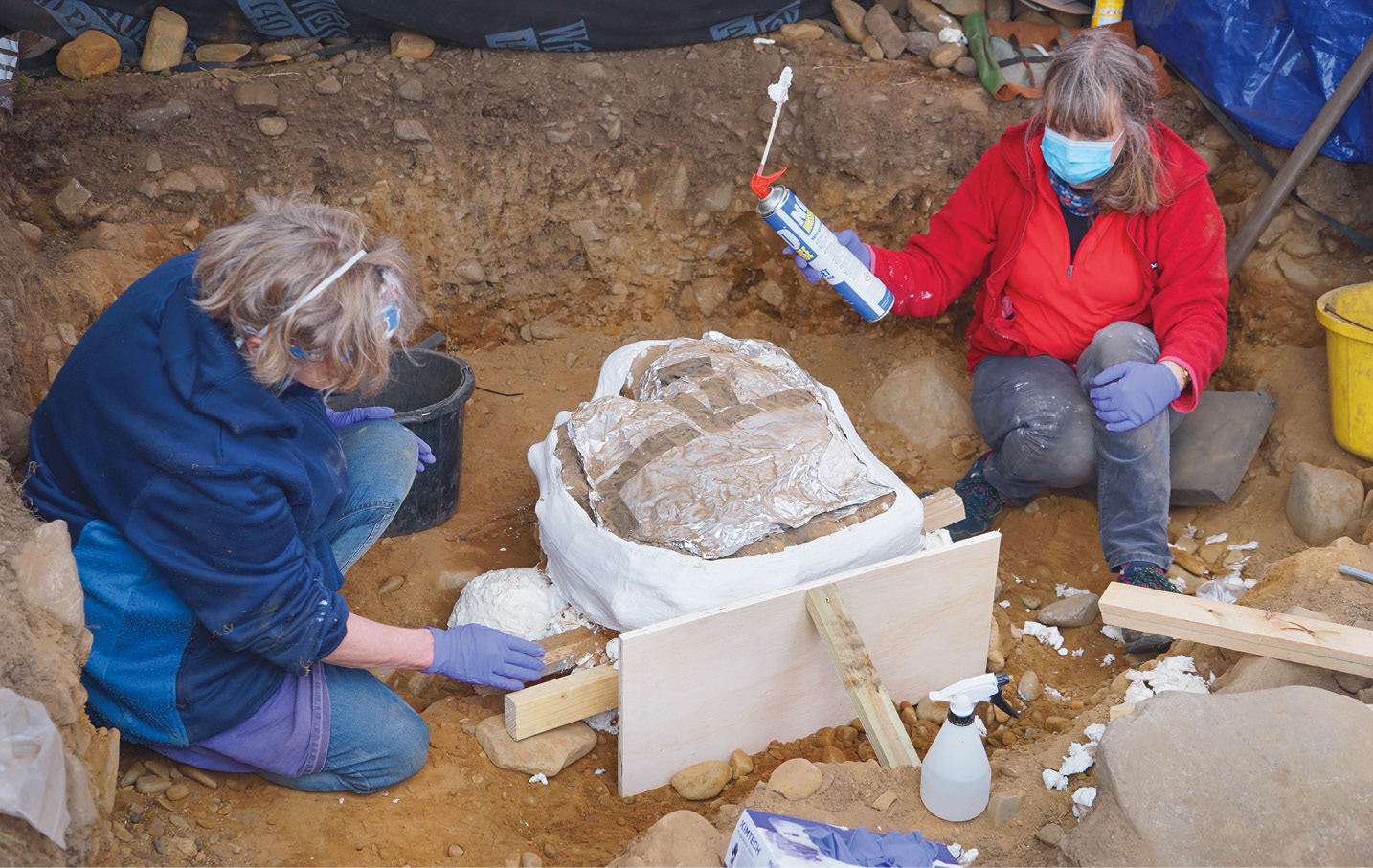
There was no way that we could adequately excavate material this complicated, fragile, and significant in a field in Peeblesshire. Even in the middle of June and July, strong winds and rain were putting the material at risk, so the National Museums’ Artefact Conservation team coordinated the block-lifting of the hoard, with Mariusz – who helped us throughout – making the timber framework for it. These efforts resulted in a 160kg block being transported to the National Museums Collection Centre for further investigation. This was no mean feat, as the soil was loose, sandy, and filled with very large cobbles – it quickly became apparent why the field was so rarely ploughed.
Excavation revealed important details of the hoard’s immediate context, too. Although the trench only covered a 4m by 4m area targeting the Bronze Age objects, we were able to establish that the hoard pit had been dug into the entranceway of a round structure. This was represented by at least three phases of outer wall, indicating an extended life, and future excavation work will be critical to shed light on what this building was used for. What was meant to take only a day or two had taken three weeks, but the hoard’s recovery offered an exciting opportunity to learn more about these often enigmatic assemblages.

Revealing the hoard
The majority of Bronze Age hoards from Scotland are historic discoveries with little contextual information, while most new discoveries have been disturbed by modern agricultural work or recovered by metal-detectorists without archaeological supervision. Block-lifting the Peebles Hoard offered a rare chance to capture and preserve a wealth of information about its contents and structure. As the block weighed 160kg, CT-scanning it was a challenging task, especially during the various COVID-19 lockdowns. We were thus incredibly fortunate to work with the µ-VIS X-ray Imaging Centre at the University of Southampton, a partner institution of the National Research Facility for Lab-based X-ray Computed Tomography (NXCT), who were willing to undertake this challenge and even built a bespoke rig to take the weight.
An initial scan revealed the limits of the hoard pit, and allowed us to turn the block upside-down and excavate more than 80kg of soil and stones from its underside with confidence. During a second scan at Southampton, the whole block lit up, revealing a remarkable array of densely packed bronze objects, including many that we had never seen before, preserved in their original alignment.
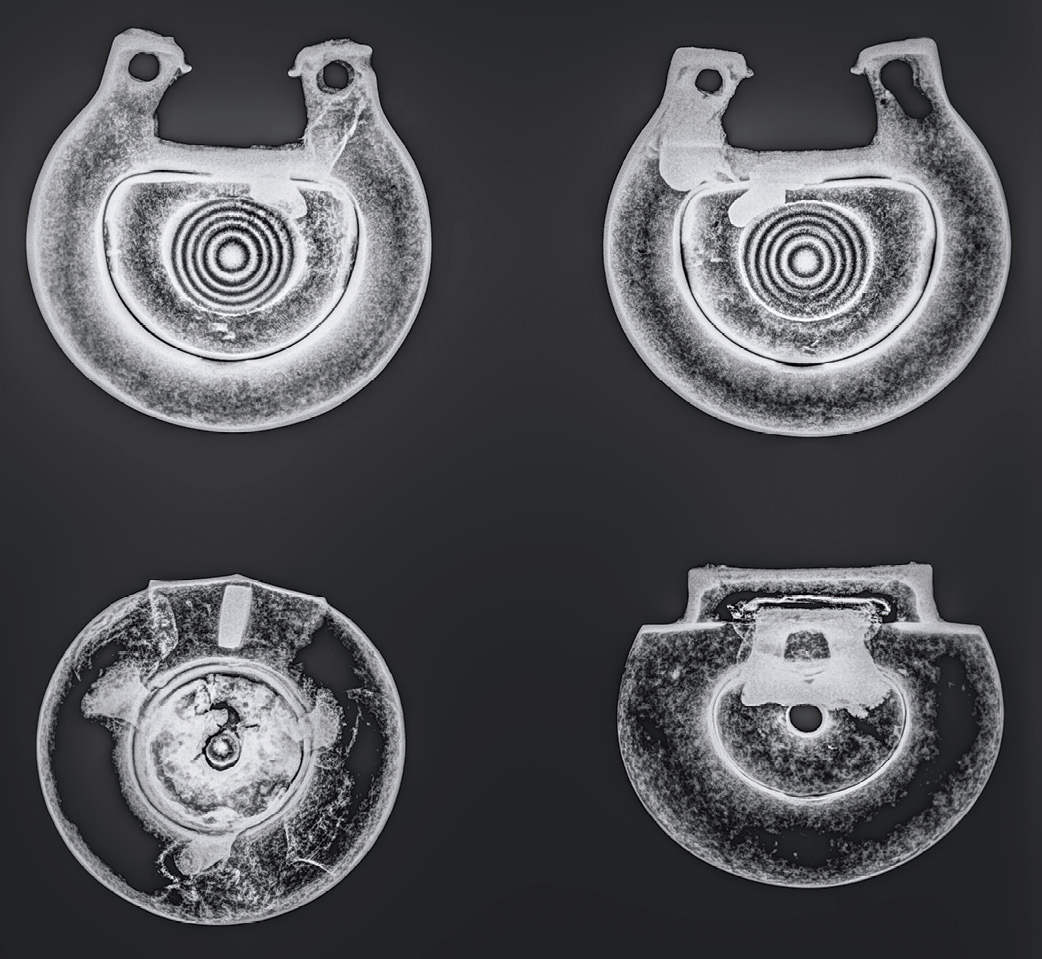
We also undertook micro-CT scans and radiography of objects that we had excavated prior to the block-lift, revealing crucial information about the manufacture of the unusual disc-shaped fittings. All of those that we scanned were two-piece fittings with hollow centres, plugged together with another metal – perhaps a tin alloy, but it is still to be analysed. These represent some of the earliest possible evidence for lost-wax casting in Bronze Age Scotland. Other Bronze Age metalwork showing this technology includes flesh hooks and cauldron fittings – objects that are found along the Atlantic façade, down the west coast of northern Britain and east coast of Ireland, and into southern Britain, France, and Iberia.
Micro-excavation at the National Museums Collection Centre took place over five weeks, uncovering many complex composite objects, often intertwined or strapped together. In the end, nearly 600 pieces were excavated from the Peebles Hoard, some in a relatively stable condition, but many in a highly fragile state. Many of the pieces were interlinked parts of other objects, and even the larger items were clearly once attached to each other. As we excavated, we hoped for gold at the centre, but rather aptly all we found was a large stone cobble.

Doughnuts and rattle pendants
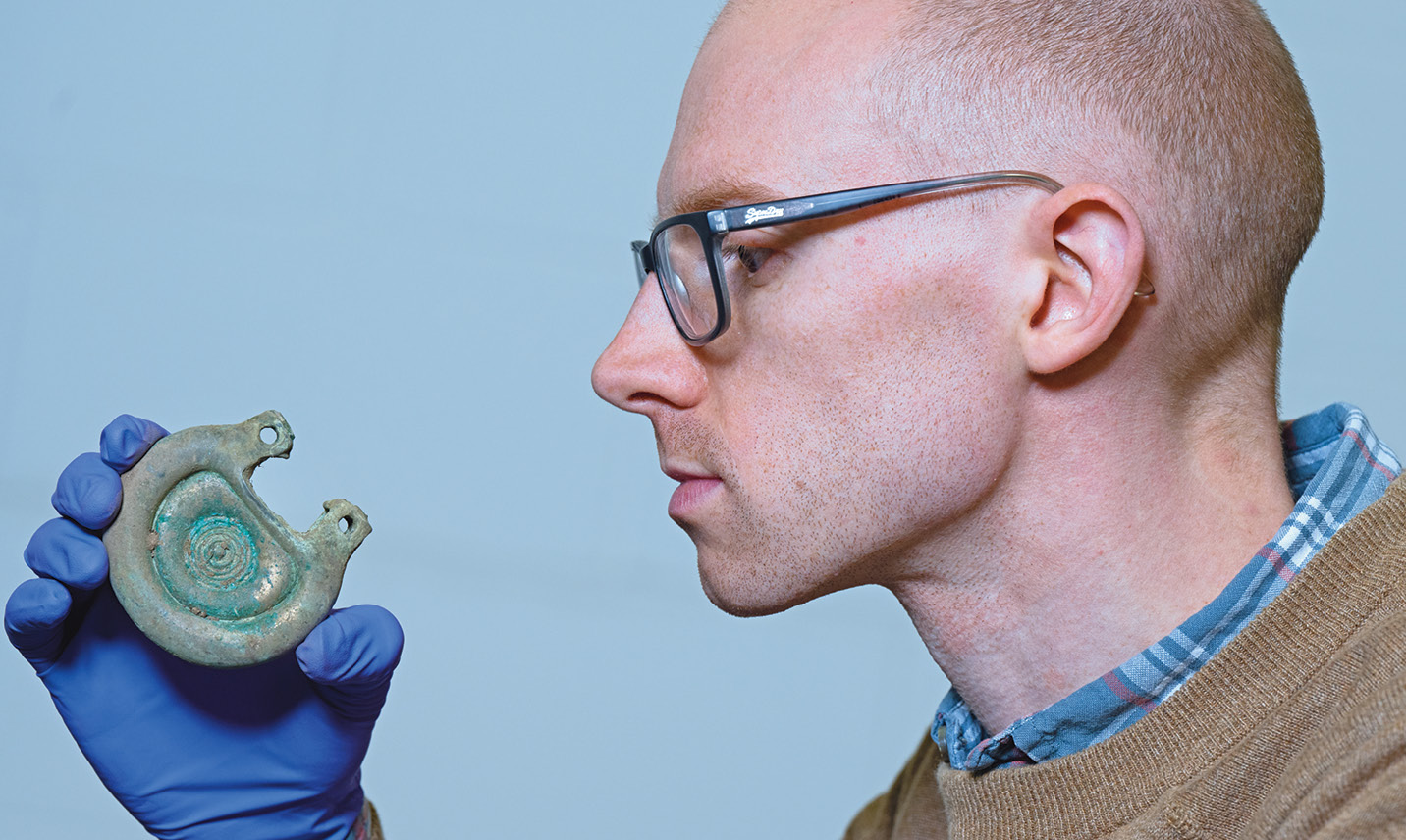
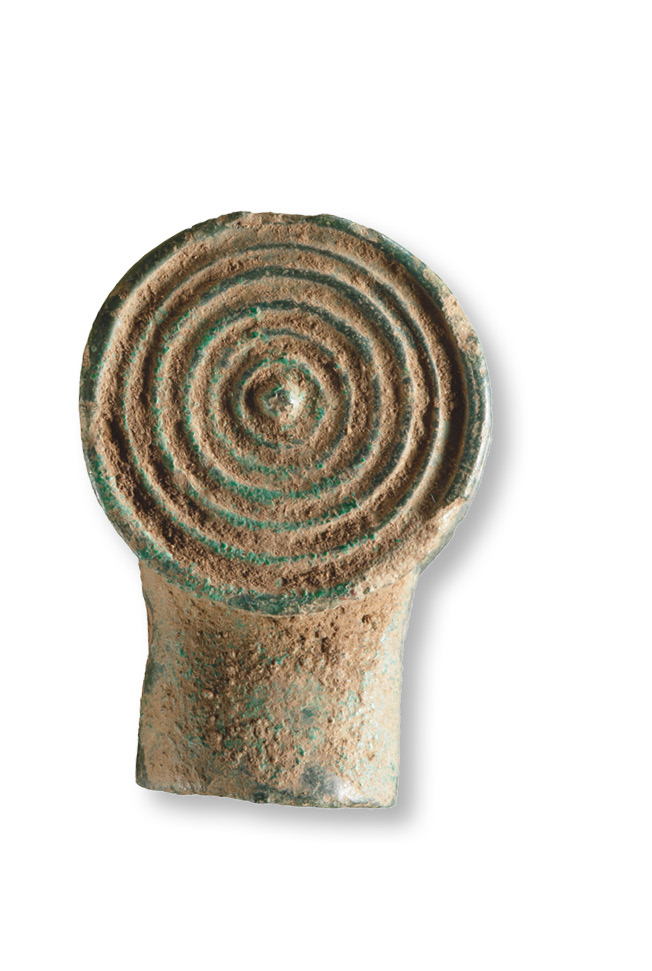
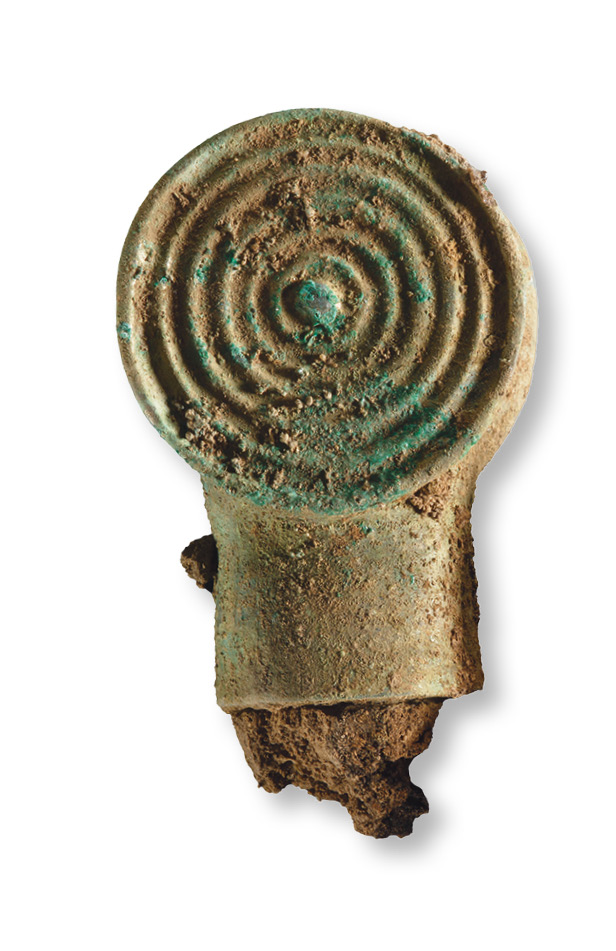
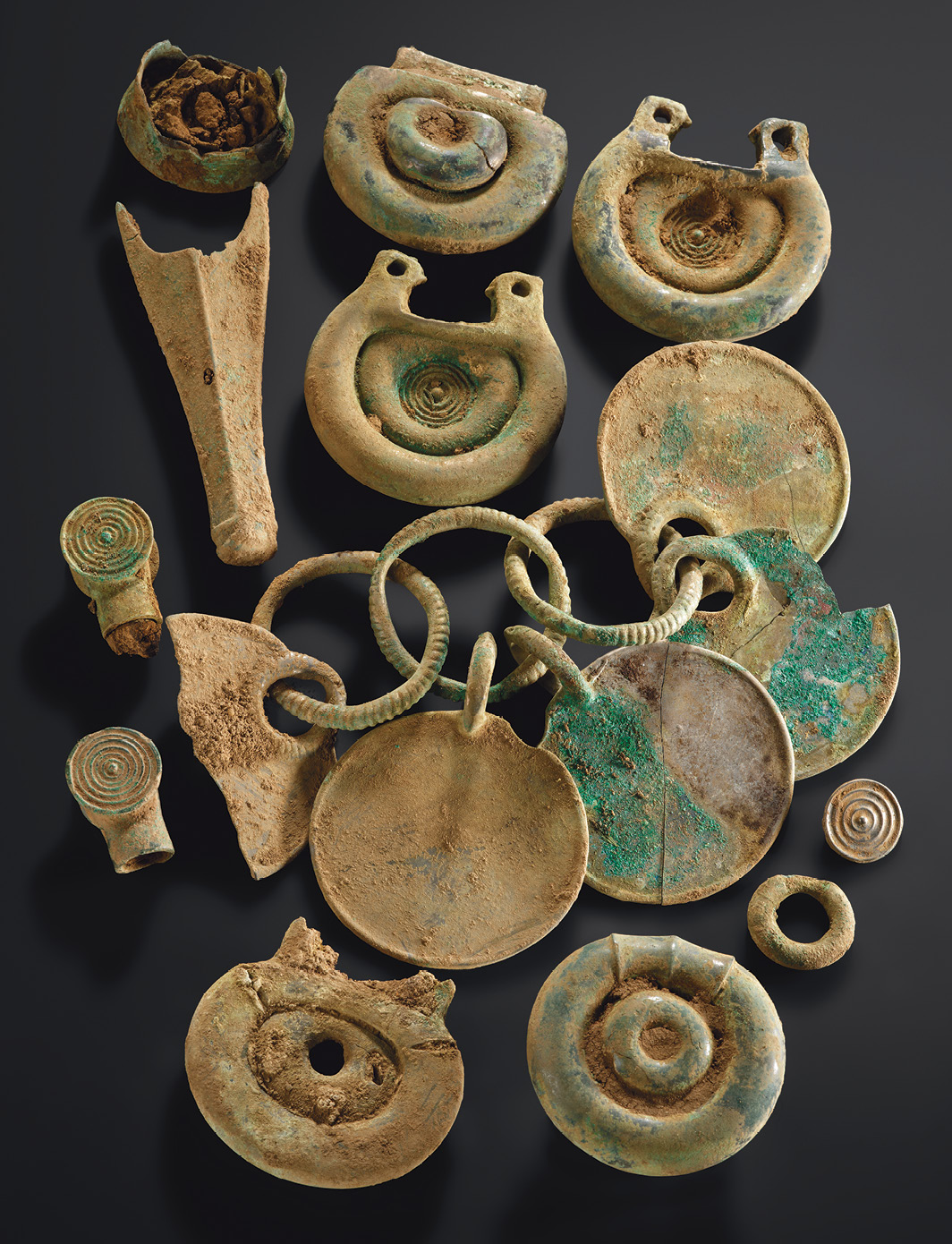
So, what is in the Peebles Hoard? This is a challenging question. Among the first objects extracted by Mariusz were several disc-shaped fittings of different forms, most with no known parallels. Those ‘doughnuts’, with their perforated lugs and concentric circle decoration, have become icons of the hoard. In total, we found 22 of these fittings in different variations: some were strung up on cords, others had a tang and were slotted into wooden objects, while some had loops functioning like belt fittings. They are clearly fittings of some kind – but for what? Archaeologists are often guilty of defaulting to horse-harness equipment as an explanation (indeed, two of the authors have previously done just that), but it is good to be mindful that the fittings and straps may serve a range of purposes.
The most recognisable object in the hoard is the complete bronze sword of a classic British design (known as the ‘Ewart Park type’). It had been the last thing placed into the hoard, laid on top of the other objects, and currently provides the best dating evidence for the hoard’s deposition, placing it at the start of the 1st millennium BC. Much of the organic handle and pommel had disintegrated, with only shadows surviving in the earth, but significant portions of the wooden scabbard are preserved – an exceptional survival. A ‘tongue-shaped’ bronze chape that fitted on to the end of the scabbard and contains the wooden remnants of the scabbard tip was also recovered, though it had been disturbed by animals.
Two remarkable objects highlight links with a network of communities across the North Sea. These rattle pendants – the first ever found in Scotland – are more commonly found in Denmark, northern Germany, and northern Poland. They are created from interlinked bronze rings and pendant plates that would have hung from a horse or wooden vehicle and rattled as they moved. One still has the remains of straps wrapped around the rings, and the other rings are uneven and worn where they have seen extensive use over time. These are securely Late Bronze Age in date.
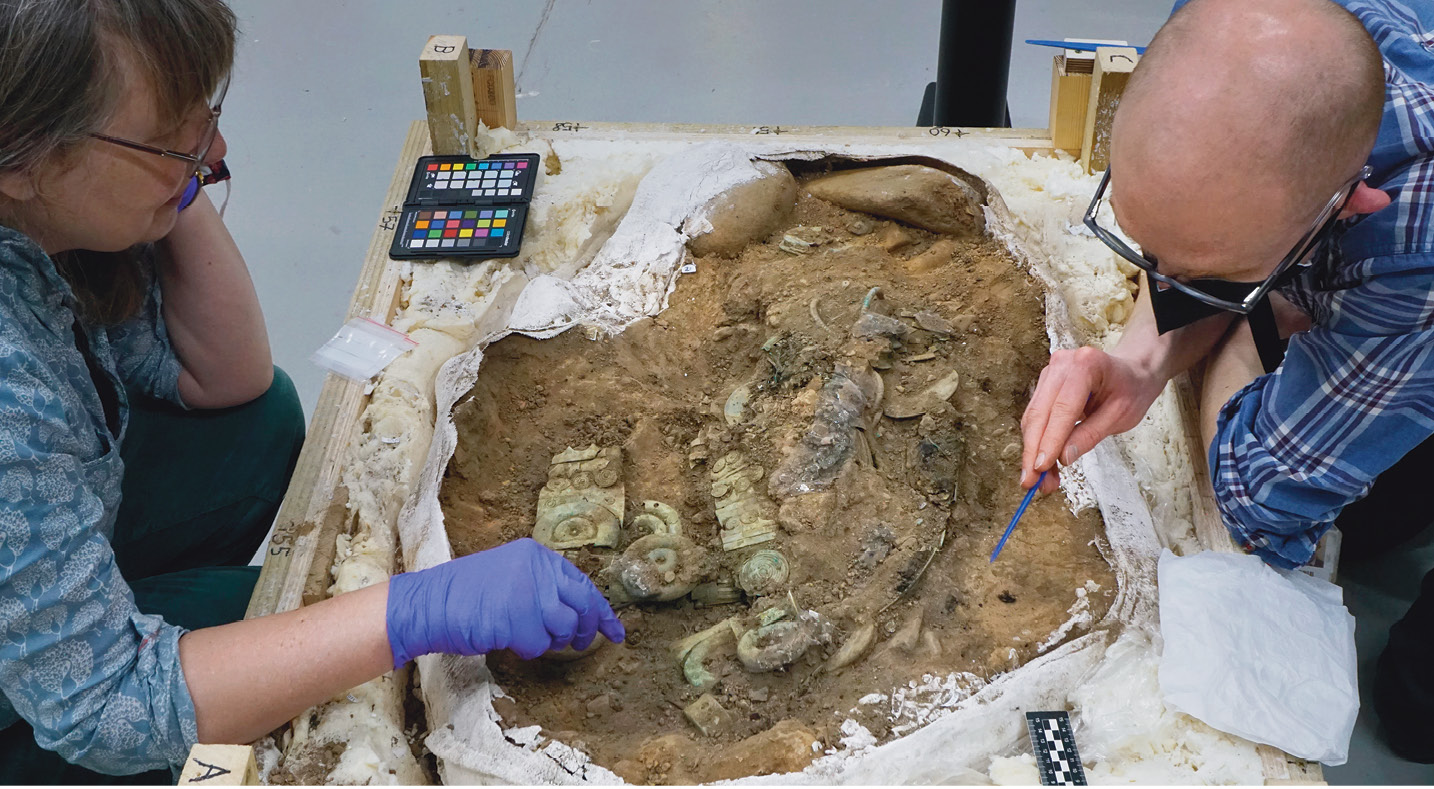
Any one of the objects just described might stand this hoard apart, but the survival of minute bronze pins, studs, and bosses still set into organic material marks this as something truly special. Decorated looped buttons retain the cords on which they were strung, and fragile bosses remain clamped around fragments of leather. As we extracted the bronze, we also excavated fragments of woven textiles, chunks of wooden objects, and items surrounded with plant material. As research continues, we are excited by the prospects of what this material will tell us about how the hoard was formed.
Parallels for Peebles
One of the fascinating aspects of this discovery is that there are so few parallels for the Peebles Hoard, though some individual pieces can be compared to items in mixed metalwork hoards from various parts of Britain. Three small, socketed finials decorated with concentric circles excavated from the Peebles Hoard are similar to four found in a hoard at Eggleston, Co. Durham. The Eggleston hoard also contained complete and incomplete bronze tools, weapons, and bracelets, as well as amber and jet beads. At Carnoustie, Angus, a sword in a wooden scabbard was excavated, along with a gold-bound spearhead and a sunflower-headed pin, all wrapped in sheepskin and textiles. The Peebles Hoard artefacts give additional context to some of these finds, but collectively these are only partial parallels.
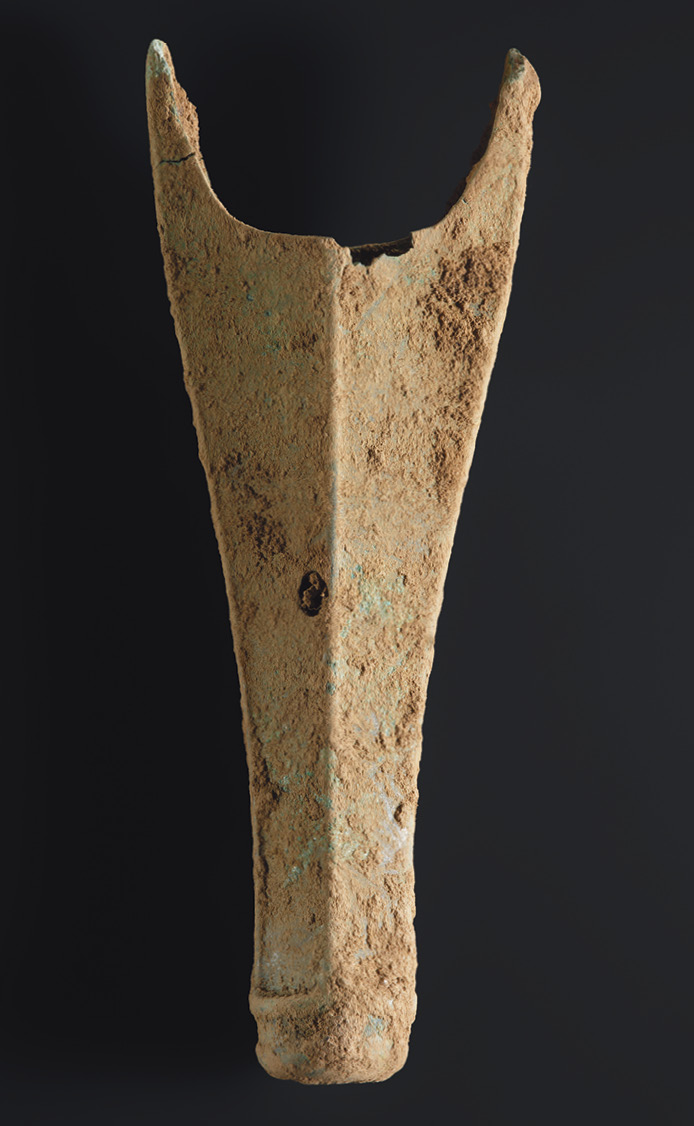
The geographically closest comparable hoard was found at Horsehope Craig, barely six miles to the south. This Late Bronze Age hoard, found on a craggy slope under a large stone in 1864, contained at least 28 bronze artefacts, including two socketed axe heads, as well as a selection of wagon fittings and small and large rings which may have formed components of horse tack. Significantly, one of the socketed wagon fittings in this hoard shares the concentric circular decoration observed on the Peebles Hoard material. The Horsehope artefacts are likely to be related to those found near Peebles.
The most direct parallel within Britain, however, is provided by a hoard from Parc y Meirch, north Wales. Here, 90 bronze artefacts were found by workmen in 1868, including multiple comparable disc-shaped fittings, numerous bronze looped buttons, and, significantly, two rattle pendants. This hoard also contains grooved terret rings, and the group as a whole has been interpreted as horse tack, though (due to the antiquity of the find) how these various pieces were once assembled was unknown. As we investigate the Peebles Hoard, however, we have already had the opportunity to shed light on this other important group of material. The overall relationship between these two hoards, and indeed other British hoards containing similar material, warrants further investigation.
Finally, the rattle pendants in the Peebles Hoard encourage us to look across the North Sea, where these objects are more commonly found. In the Baltic region, rattle pendants are often found in mixed metalwork hoards, frequently in association with other horse-tack equipment, such as bridle bits or cheek pieces, as well as ornaments and vessels. Sword fragments occasionally feature, too. An important hoard from Bækkedal in northern Denmark contained an almost complete horse bridle, including many metal components and substantial elements of the organic harness straps. Work on this material revealed crucial information about the configuration of harnessing on Bronze Age horses, and the Bækkedal hoard serves as an example of the enormous potential that the Peebles Hoard presents, given that we have so many articulated metal and organic components. Reconstructions and replicas will be especially valuable.

The rattle pendants, and these various parallels, may strengthen the idea that the Peebles Hoard is a hoard of horse tack or wagon gear. Yet we lack other material typical of such groups of objects seen in Britain and on the Continent: we have no terret rings, bridle bits, cheek pieces, or axle caps. The association of a complete sword is also anomalous. If the Peebles Hoard represents horse tack, then many of the elements we might hope to find in metal could have been made from organic materials; or does this collection represent something else? We have no clear answer as to its overall function so far, which presents an exciting avenue for future research.
More questions than answers
It is inevitable that, at this stage, we have raised more questions than we have found answers. Bronze Age hoards capture the imagination, not least as a reflection of human beliefs and practices. Since the 19th century, people have debated the purpose of such assemblages. Some are regarded as abandoned scrap, others as stockpiles for metalsmiths; others still may represent a culmination of ceremony and ‘ritual’ (that reviled word). These overly simplistic interpretations have been advanced by more recent approaches seeking to tell the stories of the objects from production to deposition, and explore the relationships between the treatment of objects, the places they were buried, and the people who accumulated and deposited them.

For the Peebles Hoard, we can be confident that this accumulation has a rich diversity of stories to tell, and we should embrace possibly complex explanations. A key advantage of the CT scan and subsequent excavation was that we could detail the careful arrangement of the material and the order in which objects were placed in the pit, which will allow us to reconstruct the performance of deposition itself. The pit cutting into a pre-existing wall gully suggests that the hoard and the structure were probably related, a rare association of a structured metalwork deposit and context for Bronze Age Scotland. Add to this the signs of manufacture and wear on the objects, and we stand poised to develop a rich biography for this hoard and the people living in the area, as well as revealing links to communities across northern Europe.
So, what next? The Peebles Hoard was declared through Treasure Trove and was subsequently allocated to National Museums Scotland. The project so far represents just the start of the work needed on this material. The many unique survivals in the Peebles Hoard, most notably fragments of fragile organic material, require urgent conservation to prevent further deterioration so that they remain accessible for critical further research. To this end, National Museums Scotland is launching a fundraising campaign to support the urgent costs of conserving the hoard and unlocking its enormous research potential. There is still much more to learn.
Further information:
• For more details about the hoard, see http://www.nms.ac.uk/discover-catalogue/what-is-the-peebles-hoard.
• An interactive, annotated 3D model of the hoard under excavation can be seen at https://sketchfab.com/3d-models/late-bronze-age-hoard-from-nr-peebles-scotland-ed73de963c194d4eb76ad0fd43559df7.
• For more about the Treasure Trove Unit, and reporting obligations in Scotland, see https://treasuretrovescotland.co.uk.
Source:
• Dr Matthew G Knight is Senior Curator of Prehistory (Chalcolithic and Bronze Age) at National Museums Scotland.
• Emily A Freeman is Treasure Trove Manager at the Treasure Trove Unit.
• Dr Mary Davis is the Galloway Hoard Conservator at National Museums Scotland.
• Dr Fraser Hunter is Principal Curator of Prehistoric and Roman Archaeology at National Museums Scotland.
Acknowledgements: This work would not have been possible without the best practice and exemplary collaboration of the detectorist (Mariusz Stępień), his fellow detectorists, and the landowner. We are grateful for the work by Jane Clark, Dr Hugo Anderson-Whymark, and Dr Lore Troalen (all National Museums Scotland). For the scanning, we are grateful particularly to Dr Mark Mavrogordato and Dr Fernando Alvarez Borges, and the rest of the Southampton team. The µ-VIS X-ray Imaging Centre is funded by the UK’s Engineering and Physical Sciences Research Council (EPSRC) grant EP/T02593X/1.