Subscribe now for full access and no adverts
When Brian Hope-Taylor died on 12 January 2001, Diana Murray – one of his former students and, at the time, Deputy Curator at the Royal Commission on the Ancient and Historical Monuments of Scotland, a predecessor of Historic Environment Scotland (HES) – mounted an operation to salvage the archives stored at his home in Cambridge. Diana was later to report that, by the time she arrived at the property, a house-clearance firm had already disturbed the contents, which were destined to be consigned to a waiting skip. Worse, more than half of the recovered material had been stored in a very damp garage where it had suffered from water damage and mould.
Even so, Diana was able to rescue more than 156 boxes of artefacts and organic samples, as well as 31,027 drawings, photographs, notebooks, and letters. Half of this material relates to Hope-Taylor’s personal life, and half is concerned with the 25 excavations that he led, including his celebrated work at Yeavering, as well as at Lindisfarne, Doon Hill (Dunbar), Bamburgh Castle, York Minster, the Devil’s Dyke in Cambridgeshire, and the early medieval palace site at Old Windsor in Berkshire.
English Heritage showed little interest in acquiring the archive (even though its predecessor, the Ministry of Public Buildings and Works, had commissioned some of the excavations) so Diana, by now Secretary of the Royal Commission, took it to Edinburgh, where the paper archives and photographs were stabilised, conserved, and catalogued. They now form part of the Brian Hope-Taylor Archive, curated by HES, and can be consulted via the online catalogue: trove.scot.

By remarkable coincidence, that same year, archaeologists excavating at Bamburgh had just discovered additional finds and archives of Hope-Taylor’s in a long-unopened storeroom at Bamburgh Castle. A newspaper dating from 1974 recorded the last time the room had been entered, which came at the end of his excavation of the promontory fort (see Antiquity’s open-access article ‘Excavating an archaeologist: Brian Hope-Taylor at Bamburgh’ by Graeme Young: https://antiquity.ac.uk/projgall/youngg318).
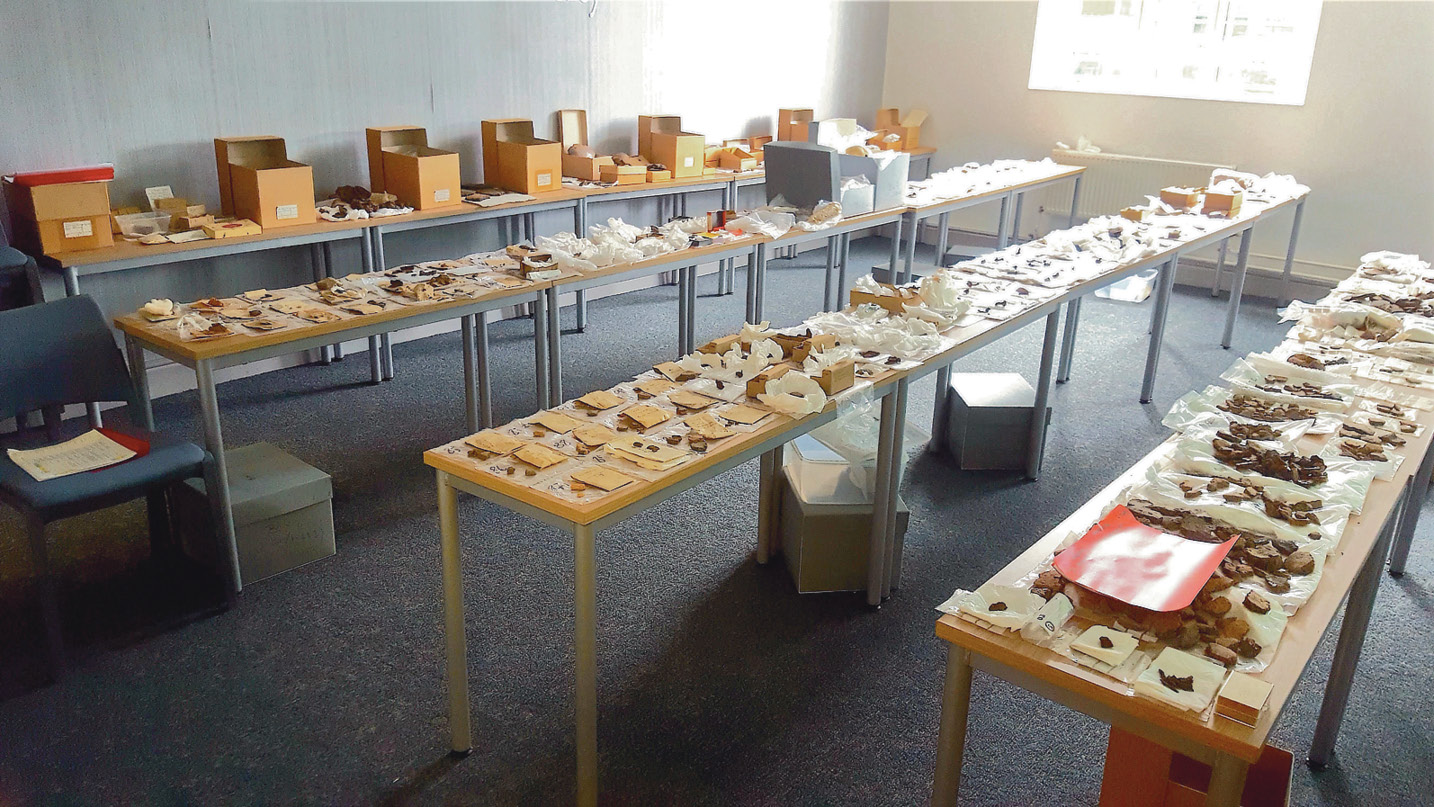
Attempts have since been made to track down further objects, environmental samples, and paper archives linked to Hope-Taylor’s work, and though much has been lost (including charcoal fragments, pottery, bone, and reconstruction models of Yeavering), some material has been traced to various museums and repositories in Scotland and England, including a fat National Archives file (TNA, 14/2186) containing Ministry correspondence relating to the Yeavering excavations (described by Roger Miket as full of ‘civil service drudgery interspersed with moments of enlivening insight’).
Roger is the main author of a new book (see ‘Further reading’ below) that draws on these surviving archives – and on the memories of those who worked with Hope-Taylor or were taught by him – to reconstruct the story of a remarkable archaeologist whose discovery of the summer palace of King Edwin of Northumbria (AD 586-633) at Yeavering has informed archaeological thinking about the early medieval period for more than half a century. When the excavation report – Yeavering: an Anglo-British centre of early Northumbria – was published in 1977, it was hailed as ‘one of the most brilliant and satisfactory pieces of research ever to be made in such a field… vibrant and inspiring… a masterly exemplar of interpretation’, in which ‘Brian’s skill as an illustrator and teller of tales leaps from the pages’.
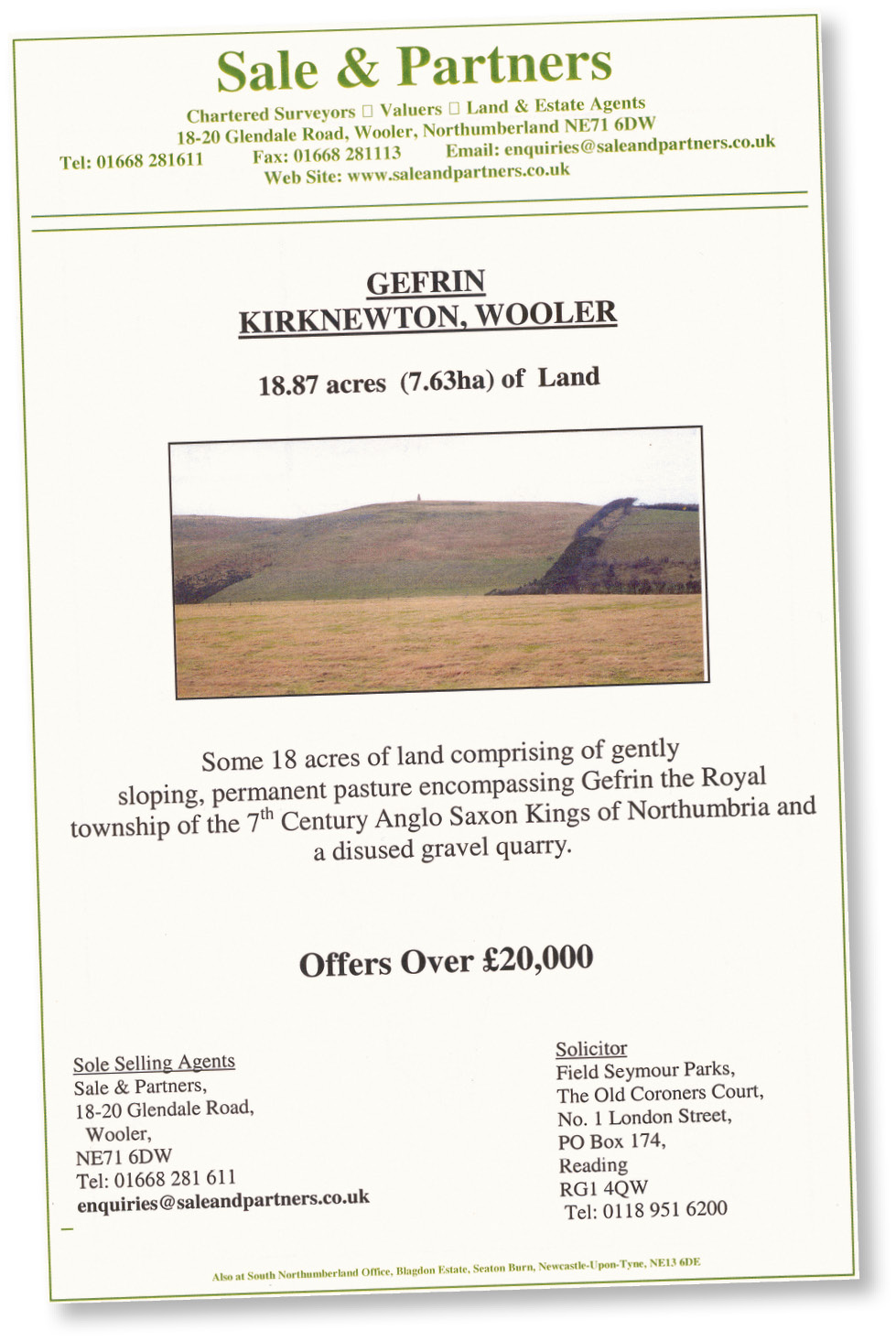
The piecemeal survival of Hope-Taylor’s records mirrors the extraordinary story of Yeavering itself, whose archaeology was rescued from the teeth of quarrying activity that had already impacted parts of the site and which threatened to destroy the rest before archaeological work could even begin. Fortunately, the quarrying ended up being limited in extent, and the land containing the scheduled monument is now in good hands. In 2002, the Gefrin Trust was established to manage the historic site (the Trust takes its name from Bede’s description of the Anglian power centre, where it is called Ad Gefrin: see box below), and Roger Miket is one of nine trustees of this small, voluntary body whose aim is to ‘ensure the future preservation of the archaeological features through sympathetic management, conservation, and investigation’.
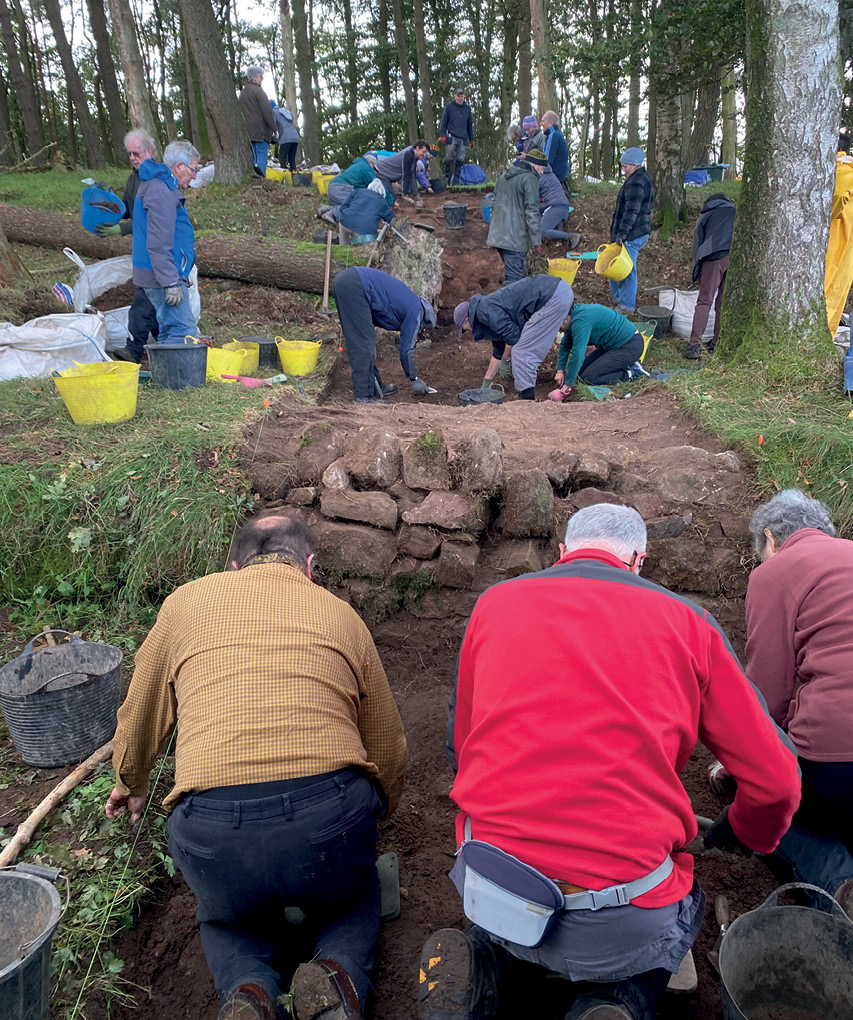
Another of the trustees is Sarah Semple, Professor of Archaeology at Durham University, and since 2021, with a project team, she has been leading a major new initiative, excavating once again at the royal palace site to expand on and revise Hope-Taylor’s discoveries, bringing modern archaeological techniques to the task. (If you are interested in learning more, Sarah will be speaking at the CA Live! conference and we will bring you a feature about the recent excavations later this year). The Trust also works closely with the Ad Gefrin Anglo-Saxon Museum and Whisky Distillery, which opened to the public on 25 March 2023 and is located four miles from Yeavering at Wooler. Its displays include an immersive recreation of the Great Hall of the 7th-century palace, as well as finds illustrating the daily life of the royal court, including glass, jewellery, ceramics, and weaponry (see CA 405).


What’s in a name: Yeavering or Ad Gefrin?
The Gefrin Trust, which now manages the archaeological site, and the Ad Gefrin museum and distillery in nearby Wooler, both use the name that Bede recorded in his Historia ecclesiastica gentis Anglorum (Ecclesiastical History of the English People), which was completed c.AD 731. The name Ad Gefrin comes from the Brittonic words gevr (‘goats’) and brïnn (‘hill’), thus meaning ‘at, or near, the hill of goats’. Yeavering is derived from the Old English pronunciation of Ad Gefrin, where the ‘G’ is pronounced as a ‘Y’.
In his History, Bede names Ad Gefrin as a major Anglo-Saxon royal centre, a place of prestige and importance, with a grandstand and great halls used for assemblies and royal feasts. The site was also central to the conversion of the Northumbrian people to Christianity, with Bishop Paulinus of York spending 36 days preaching to the followers of King Edwin and conducting mass baptisms in the nearby River Glen in AD 627.
Bede records the debate by which Paulinus persuaded Edwin to convert in detail, and this description contains one of the most vivid and often-quoted passages in the Ecclesiastical History, when an anonymous speaker compares the fleeting nature of human life to the ‘swift flight of a sparrow through the hall wherein you sit at supper in winter amid your officers and ministers, with a good fire in the midst whilst the storms of rain and snow prevail abroad; the sparrow… flying in at one door and immediately out of another… safe from the wintry weather for a short space… immediately vanishes out of your sight into the dark winter from which he has emerged’.

A model (from Bede’s World) of the theatre, royal hall, and Great Enclosure, possibly a stockade for cattle and horses given as a form of tax or tribute. Image: Roger Miket
Fortuitous foundations
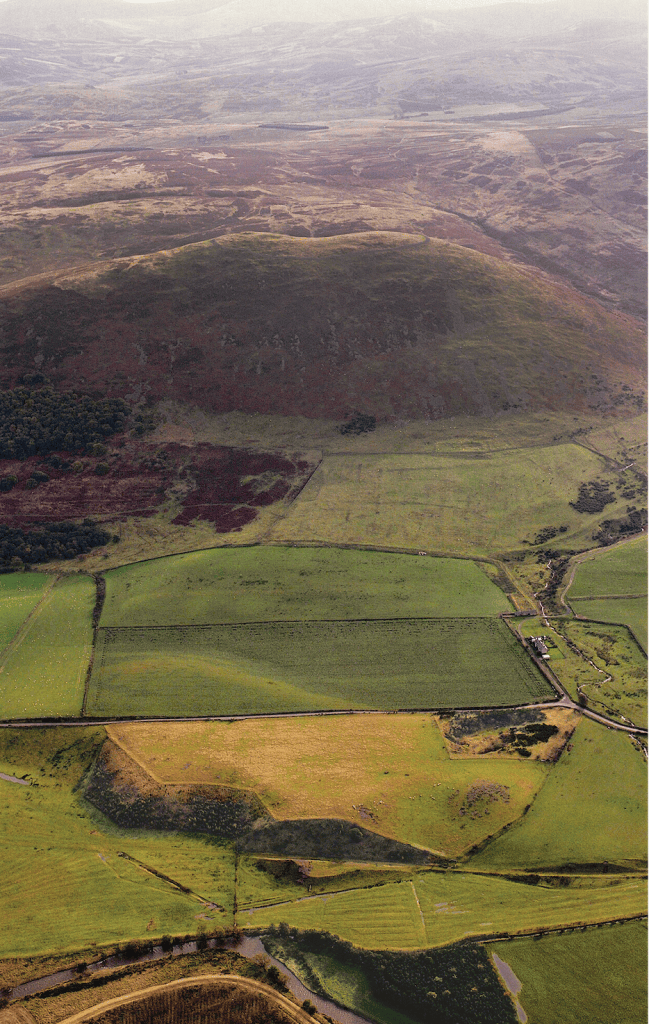
How did Yeavering’s revolutionary remains come to be rediscovered? Brian Hope-Taylor was born in 1923, and a near neighbour in his home village of Sanderstead, Surrey, was Sheppard Frere (1916-2015), later Professor of Archaeology at Oxford, who encouraged Hope-Taylor’s early interest in archaeology. His talents as an artist enabled Hope-Taylor to make a living as a freelance illustrator, especially for books about wildlife and cookery. In this capacity he was commissioned to design a bookplate for Sir Walter Aitchison (1892-1953), a keen antiquary who lived at Coupland Castle, Northumberland, just half a mile from Yeavering Bell, the twin-peaked hill that overlooks the eponymous early medieval site and is surmounted by northern England’s largest hillfort.
In 1944, Sir Walter had founded the Christianbury Trust to give grants for archaeological work in Scotland, Northumberland, Cumberland, and Westmoreland, and one of the beneficiaries was Kenneth St Joseph, then recently appointed Curator in Aerial Photography at Cambridge. The Christianbury Trust grant enabled St Joseph to record Roman military sites in Scotland and northern England, and in 1949, in the course of this work, he photographed some unusual crop marks in a field of oats just north of Yeavering Bell. The following year he found similar crop marks at Milfield, also in Northumberland, and the enigmatic images were shared among the leading archaeologists of the day, who suspected that they might represent underlying archaeology of early medieval date.

Sir Walter wanted his bookplate to incorporate images of antiquities in the Yeavering area, and during visits to Coupland to view the relevant sites, he and Hope-Taylor became good friends. It is very likely that on one of his visits to Coupland Castle Hope-Taylor was shown St Joseph’s aerial photographs. Ten years later, in 1958, when he wrote his Cambridge PhD thesis on Yeavering, he said that his analysis of the features in the Yeavering aerial photograph rapidly led him to conclude that they matched the description of two sites mentioned in Bede’s Ecclesiastical History: Ad Gefrin, the summer palace of King Edwin of Northumbria, and Mælmin, the royal residence that superseded Ad Gefrin after Edwin’s death, located 5 miles (8km) north-east of Yeavering, near the modern village of Milfield.

Hope-Taylor’s correspondence makes it clear that he was keen to confirm his theories through excavation, but the small matter of funding had yet to be resolved. Then, in September 1952, an application to extend the existing quarry on the Yeavering site was submitted to Northumberland County Council. The new quarry was planned to extend over 12 acres (5ha), extracting sand and gravel down 30 feet (9 metres), which would have resulted in the destruction of 80 per cent of the features shown in the aerial photographs.
In the end, the quarry was smaller in extent and ‘only’ consumed the archaeology on the eastern end of the site, but the threat of total destruction was crucial for unlocking Ministry funds for an excavation. Media coverage helped this cause: Yeavering was described as ‘one of the most important discoveries [to be] made in Europe for many years’, and expectations were high that it might prove to be as archaeologically rich as Sutton Hoo, whose princely burials had been excavated just over a decade previously.

Funding was not the only issue to be resolved, however. There were legal delays in obtaining consent from both the landowner and the quarry operator, who desired a speedy excavation. They were supported by the Air Ministry, who wanted the high-quality sand from the site for runway construction, and the Ministry for Constructional Works, who wanted it for harbour works in Scotland. There were tortuous negotiations over the costs and duration of the work, with Hope-Taylor emphasising the need for ‘a small excavation team [that would] work on it without hurry, for several years if need be’.
He anticipated that the remains of timber buildings would require careful excavation, and Hope-Taylor only wanted to dig in optimal conditions for detecting ‘the most subtle structural and stratigraphical indications’, in spring and autumn. Above all, he abhorred the idea of a ‘gang dig’ – common practice at the time – with several different teams of volunteers and students working on various parts of the site under an assortment of variously experienced site supervisors, an idea that he found ‘terrifying to contemplate’.

Digging and documenting
In the event, there were three episodes of excavation: a rescue phase in 1952, following unauthorised topsoil removal that had exposed archaeological features within the vicinity of the expanding quarry, destroying the most westerly of the buildings in the aerial photographs without record; then Ministry-funded annual excavations between 1953 and 1957, lasting for a total of 95 weeks; and a third phase in 1960-1962 saw ‘piecemeal re-examination on a smaller scale… to test some points that proved not to have been fully resolved during the first desperate phase of investigation’.
Monthly reports were submitted to the Ministry, documenting Hope-Taylor and his team’s progress as well as the challenges they faced, from harsh weather conditions to constant interruptions by reporters and visitors. Hope-Taylor complained about the ‘nuisance caused by the arrival, at all times of each and every day, of various reporters’, and yet he seems to have brought this upon himself by providing them with information that led to extensive coverage of the excavation in national newspapers. He was duly reprimanded by Ministry officials for not seeking their prior approval for his press releases, and for the consequent ‘undesirable effects of publicity’. He was also ‘gently chided’ for his off-hand demeanour towards the local aristocracy when they visited the site, the concern being that ‘they have a lot of power, writing to the Minister and all that’.
Roger Miket’s book summarises the findings of Hope-Taylor’s excavations season by season, up to their conclusion in January 1957, emphasising the innovative excavation techniques that he developed in response to the challenges of the site. Initially, he used small box trenches, as was the practice at the time, but he later anticipated modern excavation methods by opting for open-area excavation as a better way to reveal the principal structures. Hope-Taylor’s use of photography was also advanced for the time, employing towers for optimal lighting and capturing soil contrasts. His artistic skills contributed to the clarity and effectiveness of his plans and sections, and it was his artist’s eye that enabled him to spot the very fine differences in soil colour left by the decay of ancient timber buildings.

The main excavations ended in January 1957, and the following year Hope-Taylor was admitted to St John’s College, Cambridge, to spend three years writing up the excavation report, which was to be submitted as a PhD thesis. He successfully applied for a Leverhulme Trust research fellowship that paid for his travel to look for comparative sites and finds in museums in northern Europe. While buying a train ticket at Hamburg station on 4 September 1960, however, he placed his black briefcase containing his draft thesis and site index cards on the ground and it was stolen, never to be recovered, despite his offering a reward of 1,000 Deutschemarks (today, equivalent to £429). Undeterred, he reconstructed the whole text from memory and was awarded a doctorate in the autumn of 1961.
This was, however, only a partial account of the site, focusing on the early medieval township. For a more detailed description, the world had to wait another 16 years. Numerous discoveries of early medieval timber buildings have been made at other sites since Yeavering was first dug, but at the time this site was unique for its insights into a period that has left only the subtlest of archaeological remains. Academics in the burgeoning archaeology departments at British universities were hungry for the details, and when nothing emerged, Hope-Taylor was characterised as the archetype of the archaeologist who digs but does not write up their discoveries.
The long incubation period for the full report has been presented in the past as the result of Hope-Taylor’s intransigence, prevarication, and excessive secrecy, a view that has been reinforced by the colourful story of the dressing-down that he is said to have received from Sir Mortimer Wheeler for ‘denying his contemporaries the knowledge that might inform them in their own work when grappling with the problem of recognising what Anglo-Saxon buildings and settlements might have looked like’.
Roger Miket argues that the Ministry’s attempts to place the blame for delays in bringing the final report to full publication wholly on Hope-Taylor is ‘grossly unfair’ and was an attempted distraction from their own faults in progressing the work. He points out that Hope-Taylor had a full-time academic teaching and lecturing post at Cambridge, was working on numerous other excavation projects, and was single-handedly caring for his invalid parents at the time. Furthermore, even when Hope-Taylor’s own report had been drafted, he was held up waiting for specialist reports from others so that he could integrate their findings into his interpretation.


The fact that there was little state funding for post-excavation work was another hindrance. In a letter to the Ministry, Hope-Taylor complained about the ‘indifferent exploitation of consultants such as myself’, and about their expectation that he would undertake full-time work ‘with the minimum of assistance and often in abominable conditions’. His daily fee, he grumbled, was a sum ‘that consultants in other specialities would consider barely appropriate for a brief visit’.
When the text was finally completed in May 1970, editing and typesetting dragged on for another three years. The publisher, Her Majesty’s Stationery Office, mislaid key illustrations, requiring much effort on Hope-Taylor’s part to redraw them. The differently sized pull-outs and the careful integration of text and illustrations also meant that the book was challenging to lay out in the pre-digital era, and the book was not printed and bound until summer 1978.
It was the largest excavation report ever published by the Ministry to that date, and it was hailed as a masterpiece. Rosemary Cramp in her review for Antiquity said it would serve for ever afterwards as a ‘touchstone of how large timber structures should be identified, dissected, and interpreted’, while Philip Rahtz described the text as ‘elegant, readable, and witty, rare qualities in modern reports’.
Remarkable results
In the report, Hope-Taylor identified multiple phases of activity at the site, beginning with the construction of rectangular buildings and a large, palisaded enclosure during the reign of King Ida, ruler of the kingdom of Bernicia (the northern part of what would become Northumbria, with its capital at Bamburgh) from around AD 547 until his death in 559.
Yeavering became a royal centre under Ida’s grandson, Æthelfrith (c.593-616), boasting palace buildings and a grandstand to seat 150. The next king, Edwin, together with his wife Æthelburh, then expanded the Northumbrian kingdom further, so that it extended from the Humber to Lothian, and in 616-633 the site acquired a new royal hall, apartments, and a larger grandstand, as well as a church and cemetery. Today, the footprints of these major structures are marked out on site, with mown grass showing the outlines of the great feasting hall, the residential apartment building used by Edwin and Æthelburh, and the timber grandstand or theatre that could accommodate public assemblies of up to 320 people.

These structures, Hope-Taylor believed, were destroyed by fire in 633-634 when King Penda of Mercia and King Cadwallon of Gwynedd attacked Northumbria. They killed Edwin at the Battle of Hatfield Chase, but were defeated themselves by Æthelfrith’s son, King Oswald (c.604-642), at the Battle of Heavenfield in 634. Oswald is believed to have rebuilt Yeavering’s royal buildings and added a new church and cemetery.
This was not the end of inter-kingdom conflict: in 641/642, Penda attacked Northumbria again, and Oswald was killed in the Battle of Maserfield. The Mercian king was finally defeated by Oswald’s brother, King Oswiu (c.612- 670) at the Battle of the Winwæd in 655, and while some of the Yeavering structures were rebuilt at this time, the site was ultimately abandoned when the court moved to a new palace complex at the (unexcavated) site at Mælmin (Milfield).

Hope-Taylor’s interpretation, including the two burning events, relies heavily on the events chronicled in Bede’s Ecclesiastical History, and archaeologists are now much less ready to tie their conclusions to historical narratives. The new programme of research led by Sarah Semple and team is using geophysical techniques to locate and then re-excavate Hope-Taylor’s trenches, and is extending excavations to new areas of the site, including a well-preserved craft-working structure and new sections of the inner and outer ditches of the Great Enclosure. Scientific dating and new findings are delivering a fundamental reinterpretation of Hope-Taylor’s discoveries and the site itself across the prehistoric to historic eras. Preliminary results suggest that some of the ditches and enclosures that Hope-Taylor regarded as early medieval actually date from a much earlier point in time. Clearly, we have not heard the last from Yeavering/Ad Gefrin – the gift that keeps on giving.
Further reading:
Roger Miket (2025) Ad Gefrin: Brian Hope-Taylor and his quest for the early medieval kingdom of Northumbria (The Gefrin Trust, £35). Copies available via the Gefrin Trust website: https://gefrintrust.org.

You must be logged in to post a comment.