Subscribe now for full access and no adverts
The Peak District National Park is scattered with later prehistoric monuments – silent remnants of a 5,000-year-old landscape – many of which can be found in the region’s uplands, where centuries of agriculture have left little impact. This striking mosaic of limestone pasture, heathland, and exposed millstone-grit geology has long been associated with Neolithic and Bronze Age ritual activity, represented by the burial cairns, standing stones, stone circles, and occasional stone alignment dotting its hills. Largely overlooked amid this wealth of prehistoric monuments, however, is a distinctive tradition of late Neolithic and Bronze Age rock art.
Over millennia, the region’s exposed rocks have been heavily weathered by frost, wind, and chemical erosion, creating the rounded boulders, fissures, and overhangs visible today. Rich in quartz and feldspar, and cemented with silica, these durable surfaces proved ideal for ancient engravings (particularly the classic cup-and-ring motifs characteristic of the Bronze Age), which are now beginning to re-emerge from centuries of stony silence. We set out to explore this enigmatic and little-documented aspect of Derbyshire’s archaeological heritage – an investigation that began in the autumn of 2024 with the discovery of unexpected markings, possibly representing the outline of an animal, on the southern side of Rowtor Rocks.

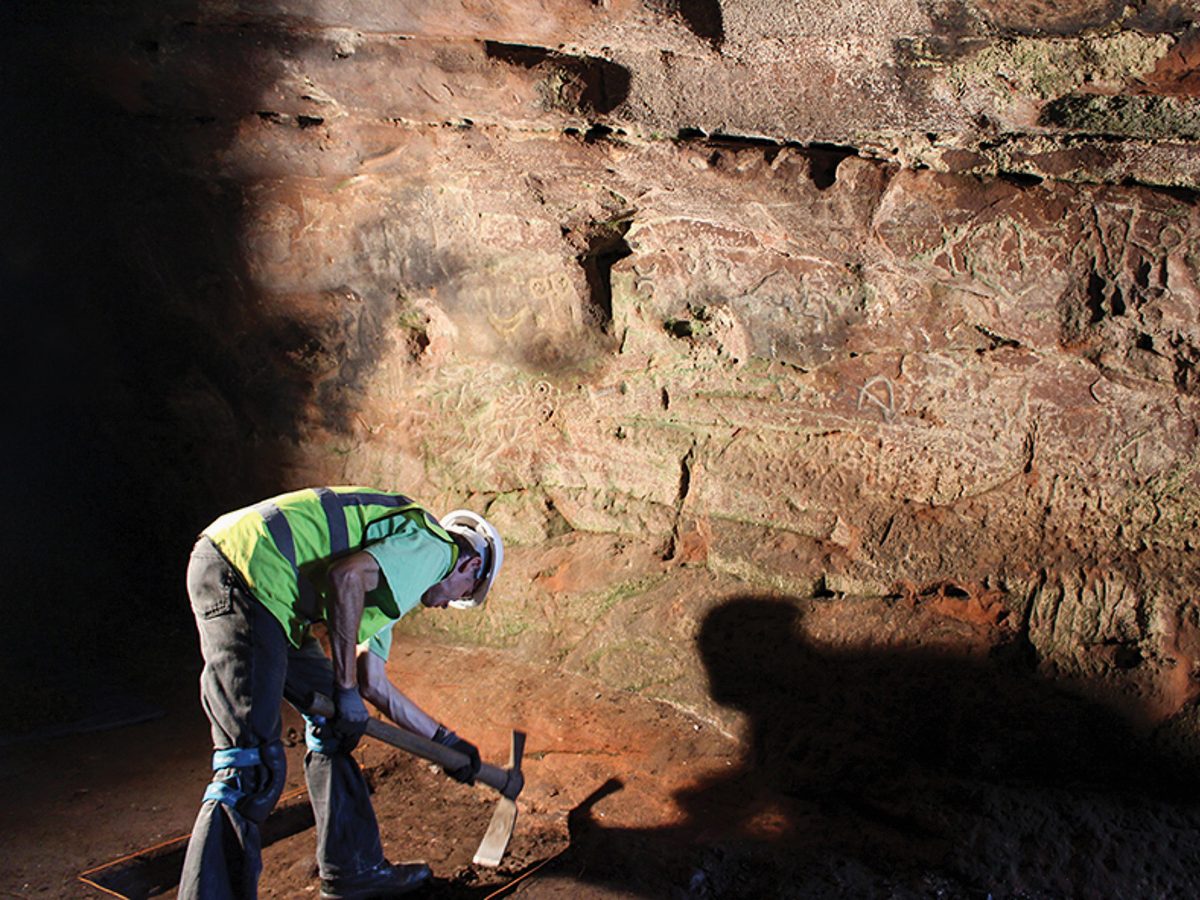
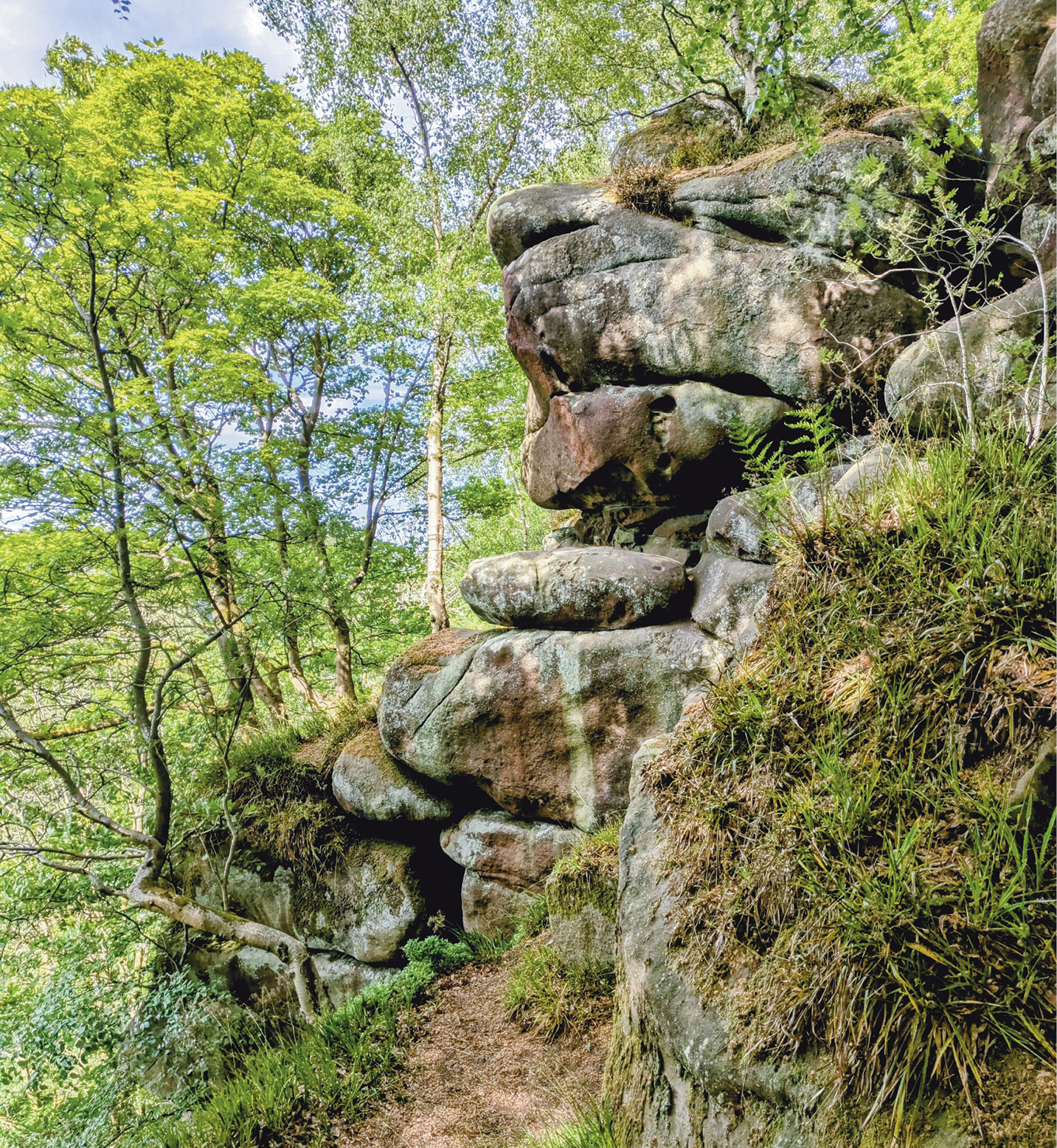
This prominent outcrop – a classic example of a tor formation, similar in character to those found on Dartmoor – occupies an elevated position to the west of Birchover, near Matlock, commanding sweeping views over the mountains and valleys of the southern Peak District. Rising to a height of 305m (1,000ft) AOD, it is formed from a chaotic cluster of stacked gritstone blocks creating a labyrinth of narrow passageways, small caves, and deep crevices. Many of these rocks bear signs of deliberate alteration – carved steps, platforms, seats, and hermitage-like cells – which are traditionally associated with the Reverend Thomas Eyre (c.1645-1717), a local clergyman and antiquarian who owned the nearby Rowtor Hall estate. Eyre is thought to have reworked parts of the tor in line with the ideals of the Picturesque movement, an aesthetic and philosophical trend that was popular among the educated elite of his day, which blended natural drama with romanticised notions of ancient landscapes. However, some modifications to the outcrop were made long before the site attracted Eyre’s attention.
Cervids and bovines in them thar hills
Before beginning our wider walkover survey of Rowtor Rocks, we focused on a near-vertical rock face on the southern side of the outcrop, which preserved an intriguing jumble of markings. Some of these were natural, but other lines appeared to be deliberately engraved, representing a stylised side-on view of an adult cervid (member of the deer family). A site visit in April 2025 confirmed this interpretation, suggesting that the carving possibly depicts a reindeer or more plausibly a red deer. The first hint of the image’s archaeological significance came with the identification of a curving line thought to represent the animal’s underbelly – a distinctive and deliberate mark that stood out clearly from the surrounding natural striations – and further details emerged during subsequent visits.

In order to understand the figure better, it was recorded under varying light conditions, both in daylight and after dark. Despite careful observation, the full outline remains partially obscured due to heavy weathering, particularly in the areas where we would expect to see the animal’s antlers and the hindquarters. Many details can still be discerned, however. Recording during hours of darkness revealed the outline of a muzzle, crown, and neck, along with a small, protruding bump representing an eye. Nor was this animal alone: a return visit revealed the presence of a second, smaller cervid – probably a juvenile – immediately to the rear of the larger figure.

When was this image created? The Rowtor Rocks engraving cannot be scientifically dated at present, but previous discoveries offer possible clues. In 2021, Hamish Fenton made a remarkable find in Kilmartin Valley, Argyll. On the underside of a capstone over one of Dunchraigaig Cairn’s three burial chambers, Hamish (who has a background in archaeology) identified carvings of two adult red deer, as well as a number of juveniles (see CA 377). Subsequently authenticated by experts from Scotland’s Rock Art Project, the images were dated to the Neolithic period, around 4,000-5,000 years ago, though the stone itself may have originated from a much earlier context. The composition of the Rowtor Rocks carving, depicting an adult and younger cervid, is a motif that is also known from engraved panels in northern Scandinavia, which are often attributed to the Mesolithic period (c.9500-4000 BC). While suggestions of the Derbyshire deer’s date must for now remain speculative, stylistic parallels may offer tentative chronological insights.

Based on archaeological evidence from the region, it is conceivable that this upland area of the northern Midlands was home to hunter-fisher-gatherer communities during the early Holocene, a time when the climate was rapidly warming and cold-tolerant birch and pine forests were gradually replaced by broad-leaf woodland dominated by alder, hazel, lime, and oak. By around 5000 BC, small-scale farming groups had cleared areas of trees, leading to the emergence of heathlands across upland southern Britain. Both these forested and open environments would have supported large ruminants such as aurochs, elk, and red deer, while reindeer – associated with colder, pre-Holocene environments – would have thrived among earlier landscapes dominated by birch and pine woodland. In Britain, humans are known to have hunted these species, alongside now-extinct megafauna, from the Late Upper Palaeolithic (c.16,000-10,000 BC) through to the early Neolithic (from around 4000 BC).
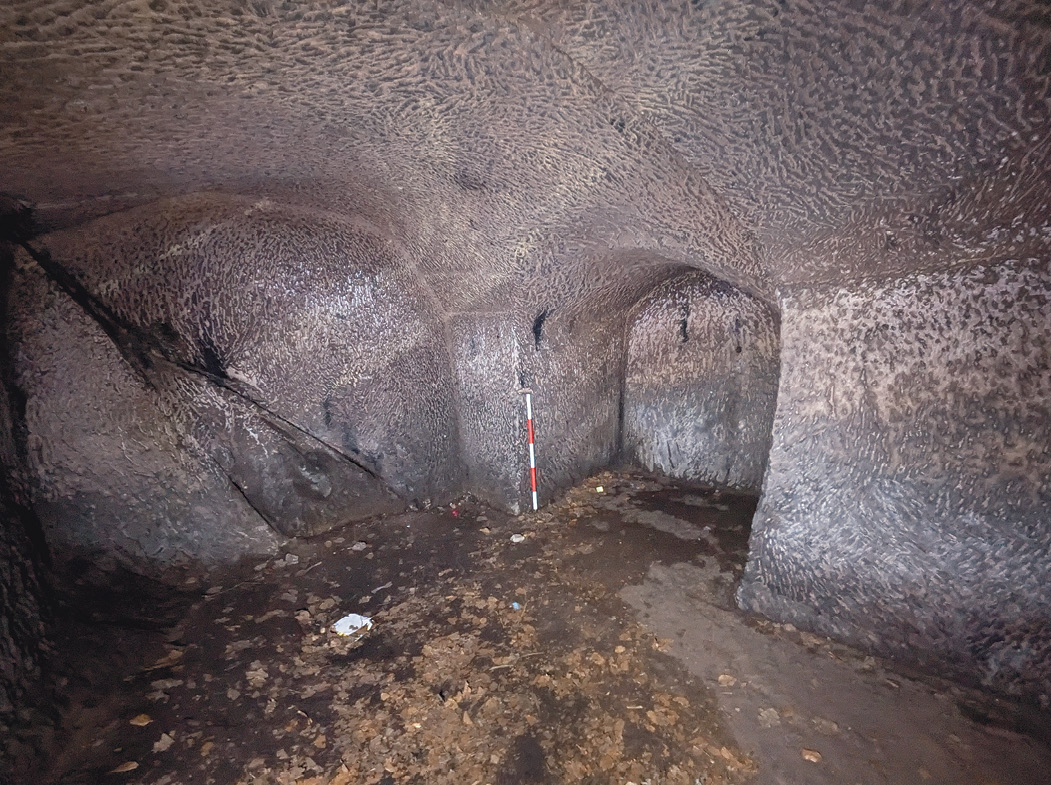
An engraving of another example of prehistoric people’s preferred prey offered further support for a possibly early date for cervid carving. During the same survey, our team documented another figurative image on the outcrop, about 35m (115ft) from the first: this time a clear depiction of a bovine, which we have interpreted as a large species of wild cattle called an aurochs. They became extinct by around 1300 BC due to overhunting and habitat loss, suggesting that, while this carving’s age is also unknown, it must pre-date the late Bronze Age. It was actually found inside one of the tor’s artificially created Picturesque caves, but the panel on which it was carved is weathered, suggesting that it had once been in an exposed position and was subsequently incorporated into the later landscaping.
Measuring about 90cm long and 45cm in height (35in by 18in), the bovine image has key attributes associated with wild aurochs, rather than domesticated cattle, including the rear section, hind legs, tail, and the characteristic line of the animal’s back and underbelly. The forelegs and lower neck are also present, though unfortunately the head appears to be missing, possibly due to damage sustained during the cave’s construction. Both the bovine and the cervid engravings conform to each other stylistically, sharing a wide and prominent carved outline of the spine, with finer lines developing the details. Both make beautiful use, too, of the topography of the stone on which they are carved, using natural fissures to give the carvings presence and grounding.


If the images are unusually early, they would represent a significant addition to our understanding of the region’s archaeology. While Derbyshire is rich in later prehistoric remains, particularly from the Bronze Age, there is limited archaeological evidence from earlier periods, including the early Neolithic, Mesolithic, and Upper Palaeolithic. Notable exceptions exist, however. About 17km (11 miles) north-west of Rowtor Rocks lies Creswell Crags, one of the most significant Upper Palaeolithic sites in the British Isles. There, evidence of both Neanderthal and early modern human activity has been uncovered – and, most importantly, the site includes Church Hole Cave, one of just three British cave sites with confirmed examples of Ice Age cave art. Its figurative images include engravings of animals like red deer and bison, some of which have been scientifically dated to more than 12,000 years old (CA 197). Such findings highlight the potential for undiscovered early prehistoric art elsewhere in the region, including open-air sites like Rowtor Rocks, even if current evidence remains limited.
Later signatures on an ancient landscape
Rowtor Rocks forms just part of a wider, richly layered prehistoric landscape, with notable neighbours including Robin Hood’s Stride, located a few hundred metres to the west, and the monuments of Stanton Moor, approximately 1km (0.6 miles) to the north-east, among many others. These locations are intervisible with Rowtor Rocks, reinforcing their spatial and visual connectivity – and, by extension, the likelihood of them having had collective ritual or symbolic significance during later prehistory. Robin Hood’s Stride, a dramatic, largely treeless gritstone outcrop, preserves several examples of Bronze Age rock art, commonly in the form of cup-marks, cup-and-ring motifs, and bowl-marks, which are found on and around Rowtor Rocks as well, suggesting a shared cultural or symbolic repertoire across the immediate landscape.
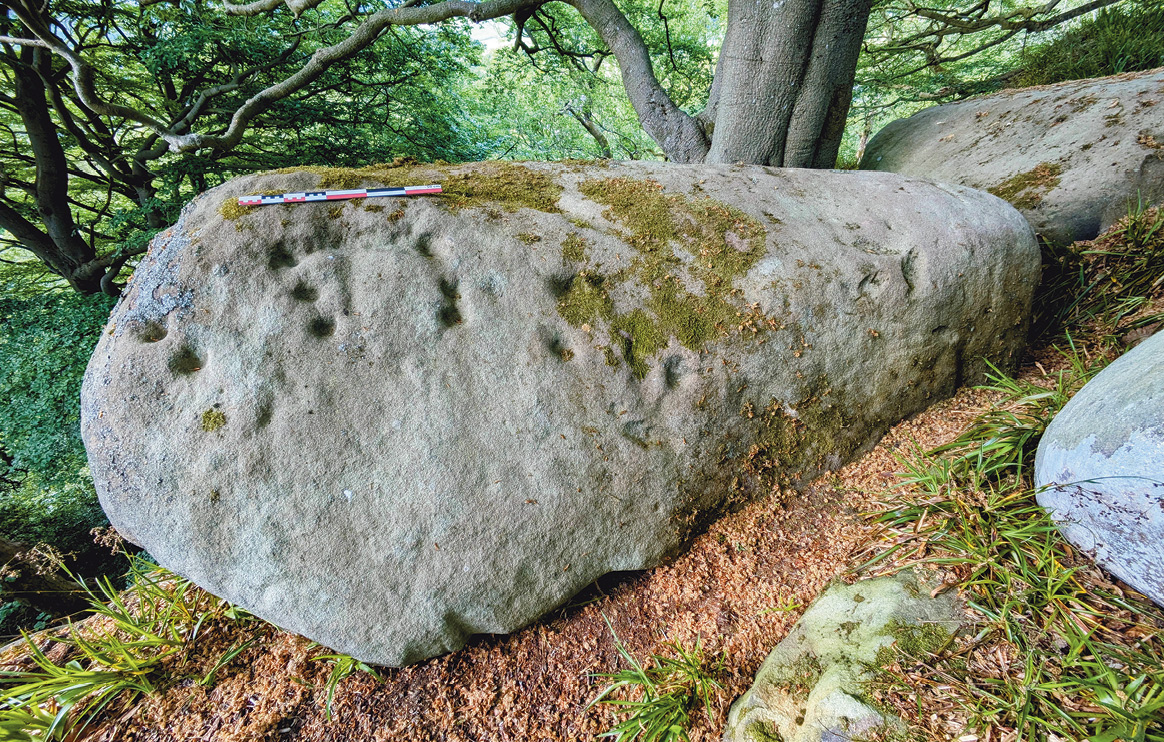
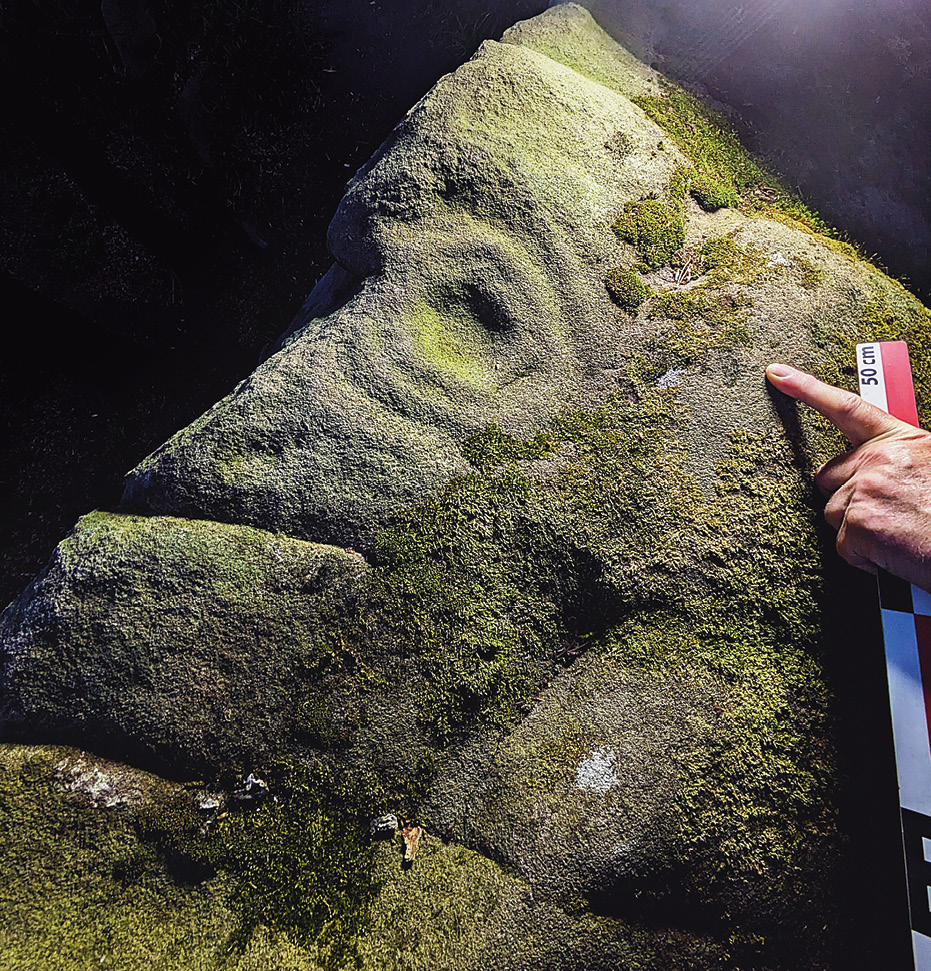
By contrast, while Stanton Moor boasts a wealth of archaeological sites – being home to several stone circles (including the Nine Ladies and Doll Tor), ring cairns (Stanton Moor I, III, and IV), a prominent standing stone known as the King Stone, and numerous burial mounds – there is no recorded evidence of prehistoric rock art within this area. Stanton Moor’s significance instead appears to derive primarily from its monumental architecture, and the role that these constructions may have played in later Neolithic and Bronze Age funerary and ceremonial practices. We might even imagine that this ritualised landscape could have been approached via Robin Hood’s Stride and Rowtor Rocks, both of which preserve evidence of earlier rock-art traditions. Perhaps they formed part of a broader ceremonial route, along which communities processed with their dead, marking the landscape with carved symbols as a form of commemoration and ancestral remembrance.
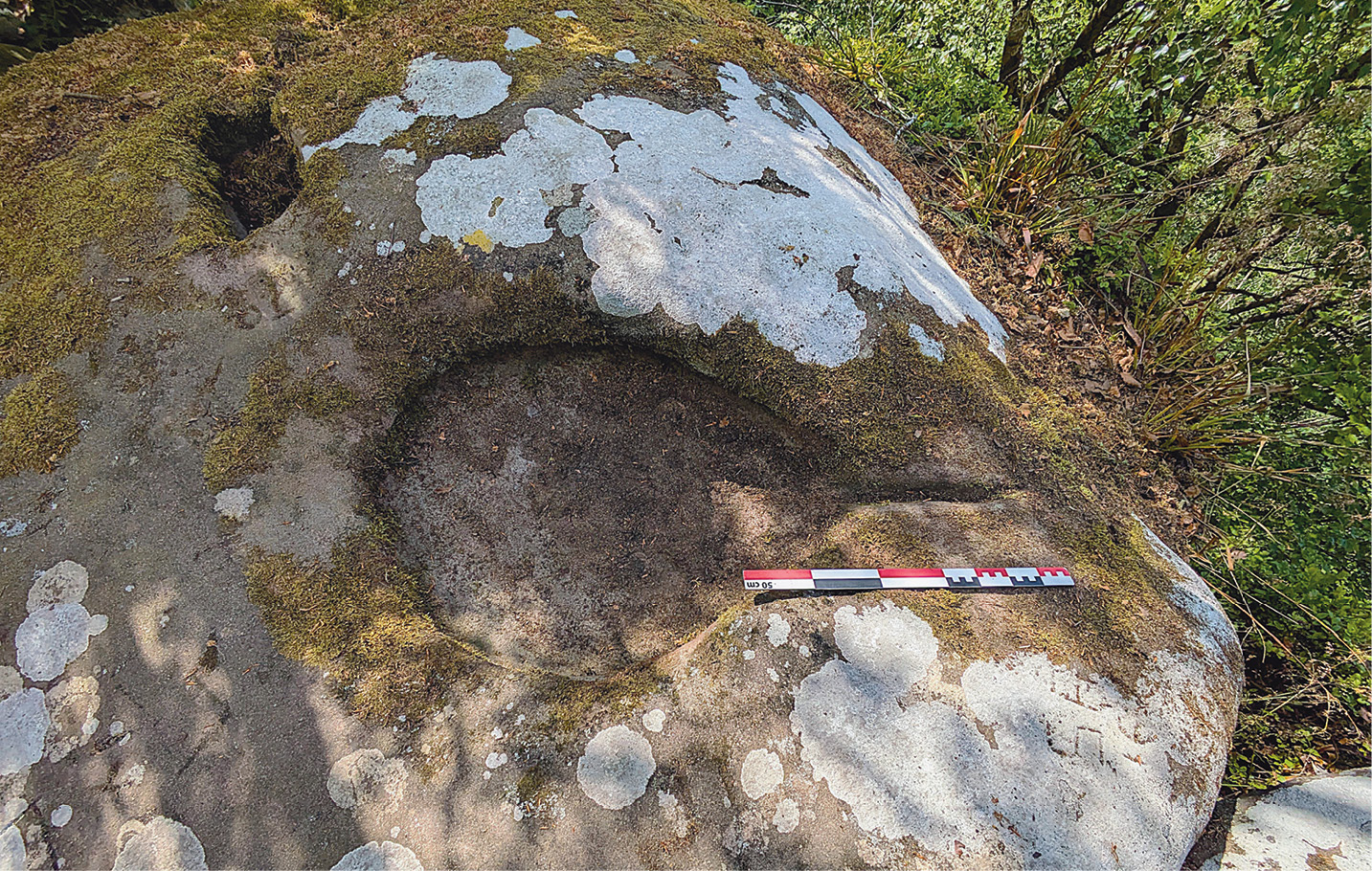
As mentioned above, the figurative carvings identified during our survey are not the only examples of ancient art adorning Rowtor Rocks. Before our 2025 walkover survey began, a small number of prehistoric carvings had already been recorded at the western end of the outcrop. Thought to date to the 3rd or 2nd millennium BC, they are typical of Bronze Age motifs found not only in the Peak District but also across other parts of northern Britain, including cup-and-ring motifs, a cup-mark with a snake-like groove, and a more elaborate design made up of a central cross surrounded by concentric rings and U-shaped grooves.
Several of these known locations were revisited during our research, and altogether we recorded 44 carved sites spread over an area measuring roughly 245m by 110m (800ft by 360ft), the majority of which were late Neolithic/Bronze Age in date, alongside historic and modern graffiti. Most of these engraved areas were found on the northern and southern slopes of Rowtor Rocks, where a range of vertical and horizontal surfaces, both on the tor itself and on loose or fallen boulders, appear to have been deliberately selected. Very few panels contained only a single cup-mark, and, in cases where this did occur, they were typically surrounded by panels featuring multiple examples, hinting at a broader spatial logic or clustering in the way these features were created and used.
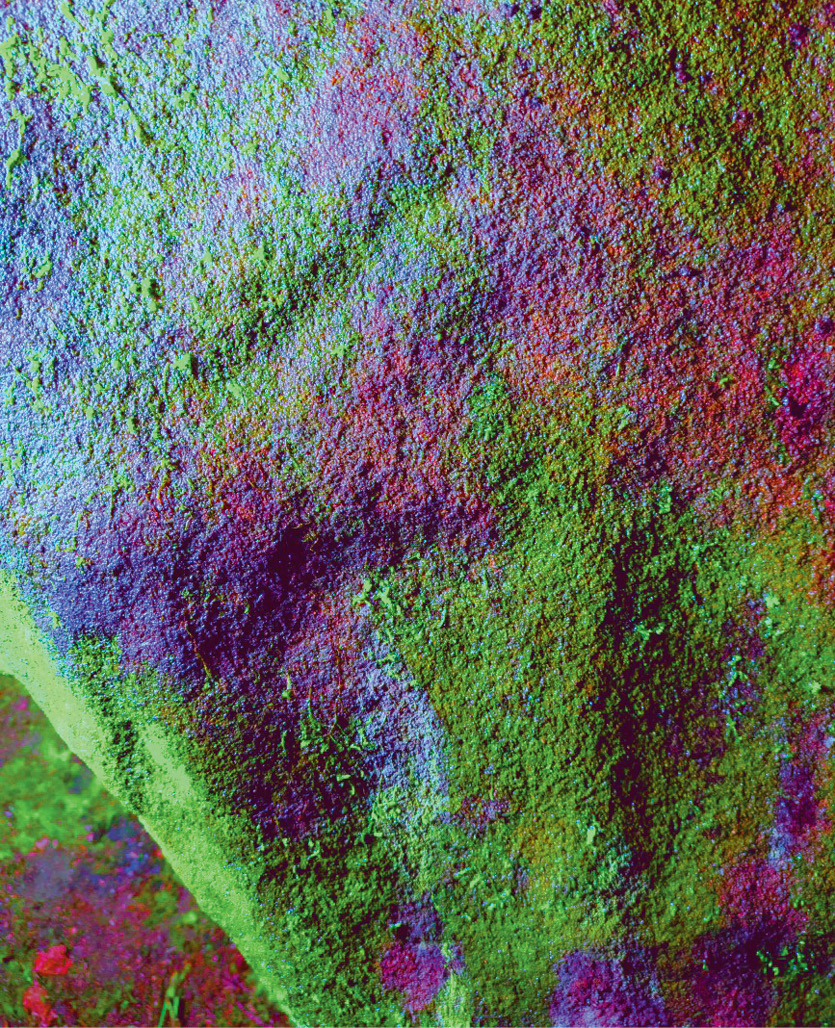
In order to identify these carved areas, we not only used targeted light sources – such as oblique lighting during the hours of night – but also used a mobile application to create 3D models of various panels, primarily located on boulders, by means of photogrammetry and LiDAR scanning. One such boulder, situated a few metres east of the cervid carving, featured a substantial number of cup-and-ring marks which, despite significant weathering, remained visible under artificial lighting – and even more were revealed through 3D animation of the stone.
Another intriguing aspect of Rowtor Rocks is an engraved motif known as the ‘Rosetta Stone’. Located on the tor’s northern side, it is a heavily weathered but complex design formed by a double-lined concentric circle. Within this, a series of pickets and lines create a symmetrical inner pattern, while beyond the concentric lines, a wavy-line configuration extends outward. It is likely that this composition was originally even more elaborate, but four millennia of weathering have eroded much of its finer detail.
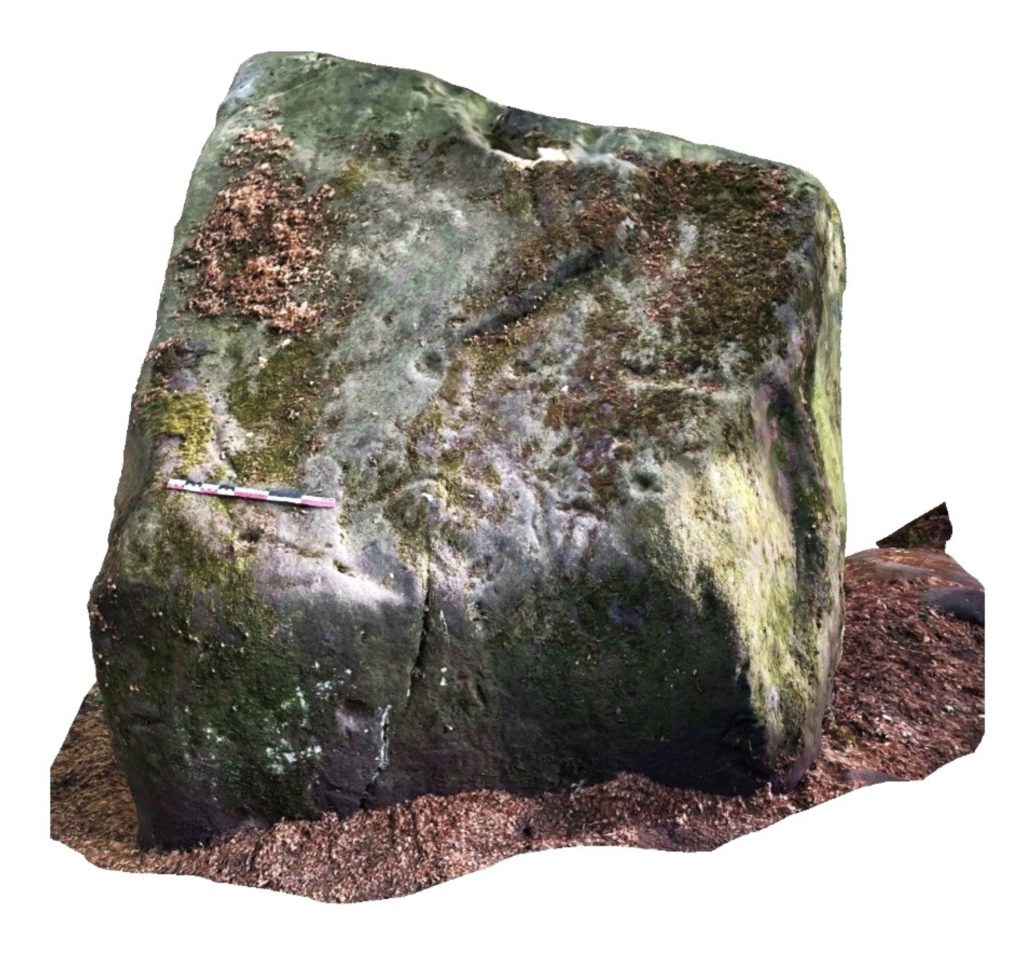
A portable 3D scan of the northern surface of the Druid Stone, made using PolyCam.
Why mark the landscape?
The interplay between natural geological processes and human modification has given Rowtor Rocks a distinctive and layered character, but beyond its striking physical form the outcrop is imbued with a deep cultural and historical significance. Over the centuries, it has been appropriated for a range of human activities, from prehistorical rituals and artistic expression to Picturesque fascination that saw 18th- and 19th-century individuals seeking sublime and romantic landscapes. In the modern era, the site continues to attract interest as a place of mystery and inspiration: a destination for walkers, climbers, and those who are drawn to its enigmatic atmosphere.
Taken together, the physical and cultural elements of Rowtor Rocks form a complex palimpsest of activity. They reflect sustained human engagement with and reverence for this upland landscape, from figurative carvings that could be as early as Mesolithic in date, to Bronze Age motifs and later historical sculpturing. Each layer of use and meaning adds depth to our understanding of the site, revealing it not as a static monument, but as a living, evolving cultural landscape.

All images: Anna Clark/George Nash, unless otherwise stated