Subscribe now for full access and no adverts
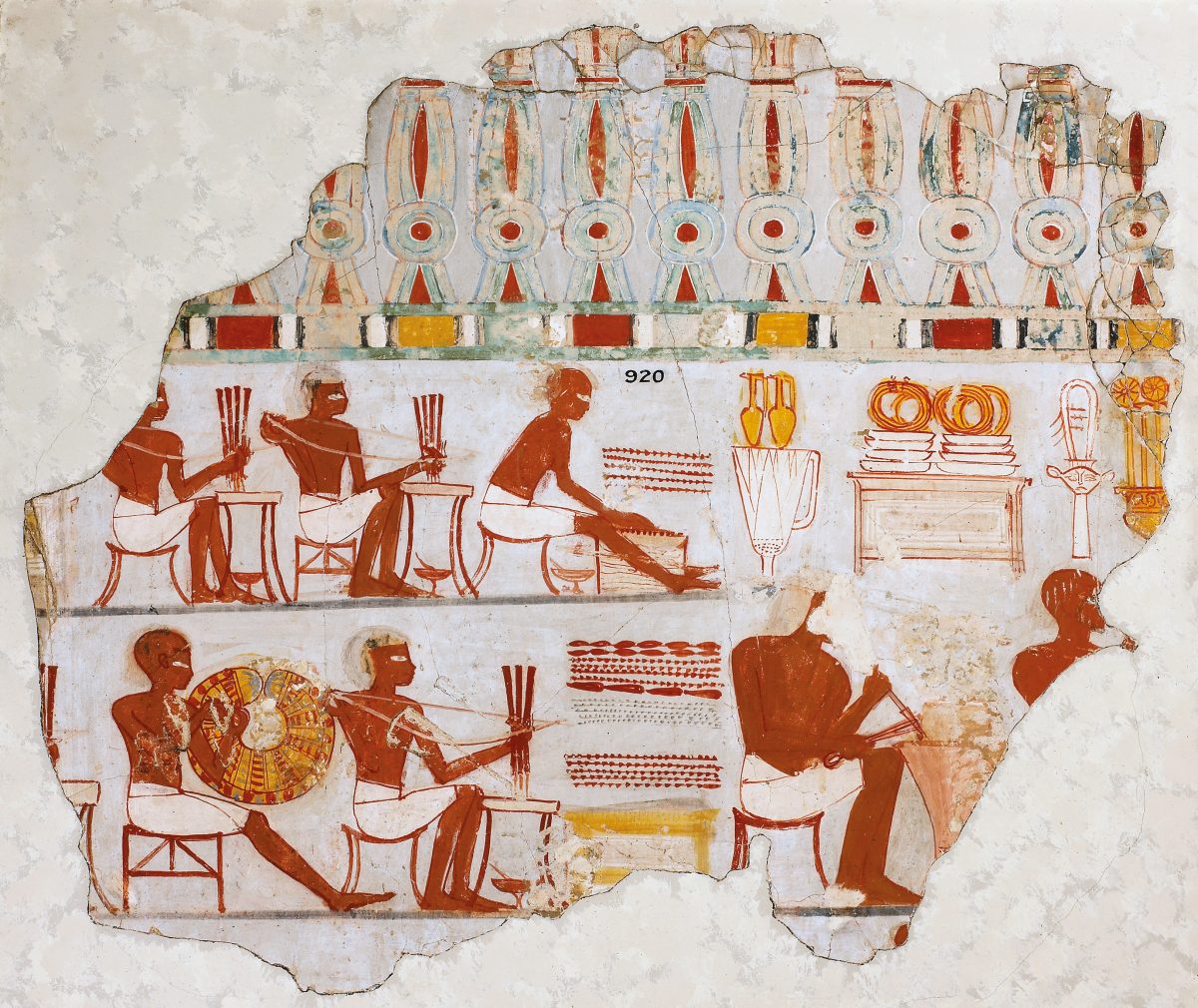
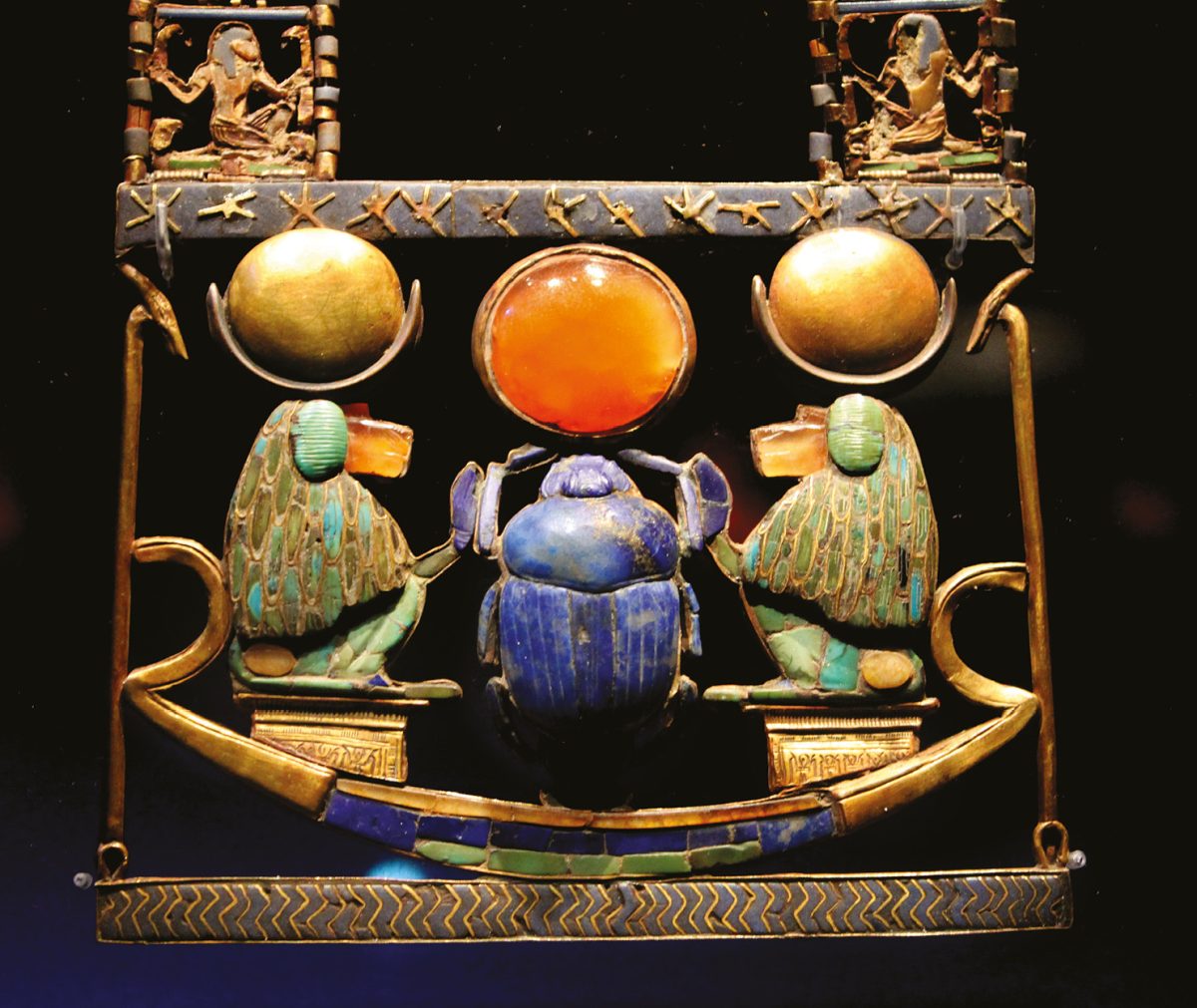
Carnelian was the most commonly used gemstone in ancient Egypt, as evidenced by the countless surviving examples in jewellery and the decorative arts. These include mainly beads, but also inlays (in both jewellery and furniture), amulets, and plaques.
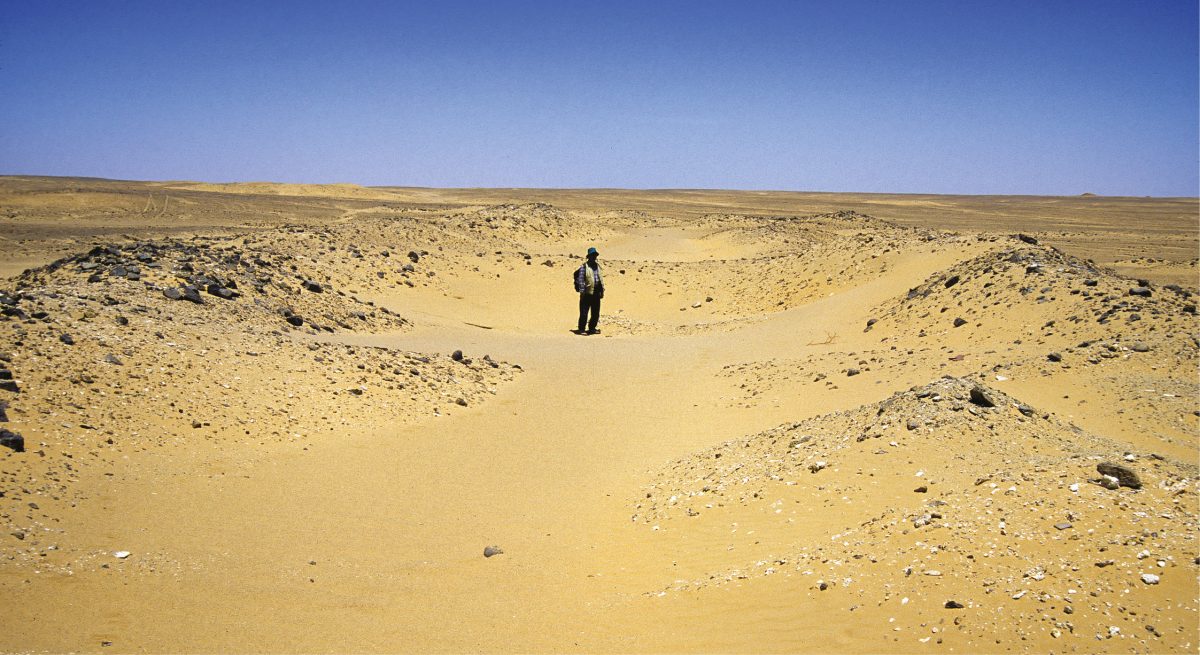
There is, however, a great mystery surrounding this gemstone: its source. The only known ancient mine for carnelian is the one at Stela Ridge, 40 miles (70 km) north-west of Abu Simbel in the Nubian Desert. This site was primarily active during the Middle Kingdom’s Twelfth Dynasty. Although there are faint traces from the Old Kingdom and Roman Period, too, there is no evidence of significant mining at these times.
The question then is: where did the Egyptians get the prodigious amounts of carnelian that they used both before and after the Twelfth Dynasty? It is widely asserted in the Egyptological literature that the source was the wadi gravels in the Eastern Desert, but this is incorrect – as will be explained below.
What is carnelian?
Before proceeding any further, we must first consider the definition and nature of carnelian. Although there is no universally agreed description, it is widely accepted that this semi-precious gemstone is a variety of ‘chalcedony’, which is a translucent, fibrous, microcrystalline form of quartz (SiO2 or silica). It differs from normal or ordinary quartz, which can be transparent or translucent, and macrocrystalline or microcrystalline, but always with a granular structure. The term ‘chalcedonic quartz’ is synonymous with chalcedony. Chalcedony comes in many colours and patterns, and is given the varietal name ‘carnelian’ when it has a largely solid orange, orangish- to brownish-red, or red colour. These hues all result from iron-oxide impurities. The gemstone’s reddish aspect is commonly emphasised in the published definitions, but this stems from a misunderstanding of the origins of its colour. Red carnelian is exceedingly rare in nature, but it is abundant in ancient jewellery, and (as will be argued below) heat treatment is usually responsible for the colour of this stone.
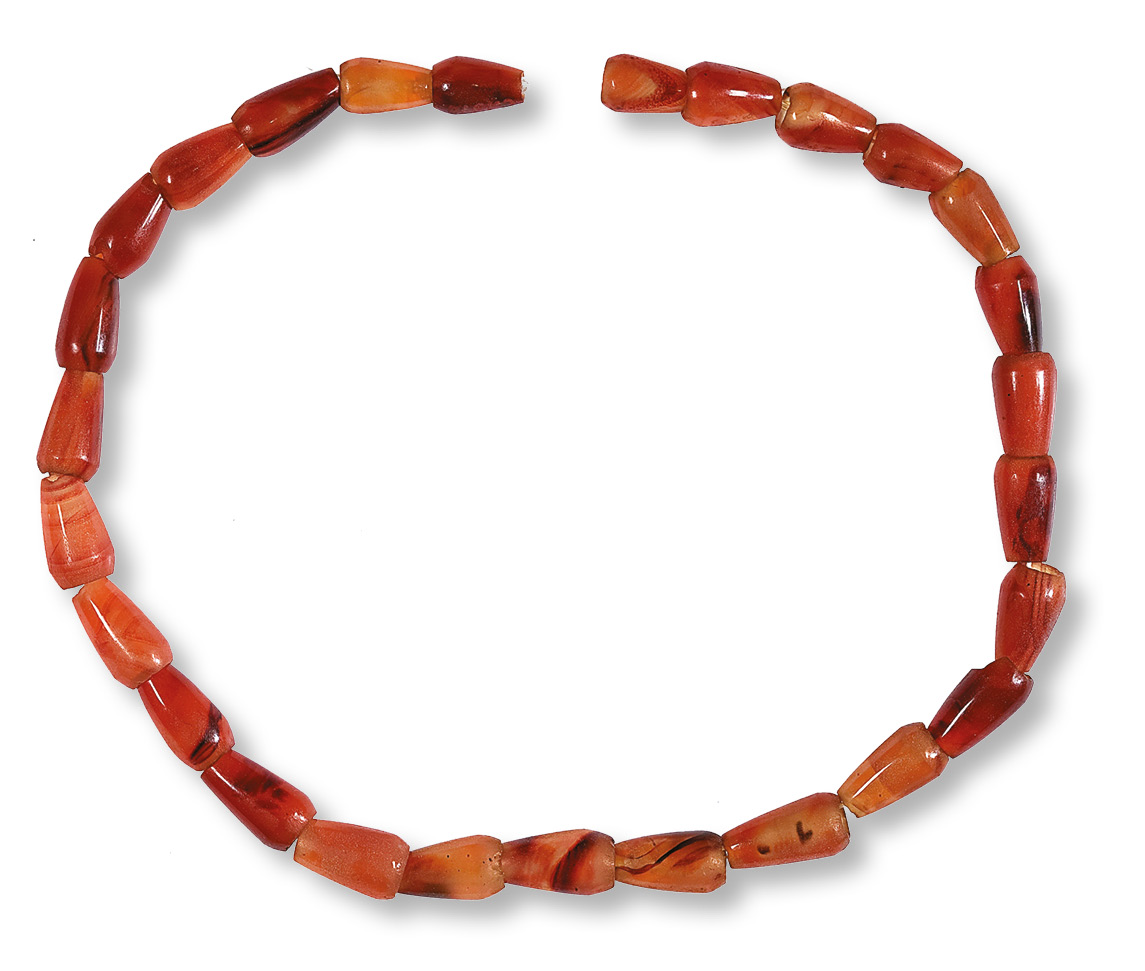
A necklace with carnelian drop beads, from the Second Intermediate Period or early New Kingdom (Thebes). Image: Metropolitan Museum of Art, New York (MMA)
‘Agate’ is sometimes inappropriately used to refer to all forms of chalcedony, including carnelian, but is more correctly applied to colour-banded and other patterned forms. ‘Jasper’ is a close cousin to chalcedony. Although it consists largely of microcrystalline quartz (either the granular or fibrous variety, or, commonly, a mixture of both) and is also coloured by iron oxides, it is opaque and usually contains other impurities. ‘Chert’ (or ‘flint’) is another variety of quartz that is like jasper but lacks its attractive colouration. Much of what archaeologists have called carnelian is better described as ‘sardonyx’, which is a sub-variety of banded agate with parallel, usually planar, layers that alternate between white or light grey, and brownish, orangish or reddish tints.
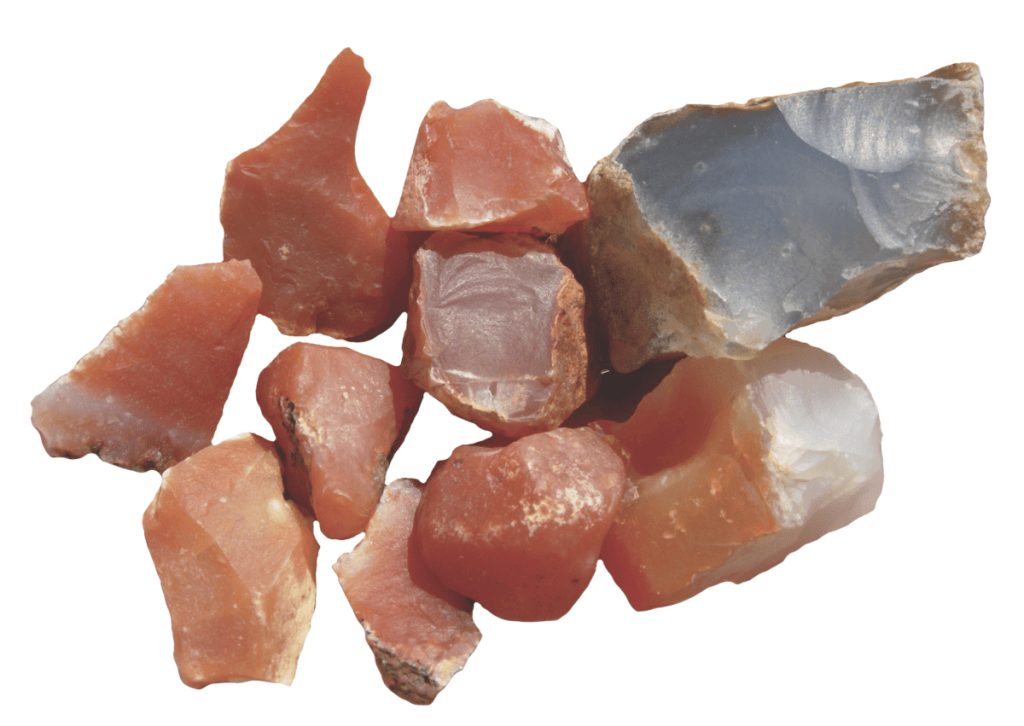
The ancient Egyptians called carnelian ḥrst or herset, whereas the ancient Greeks called it sardion, and Romans knew it as sardius or sarda. Oddly, the modern term ‘sard’ has lost its original meaning and now refers to a brownish-coloured chalcedony. The word ‘carnelian’ is a late Middle English corruption of the Old French cornelian or corneline. The latter name ultimately derives from the Latin cornum, which refers to the ‘cornelian cherry’ with its red, translucent fruit. It has also been argued, however, that ‘carnelian’ is independently derived from the Latin carnosus, meaning flesh or meat, with its inevitable suffusion of red blood. Although cornelian has the better claim to legitimacy, carnelian is now the English word most often used to refer to orangish or reddish chalcedony.

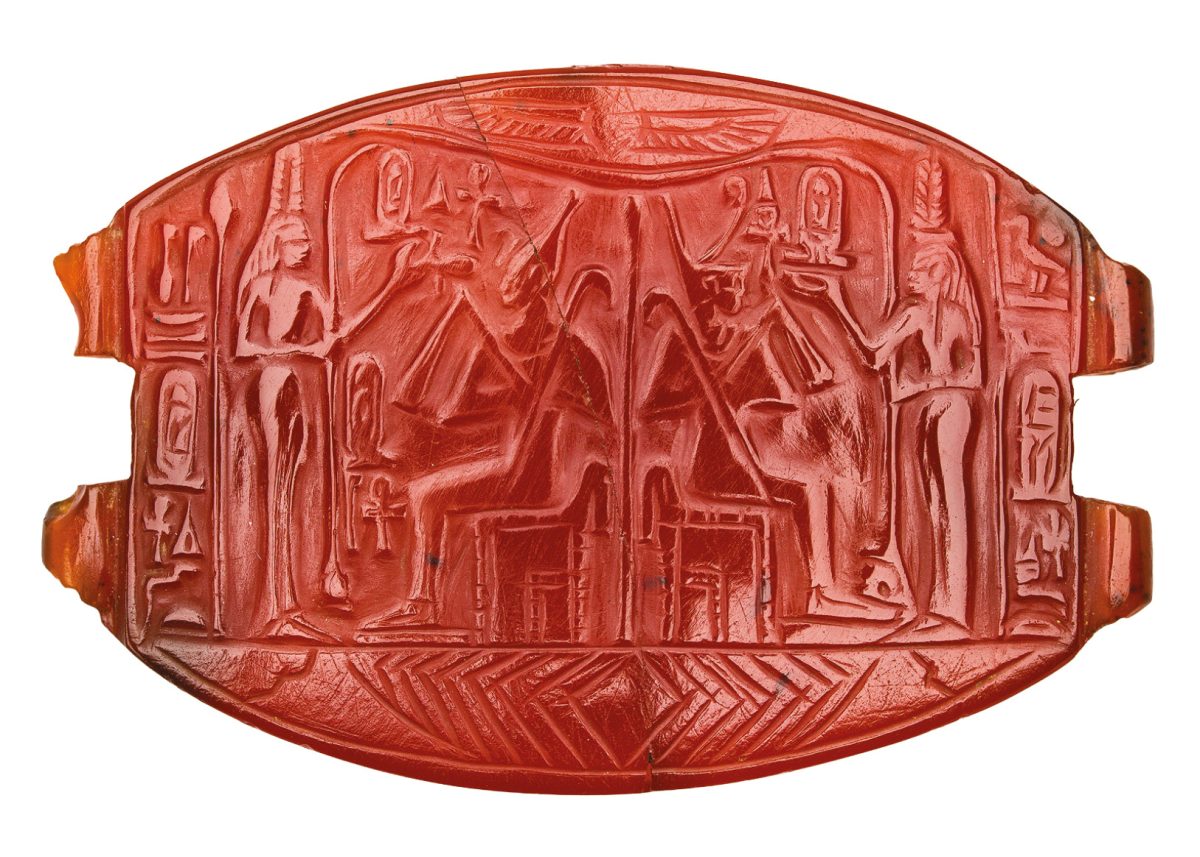
Eastern Desert?
Let us now return to the widespread belief among Egyptologists that carnelian pebbles are easily found in the Eastern Desert. This notion originated with Alfred Lucas in the 1934 (2nd) edition of his highly influential work Ancient Egyptian Materials and Industries. On p.341, he says ‘carnelian… in the form of pebbles… occurs abundantly in the Eastern Desert of Egypt’, but cites no source for this information. This claim was repeated, without elaboration or confirmation, in the next two editions of Lucas’s book, and no geological study ever verified it.

Based on my decades of fieldwork in the Eastern Desert, I can confidently say that carnelian pebbles do not occur in the wadi gravels, except in rare, local instances. What one does find in great abundance in nearly all of these deposits are pebbles of ordinary quartz. These are derived from the ubiquitous quartz veins cutting through the igneous and metamorphic rocks of the Red Sea Hills. The gravel clasts can have a pinkish, brownish-orange, or brownish-red patina, which is a surface stain from iron oxides. The interiors of these pebbles exhibit pale shades of the patina colour or, sometimes, are colourless or white.
Much of what archaeologists have called carnelian is better described as ‘sardonyx’.

Visually, carnelian can be distinguished from this vein quartz by its richer internal colouration and better-developed translucency. The wadi pebbles only superficially resemble this gemstone, but almost certainly were the stones that Lucas or his informant thought were carnelian. If not the Eastern Desert, where might the ancient Egyptians have obtained their carnelian before and after the Twelfth Dynasty? There are two possibilities: importation from India and – more likely – by heat-treatment of chalcedony from the River Nile gravels.
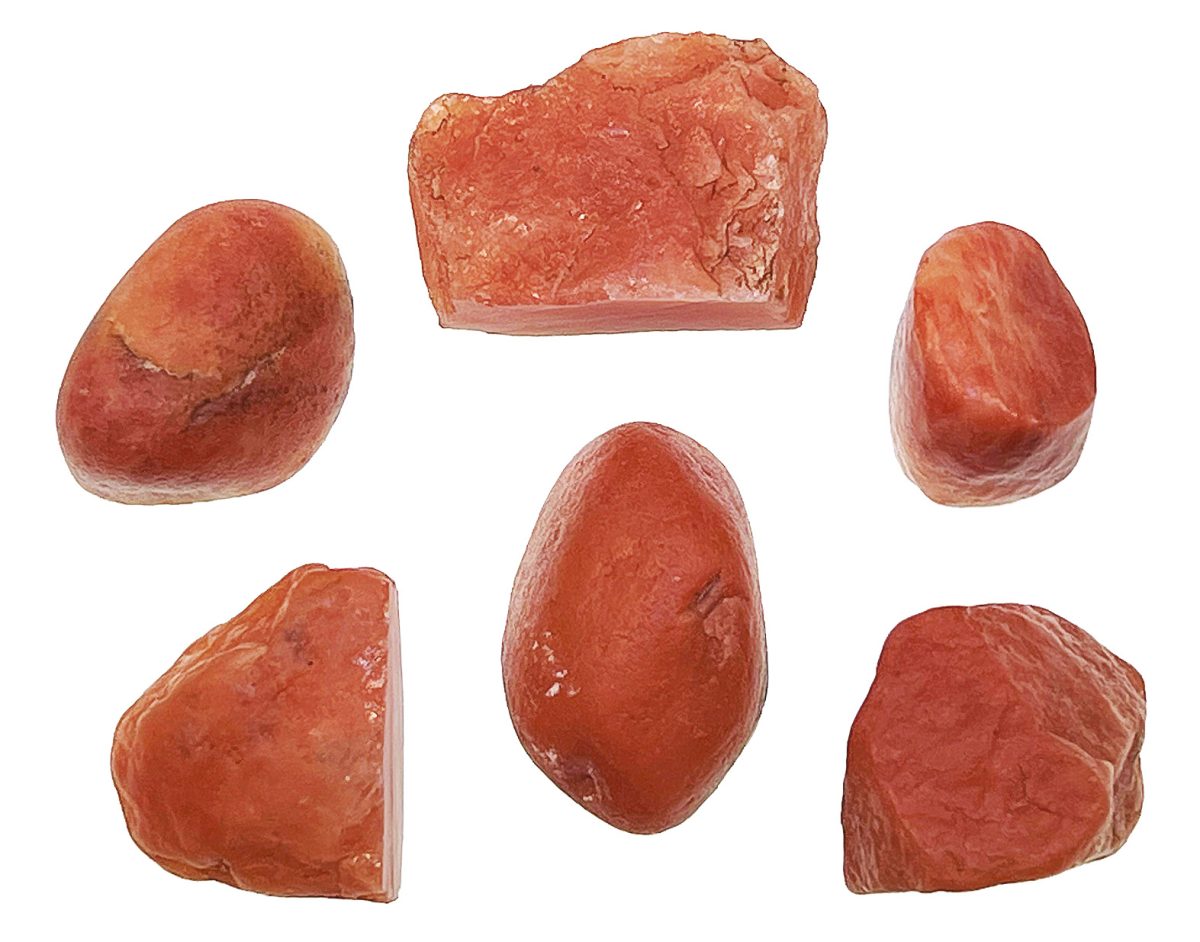
India?
The dark blue lapis lazuli used by the Egyptians for jewellery and the decorative arts from the Late Predynastic Period onwards was imported from north-eastern Afghanistan. If this gemstone could be brought from such a great distance, carnelian and other chalcedonies could have been carried to Egypt from the similarly distant Gujarat region of north-western India. This area has been famous as a source of chalcedony from early antiquity up until the present. Most notably, it supplied the ancient Harappan (or Indus Valley) Civilisation of the mid-3rd to early 2nd millennia BC in southern Pakistan.
It has long been assumed that no Gujarat chalcedony |was imported into Egypt during the Dynastic Period. However, some evidence suggests otherwise. For example, a carnelian bead with a white, chemically etched design was found in a Middle Kingdom tomb at Abydos. Such beads are widely regarded as a uniquely Harappan product. The Abydos bead, therefore, either came from the Indus Valley as a trade item, or it was made in Egypt by a craftsman familiar with the Indus Valley techniques, and perhaps using Gujarat chalcedony. There are two carnelian scarabs as well, both from unknown sites in Egypt, one from the Middle Kingdom and the other from the Eighteenth Dynasty, with white designs made by the same etching technique. Being scarabs, these were almost certainly made in Egypt, suggesting that either the etching technology – or the artisans themselves – came to Egypt from the Indus Valley, together with the Gujarat chalcedony. The evidence for this is admittedly thin. Nevertheless, some trade in chalcedony undoubtedly happened, although it may have been very minor.

Above & below: Harappan-style white etching on a carnelian bead from an Eleventh Dynasty tomb at Abydos, and a carnelian scarab from an unknown source, probably dating to the late Middle Kingdom. Images: Petrie Museum, University of London (below)

Gravel deposits
The Egyptians did not have to look to India for its chalcedony, however. There are numerous geological reports of agate and other chalcedonies – including occasionally carnelian – in the Nile River gravels of northern Sudan and southern Egypt. Such clasts are never abundant, but they always seem to be present.
Of particular significance is a gravel deposit known as the Abbassia Formation. This was laid down by the Palaeo-Nile during the mid-Pleistocene epoch, and occurs sporadically throughout the Nile Valley from Nubia to the Delta, with the deposits typically about 6m thick (20ft), but in places up to 15m (50ft). The formation name comes from the Abbassia district on the east side of Cairo, adjacent to ancient Heliopolis, where the gravel deposit was especially well developed. It has since been quarried away at this locality, with any remnants subsequently built over. Currently, the best exposure of the Abbassia Formation is near the el-Rus railway station, about halfway along the Wasta-Faiyum railway line between the River Nile and Fayum Depression. Although there has been no published report of chalcedony from the Abbassia gravels, pebbles of this gemstone are present. They consist mainly of banded agate with some non-banded brownish and yellowish chalcedonies.
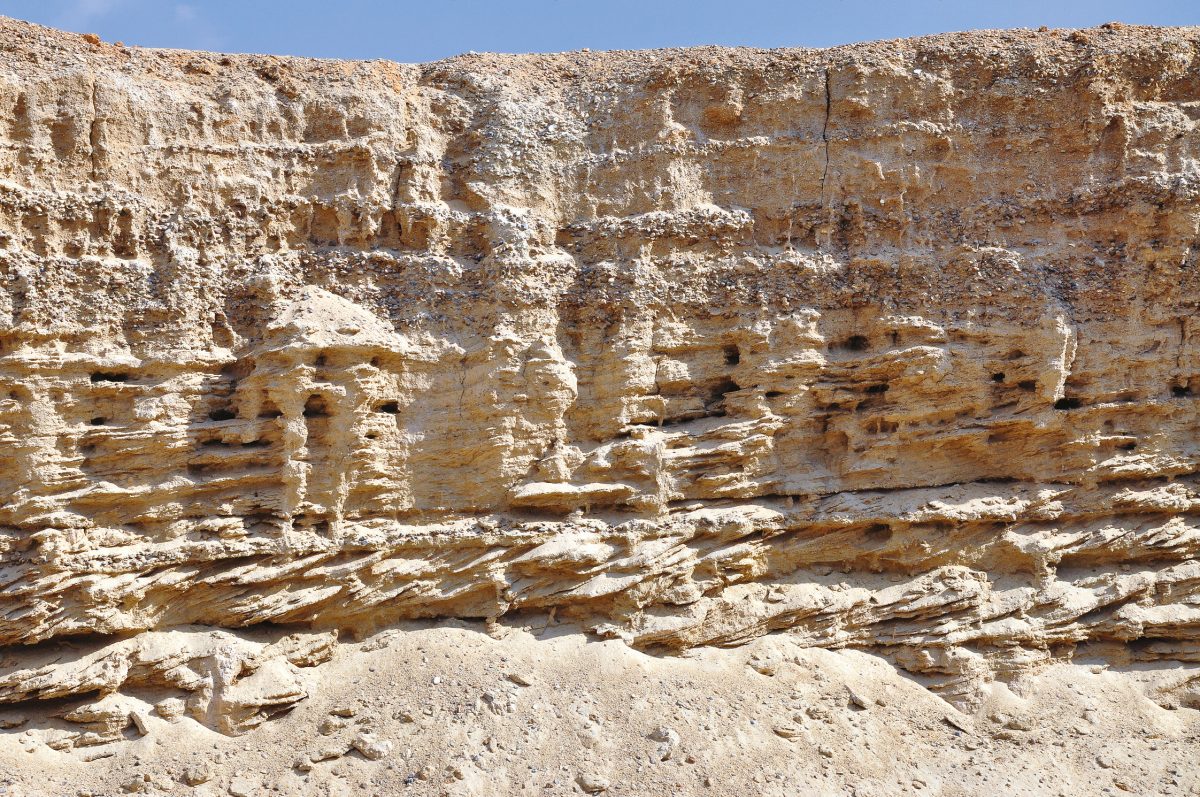
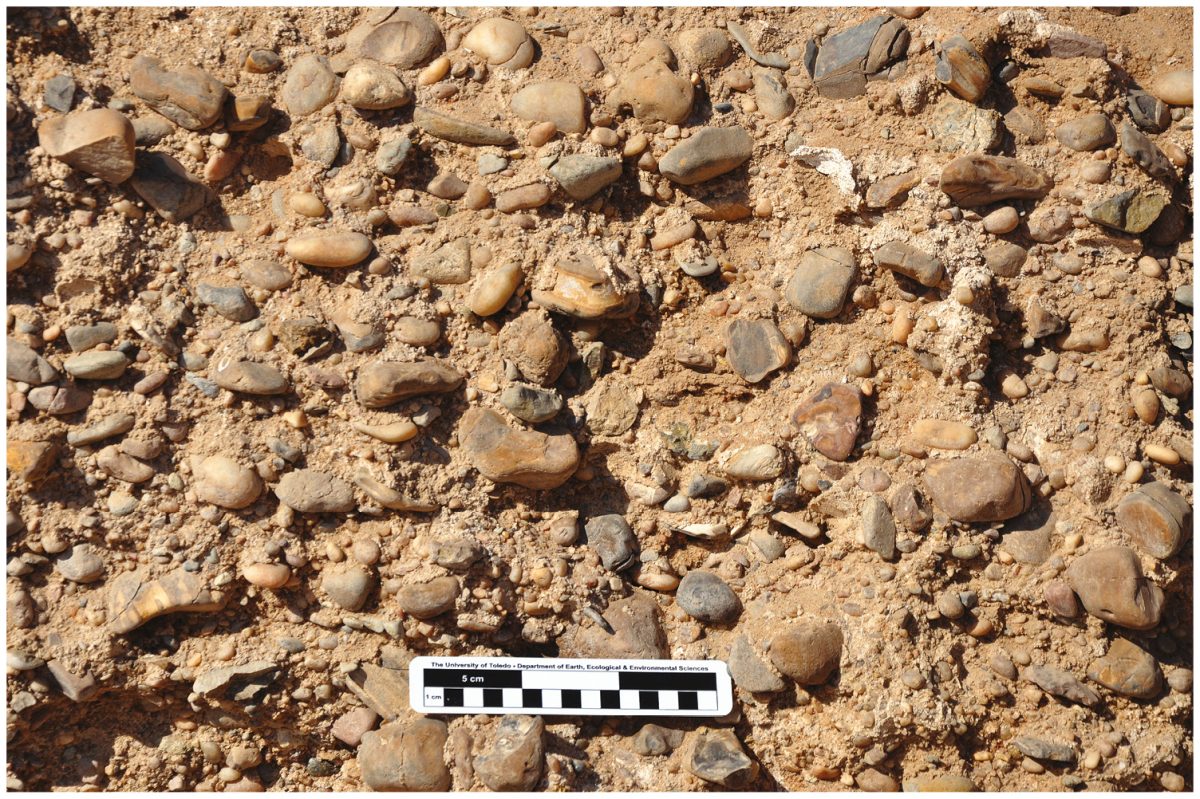
Although rare, these stones stand out from all the other pebbles in the deposit (which consist of a large variety of mostly igneous and metamorphic rocks derived from the Eastern Desert) in that they are much more reflective. Their shiny, glistening or wet-like appearance under the bright desert sun makes them relatively easy to spot. A few chalcedony pebbles approach carnelian in colour, but the great majority exhibit shades of brown or yellow. Such chalcedony, however, is ideal for manufacturing carnelian by heat treatment.
Heat treatment
Carnelian and other chalcedonies can be heat-treated to enhance or change their colour, a process that also makes them easier to work by pressure flaking and drilling. This was done, for example, by the artisans of the Harappan Civilisation. The effects of heat treatment are best seen with chalcedony of yellowish or brownish colour caused by the presence of hydrated iron oxides like goethite and limonite. At temperatures in the range of 250°C to 350°C, these impurities dehydrate to anhydrous iron oxide or haematite (Fe2O3). Thus, a yellow or brown chalcedony transforms to a rich orangish-red or red carnelian after heat treatment, with the final shade depending on the original amount and type of hydrated iron oxide in the chalcedony. The hallmarks of a heat-treated carnelian are its deep (burnt) reddish colour and a glossy sheen on new (post-heating) fracture surfaces.
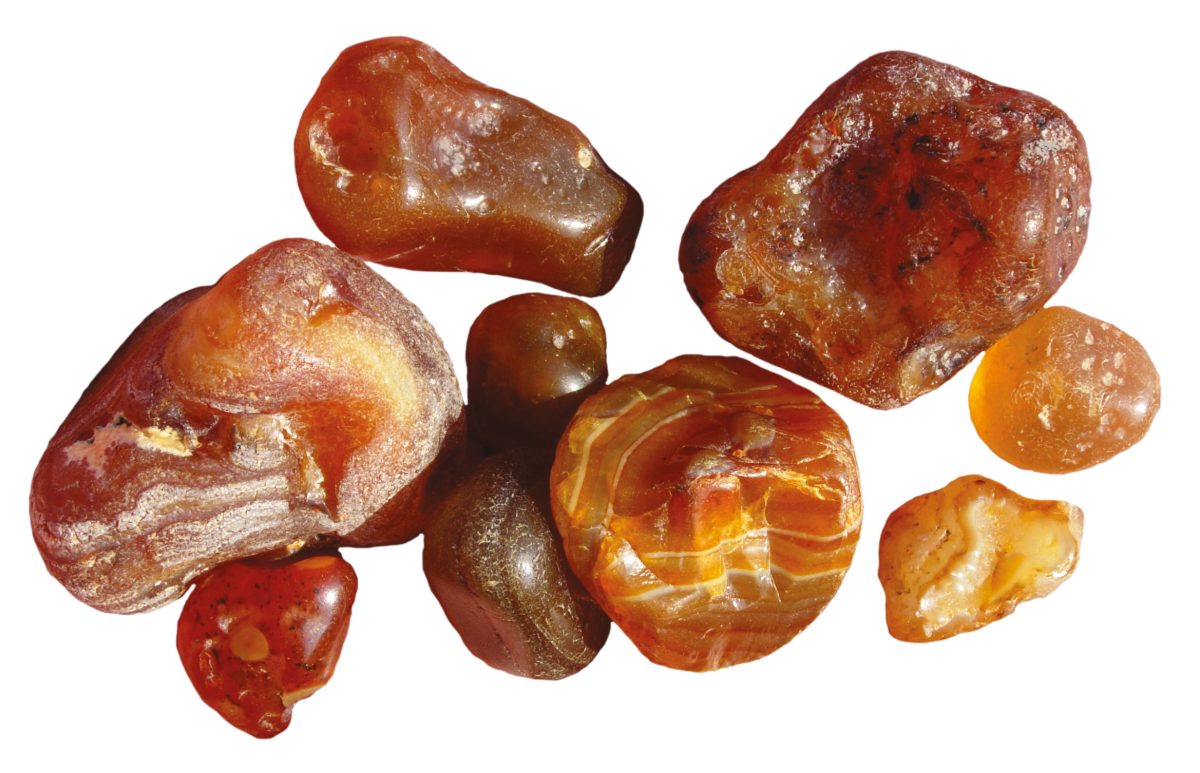
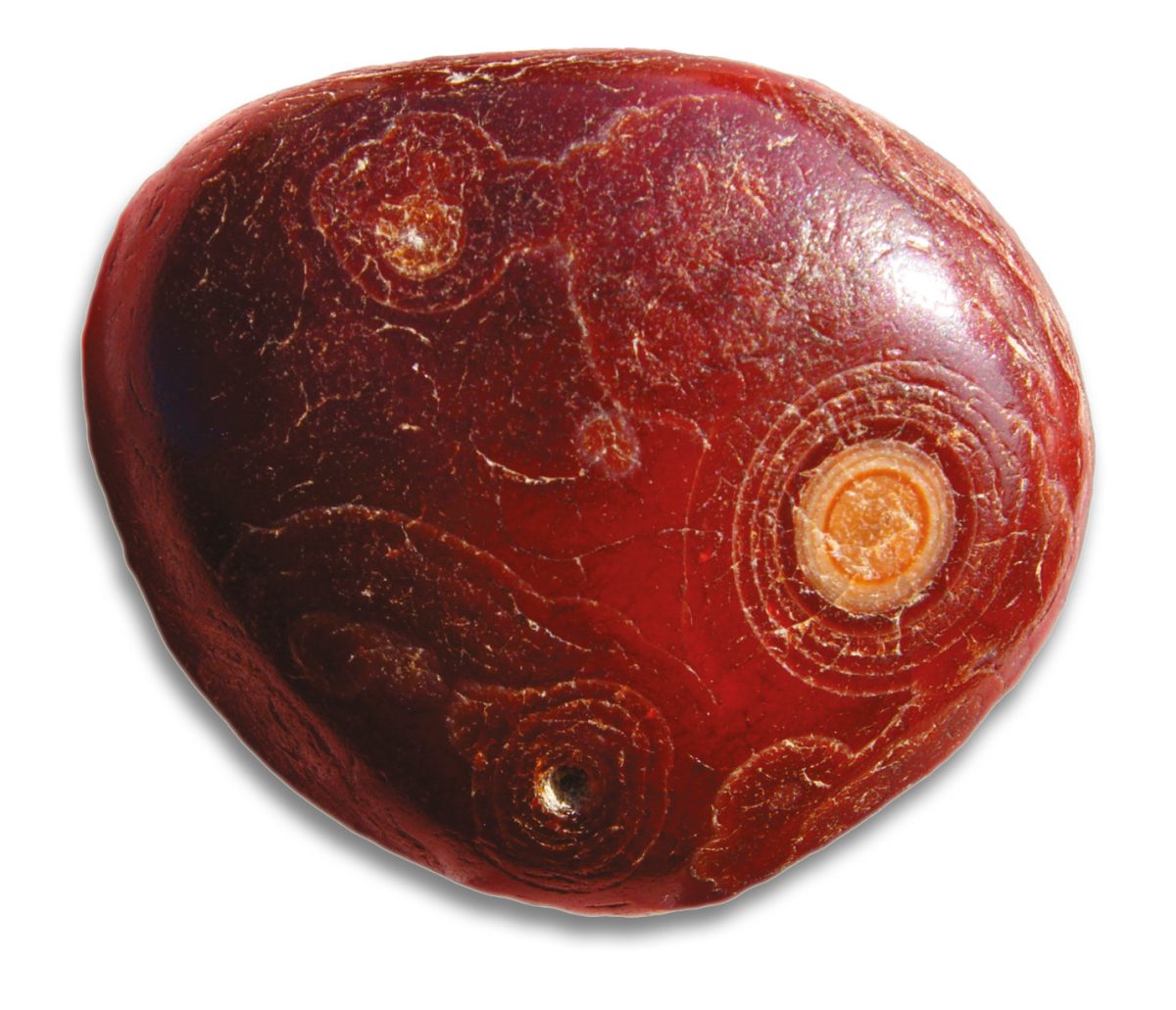
The ancient Egyptians were familiar with the use of heat treatment to harden objects carved from the talc-rich rock known as steatite or soapstone, but it has not been generally recognised that they employed this technique to manufacture carnelian, too. The fact that the Egyptians did heat-treat chalcedony is supported by both observational and experimental evidence. Examples of the former are the many unnaturally dark reddish carnelians seen in ancient Egyptian jewellery and in uncarved material at archaeological sites.
Naturally occurring carnelian only rarely exhibits such dark and intense colouration, and none of the known chalcedony sources in Egypt and northern Sudan can supply such stones. Experiments carried out on yellowish and brownish chalcedonies from the Abbassia gravel deposit showed that these reddened after heating for three days in a furnace at 275°C. In contrast, the orangish- and reddish-patinated vein quartz pebbles in the deserts are unaffected by the heat.
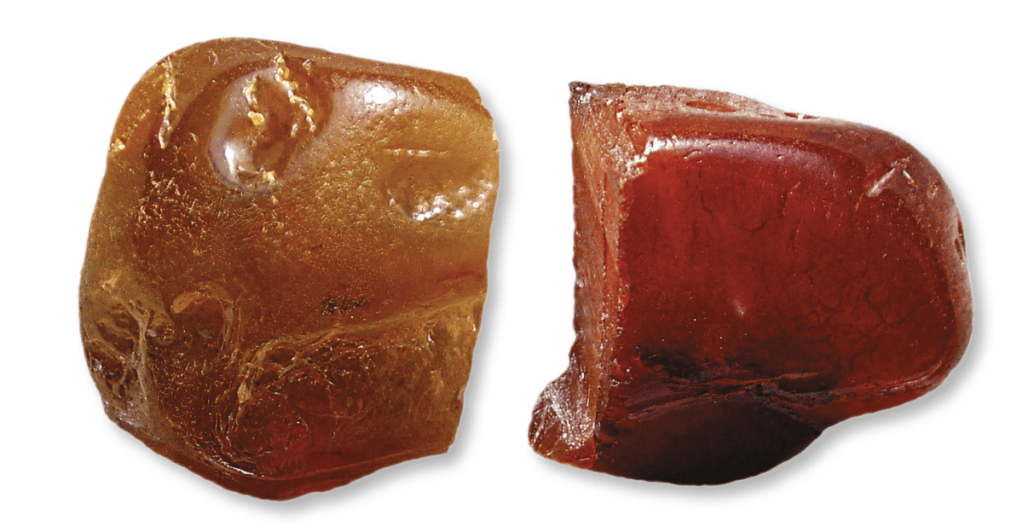
A heat-treated chalcedony pebble from the Abbassia Formation at el-Rus, before heating (on the left) and after heating (on the right).
The Abbassia gravel would have provided ancient Egypt with a ready and inexhaustible supply of brown and yellow chalcedonies for heat treatment, as well as the occasional natural carnelian. This is not to say, however, that carnelian of sufficient quality was always available in the amounts needed. Alternative sources sometimes had to be found. For example, beginning in the Eighteenth Dynasty, faux carnelian was made by setting rock crystal (normal, colourless, macrocrystalline quartz) over a reddish paste. Also, in the New Kingdom, red glass was used as a substitute for both carnelian and red jasper.
James A Harrell is Professor Emeritus of Archaeological Geology at the University of Toledo in the USA. He has so far made 50 trips to Egypt and Sudan investigating ancient Egyptian stones, resulting in the publication of three books and numerous papers. You can read his article on faux-stone vessels in AE 144 and on purple gemstones in AE 153.
• C Andrews (1990) Ancient Egyptian Jewellery (London: British Museum).
• J M Kenoyer (2020) ‘Bleached carnelian beads of the Indus Tradition, 3rd millennium BC: origins and variations’, in I L Finkel and J Simpson (eds) In Context: the Reade Festschrift (Oxford: Archaeopress), pp.169-182.
• J A Harrell (2024) Archaeology and Geology of Ancient Egyptian Stones (Oxford: Archaeopress).
All images: the author, unless otherwise stated