Subscribe now for full access and no adverts
The notion that there were literate women in ancient Egypt outside the royal court has been treated by modern Egyptology as improbable. Since the 1980s, scholarship has largely assumed that, even if some women could read and write, their influence on the bureaucratic machinery of the state was minimal, and rarely demonstrable. Egypt, like many other ancient societies, was rigidly hierarchical, and the main state positions were reserved for men. Although gender segregation was not as strict as in some antique cultures – women could work in manufacturing, cooking, and housekeeping in Egypt – records of women in high-ranking administrative or intellectual positions are exceedingly rare. This scarcity has often been taken as proof that true literacy among women was limited, especially beyond the palace walls.
Yet despite being sparse, fragmentary, and often indirect, evidence for female literacy does exist, especially in elite households, temples, and specialised professions, where women appear to have had opportunities to learn and use writing skills.

Was literacy necessary?
From the Old Kingdom onward, women are occasionally recorded with administrative titles, particularly within royal estates and households. Among these titles are ‘female household steward’ (imyt-r pr), ‘female overseer of the king’s house’ (imy.t-r is pr-nswt), and ‘female treasurer’ (sxt Htm.t). Even more striking are cases of women occupying professional and religious posts, such as ‘female director of the funerary priests’ (imy.t r Hm.w kA).
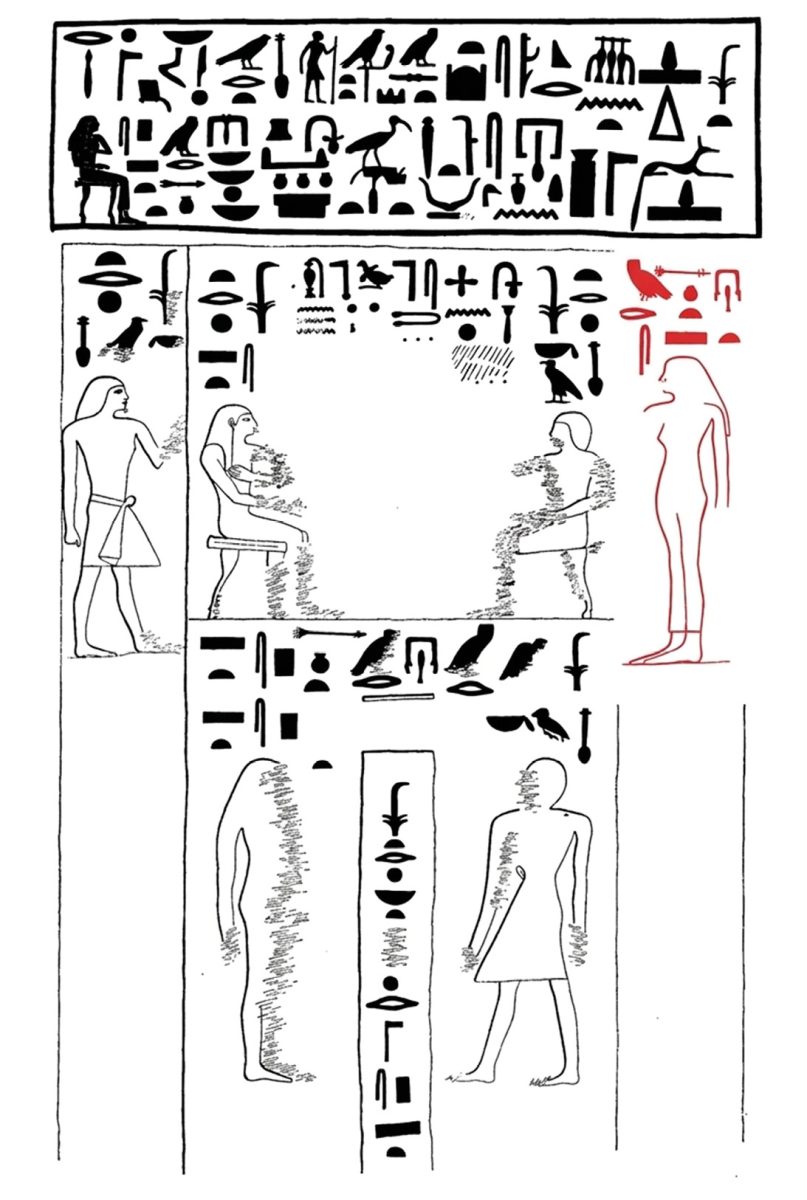
The false door in Akhethotep’s mastaba at Giza; the name and titles of his mother, Peseshet,are marked in red. Image: S Hassan (1932) Excavations at Giza 1929-1930, vol.I, fig.143
One of the most notable figures is Peseshet, who held the title ‘female director of the physicians’ (imy.t r snw.w) in the Fourth or Fifth Dynasty (c.2675-2413 BC). She is named in the mastaba of her son Akhethotep at Giza, where she is also identified as ‘female director of the ka-priests of the king’s mother’ (imy.t r Hm.w n kA nswt mwt). Her dual role suggests both medical authority and responsibility for the funerary cult of the pharaoh’s mother (who is not named). Such titles imply not only high status, but also the likelihood of literacy.
Evidence for female literacy, though sparse, fragmentary, and often indirect, does exist…
Female scribes: reality or misinterpretation?
The existence of female scribes remains one of the most debated questions. Terms such as sS.t or sxAt which appear in the Middle Kingdom (c.2045-1700 BC), were long translated as ‘cosmetician’. However, recent scholarship has challenged this, suggesting a closer link to writing or documentation.
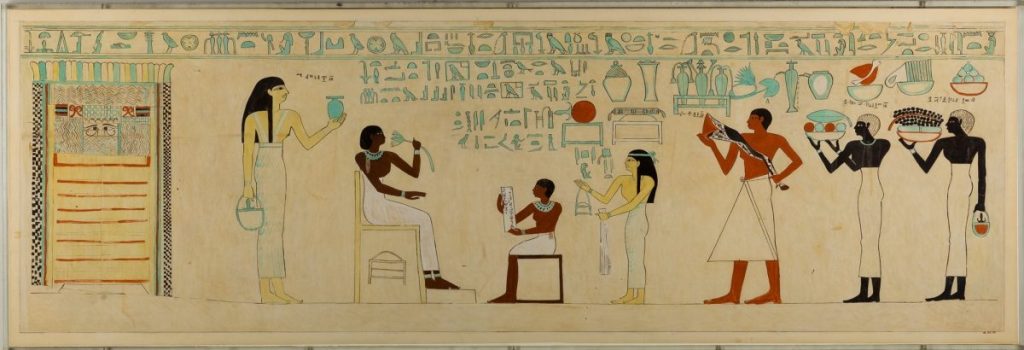
A striking case comes from the sarcophagus of Ashayet, one of the secondary wives of the Eleventh Dynasty king Mentuhotep II, which was found in the king’s temple complex at Deir el-Bahri. Three women in her service – Ik(u), Nebet-senu, and Senet-Intefara – are described as sS.twt. Though not shown with palettes or brushes, one of them is depicted reading notes, suggesting involvement in correspondence or record-keeping for the queen, like a lady-in-waiting of the privy chamber, rather than being concerned solely with hair and make-up. She was no doubt a literate woman, even if she did not formally belong to the professional scribal class.
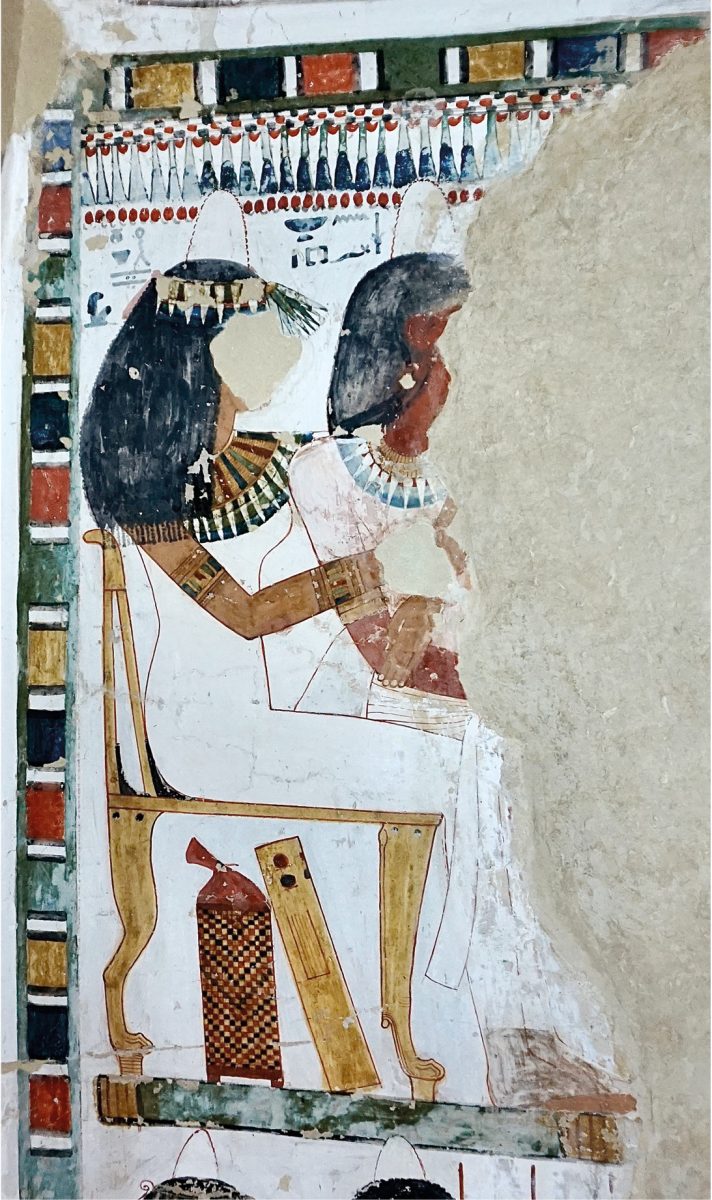
Later, in the Eighteenth Dynasty necropolis of Sheikh Abd el-Qurna, some tombs depict women with unmistakable scribal kits (palettes, leather pouches, and rolls of papyrus) placed beneath their chairs. These objects did not serve a decorative purpose but rather symbolised a work-related and intellectual identity, even though their owners were probably not professional scribes. This is a fitting detail, given that Seshat, the goddess of writing and record-keeping, presided over all matters of literacy and documentation in ancient Egypt, alongside her masculine counterpart Thoth.
One example comes from TT84, the Tomb of Amunedjeh, the king’s first herald. Here, the literate lady seems to have been the mother of the tomb-owner’s wife, though her name is now unreadable in the scene. Another example is found in TT69, the Tomb of Menna, where his wife Henuttawy, a singer of Amun, is portrayed twice with the same scribal kit. Similarly, in TT162, the Tomb of Qenamun, mayor of Thebes under Amenhotep III, his wife Muttuy is likewise depicted in this fashion, echoing the same intriguing association with the tools of writing.
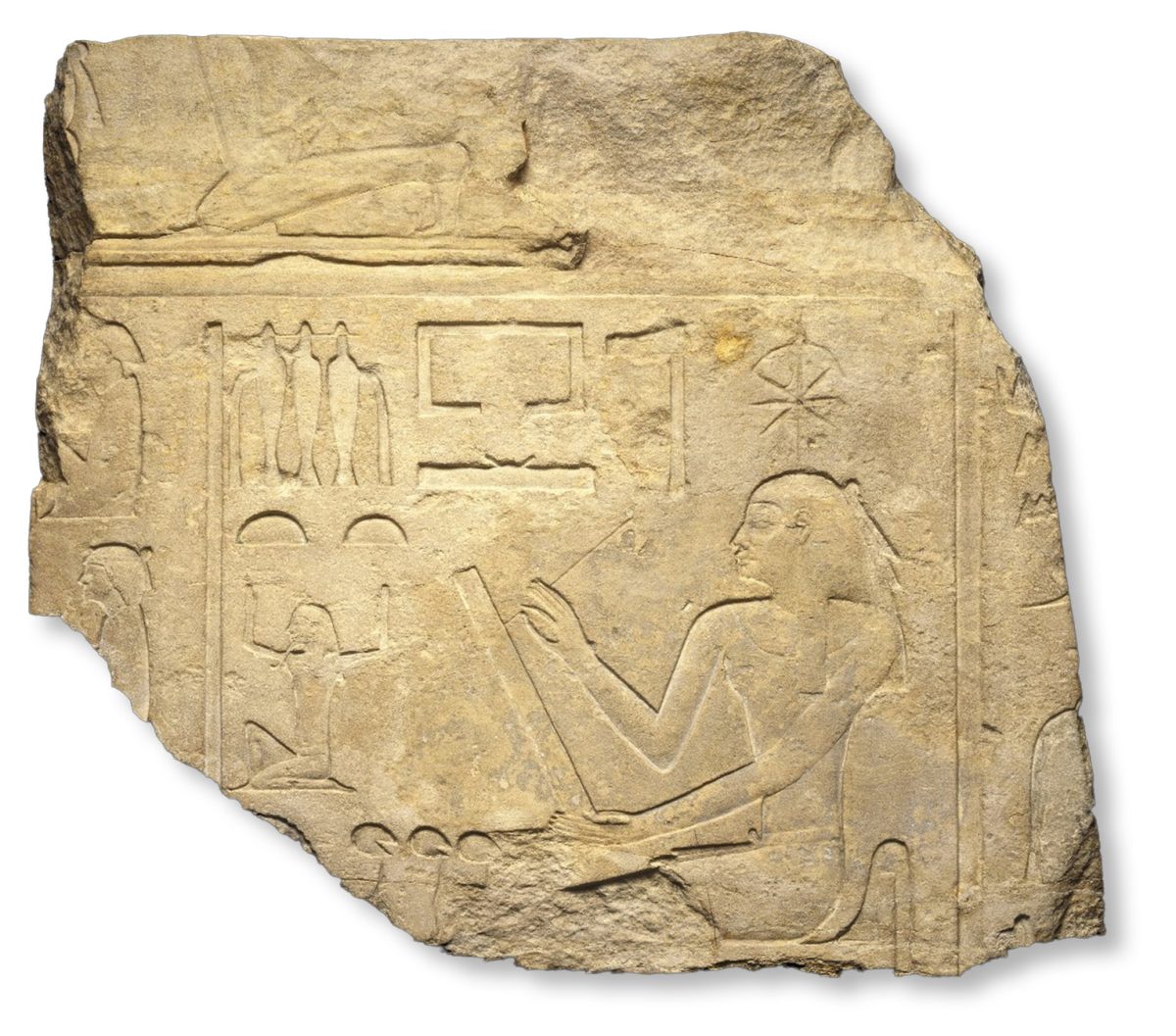
In the Late Period (c.747-322 BC), two notable professional female scribes are securely attested. One, Naas, is mentioned on a limestone stela now preserved in the Museo Archeologico of Florence. The other is Irtieru, who personally served the God’s Wife of Amun, Nitocris, daughter of Psamtek I. As a high-ranking lady, married to the vizier Nespamedu, and mother of the vizier Nespaqashuty D, she had the means to construct a large, decorated, and inscribed tomb in the South Asasif necropolis (Western Thebes, TT390).
Education: exclusive to the royal court?
Within the royal family, education followed a markedly distinct and privileged course compared to that of the wider populace. Literary sources, such as the Demotic text ‘The First Tale of Setne Kamwas: Setne and Naneferkaptah’, illustrate the high value placed on literacy among the elite. Even female members of the royal household were often instructed by private tutors, who not only taught them to read and write, but also fostered a broad cultural and intellectual foundation.
The high mortality rates of the period meant that succession could rarely be guaranteed; consequently, several royal children were often prepared simultaneously as potential heirs to the throne. This comprehensive education was not merely ornamental, but strategic: by studying inscriptions and monumental triumphs carved into temples and tombs, royal women found inspiration in the deeds of their predecessors. Their education also enabled them to recite sacred formulae during religious ceremonies – skills of significant ceremonial and political weight that reinforced their legitimacy and authority within the ancient Egyptian sociopolitical framework. For similar reasons, such training may have been extended to non-royal children destined for careers in the bureaucracy or the army. These children probably attended lessons within the royal residence, in an institution referred to as ‘the school of writing’.

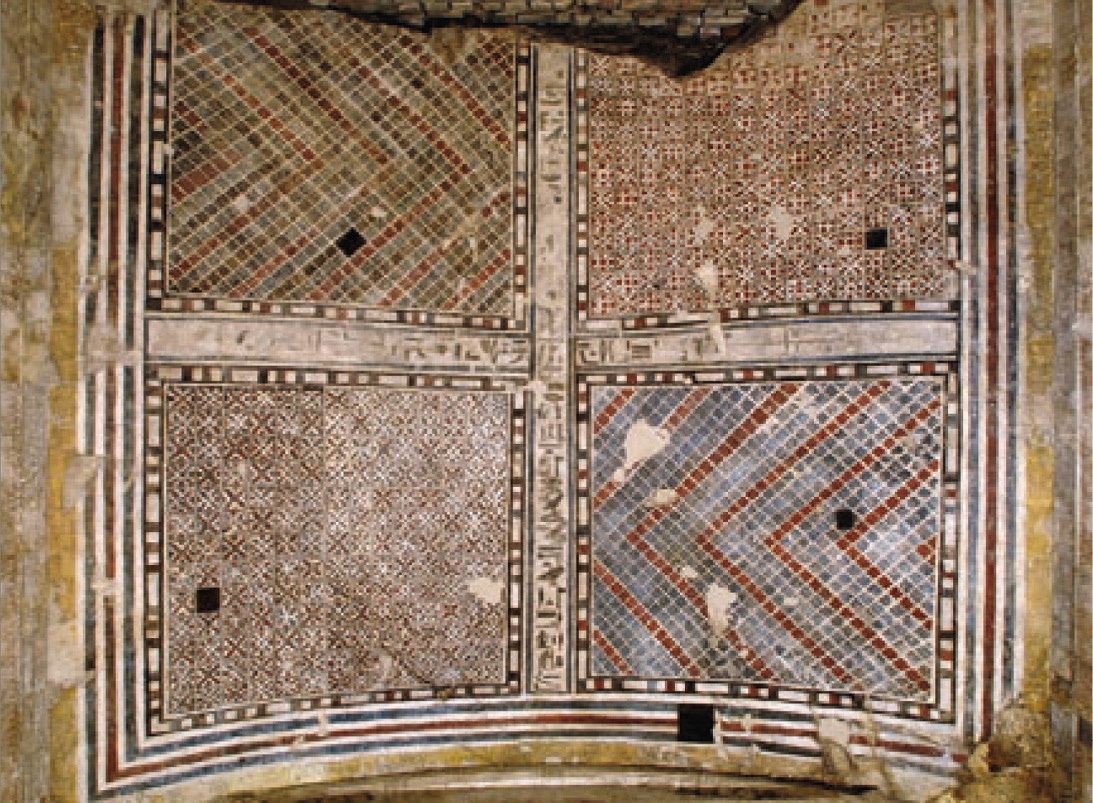
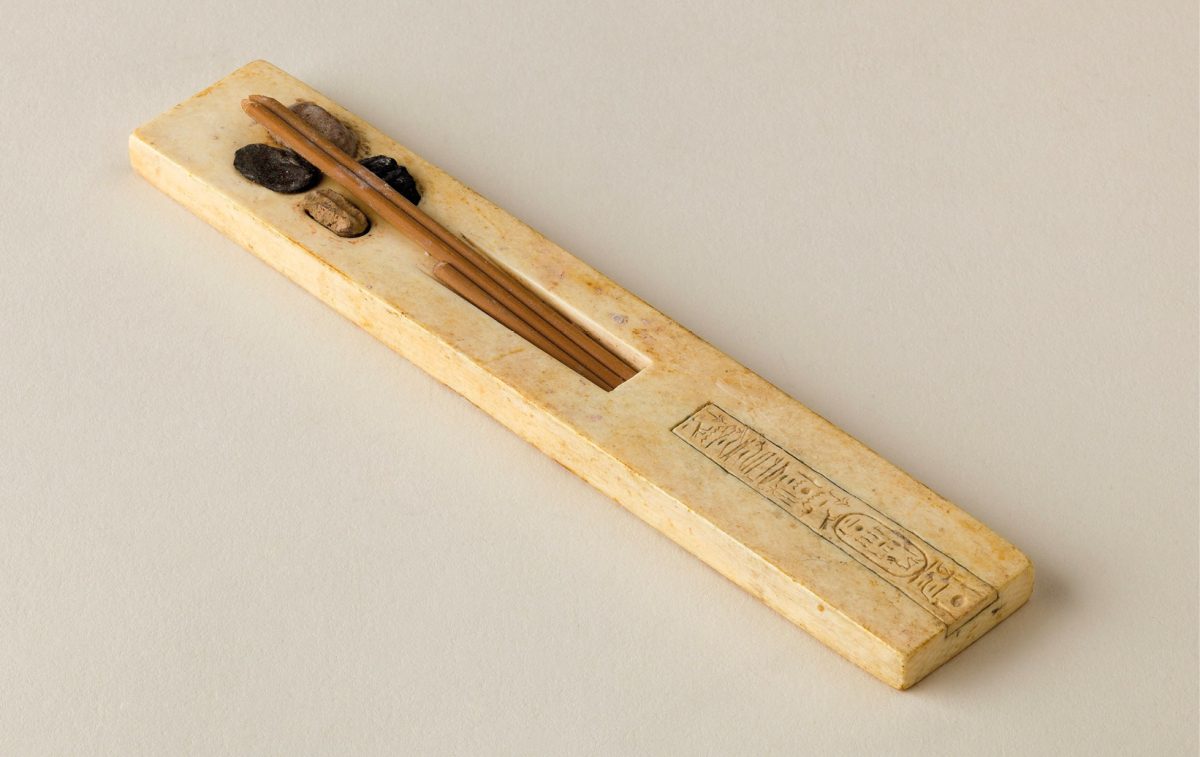
Two remarkable artefacts draw particular attention to their own association with writing: the ivory scribal palettes of the Amarna princesses Meketaten and Meritaten, now housed in the Metropolitan Museum of Art in New York and the Egyptian Museum in Cairo, respectively. Meketaten, the younger of the two Amarna princesses, died tragically at a young age, before her (probable) brother Tutankhamun ascended the throne. It is tempting to imagine her seated with her palette, copying short texts or sketching images of birds, pets, and family members – activities much like the leisure pursuits of children across history.
Meritaten, Akhenaten’s firstborn, was destined to become queen – and did so, albeit for only a few years. Her ivory palette probably served not only as a tool for artistic expression, but also as part of her preparation for the political and ceremonial duties that awaited her – responsibilities she is often shown fulfilling alongside her father. She resided in a private northern palace, where she may have used the palette to draft or revise diplomatic letters, particularly as her name appears frequently in correspondence with the royal court of Babylon regarding gifts sent from that kingdom.
Women’s voices in letters and love poetry
The corpus of letters from the end of the Ramesside Period (c.1188-1069 BC), mainly from the tomb-workers’ village of Deir el-Medina, is invaluable, offering rare insights into the direct voices of ordinary women in their daily lives. These texts reveal not only urgent, practical requests for domestic goods, but also deeply emotional appeals to relatives, demonstrating that women were neither silent, nor passive and idle.

One wife, perhaps separated from her husband after a betrayal, reproaches him for cowardly abandonment and unresponsiveness – behaviours unbecoming in a respectable paterfamilias. Having left his family without provision, he becomes the target of her indignant plea:
Why have you left me without word? Why do you ignore your household? I am here, struggling to care for myself and the children. Send us food and clothing. Do not let us go hungry while you are away. Remember your responsibilities as a husband.

Another letter records a mother’s complaint against her nearly adult son, who has neglected his filial duties. Her words combine moral insistence with emotional urgency:
My son, am I not the one who bore you? Why have you not come to see me, or sent me help? I am in need and alone. Please, fulfil your duty and bring support, or at least send word of your plans. Your mother is waiting for your care.
In a society where writing was indispensable to daily life, it is reasonable to assume that basic literacy was relatively widespread, even among women of artisan, scribe, or merchant families. A small number of women were known to be female entrepreneurs, such as Tsenhor, who ran her own funerary business when Egypt was under the rule of the Persians (c.525-404 BC). Keeping records, noting transactions, and managing household accounts were essential for family business and domestic life. Women may not always have required a male intermediary to read or send private letters, particularly when wishing to avoid the intrusion of third parties into sensitive family matters.

Even if such texts were composed by professional scribes at their dictation, or replies read aloud to them, the emotional register remains vivid and authentic. They convey anger, frustration, sadness, and fear, reflecting the precarious social conditions of women faced when isolated or deprived of male protection and economic support – as illustrated by the will of Naunakhte, who disinherited three of her eight children because they did not care for her in her old age.
Beyond correspondence, the more positive portrayal of women in the love poems preserved in Ramesside Papyrus Chester Beatty I and Papyrus Harris 500 (in contrast to their often-cautionary depiction in moralising documents or narrative tales) raises the possibility that there were specific social or cultural contexts in which (elite) women actively participated in literary composition. This divergence probably reflects the different settings in which these texts were produced and circulated.
These texts reveal… that women were neither silent, nor passive and idle.

Love poetry, closely tied to performance, ritualised courtship, and personal experience, may have provided a space where women were not only represented in affirming roles, but may also have contributed to both the creation and the reception of such works. Narrative tales, by contrast, tend to participate in a more male-centred discourse, where female characters frequently appear as disruptive figures: seductresses, betrayers, or agents of disorder. The voice of the female speaker in the love songs is strikingly direct and emotionally unrestrained:
It is pleasant to go to the canal, to wade with you. My heart is eager for your company, more than for food or drink.
If only I were your wife, you would hold me close every day. My heart is glad when I imagine it.
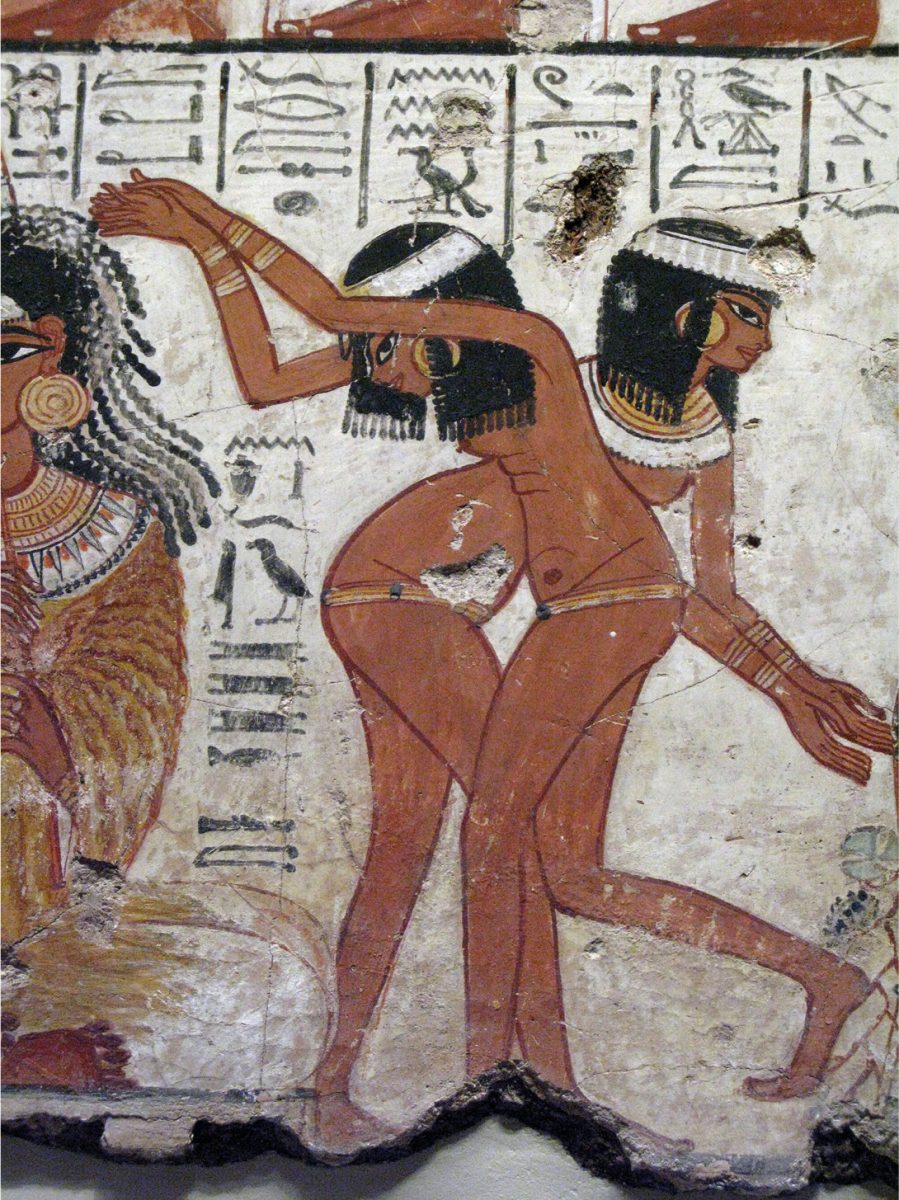
This genre of literature presents women not as silent or passive figures, but as free agents of desire, unafraid to express longing and passion openly. Their words are bold, intimate, and at times daring, articulated without hesitation or fear of social blame. The love poems therefore offer not only idealised literary voices, but also valuable glimpses of a cultural background in which female subjectivity and erotic agency could be celebrated rather than condemned.
Women’s literacy in ancient Egypt was not widespread – but it mattered. From royal ladies and doctors to singers and scribes, a handful of women broke through the barriers of their time, leaving traces of their words in stone, papyrus, and perhaps in poetry. Their stories prove that even in a world ruled by men, women could claim a place in the culture of writing – and make their voices heard across the centuries.

Simone Petacchi is currently a scientific collaborator for the Museum of Mediterranean Archaeology in Marseille, a consultant curator for the Egyptian antiquities at the Stibbert Museum (Florence), and a member of the Nuri Archaeological Expedition, Sudan. He is the author of three books and numerous academic papers. You can read his articles on the Marseille Collection in AE 145 and Christiane Desroches Noblecourt in AE 149.
• B M Bryan (1985) ‘Evidence for female literacy and scribal activity in the New Kingdom’, Bulletin of the Egyptological Seminar 7: 17-32.
• G Robins (1993) Women in Ancient Egypt (Cambridge, MA: Harvard University Press).
• K Donker van Heel (2014) Mrs Tsenhor: a female entrepreneur in ancient Egypt (Cairo: AUC Press).
• K Donker van Heel (2016) Mrs Naunakhte and Family: the women of Ramesside Deir al-Medina (Cairo: AUC Press).
• M F Ayad (2021) ‘The female-scribe Irtieru and her tomb (TT 390) in the South Asasif’, in E Pischikova, Tombs of the South Asasif Necropolis: art and archaeology 2015-2018 (Cairo: AUC Press), pp.271-282.