Subscribe now for full access and no adverts
Since November 2021, members of Wigan Archaeological Society have been investigating the remains of a large, previously unknown circular monument in a field at Aspull, about three miles north-east of the town that gives our group its name. This enigmatic site had first come to our attention two years earlier, when a near-circular cropmark was spotted in overhead images seen online. After an initial desk-based assessment identified an intriguing low mound (visible in LiDAR imagery) at its heart, we wondered: might the markings represent the remains of a barrow?
Unfortunately, before our investigation could begin in earnest, the onset of the COVID-19 pandemic brought everything to an abrupt halt – but (during an easing of lockdown restrictions) in 2021 we were able to carry out a resistivity survey. This confirmed the presence of a roughly circular feature 47m in diameter, with a low mound in the middle which rose to a little over 1m in height, and in order to make sense of these discoveries we devised a three-phase plan of investigation. The first aimed to determine what was causing the cropmark; the second would characterise the dimensions, construction, and other details of this cause; and the third, necessarily woolly at this point, would go on to explore the central mound itself.
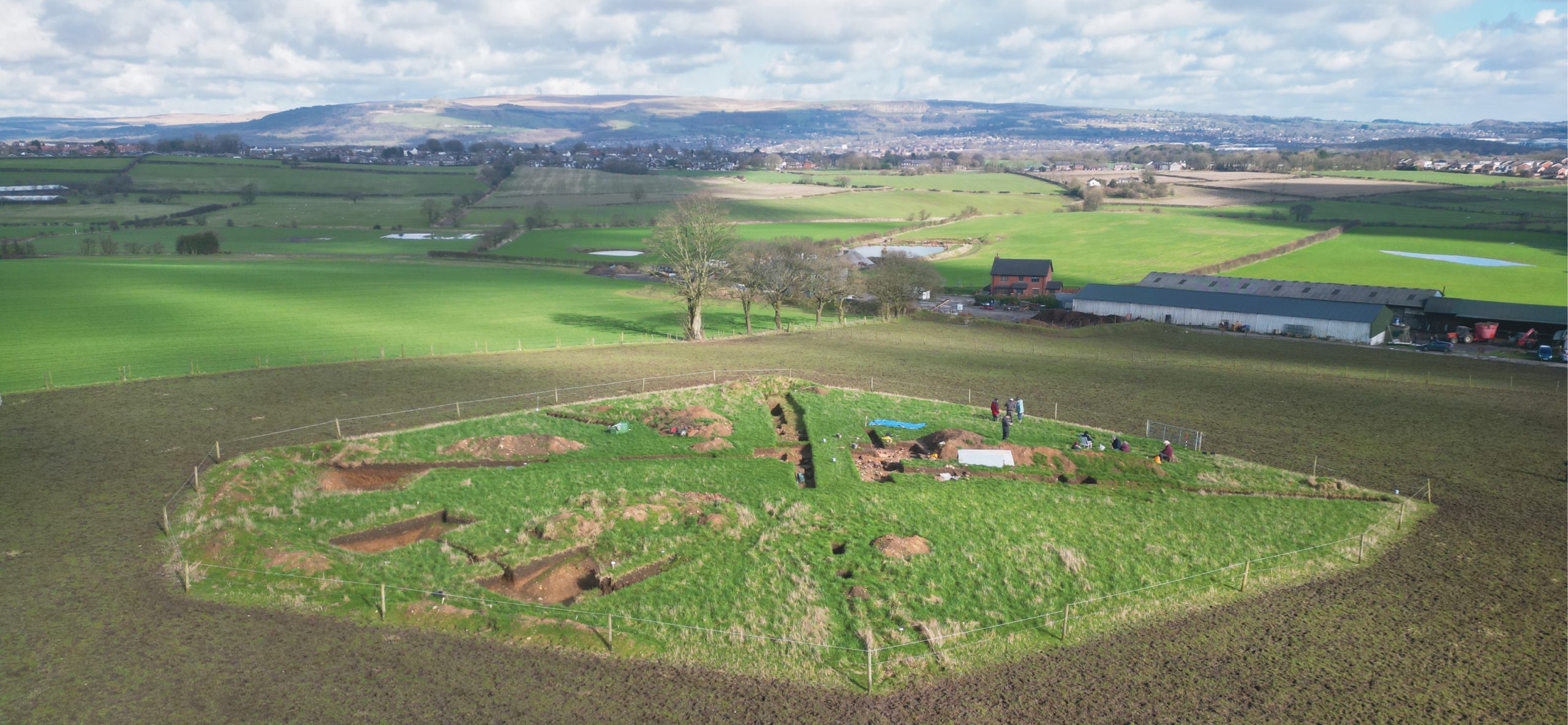
The site – which we were then calling the ‘Aspull Ring Feature’ – lies on rising ground on the western flank of a valley (the M61 corridor); several miles away, on the eastern side, we find Winter Hill and Anglezarke Moor, a region rich in prehistoric monuments, but our area had not previously been recognised as being particularly archaeologically significant. We hope that our discoveries will help to redress this balance somewhat. Early in the investigation, we were able to establish that there was a great deal of intervisibility between the ring feature and several of the monuments on the far side of the valley, including the Pikestones (a Neolithic long barrow), Winter Hill cairn, Noon Hill cairn, Round Loaf, Two Lads, and a number of other suspected or unnamed prehistoric sites. Might this suggest that the ring feature was similarly ancient, and that the builders of these monuments had been aware of its presence?
A monument emerges
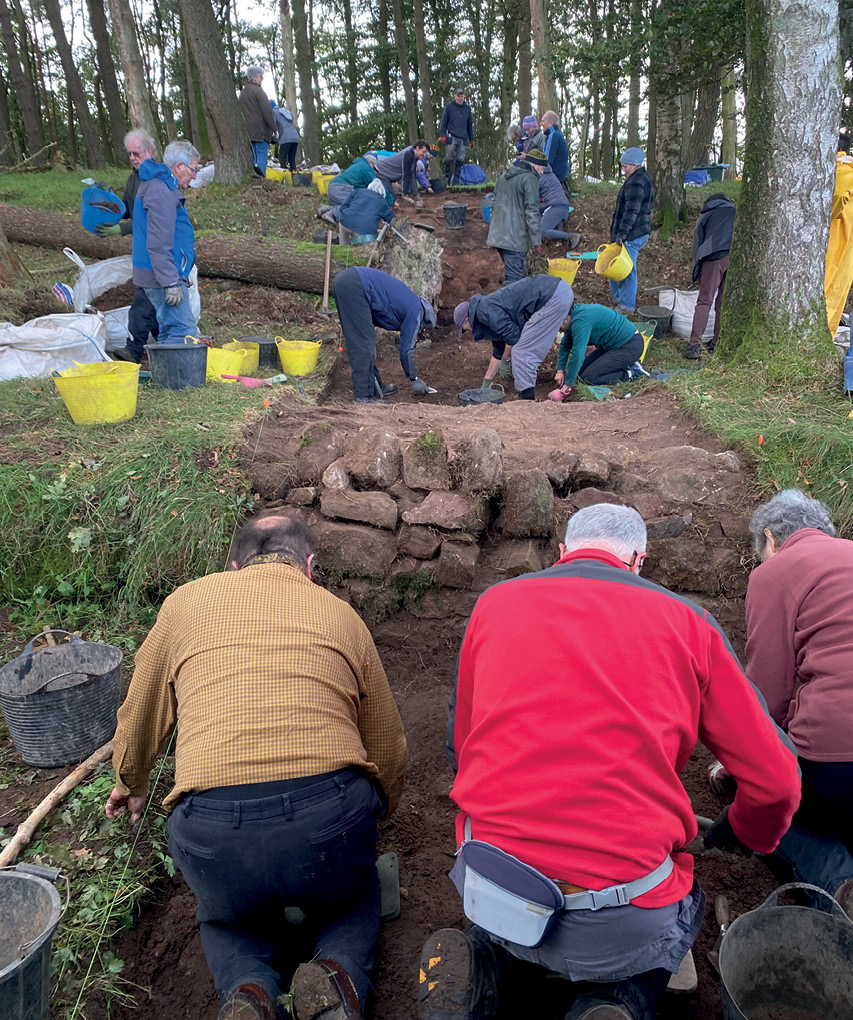
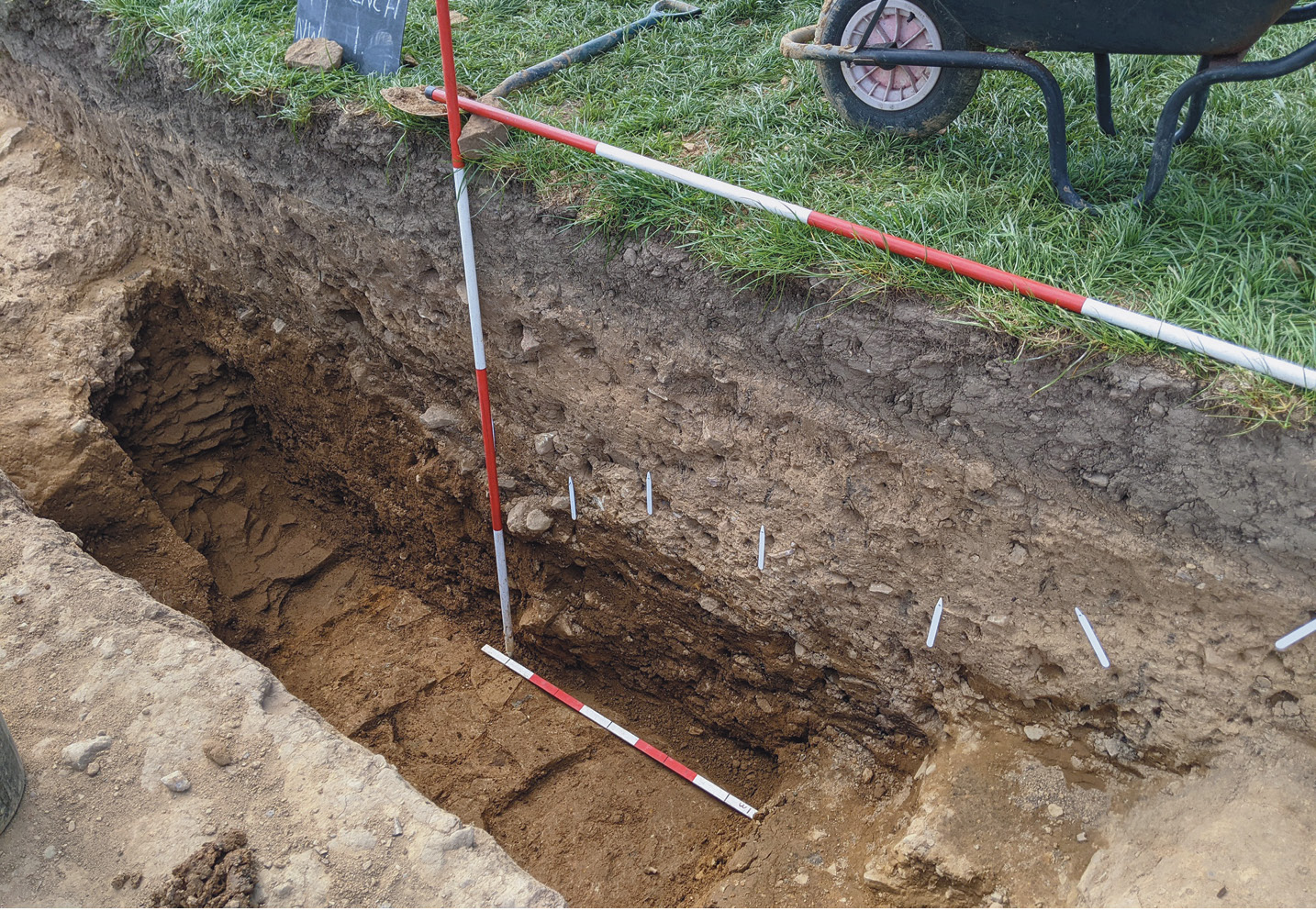
This intriguing picture began to come into greater focus in April 2022, as we launched our first full investigation. A trench was cut across the ring at the point where the aerial cropmarks and the geophysics results coincided most closely, in the north-east quadrant. As we had hoped, this soon revealed the cause of the cropmark, as we uncovered the top of a segment of rock-cut ditch: a substantial, steep-sided feature that was 3.5m wide at the top, 1.5m deep, and 3m wide at its flat, bedrock base. While this trench produced no finds – other than small pieces of charcoal at the bottom of the ditch, which were collected for radiocarbon dating – the make-up of the fill was very interesting. It showed no sign of layering, being an undifferentiated mix of sand and stones, and several trenches dug since have shown that other segments of the ditch were the same. It appears from this that the ditch had not silted up naturally, but had been deliberately filled in over a very short time. The completion of Phase 1 also occasioned a change of name for the feature: ‘Aspull Ring Feature’ became ‘Aspull Ring Ditch’. So what else could we learn about this enigmatic construction?
To find out, our second trench was dug across the western edge of the circle, an area which had lacked clarity on the resistivity survey. Much to our consternation, no trace of the ditch could be seen there, so a third trench was placed across the south-east of the ring – and to our relief, Trench 3 revealed very nearly the same ditch profile as found in Trench 1. What, then, could explain its absence in Trench 2? The resistivity for this part of the site was hard to interpret, but once we had eliminated the possibility that the ditch had curved further in or out than the limits of our trench (expanding the cut 2m to the east and 2m to the west), only one option remained: did the apparent gap represent an entrance?

Our next two trenches continued to reveal the line of the ditch – but, in one of them, something odd was happening. In Trench 5, the course of the ditch actually did deviate 5m further out than the circle we had predicted, showing that the ‘ring’ was in fact more oval in profile. Taken together with the scale of the ditch and the possible entrance, we wondered if it might therefore suggest a Neolithic henge, though the presence of this kind of monument would be unprecedented for Lancashire. The ditch also appeared to be terminating in this area, but if this marked the start of the proposed entrance, the gap would have to be very broad indeed, leaving more than 20 metres open.
We opened another trench, Trench 5a, immediately alongside in the hope of clarifying this – but while the ditch was present there, too, it did not line up with the section in Trench 5. What we did find, though, were further termini in both trenches – unusual in form, with square ends, cut into the bedrock – which had a gap approximately 1m wide between them. These appeared to form an interruption in the outline rather than a formal entrance, and their presence was undeniably unexpected. More to the point, we had still not found the termini that we were sure had to lie to either side of the empty area in Trench 2. After careful use of an auger (a risky business in stony ground) to position our next trenches, we did at last locate these features – but, unlike the square-ended ‘gap termini’, these were shallow and more bowl-shaped (though there was evidence of extensive tree-root damage to the northern example). From these, we can say that the western entrance measured a more sensible 6.5m wide.
Back in Trench 5, another feature was becoming clearer. Close to its ‘gap terminus’, we had found what looked like a deliberately placed pile of stones measuring 2.6m (east–west) by 1.6m (north–south), and 0.4m high. The purpose of this ‘cairn’ was not immediately obvious, but excavation of its eastern corner revealed a carefully built structure of alternating layers of sand, rounded stones, and clay. Helpfully, at least two long pieces of burnt wood were also involved in its make-up, allowing us to take samples for radiocarbon dating.
Speaking of dates: when the results from our first sample, from the charcoal in Trench 1, came back, it returned a probable date of 1501-1425 BC. This surprised us somewhat, being middle Bronze Age and not, as we had expected for such a monumental ditch, Neolithic. The date came with a proviso – the sample had been poor in carbon, which could have resulted in it producing a slightly too-recent date – but when we got results for the ‘cairn’ sample from Trench 5, it too gave us a date from the middle Bronze Age, centring on 1650 BC.
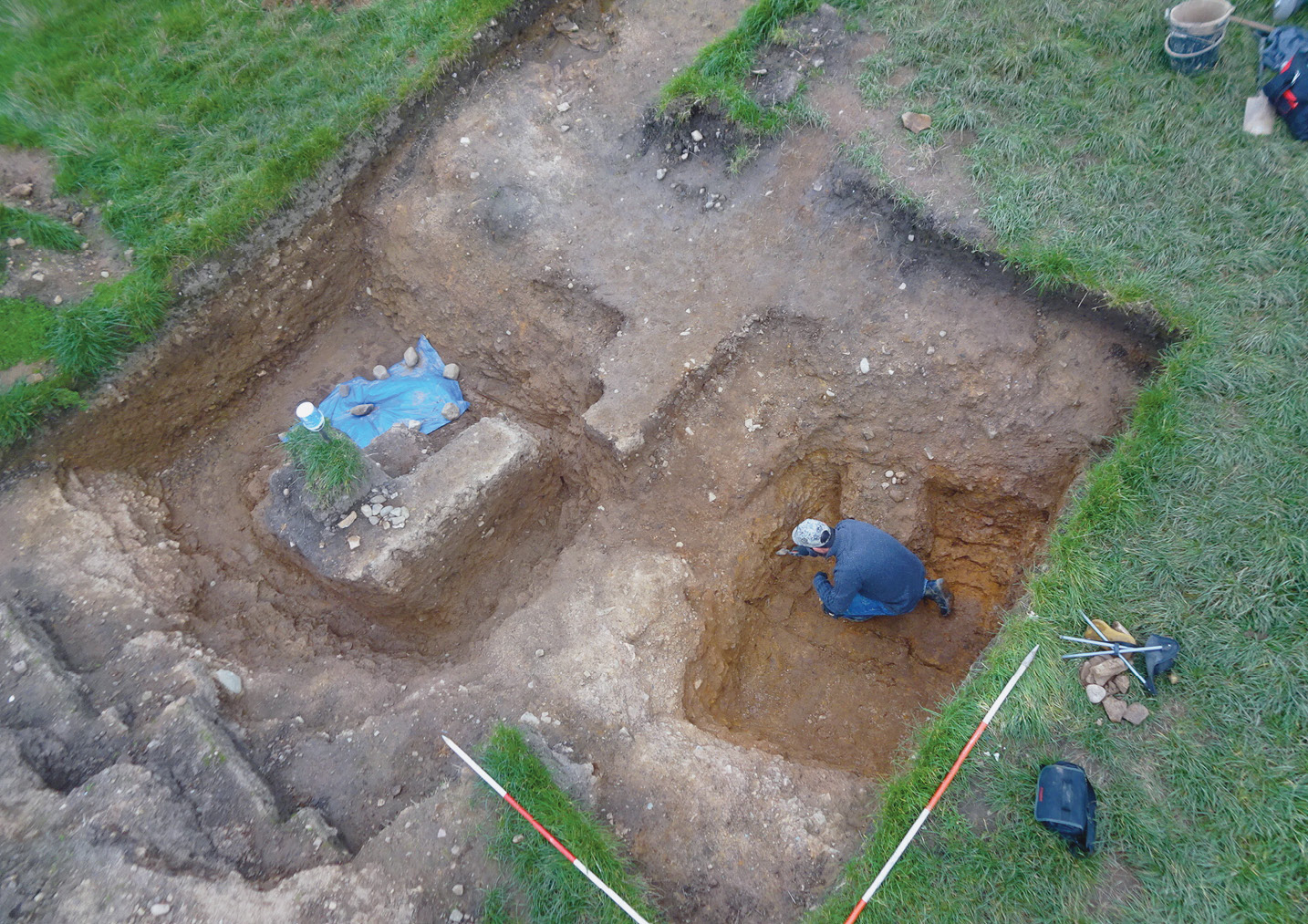
To summarise the ‘story so far’ by the close of the 2022 season, we had defined a substantial rock-cut ditch forming an oval some 47m by 42m, with a 6.5m-wide entrance to the west and a 1m-wide ‘interruption’ a little to the north of this more formalised gap. Our working theory at this stage was that the feature had originated as a Neolithic henge monument, which was then repurposed during the Bronze Age, possibly as a funerary enclosure. The Bronze Age date from the ditch charcoal reflects the last time that the feature was open, rather than its original construction, and we suggest that it had been deliberately filled in – perhaps as some kind of closing ritual. The mound in the centre was suspected to represent part of this Bronze Age reuse, too – and so, in 2023, we launched Phase 3 to find out more.
Exploring the mound
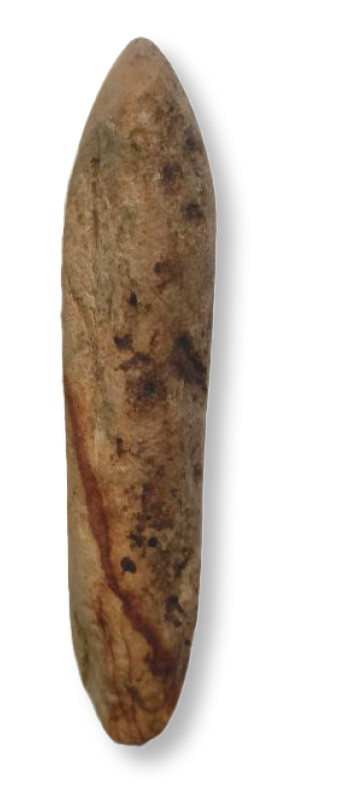
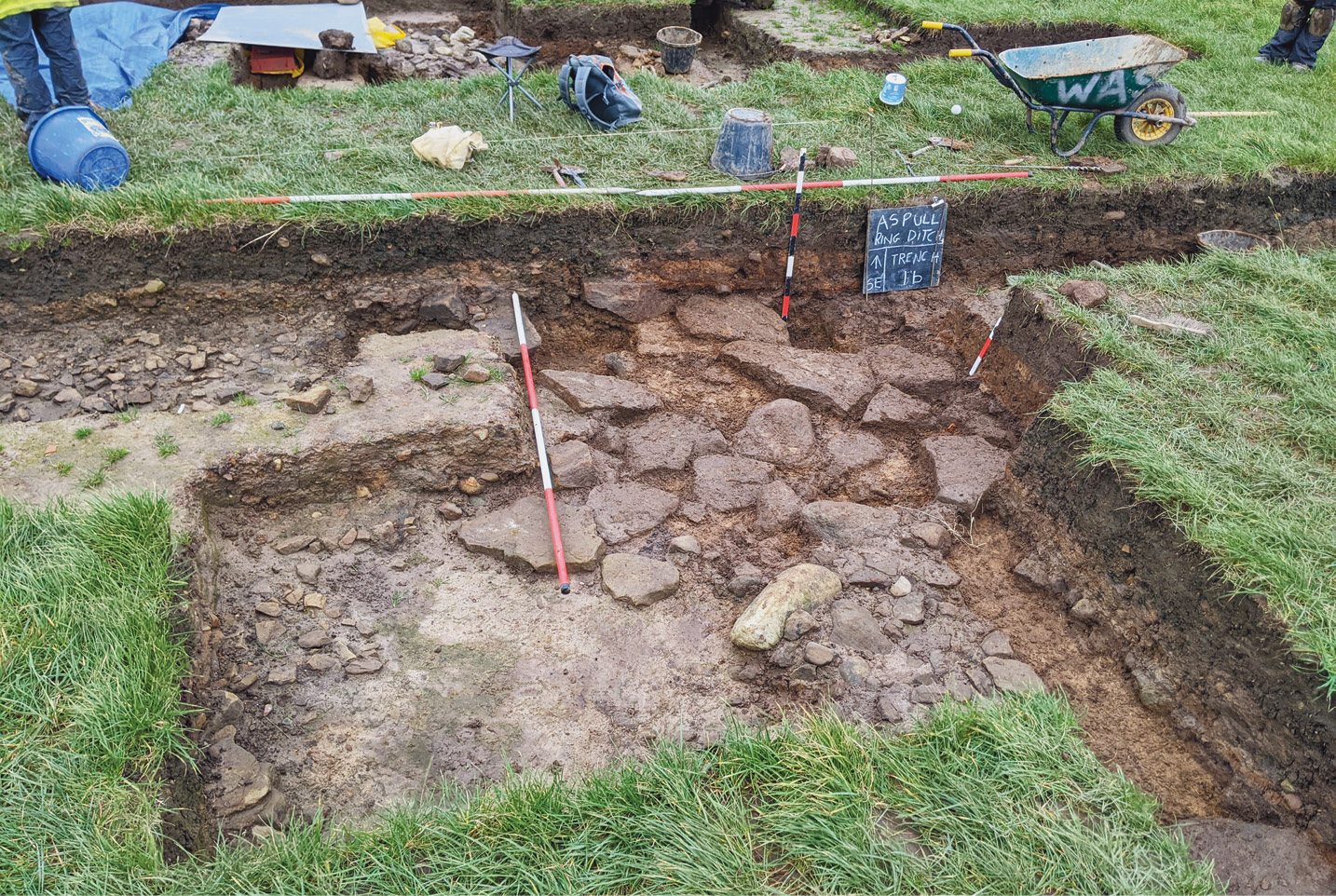
As we began Phase 3, we extended our original Trench 1 towards the centre of the monument (creating Trenches 1a and 1b), which revealed that the mound had been made from local sandstone – as was our first artefact, which we recovered during this expansion work. It was a small, polished handaxe, distinctive in design, but its material would have made it unsuitable as a practical tool. Instead, it is likely that this was a representative piece, possibly made on site and left as a deliberate deposit. Pieces of flint also began to appear, and this was particularly interesting as flint is not native to the area. Most seemed to be debitage, but one piece has been identified as a thumb-scraper, probably Mesolithic, but with the understanding that similar items were produced during the Bronze Age as well.
Trench 3, to the south-east, was also extended towards the centre and a new trench was dug to connect with Trench 5, in the north-west, meaning that we had a complete section from north-west to south-east, and a half-section from the north-east to the centre (and a little beyond). It quickly became clear that much of the central area, covering some 300m2, showed signs of burning, clearly visible in section as a thin black line overlaid with a clear, bright red layer. As this burnt layer forms a distinct horizon across the whole centre of the monument, it was important to get it dated, and our results have a median probability date of 1820 BC.

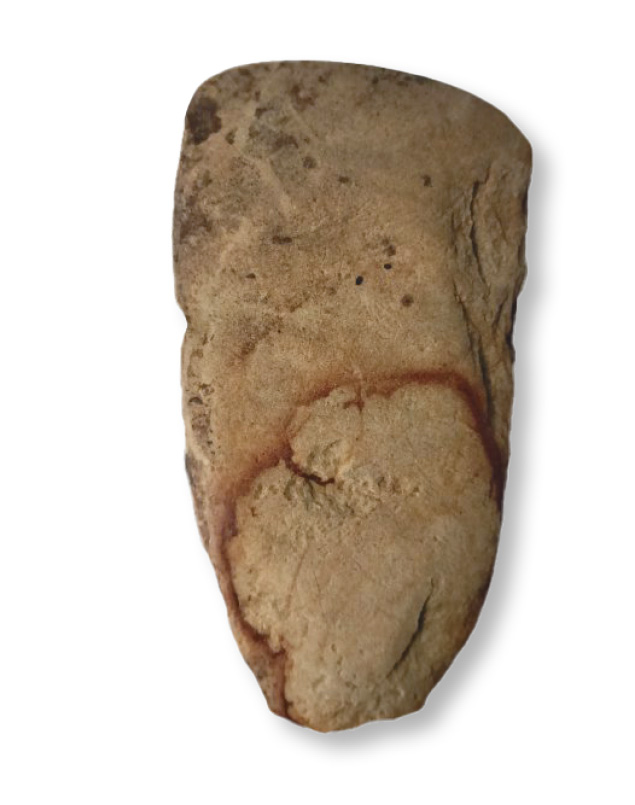
Above & below: This small, polished stone axe was the first artefact recovered during the project. It is made of local sandstone, a material ill-suited to a functional tool.
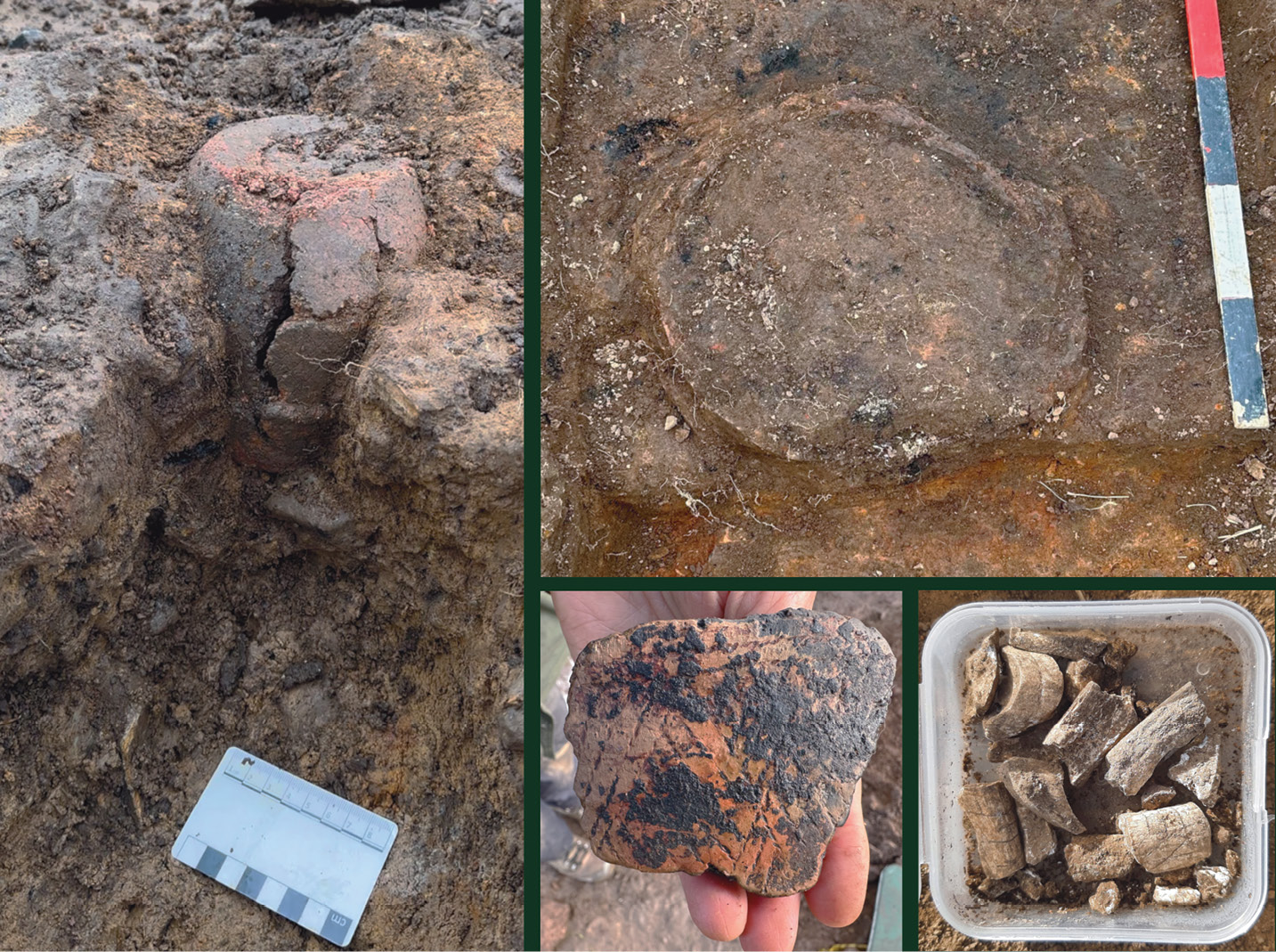
Covering the red/black layer was another layer of mottled yellow, whose diagonal banding suggests it could have been deliberately constructed using turves – and in a pit cut into this surface, 6m from the approximate centre of the mound, we found the rim of a large collared urn surrounded by burnt wood. Unfortunately, the rest of the urn had been ploughed away – demonstrating that, at one time, the mound covering it must have been considerably higher than it is now – but careful excavation of the rim allowed us to estimate that it measured 32cm across and the pot had been placed in the pit upside-down. It probably had a funerary function, as the rim was also associated with a large quantity of small fragments of bone bearing the characteristic chevron fractures of cremation.

A second pot emerged from a sandy clay patch on the north-east side of Trench 3a – and, although badly cracked, this one had survived intact. It was much smaller than the first at c.20cm tall, but it is another collared urn, preserving simple cross-hatched decoration beneath its rim. Significantly, it, too, had been placed upside-down, although it was buried directly in the sandy clay mound, not in a pit, and so far no cremated bone has been found in association with it. Both urns remain in the ground, awaiting lifting later this year – but they were clearly not the only examples buried on this spot, as we found a single sherd of a third urn a few metres from the first two, again decorated with a cross-hatched, corded pattern. Together, these finds confirm a theory first proposed in 2022 – that the ring ditch had been in use in the Bronze Age as a funerary monument – but its origins now appear to be rather older in date.
Close to the centre, we removed a stony layer to reveal a substantial area of considerably larger, mainly flat, stones. Their purpose is as yet unclear, but as they lie on top of the soft sandy clay which defines the central mound, they are likely to be associated with the earlier life of the funerary monument. Our understanding of the site is now that it began life in the Neolithic, most likely as a henge. Although no trace of an outer bank has been found, the evidence from its central area suggests a levelling event at some time, probably to render the field more amenable to the plough, which would have removed any such earthwork.
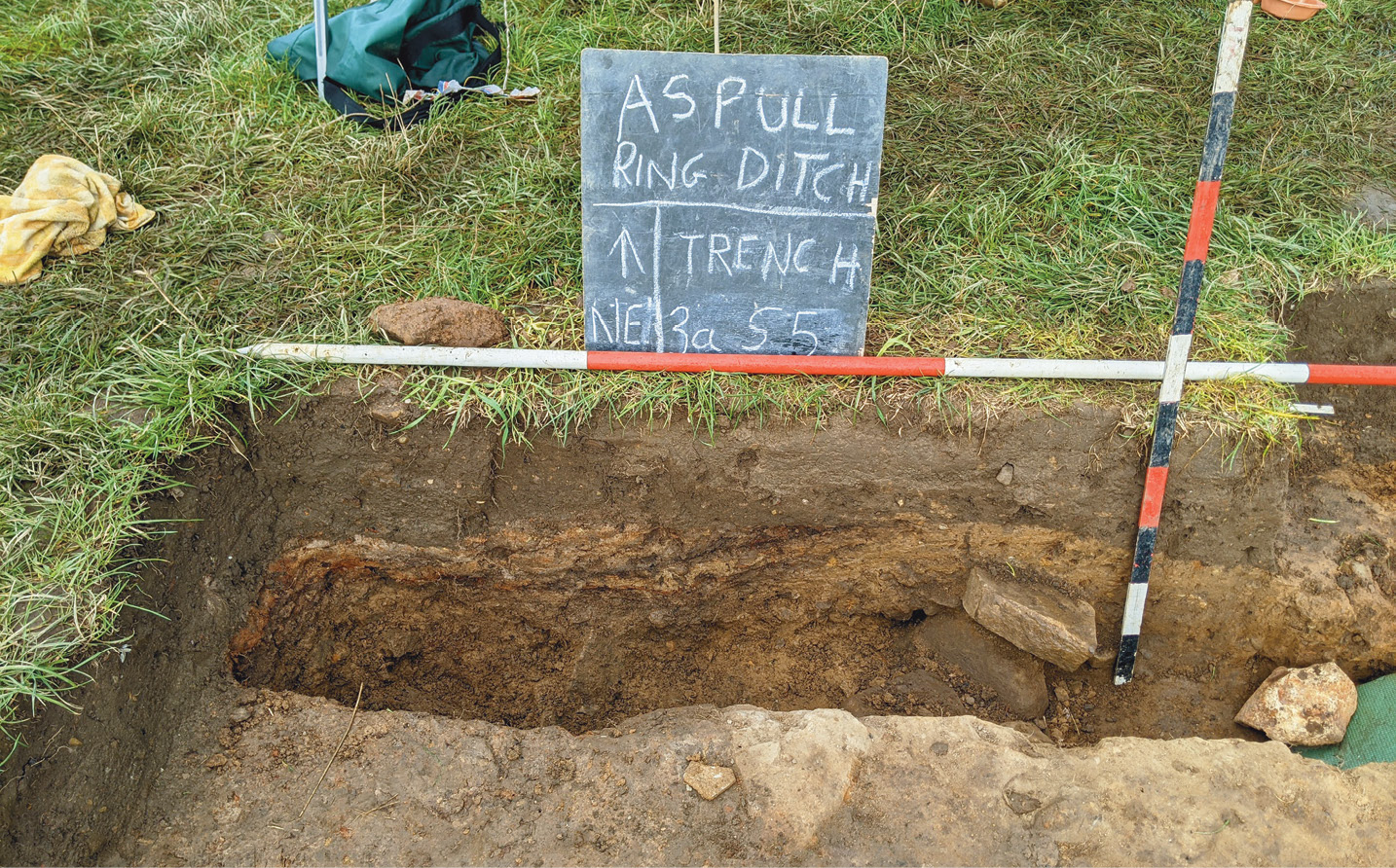
The monument was still in use in the middle Bronze Age, when it was apparently modified by the addition of a funerary mound – but whether the use of the site was continuous or episodic is not currently clear. As the ditch is rock-cut, recutting and maintaining it would have been relatively easy: just remove soil until you find the rock. This would leave no trace of recuts. There is no sign, either, of silting or natural filling of the ditch in any of the eight trenches that have been dug across it, strongly suggesting that the ditch had been deliberately filled in a single event. We now have four radiocarbon dates from across the site, all of which date to the middle Bronze Age, so we can be confident that this site was last in use at that time.
Continuing questions
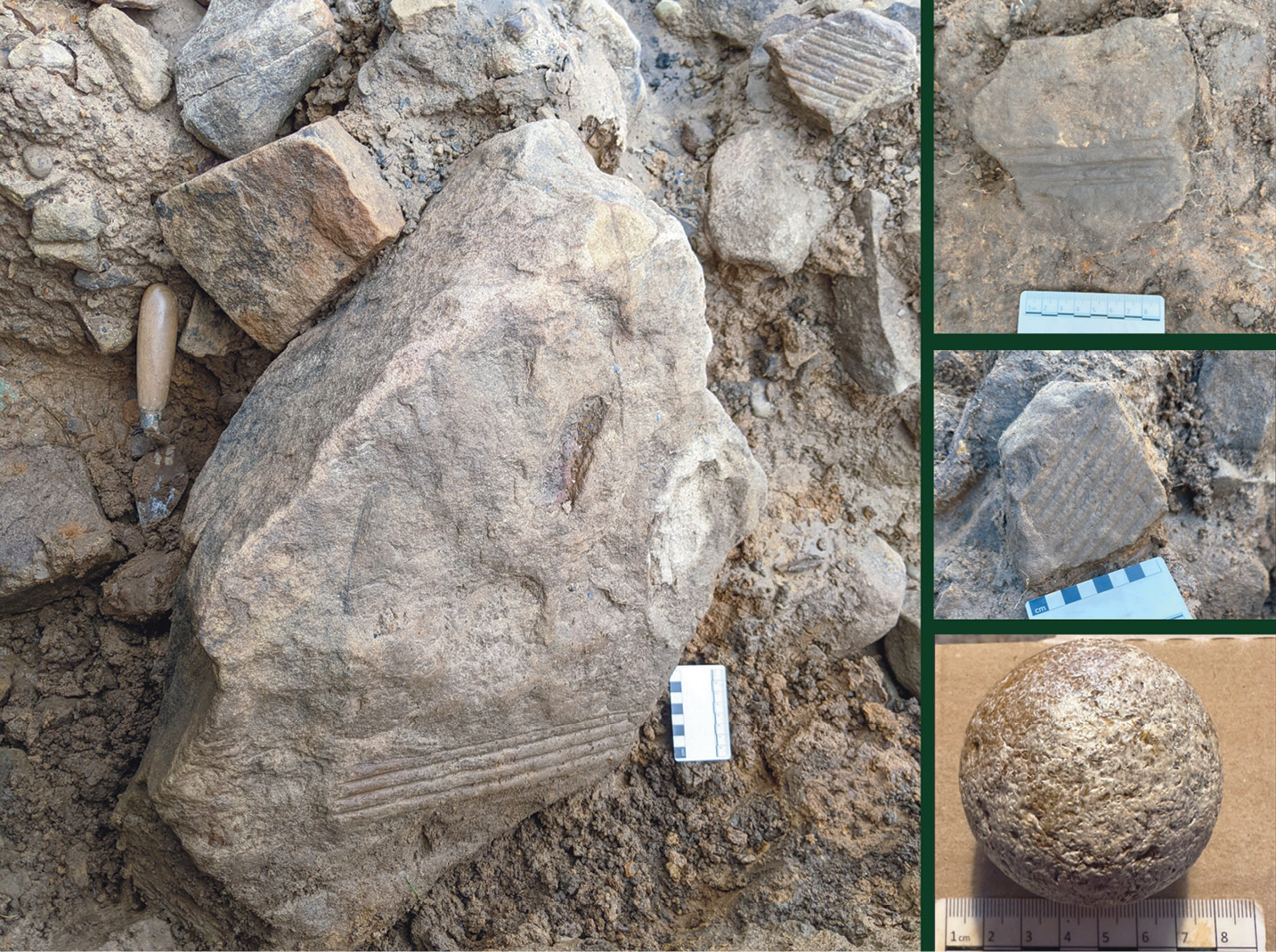
While there are still many puzzles and conundrums to unravel at this site, there are two finds that so far defy explanation. The first is an irregular stone ball – unfortunately it was recovered from a spoil heap rather than spotted in situ, but a study of drone shots revealing the timeline of the spoil heap shows that it almost certainly came from prehistoric layers close to the centre of the mound. The ball is covered with brown and white patinas that hinder identification of the rock type, but it might be granitic, and is certainly not local.
Our second enigma is a stone inscribed with three deep, parallel grooves, 9mm apart. It was found within prehistoric layers in the central area, albeit during a fairly coarse removal of soil, meaning its exact relationship with the stratigraphy is unclear. When it was discovered, it was relegated to the status of a later intruder – and then another one turned up, this time with four parallel grooves spaced 8.4mm apart. Better still, it was found in a carefully excavated section, meaning that we can tell it was definitely beneath the burnt layer dated to 1820 BC. Like buses, a third example duly appeared, again in a certain prehistoric context and this time with eight grooves 10mm apart.
In each case, the grooves are precise and deep, unlike, for example, sharpening stones, where the grooves tend to be at random angles and anything but precise. What they mean, though, is truly mystifying. Details and photographs have been passed on to prehistoric specialists at the Greater Manchester Archaeological Advisory Service and elsewhere, but all enquiries have drawn a blank. We are currently investigating the possibility that these are not man-made objects, but fossils of Carboniferous club mosses, curated by Bronze Age people. Any suggestions from readers with a knowledge of the subject would be warmly welcomed. In any case, the upcoming 2024 season will see the team back at the site, and with so much work still to be undertaken there, we have asked for, and received offers of, help from other local groups. There is much still to unravel at this complex and important site.
Further reading: For a fuller overview of the dig, you can find the project blog and Site Diaries for each year at http://www.wiganarchsoc.co.uk/blog/?page_id=2333.
Acknowledgements: Wigan Archaeological Society offers sincere thanks to the following: The Council for British Archaeology (North-West), the Community Archaeological Radiocarbon Dating (CARD) Fund (see CA 405), Ron Cowell of National Museums Liverpool, Ian Miller and Ben Dyson of the Greater Manchester Archaeological Advisory Service, Steven Twigg for bringing this feature to our attention in the first place, and the Marsden family, who have looked on with great interest and enthusiasm as we trashed their field.
All images: Wigan Archaeological Society