
Subscribe now for full access and no adverts
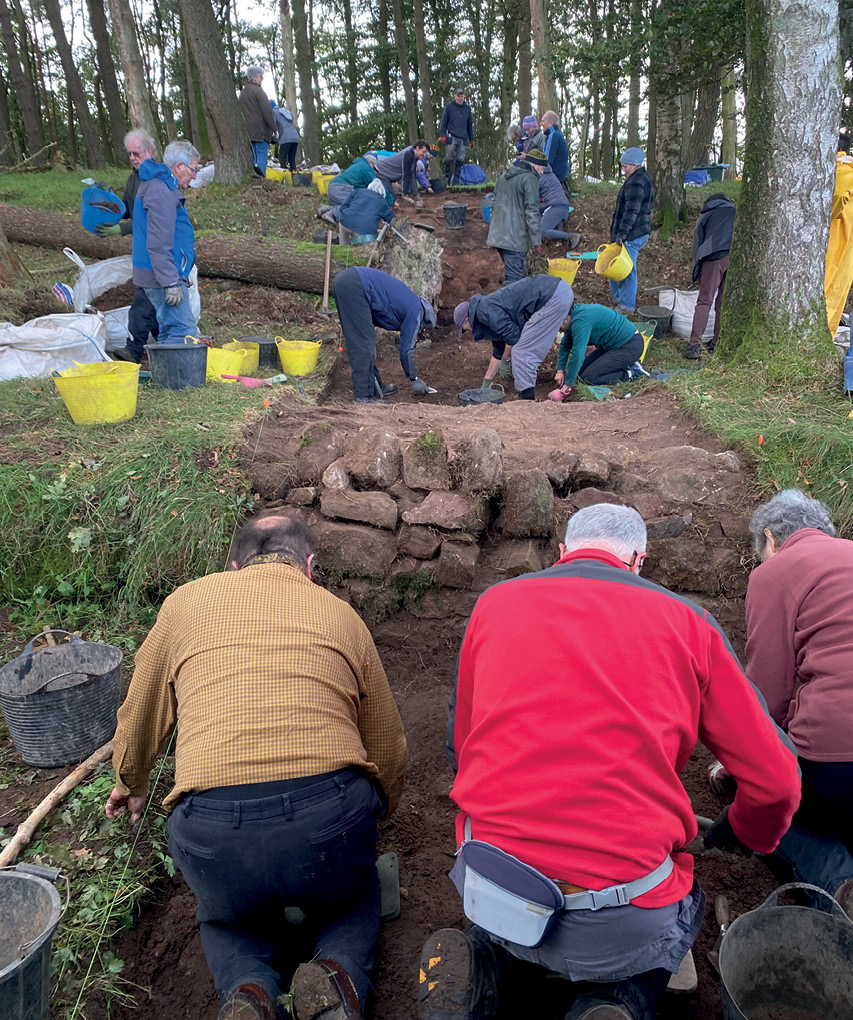
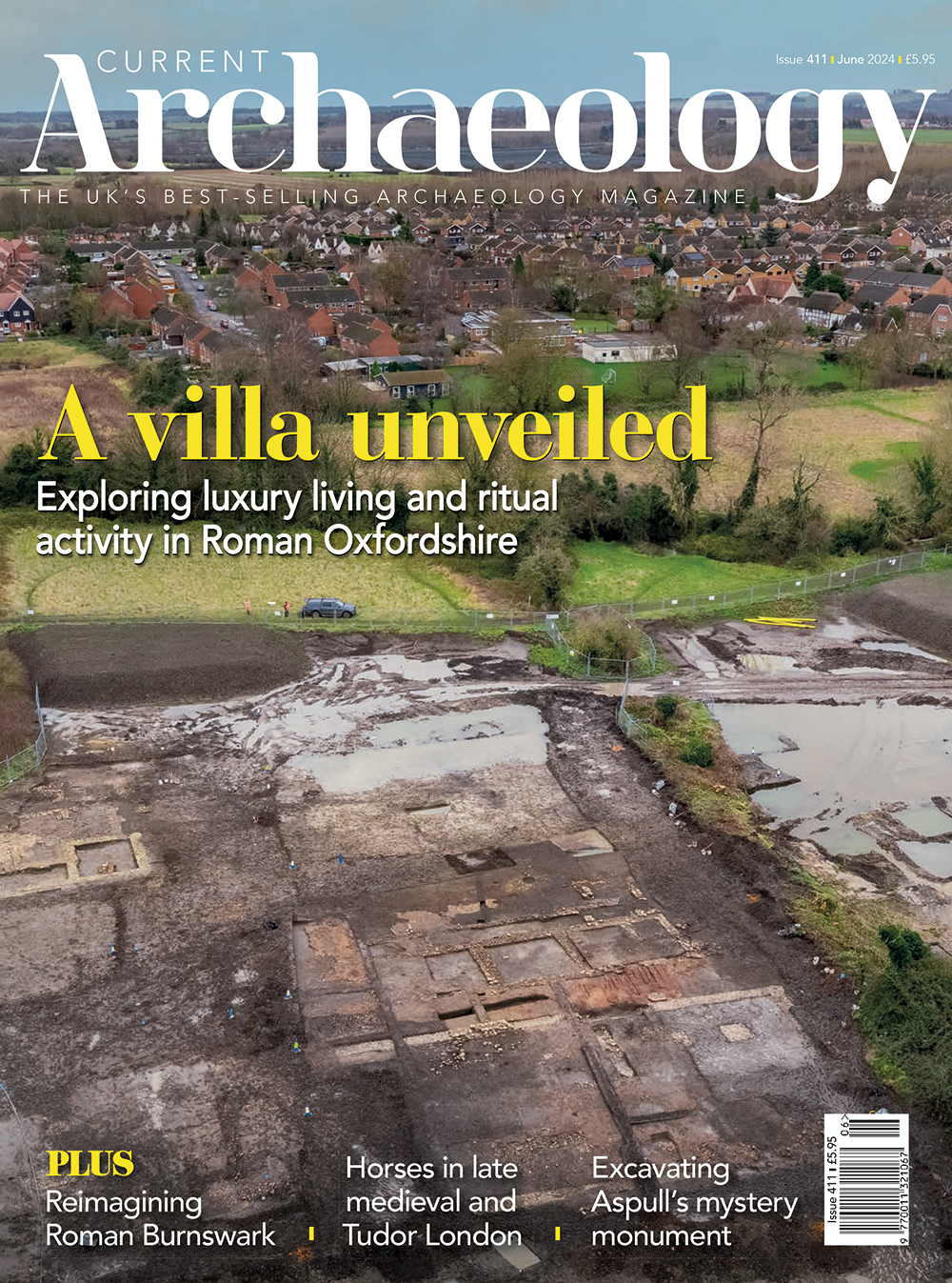
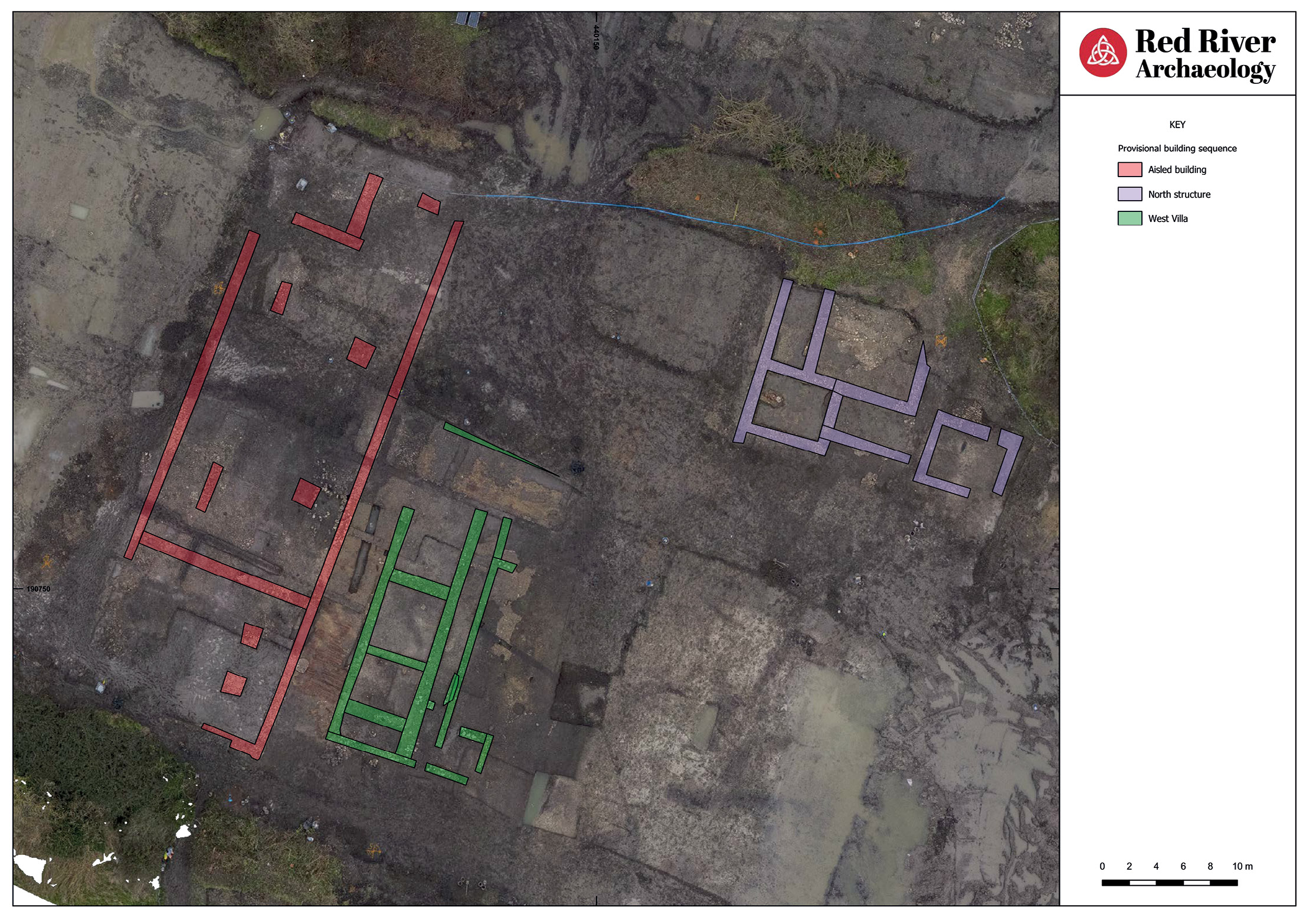
On the outskirts of Grove, a village near Wantage in Oxfordshire, archaeologists exploring an area scheduled to become a new housing development for Barratt and David Wilson Homes have uncovered traces of a much earlier ‘des-res’: a previously unknown Roman villa. Red River Archaeology have been excavating the site for over a year, working from west to east and recording a diverse array of features, including extensive Roman field systems. When they reached the eastern extent of the planned estate, however, they found signs of something even more significant: the unmistakable outline of a modest villa complex, lying almost outside the area set for investigation.
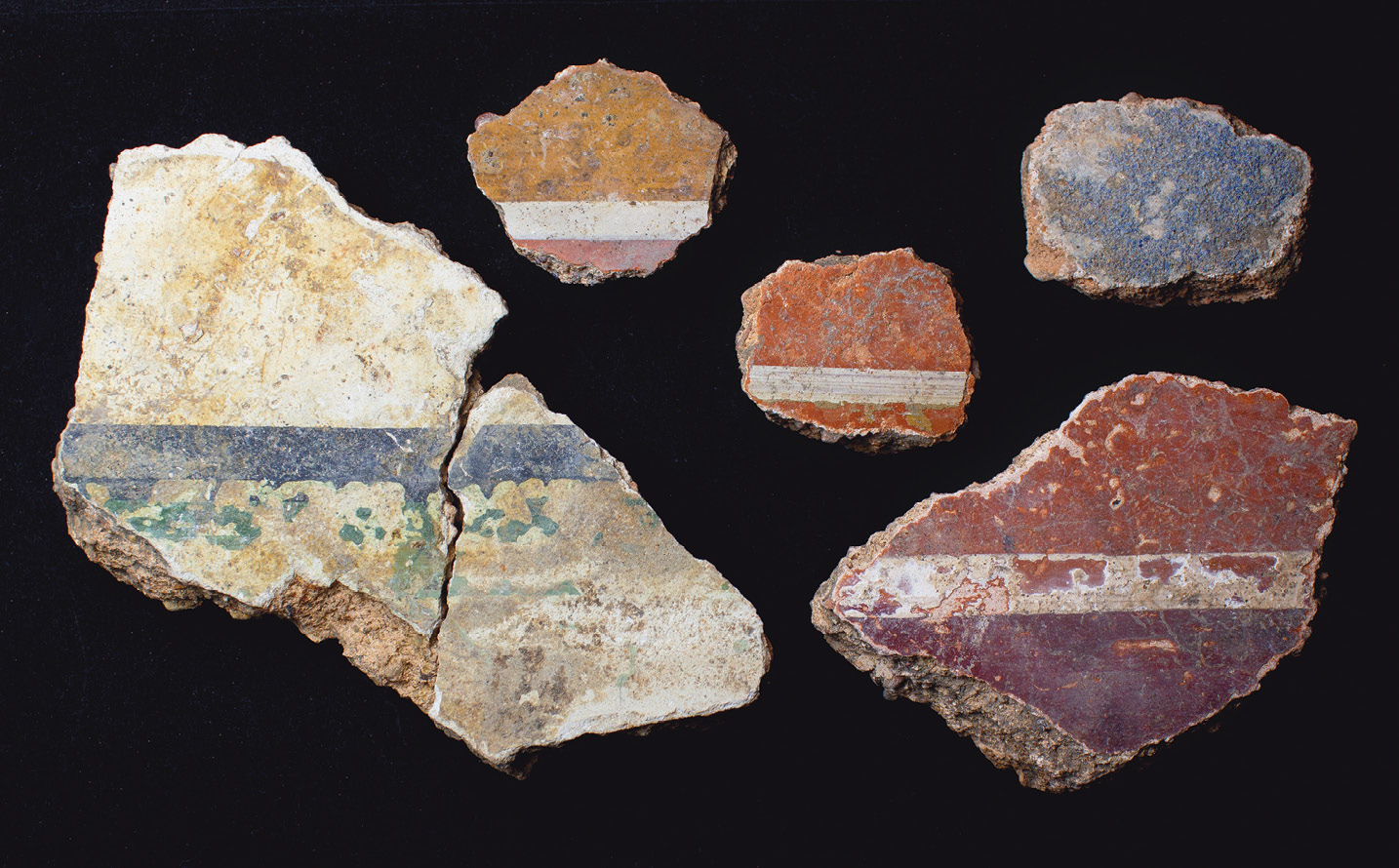
The Roman residence was a winged-corridor-type villa, a fairly common design in British archaeology, comprising a central block of rooms linked by a passageway, with flanking ranges of other buildings to the sides. In this case, the (larger) western and (more subsidiary) northern wings of the east-facing villa have been exposed; its eastern range, if it has survived in the heavily ploughed soil, lies outside the scope of the present excavation. Despite this partial picture, though, Red River Archaeology have been able to estimate that the villa complex would have measured around 50m by 45m: not a sprawling, palatial estate, but one that would nevertheless have been a dominant feature of the local landscape, and one that still bore many of the key markers of high-status occupation. Fragments of hypocaust tiles indicate that at least some of its rooms boasted underfloor heating, while quantities of colourful painted plaster – decorated with bright banding and floral motifs – as well as orange and white tesserae from mosaic floors, speak of an attractive interior design. The villa’s inhabitants were evidently influential enough to access far-reaching trade networks: analysis of pottery from the site is ongoing, but they were using Samian table-wares imported from Gaul.
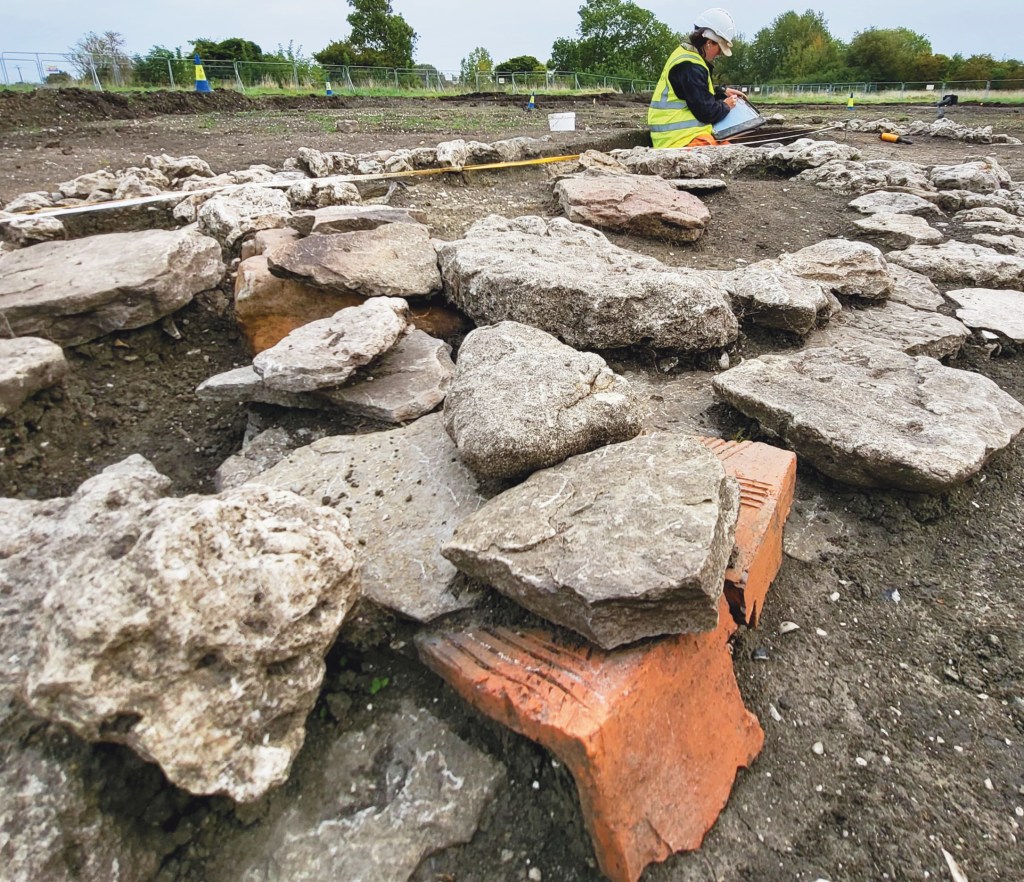
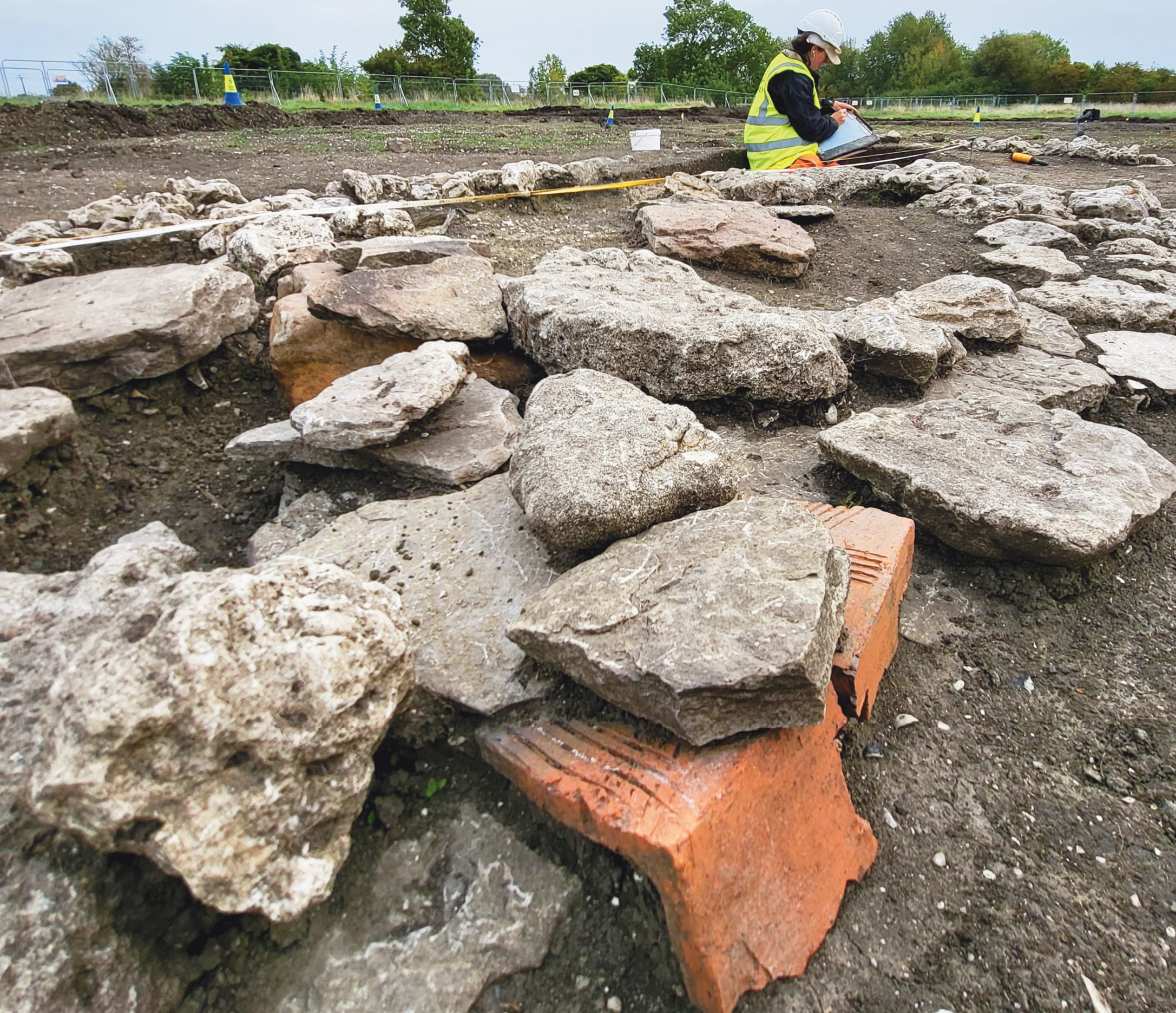
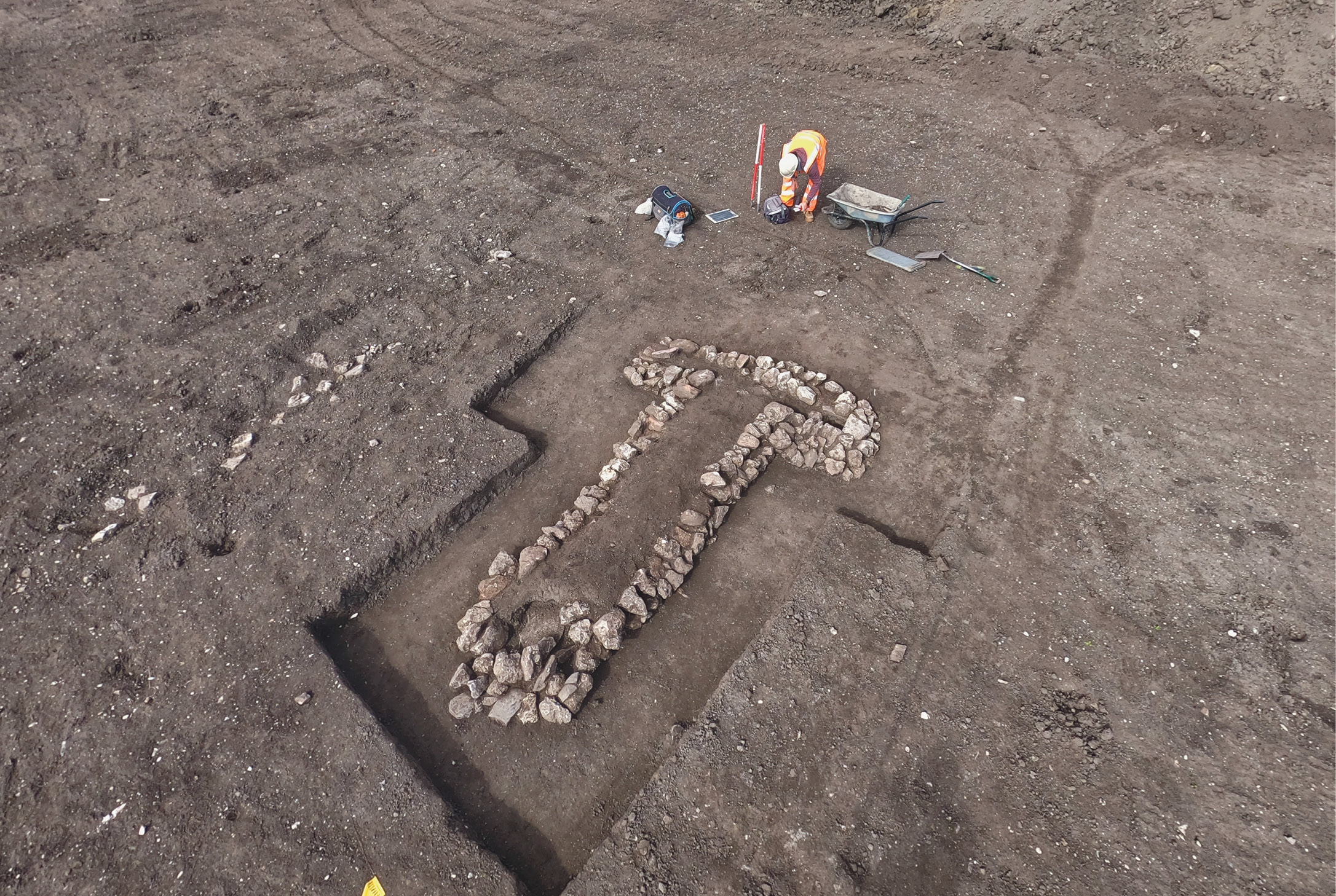
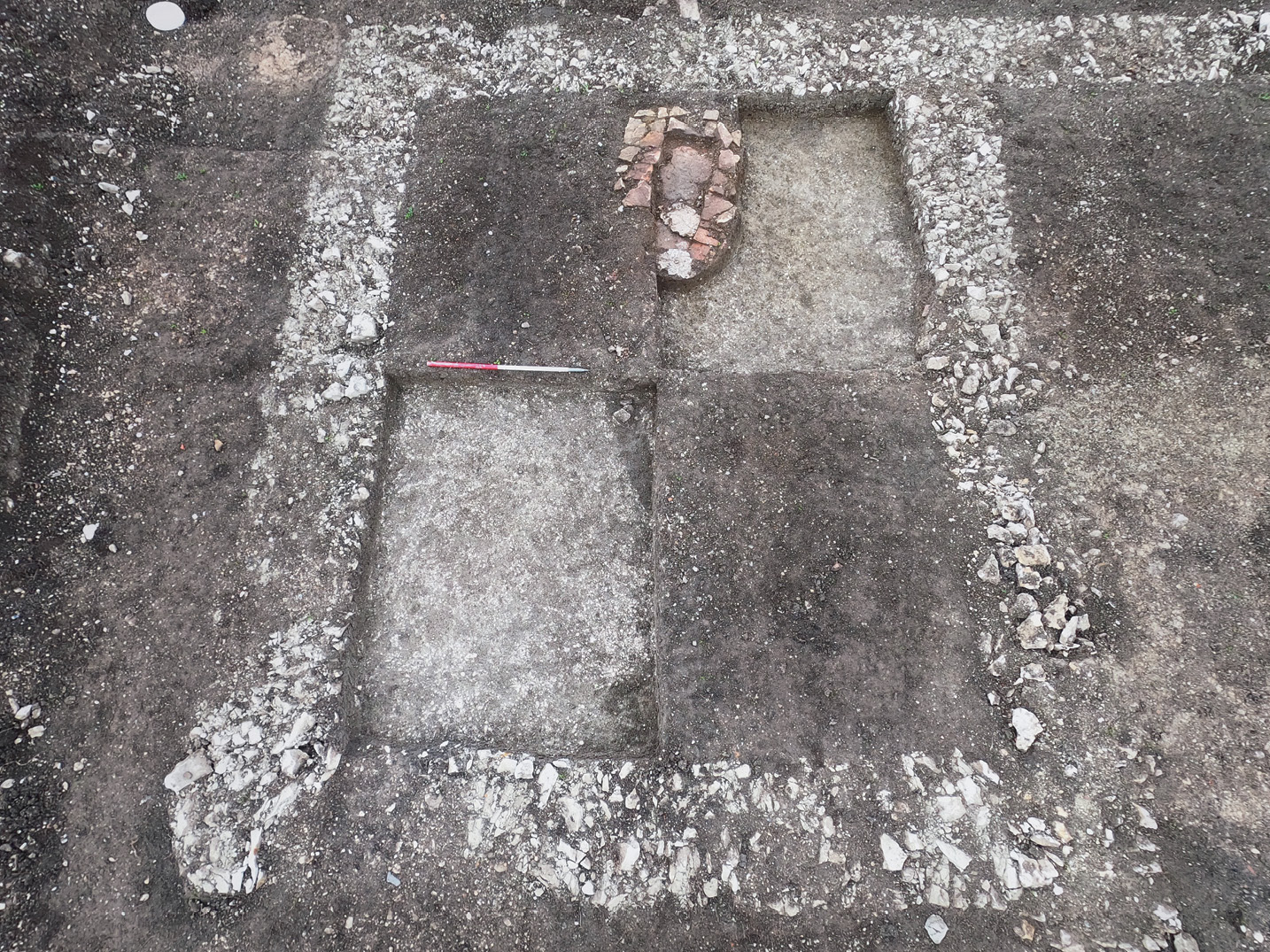
Even more impressive than the villa, however, was the monumental aisled structure that had once stood next to it. Its well-made and expertly squared-off chalk foundations were much deeper and more substantial than those of the villa, easily sturdy enough to have supported a second storey, and within these walls four large, square chalk bases – possibly supports for columns or large wooden posts – hint at an internal colonnade.
Aisled buildings are known from many villa sites in Britain, though their precise purpose – and their place in the chronology of their respective complexes – remains debated. Some examples are thought to have been built first, before later being incorporated into a larger complex, while others appear to have replaced existing villas. In the case of the Grove aisled building, while its exact phasing is still being pinned down, the current interpretation from the excavation team is that it is probably a later element of the site – and, at 43m by 15m, it is one of the largest examples of its kind known in Britain.

Reconstructing the villa
However imposing the Grove complex’s buildings would have been in their heyday, today their remains are reduced to robbed-out footprints plundered so comprehensively that in some places even the foundations have been taken out. The villa appears to have been demolished at the end of its life, probably during the late Roman period, and much of its fabric recycled elsewhere. Senior Project Manager Louis Stafford described his ‘brilliant’ site team led by Francesca Giarelli as recovering ‘maybe a couple of wheelbarrows’ of ceramic building material (CBM) from within 100m of the villa, and very little in the way of roof or floor tile: finds that you would normally expect in abundance. By contrast, the team have identified an estimated 50kg of wall plaster, not in situ on collapsed walls, but mainly as tiny fragments found among the rubbish that had been used to back-fill ditches – the opposite way round to what you would expect, Louis said, suggesting that the CBM had been systematically removed from the site.
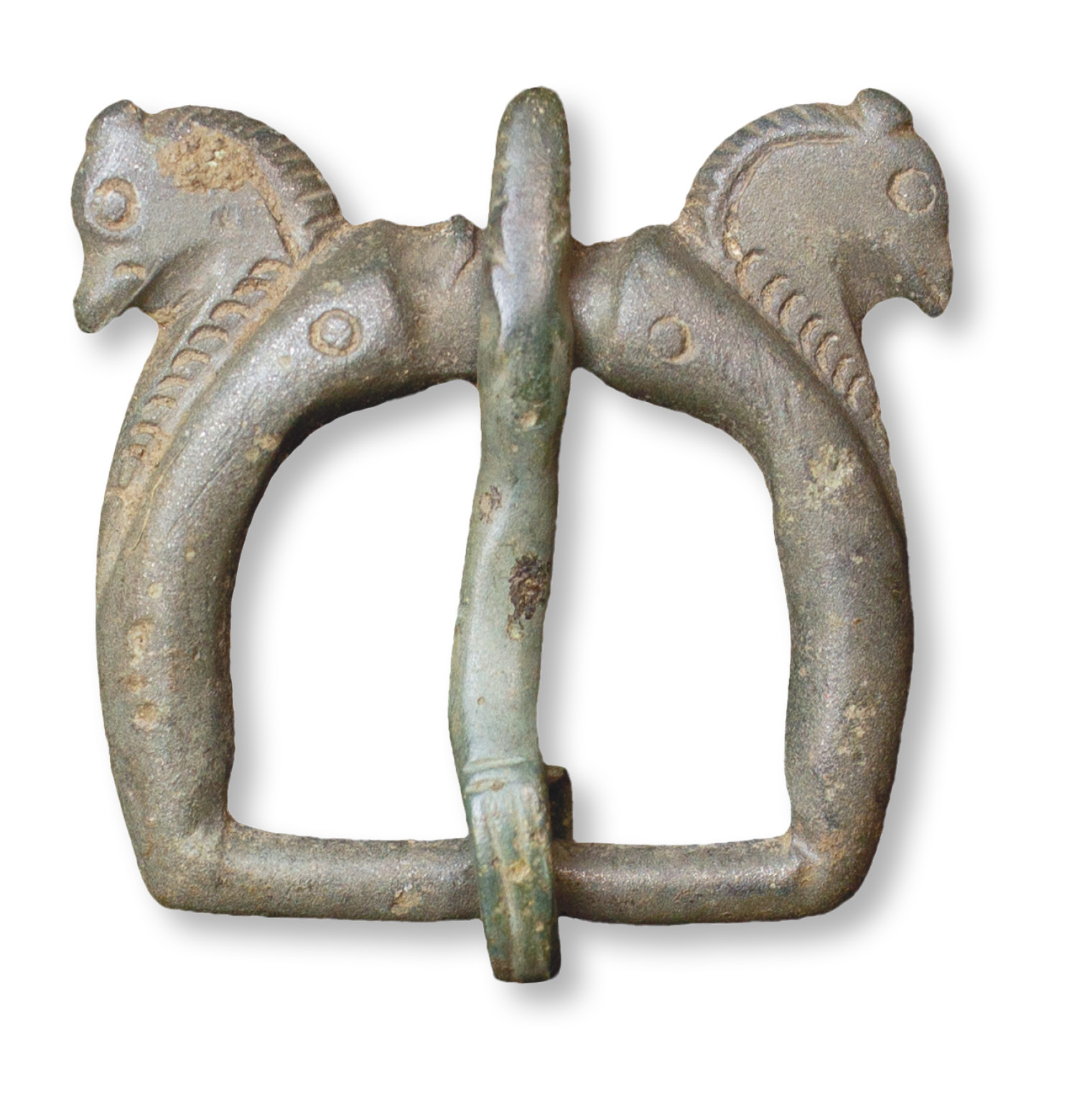
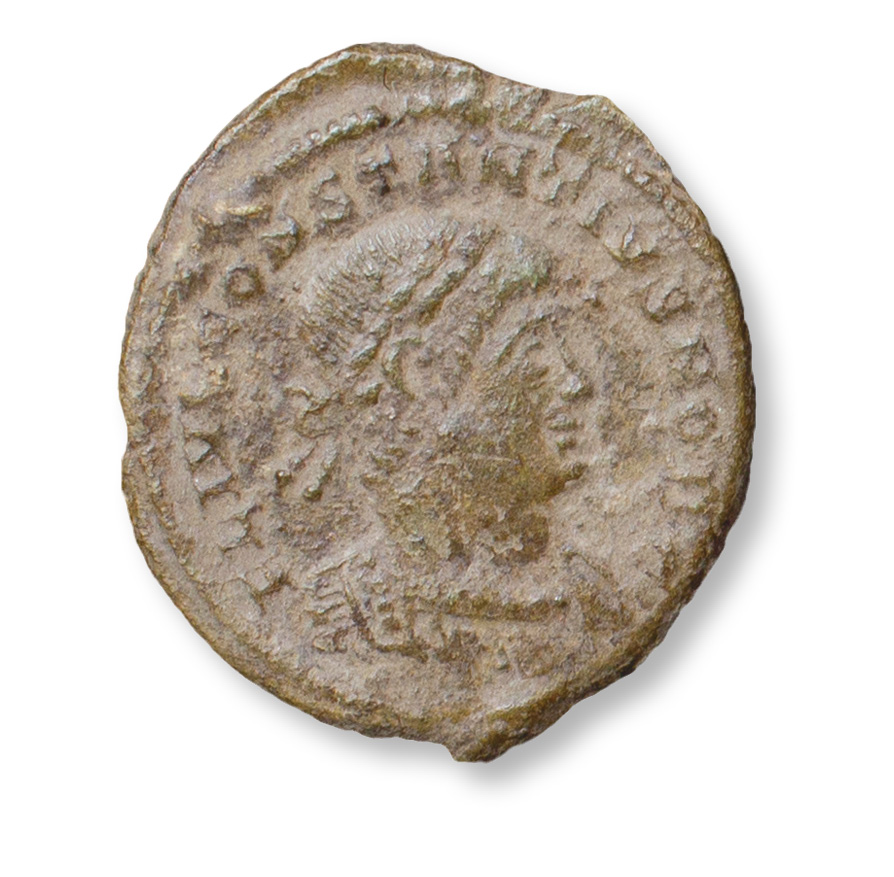
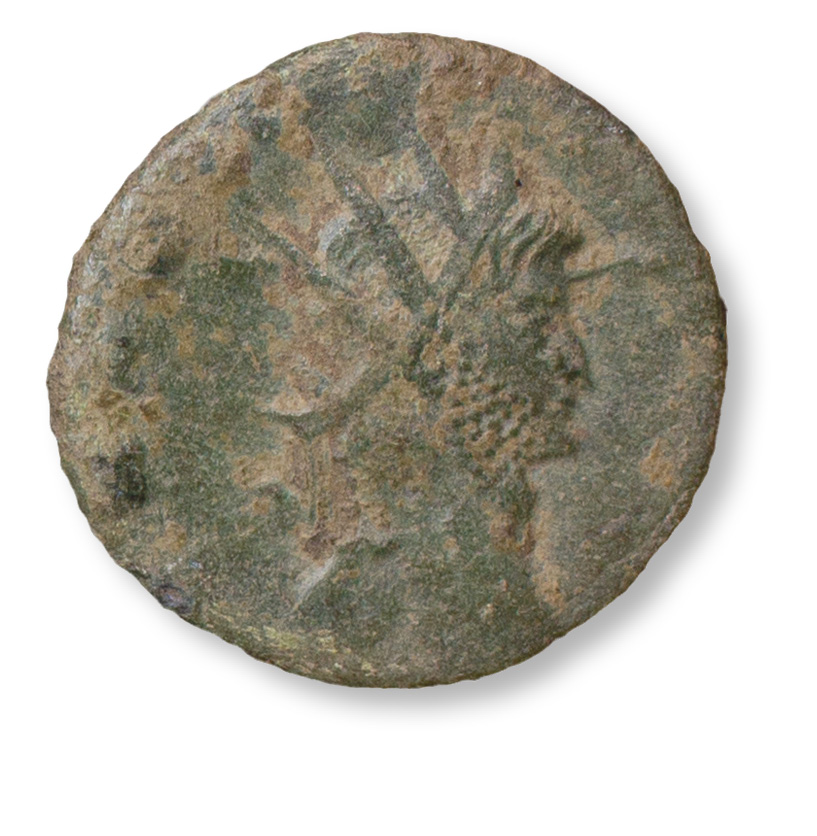
In direct contrast to these ghostly structures, however, artefacts lost by the people who lived and worked there have proven plentiful. Over 2,000 small finds have been documented to-date, including more than 400 Roman coins (mainly low denomination) spanning the 1st/2nd centuries through to the late 4th century. It is possible that the villa’s lifespan was even longer, however: one key piece of evidence to support this suggestion was a distinctive buckle decorated with two outward-facing horse heads. Classed as ‘Type 1B’ by Hawkes and Dunning’s 1961 typology, these objects are thought to have been worn between the mid-4th and mid-5th centuries, and are often associated with individuals linked to the late Roman army. They are known from locations across Roman Britain – search for DUR-455F88 on the Portable Antiquities Scheme’s database (https://finds.org.uk), for example, for a recent discovery from North Yorkshire, as well as links to other examples from locations as disparate as Northamptonshire, Somerset, Hampshire, and Warwickshire. The collections of Amgueddfa Cymru – Museum Wales include one from Caerwent, too. These brooches also appear to have been carefully curated as curiosities or family heirlooms, as they have been recovered from a number of early Anglo-Saxon graves as well. In the case of the Grove find, this particular buckle might suggest that its owner had connections to social elites linked with the army, or that they at least wanted to be associated with that kind of prestige.
Other items of jewellery, including rings and brooches, most likely represent the personal possessions of the villa community, but some of the metalwork recovered by the team is more enigmatic. Chief among these are around a dozen small strips of lead, tightly wound to create little coils that are strikingly similar to artefacts commonly called defixiones or ‘curse tablets’. Around 300 such items are known from other locations in Roman Britain, concentrated (as Roger Tomlin describes in his 2021 article ‘The Latin curses from Uley and other sanctuaries in Britain’) in the non-military south, and associated with two key sites in particular: Bath, which has produced around 130, and Uley in Gloucestershire, where around 80 inscribed pieces of lead were excavated in the 1970s. Further finds (albeit in much smaller numbers) are known from elsewhere in south-west Britain, such as at Lydney, also in Gloucestershire; Brean Down and Pagans Hill, south-west of Weston-super-Mare and Bristol respectively; and Leintwardine in Herefordshire; as well as the legionary fortress at Caerleon, in Newport, Wales – but they are not exclusive to this region, and others are known from places including London, Farley Heath in Surrey, and just outside Venta Icenorum, the walled Roman town near Norwich.
Where their text can be deciphered, these items typically record the prayers of individuals who have been wronged in some way – usually through the theft of items ranging from clothing and jewellery to livestock – and who are seeking the intervention of their chosen deity to secure justice and the return of their property. Various gods and goddesses appear to have been entreated in this way – Uley’s tablets mainly call on Mercury, Venta Icenorum’s example names Neptune, Bath’s favour Sulis Minerva, and Lydney’s invoke another syncretic deity, Mars-Nodens. What these finds have in common, though, is their fairly formulaic phrasing, and the fact that many of them have been recovered from sites where the remains of temples or shrines have also been excavated. No such structure has been identified on the Grove villa estate, though it is possible that one of its rooms or buildings had a ceremonial role on a more informal or domestic level. Unfortunately, although the scrolls were certainly associated with the villa and its occupation, they were not tellingly concentrated in one place but scattered around the site.
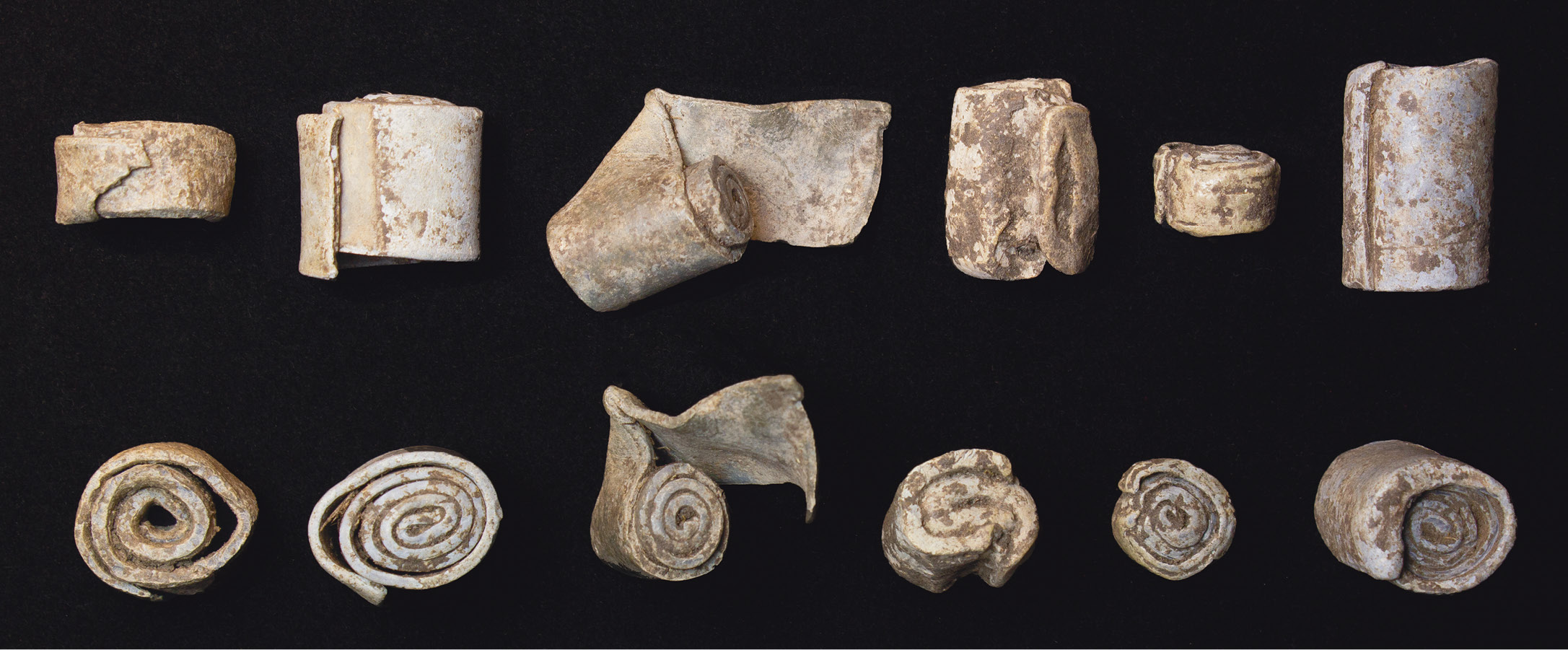
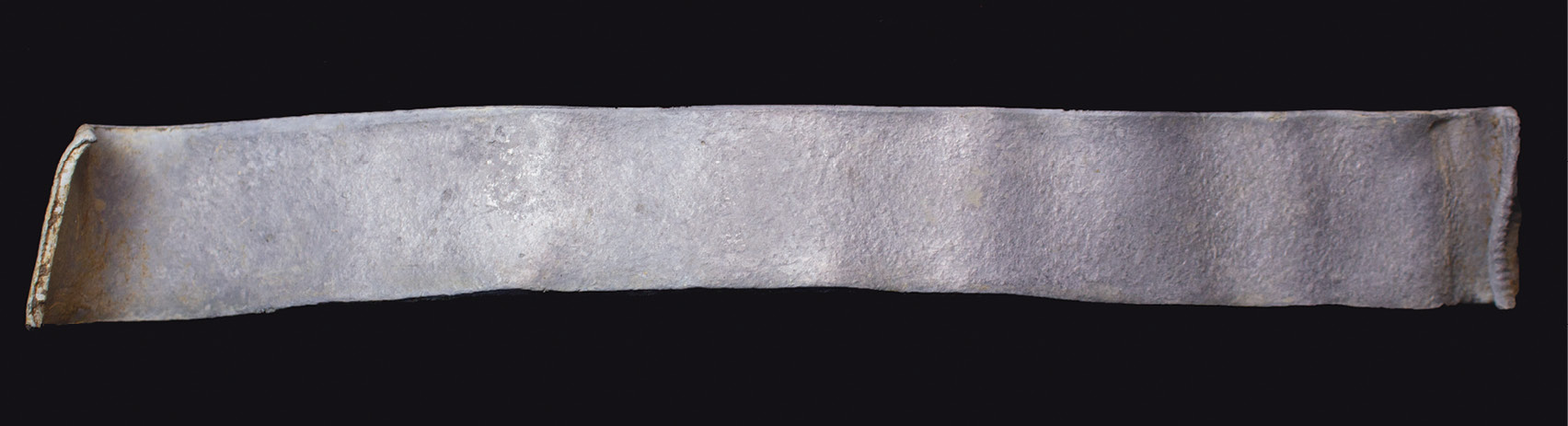
As for their contents, expert conservators Drakon Heritage have carefully unrolled half of the fragile sheets and examined their surfaces under various lights, but this analysis has identified no evidence of writing on any of them. This is not unprecedented – at Uley, in addition to the dozens of inscribed lead sheets, more than 40 other blank ones had been folded and deposited in exactly the same way, and, in that case, it has been suggested that they might represent curses expressed by illiterate individuals, who spoke their desired outcome instead. Alternatively, the Grove examples could have been made on, or brought to, the site, but never actually put to use.
Whatever their intention, the scrolls are not the only hint of ceremonial activity taking place on the site. The team have also recovered a number of miniature bronze axes which may have been intended as votive offerings. Similar examples are known from confirmed cult sites, where they seem to have been particularly associated with deities like Mercury and Mars. While their full significance remains obscure, their presence at the Grove villa, together with the ‘curse’ scrolls and a growing number of coins, points to something ceremonial taking place within the estate.

An evolving view
Once the villa’s more official functions ended, the main residence was abandoned and its buildings taken apart – but, even as this destruction progressed, some of its spaces appear to have been taken over by industrial activities. In the northern wing, a south-western room became dedicated to processing lead, using materials from the demolished buildings themselves to create a crudely stacked little oven, where the heat-coloured stones at its base speak of repeated use. The fact that its creation had cannibalised masonry from the villa, and that it was not aligned to any ‘official’ part of the complex, testifies to its late date – it would have given the site’s story a pleasing symmetry if this had proven to be the place where the lead scrolls were being made, Louis said, but the phasing simply does not support such an interpretation.

Rather, it seems that someone had been taking lead – possibly directly from the villa buildings as they were dismantled around them – and using the oven to convert this scrap material into more conveniently portable or consistently valued ingots that could then be transported away from the site. This seems to have been a fairly casual process, though, rather than a determinedly commercial one – or at least one that was not concerned with extracting every last scrap of revenue from the material, as in the bottom of the oven the team have identified leftover lead from perhaps its last two firings, where about 1kg of the material had bubbled through the rocks to puddle underneath.
When the fires of industry went out, the derelict villa site at last lay empty – though stray finds like a lone coin of Edward the Confessor (r. 1042-1066) testify to casual visitors still passing through the area during the early medieval period, perhaps travelling along the line of the brook that flows a short distance to the east. As analysis of the finds continues, evidence is also emerging to illuminate what was happening on the site long before the villa complex was constructed.
Evidence of human activity dating back to the Bronze Age has been identified during the ongoing excavations, though these early traces are fleeting, limited to a scatter of pits and two tiny, intriguing artefacts. They are a miniature Bronze Age dagger – missing its tip and its top, but still clearly a little blade – and a small socketed hammer of the same period.
Such items are seldom found ‘in the open’, being more commonly associated with more monumental features, such as a barrow, Louis said. Metal-detecting across the site did not uncover any other Bronze Age material, but the miniature objects hint at something significant happening in the area during this period of prehistory. It is possible that the landscape was once marked by Bronze Age funerary activity, but that this was obscured – or even deliberately destroyed – by what came immediately afterwards.
In the field just to the north of the villa and partly underlying the Roman remains, the team found very dense evidence of Iron Age occupation concentrated within a relatively small area. Describing the features as ‘boundary upon boundary, ring ditch upon ring ditch’, and noting the large amount of Iron Age pottery that had been recovered from this area as well, Louis said that the overall effect is one of a village that had not shifted as it developed, but grew and intensified on the same spot.
Not all of the circular features have yet been confidently identified as roundhouses, but if this was an earlier settlement it was ultimately replaced, first by Roman field systems and then by the construction of the villa complex, and currently little can be said about its evolution and the people who lived there. It is hoped that further investigations will shed more light on this aspect of the site’s past.
This is very much an excavation whose story keeps evolving: as archaeological work continues and specialist analyses of the finds progress, our understanding of this intriguing site is sure to grow. We will bring you an update on how interpretations of the archaeology have developed in a future issue of CA – watch this space.
Louis Stafford is a Senior Project Manager with Red River Archaeology. He is directing excavations on the villa site.
Further information: The site is destined to become the Brookside Meadows development, by Barratt and David Wilson Homes. See the website http://www.rrarc.co.uk for more information about Red River Archaeology.
All images: © Red River Archaeology Group, unless otherwise stated