
Subscribe now for full access and no adverts
When the ‘butcher’s bill’ is settled on the battlefield, the price is literally paid in blood.
But among the many lists of ‘war-winning’ innovations of the Second World War, one is consistently missing: the widespread availability of blood and plasma transfusions for wounded Allied personnel. It is taken for granted today as a fundamental component of casualty care, but when war broke out in 1939 Britain was the only combatant nation whose armed forces had an established blood-transfusion service.
Aware of the innovations in the use of stored blood and mass donor recruitment that occurred during the Spanish Civil War, the Army Blood Transfusion Service (ABTS) was established within the Royal Army Medical Corps in 1938. With its headquarters and logistical hub – the Army Blood Supply Depot (ABSD) – set up at Southmead Hospital in Bristol in 1939, it was led by Colonel (later Brigadier) Lionel Whitby. And Whitby was certainly the right man for the job. He had deferred a scholarship to Cambridge University to enlist as a private in the army in 1914, been commissioned as an officer, and been awarded the Military Cross for gallantry at Passchendaele. But he was also the living embodiment of the importance of blood transfusion on the battlefield: in 1918, a German artillery shell had severed his femoral artery, but his life had been saved by the skill of an American surgeon and a transfusion directly from his batman.

Despite losing his leg, Whitby forged a distinguished medical career in the interwar years: studying medicine at Cambridge before specialising in disorders of the blood. But Whitby’s task was onerous. Blood transfusion remained relatively rare in Britain. There was no National Health Service or national blood-donation system, and transfusions relied on a mixture of volunteer and paid donor schemes organised to support local hospitals. In January 1939, Bristol had the second largest group of members of the Blood Donors Association in Britain, but had just 506 volunteers on its books. By the time war was declared, 5,000 volunteers in Bristol had come forward to offer their blood when it was needed. But it was still not enough. In 1940, the ABSD was given exclusive permission to recruit civilian donors in Bristol, Cornwall, Devon, Somerset, Gloucestershire, and Wiltshire. It would eventually run more than 10,000 donor sessions.
Although what became known as the ‘phoney war’ ended in popular memory with Germany’s ‘Blitzkrieg’ invasion of France, Belgium, Luxembourg, and the Netherlands in May 1940, Germany had already invaded Norway on 9 April – and it was here that the British Army’s blood transfusion service was first called into action. ABSD personnel obtained blood from night-shift workers at a Bristol aeroplane factory, and provided 120 pints of fresh blood and 44 pints of plasma to British forces sent to Norway. But it was the German invasion of France that became the real testing ground for the fledgling blood service: nearly a thousand units of blood and more than a hundred units of plasma were shipped to British forces there.
The speed of the German advance was a salutary experience. The casualty-evacuation chain broke down in the chaos, and, in comparison to later campaigns, only small numbers of the wounded received blood, because the Field Transfusion Units were attached to Casualty Clearing Stations in the rear. One ABTS member who returned safely summed up his experiences as, ‘I came, I saw, I was evacuated’. But valuable lessons had been learned about the organisation and supply of blood products and the training of personnel: blood and transfusion equipment had to be available in all forward medical units, not just specialist ones. The opportunity to implement this came in North Africa, where, due to limited refrigeration facilities, transfusion was being undertaken donor-to-patient, literally arm-to-arm: something that was completely impractical in battle conditions. By 1941, the implementation of Forward Surgical Units supported by Mobile Transfusion Units, and supplies of blood dispatched to forward units from Base Transfusion Units, improved things dramatically.

Life and death
Fresh blood required refrigeration and had a limited shelf life, posing huge logistical and transfusion safety issues when used overseas. Patients also had to have their blood group checked, unless the universal donor blood (then believed to be Group O) was used. But there was an alternative. Plasma, the amber-coloured fluid left after the red and white blood cells are removed from blood, enabled the resuscitation of patients who had suffered potentially life-threatening fluid loss from bleeding or burns without the risks associated with blood transfusion. It could be produced from all blood groups, and harvested from unused fresh blood. Crucially, in a freeze-dried powder form, it didn’t require temperature control before use, enabling it to be transported around the world. The ABSD soon focused on the production of plasma rather than the supply of fresh whole blood, though it continued to supply this to local hospitals.
The bombing raids on Bristol during 1940 disrupted the vital electricity supplies required for the ABSD’s work. In early 1941, a ‘shadow’ depot began operating at West House at Chilton Polden in Somerset, 35 miles from the main depot. It was not too soon: on 3 April, 11 bombs fell in the grounds of Southmead Hospital, including a delayed-fuse bomb that landed on a corner of the buildings occupied by the ABSD. In June 1941, a large plasma-drying unit, purchased with £9,000 donated by the ‘Silver Thimble Fund of the Women of India’, was set up in the stable block at West House. It was doubled in size in November 1942 after a second gift from the same fund, enabling it to produce up to 1,400 units of plasma a week. Supplies of plasma were also obtained from the separate civilian Emergency Blood Transfusion Service, as well as from Canada, enabling the ABSD to distribute nearly 342,000 units of plasma to frontline units during the war.
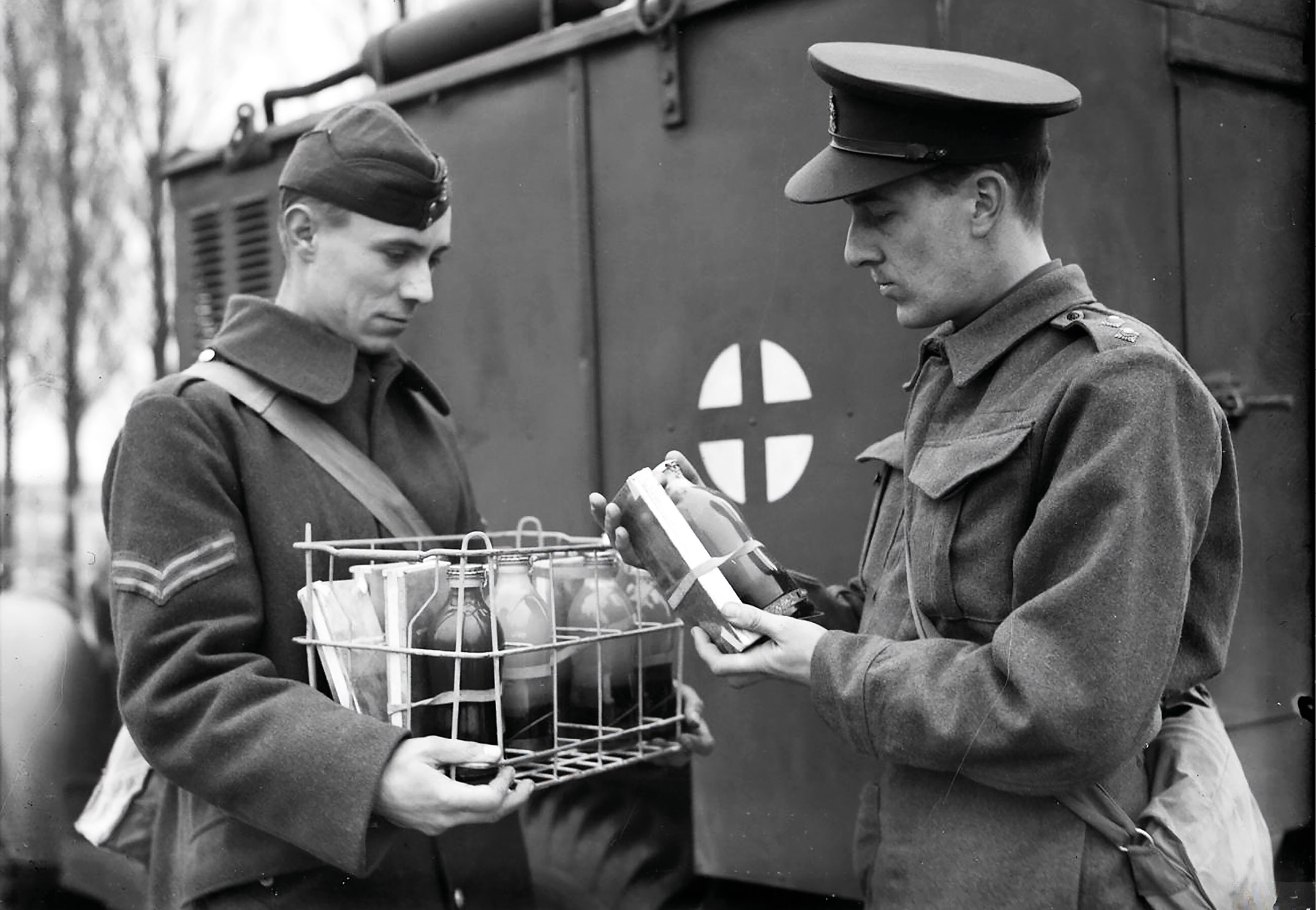
The Chilton Polden site became home to the stores and dispatch departments of the unit, and rapidly expanded to meet the growing demand. It eventually occupied 13,224 cubic feet of covered space, 4,448 cubic feet of tented accommodation, and 2.5 acres of open space. These facilities contained the stores required by the depot for one year, along with all the dried plasma, liquid plasma, and whole blood it produced or processed. Together with the distilled water used to reconstitute the dried plasma and equipment required to deliver transfusions, these stores were packed on site and dispatched around the world. The depot held medical mobilisation equipment, too, for all projected overseas Base and Field Transfusion Units. Dried plasma was assigned to ‘tropical’ theatres of war, while liquid plasma was used in more temperate climates – though, after the fall of France, British forces were almost exclusively in action in ‘tropical’ theatres of war for several years.
Blood and sand
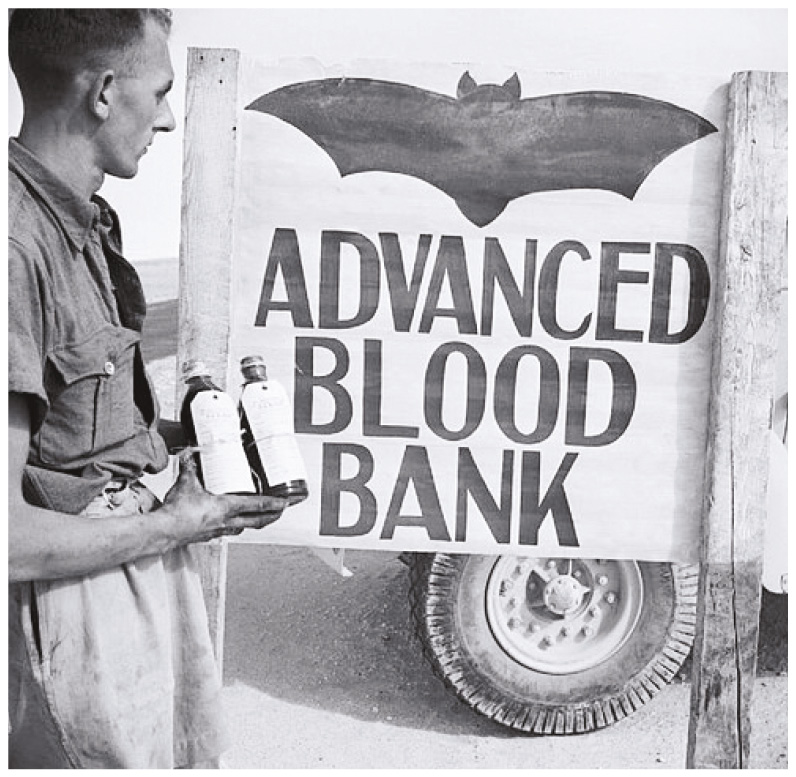
In June 1940, the ABSD dispatched personnel to the Middle East under the command of Major Gladwin Buttle. With Allied convoys under frequent attack in the Mediterranean, shipments of transfusion equipment took up to four months to arrive – if at all. Buttle had to improvise. Bottles for storing blood were manufactured locally, but empty Johnnie Walker whisky and Gordon’s gin bottles, obtained from the barman at the Union Club in Alexandria and officers’ messes, were used to hold plasma. By the time of the First Battle of El Alamein in July 1942, nearly 1,300 recycled bottles held frozen plasma in the Royal Army Service Corps’s local meat safe, while 10,379 units of whole blood obtained from troops in base areas were also available. Blood donation was a form of insurance policy for troops, and was made all the more attractive by ‘beer for blood’ publicity campaigns. By the time of the Second Battle of El Alamein in October-November, BBC correspondent Godfrey Talbot was claiming that the widespread use of blood transfusion was ‘one of the biggest and finest medical service developments in this war’.
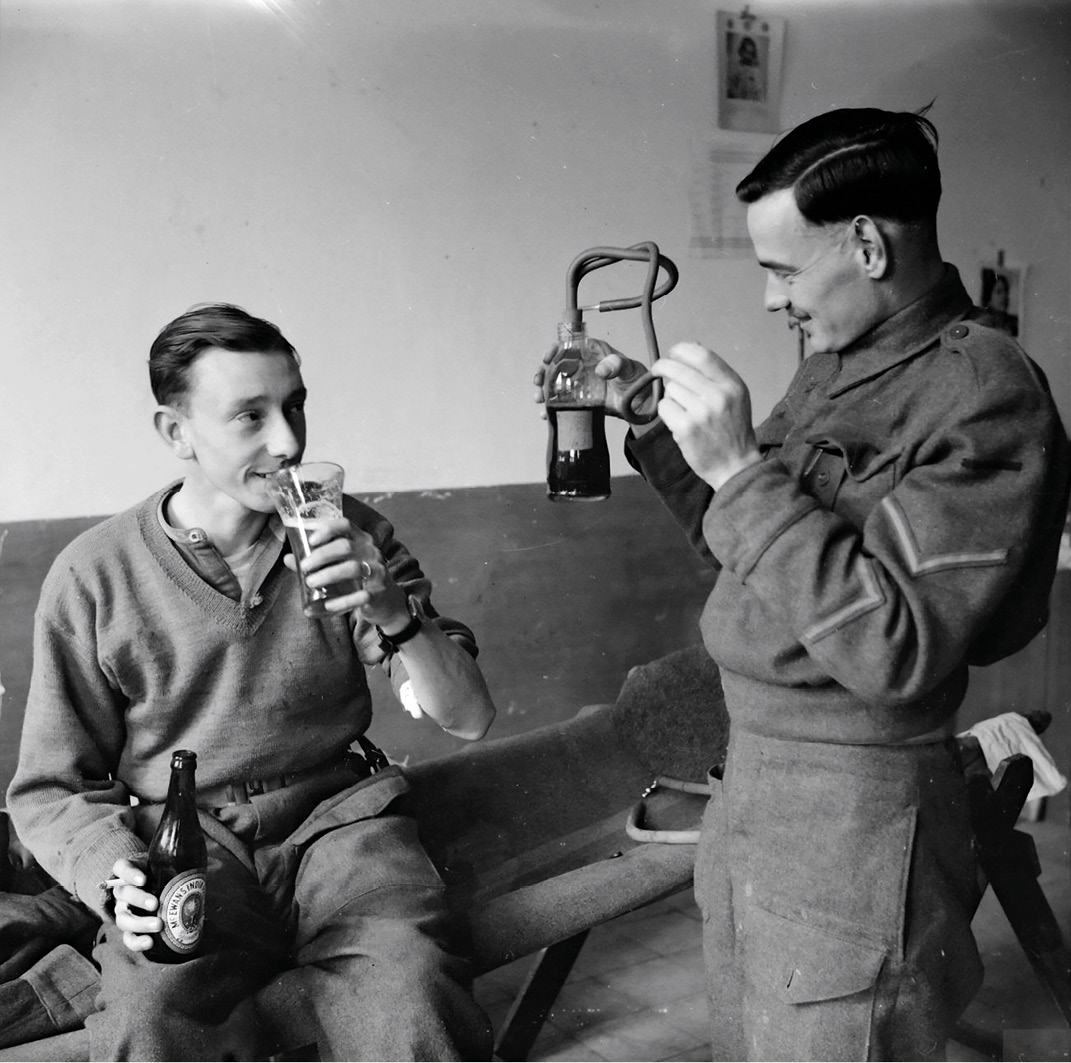
‘Buttle’s bottled blood’ was deemed a lifesaver, but a disagreement emerged between those providing frontline care and the official policy on plasma transfusion in forward units. Buttle and his team were advocates of a ‘blood-first’ policy – because, with casualty transportation times increasing as the Allies chased the Axis forces across North Africa, patients initially resuscitated with plasma deteriorated due to continuing blood loss en route to hospitals. Whitby toured the transfusion units in North Africa, where Buttle and others vociferously advocated greater blood use for initial treatment. But Whitby was concerned at the problems of contamination and temperature control posed by using blood in forward units in North Africa, as a number of deaths had been reported from these causes. He continued to advocate the use of dried plasma but acknowledged that ‘the optimum treatment for all situations is probably a compromise – a judicious mix of blood and plasma, reserving the former for those cases in which the transfusion has to be massive.’
But for those in North Africa there was a fundamental logistical problem: as Colonel J Boyd wrote, ‘on no occasion since the beginning of the campaign have the supplies of plasma from the UK been adequate for battle transfusion requirements. It has invariably been necessary to make use of blood.’ Boyd went on to note that ‘there is another aspect… but which is obvious to anyone who has come in contact with the troops in action, namely the psychological effect of blood. Troops don’t understand plasma; they all know what blood is. There is no doubt that a well-advertised blood transfusion service has a very good influence on morale.’ Indeed it did: both overseas and at home.

The home front
Propaganda emphasised the link between blood donors in Britain and those serving overseas. In a broadcast on the BBC Home Service in March 1943, Lieutenant-General Alexander Hood – the Director of Britain’s Army Medical Services – stated that ‘you who’ve given it are indeed the blood brothers of our soldiers… your gift has been one of the greatest life-saving measures provided for an army. The enemy have nothing like it…’. And they did not.
Although the Germans used blood transfusion in military hospitals and sometimes operated refrigerated lorries, they relied heavily on a synthetic blood substitute called ‘Periston’, which even their own medical officers complained was poor. After the Germans captured British dried-plasma supplies at Tobruk in 1942, however, they began to manufacture it themselves. But the condition of many casualties in captured German hospitals throughout the Desert Campaign and later in Italy indicated that both whole blood and plasma were in short supply. This was a gift to British propagandists, who emphasised in messages to the country’s own troops that ‘German doctors themselves envy our blood transfusion’.
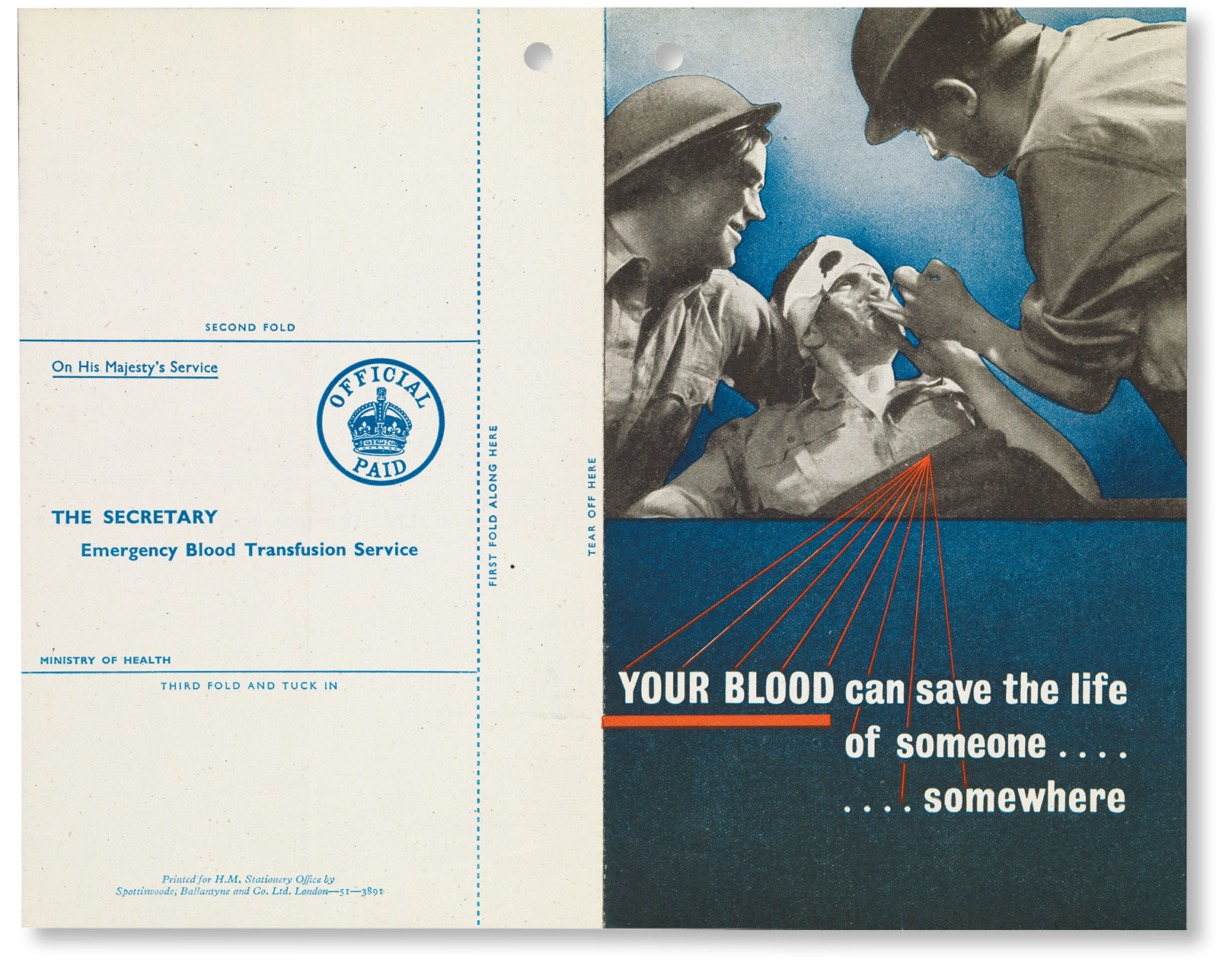
But at home, the ABSD struggled to maintain a guaranteed supply of donors, as many who initially volunteered failed to turn up when called to donate. The ABSD received surplus blood and plasma from the civilian transfusion services, but by 1942 it had to extend its recruitment of donors to Berkshire, Oxfordshire, and Hampshire to meet demand. The Second World War was perhaps the heyday of cinema attendance, with 30 million people visiting their local picturehouse every week in 1945, and a series of information films was produced by the Ministry of Information and the Ministry of Health explaining the process of blood donation and the need for donors.
A key target of these films was women. During the Second World War, more British women remained full-time housewives than were employed full-time in war production, the armed forces, or civil defence, and they were seen as a critical resource in the campaign to provide blood to the armed forces. Propaganda specifically encouraged women to see blood donation as an opportunity to contribute to the war effort. But it also focused on more personal factors. Of One Blood (1943) urged women to ‘save the life of a man you love’. In Blood Will Out (1943), the camera panned across a largely female cinema audience as the film’s narrator declared that blood donation could save the lives of ‘perhaps your husband, your son, your brother, your sweetheart’. And women would come into their own in the preparation for D-Day.
The D-Day Casualty Planning Committee assessed that 30,000 pints of Group O blood would be needed following the invasion of Normandy. In February 1944, the ABSD ran its largest recruitment drive in Bristol, touring the city in its information van, nicknamed ‘Bloody Mary’, emblazoned with the unit’s unofficial insignia of a red ‘vampire’ bat. Supported by a huge press and poster campaign for the first time, it recruited 65,205 new potential donors. Similar ‘Blood for Victory’ campaigns were run in cities throughout the south-west region, including Southampton, Portsmouth, Reading, and Bath.
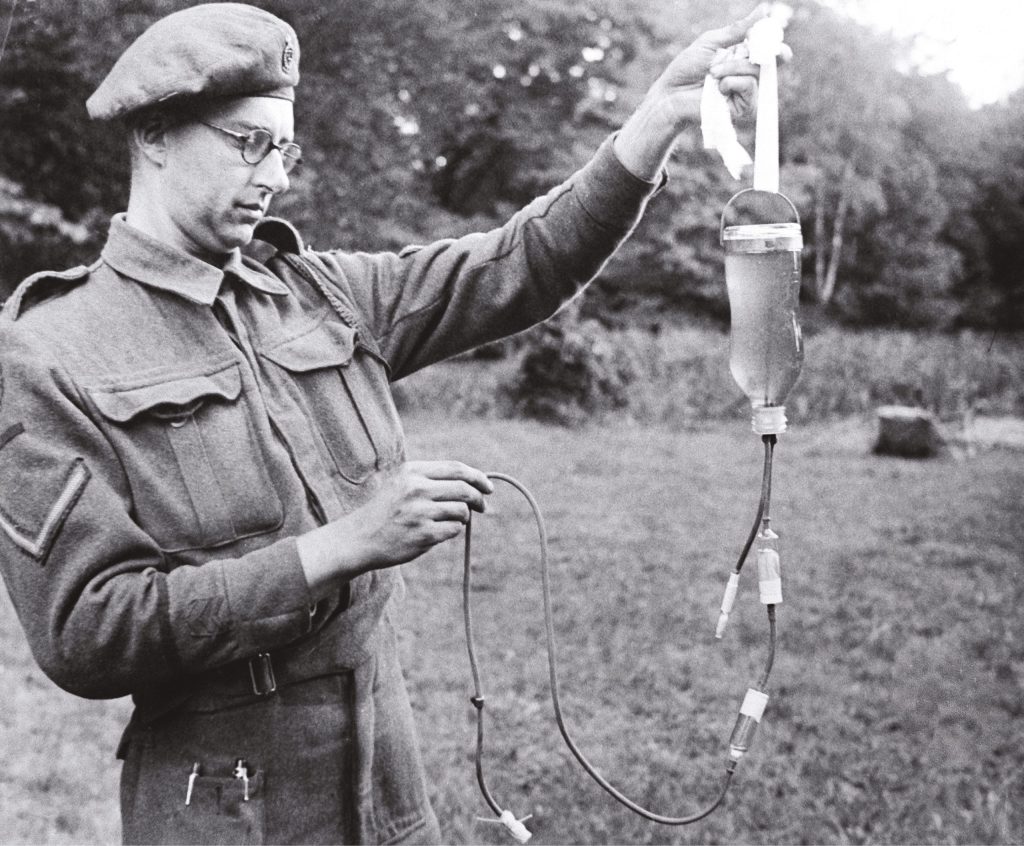
Such campaigns ensured that, accompanying the paratroopers, gliders, and landing craft that landed in France on 6 June 1944, were waterproof cases containing transfusion sets and bottles of plasma and whole blood. Transfusion Officers also went on to the landing beaches ahead of lorries that carried another 1,100 units of refrigerated fresh blood. As the troops fought their way inland, supplies of blood followed them, some dropped from the air in wicker baskets. Within hours of the invasion, landing craft left England carrying insulated boxes containing the estimated daily needs of plasma for the whole invasion force for a day. Blood was also supplied to Southampton to replenish hospital ships, as well as to the D-Day Casualty Receiving Centres located around Swindon. Within two weeks, cargo aircraft were transporting fresh blood, too – sometimes resulting in blood donated in England one day being used on the battlefield the next. It was desperately needed.
Final reckoning
During operations in the desert, British forces had used about 10,000 pints of blood. By contrast, the British Land Army fighting in Europe from June 1944 was supplied with six times that amount in six months. The demand was so great that supplementary supplies had to be obtained from the civilian Emergency Blood Transfusion Service and civilian donors recruited in France and elsewhere. On this evidence, Whitby was certain that the ABTS would not be able to meet the demands for blood for the expected invasion of Japan (see MHM 146, June/July 2025). The Ministry of Health produced a booklet, Life Blood, detailing the history of the Transfusion Services and packed with case studies of lives saved, in preparation for a new recruitment campaign. But the war was ended by the bombs dropped on Hiroshima and Nagasaki on 6 and 9 August 1945 before it was needed.
Blood transfusion was critical to what is officially termed ‘manpower economy’ in the Second World War: the ability to return to service highly trained personnel who have been wounded. And Britain led the way. For General Sir Bernard Montgomery, the Blood Transfusion Service was ‘a great Battle Winning Factor’. But, while whole blood remains the ‘gold standard’ for transfusion, its availability in immediate frontline care remains an issue today – for many of the same temperature-control reasons that Whitby, Buttle, and their colleagues in the ABTS experienced. In 2023, however, the Ministry of Defence launched a ‘Blood Far Forward’ research programme to enhance the care and survival rates of injured personnel in war zones. At its core are plans to administer dried plasma within 30 minutes of injury.
John Beales has a PhD in history, and has written articles on military history for History Today, among other publications. He has also undertaken research for television documentaries on military conflicts, and was awarded the 2020 Roy Porter Prize in the social history of medicine for research into blood donation in Britain in the Second World War.
Further reading:
• Mark Harrison, Medicine and Victory: British military medicine in the Second World War (Oxford University Press, 2004).
• Linda Palfreeman, Spain Bleeds: development of battlefield blood transfusion during the Civil War (Sussex Academic Press, 2015).
All images: Wikimedia Commons, unless otherwise stated; Alamy