
Subscribe now for full access and no adverts
The Kriegsmarine, Nazi Germany’s navy from 1935 to 1945, had always regarded the Baltic very much as ‘our sea’ – but 80 years ago, as the Second World War entered its final stages, that sense of German ownership was in rapid decline, as increasingly large numbers of soldiers and civilians around its shores found themselves cut off by Soviet advances. Known as Operation Hannibal, the naval operation to evacuate more than a million people westwards (to the relative safety of western Germany and German-occupied Denmark) would continue right up until the final German surrender on 8 May. One of history’s largest seaborne evacuations, it would be remembered by many in Germany as unser kleines Dünkirchen (‘our little Dunkirk’).
Background
The Soviet offensives of 1944, which raised the siege of Leningrad and drove German forces back through the Baltic states, alarmed Großadmiral Karl Dönitz, the Commander-in-Chief of the navy, who became increasingly concerned at the risk to his U-boat training areas. He used his influence to persuade Hitler to order the now-depleted Army Group North (one of the three army groups that had begun Operation Barbarossa, the ill-fated invasion of Russia, more than three years earlier) to hold dangerously exposed positions, such as the Courland Pocket (situated on a large peninsula on the Latvian coast), to protect the minefields that kept the Soviet Baltic Fleet bottled up in Kronstadt harbour, just to the west of Leningrad.
Even Dönitz, however, recognised that Army Group North could not hold the positions he considered essential without support. Accordingly, he ordered the transfer of most of the Kriegsmarine’s surviving larger surface vessels to the Baltic to provide naval gunfire support (NGS) to the hard-pressed coastal garrisons. Despite ever-increasing Soviet air superiority, these NGS missions continued right up until the German surrender.
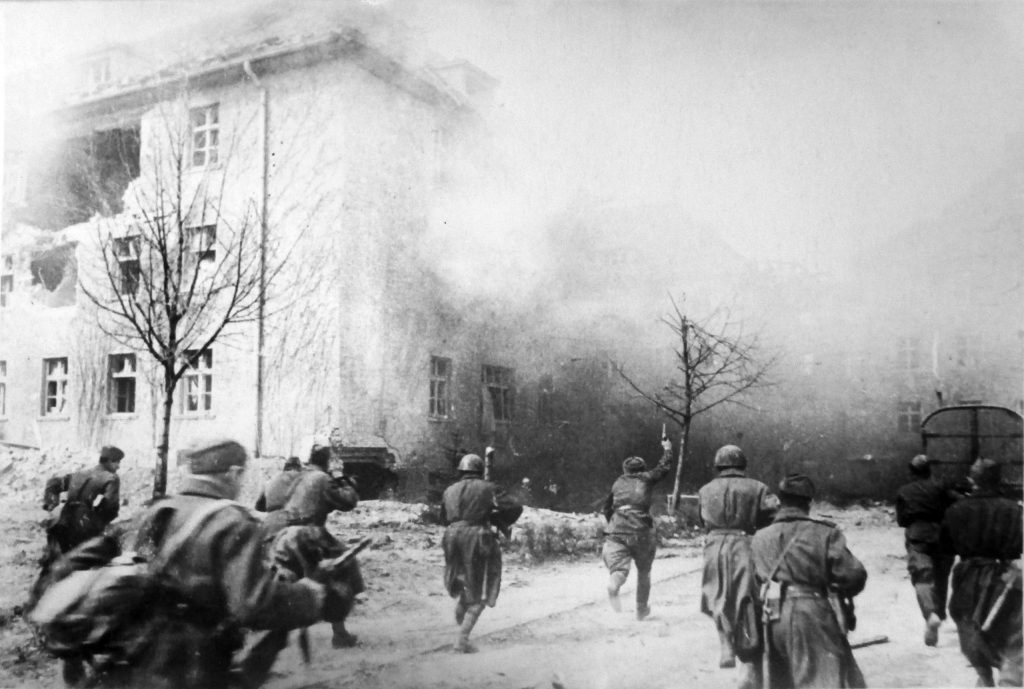
By the beginning of 1945, it was apparent that the Soviet offensives along the Baltic coast could not be contained. The East Prussian Offensive by the Red Army’s 3rd Belorussian Front under General Ivan Chernyakhovsky began on 13 January, and, in conjunction with Marshal Konstantin Rokossovsky’s 2nd Belorussian Front, subsequently cut off East Prussia from the rest of the Reich.
Operation Hannibal
In early January, Hitler granted permission for a partial withdrawal of Army Group North from the Courland Pocket. Dönitz scraped together sufficient shipping to evacuate 4th Panzer Division, 31st, 32nd, 93rd, 218th, 227th, and 389th Infantry Divisions, plus 11th SS Division ‘Nordland’. The remaining force of at least 135,000 men, renamed Army Group Courland, was able to hold out until the end of the war largely due to constant resupply by sea and Kriegsmarine NGS.
The experience gained in this operation helped Konteradmiral Conrad Engelhardt (the Wehrmacht’s Seetransportchef, or Sea Transport Chief, since 1944) to refine his existing contingency plans for Operation Hannibal, a major evacuation of troops and civilians from areas along the Baltic coast threatened by the Red Army. On 23 January 1945, the alarming Soviet advances prompted Dönitz to implement the operation, which would quickly become one of the largest evacuations of its kind in history. Initially, evacuees were ferried to the ports of Warnenemünde (near Rostock), Swinemünde (in Western Pomerania), and Sassnitz (on the island of Rügen), but they were soon unable to accommodate the sheer number of troops and civilians arriving each day.
On 31 January, the minutes of a Führer conference noted that:
The Führer orders that the ships evacuating refugees should carry food for the refugees on their return trip to the east… The Commander-in-Chief, Navy, reports that more than 20,000 refugees in Swinemünde are causing severe congestion in the port and endanger troop transports from Kurland [Courland]. Though it is a strategic necessity to evacuate these steadily increasing hordes of refugees, only one hospital train left Swinemünde yesterday, and not a single train for evacuees. The Führer orders that the refugees be dispersed at once among the surrounding villages, and that facilities are to be provided to speed up evacuation. Reichsleiter [Martin] Bormann is to be responsible for the execution of this order.
Ultimately, the worst of the congestion was eased by diverting some of the shipping to harbours further west, including Kiel and Copenhagen.
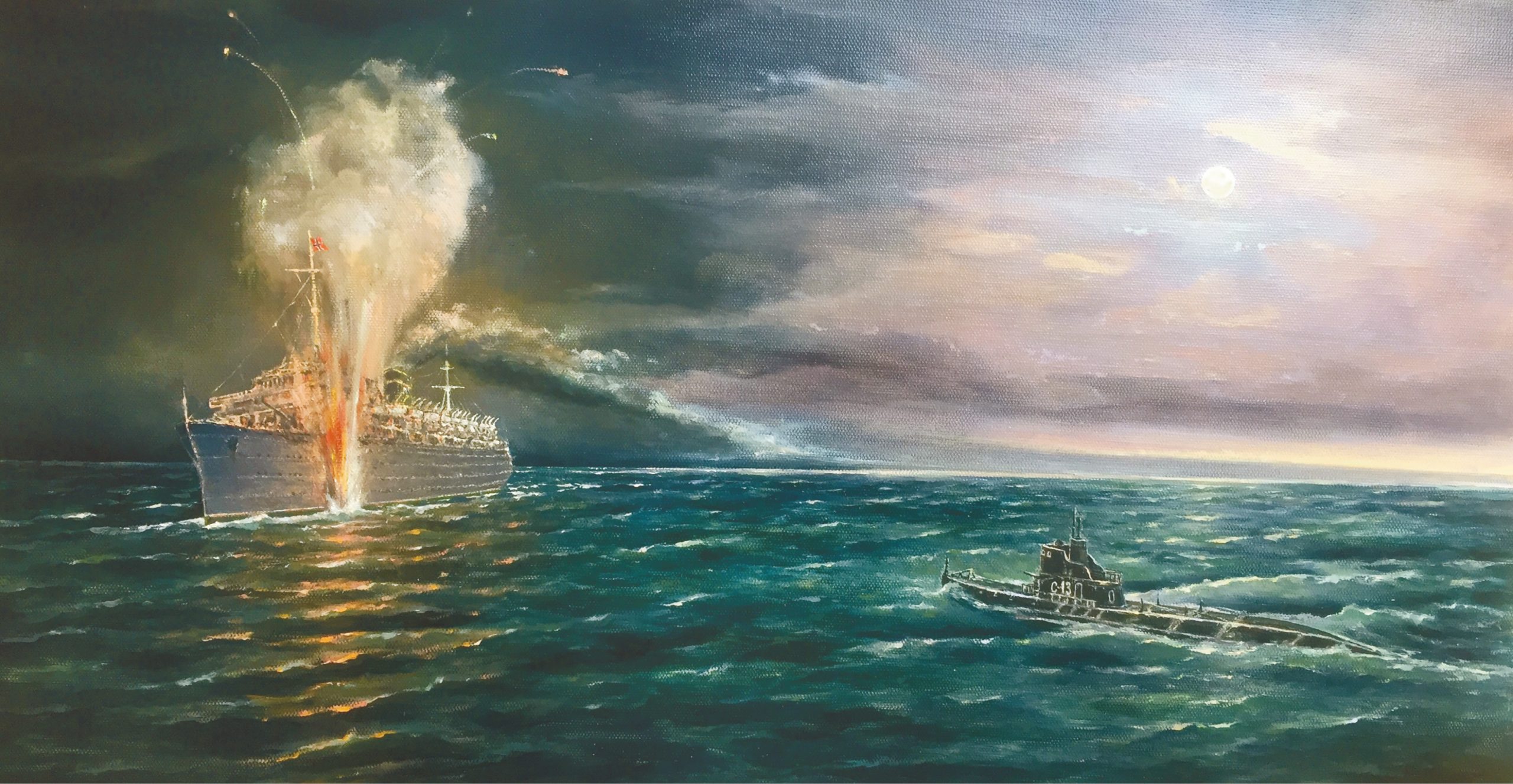
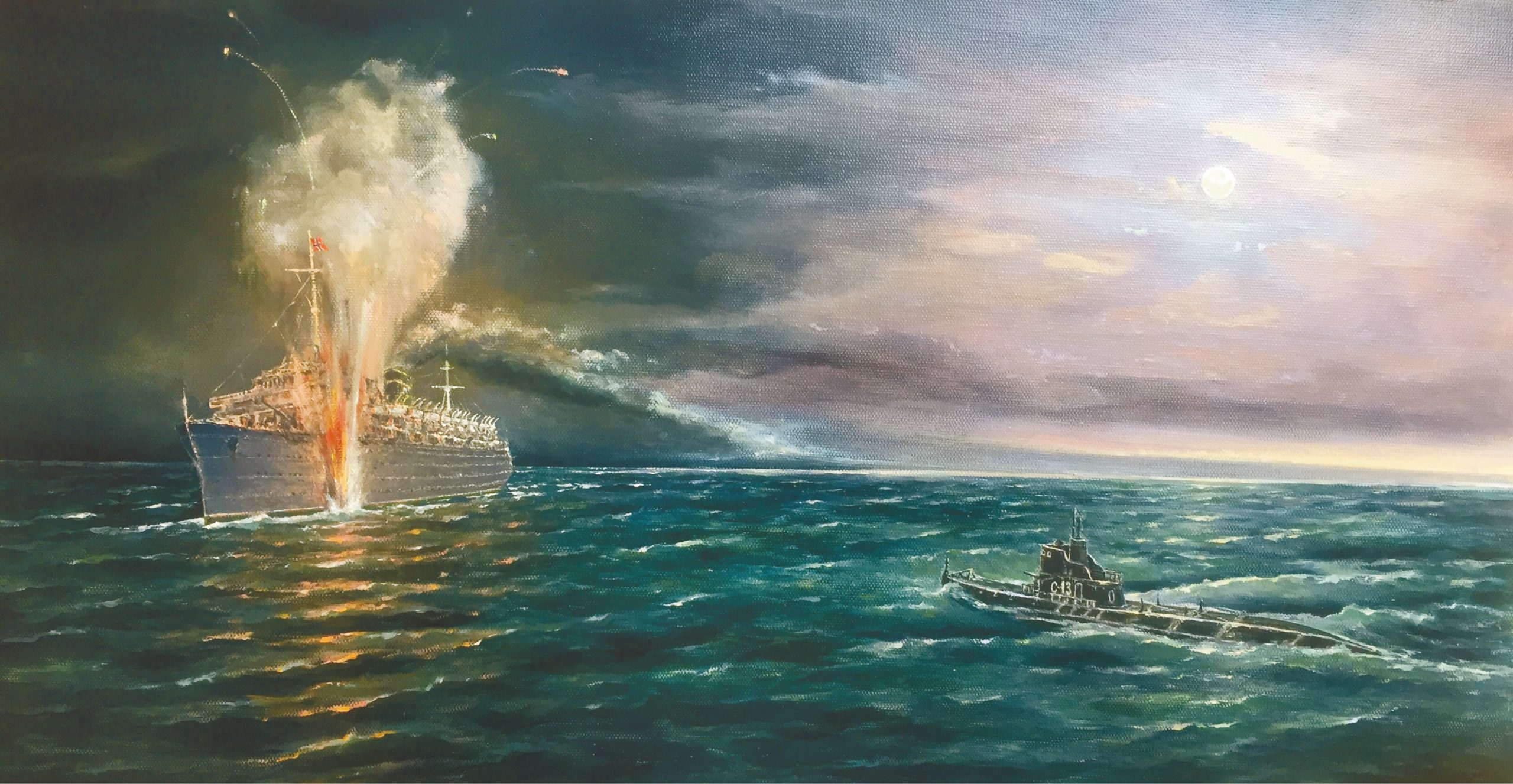
As it was, the evacuation fleet included 14 former liners, plus 23 merchantmen of more than 5,000 tons and many other smaller ships totalling 1,080 merchant vessels of all types (of which 161 were lost). All faced the threat of Russian submarines, but the worst casualties were incurred when three of the larger ships were lost. On 30 January, the ex-liner Wilhelm Gustloff left the harbour at Gotenhafen (in occupied Poland) bound for Kiel. Grossly overloaded with more than 10,000 civilians and military personnel aboard, the Gustloff was torpedoed and sunk by the Soviet submarine S-13 off the Pomeranian coast, with as many as 9,500 deaths, making it the largest loss of life in a single ship sinking in history. Days later, on 9 February, the 14,660-ton Steuben carrying more than 5,200 passengers and crew was also sunk by S-13, with only 650 survivors. Then on 16 April, the former freighter Goya was torpedoed and sunk by the Russian submarine L-13, with just 183 survivors from the 6,000 refugees on board.
Faced by rising losses, the Kriegsmarine committed the bulk of its remaining surface units to support the operation. Vizeadmiral August Thiele commanded Kampfgruppe Thiele, which included the heavy cruisers Prinz Eugen, Admiral Hipper, Admiral Scheer, and Lützow, the old pre-Dreadnought battle-ship Schlesien and the light cruisers Leipzig and Nürnberg. There were concerns that the Soviet Red Banner Baltic Fleet might put to sea from Kronstadt with one battleship, two cruisers, and 17 destroyers/torpedo boats to disrupt the evacuation, but in the end Russian naval efforts were confined to submarine and motor torpedo boat sorties. This allowed the Kampfgruppe to provide detachments for NGS, as well as assisting with the evacuations whenever possible.
In late January, Prinz Eugen was sent to provide NGS for the garrison of Samland, the strategically important peninsula north of the East Prussian capital of Könisgberg, firing a total of 871 rounds of 203mm (8in) ammunition between 29 and 31 January. In early February, Lützow was in action with Kampfgruppe Thiele supporting the 4th Army, shelling the Soviet 3rd and 48th Armies advancing on the coastal towns of Frauenburg and Elbing, between Könisgberg and Danzig. Admiral Scheer and Lützow were then ordered to Samland with several torpedo boats. The ships bombarded Soviet positions in the region for the rest of the month, seeing particularly intense action on 18-19 February, when they shelled Russian forces near Peyse and Groß Heydekrug in support of a counter-attack by elements of 3rd Panzer Army and 4th Army, which temporarily restored a land corridor between the port of Pillau and Königsberg itself. This success allowed the evacuation of 450,000 refugees from Pillau over the next two months. (The total includes at least 5,000 refugees and wounded troops flown out from the Luftwaffe seaplane base at Pillau-Neutief, which remained operational despite constant Soviet air raids and artillery bombardment until it was finally overrun on 25 April.)

Rising tide
The strain of constant operations with minimal maintenance soon began to tell on the Kriegsmarine, however. By early March, half of the vessels assigned to support the evacuation were reported to be unserviceable due to mechanical problems or lack of fuel. Despite this, phenomenal efforts were made to keep ships in action – Admiral Scheer, three destroyers, and the Elbing-class torpedo boat T36 gave covering fire to a German enclave near Wollin, at the mouth of the River Oder, allowing small craft to evacuate more than 75,000 troops and civilians who had been trapped in the area. However, on 8 March, Scheer was forced to return to Kiel (carrying 800 civilian refugees and 200 wounded soldiers) to have her badly worn guns replaced. An uncharted minefield forced her to divert to Swinemünde, where she temporarily disembarked her passengers. Despite her worn-out guns, the ship then shelled Soviet forces outside Kolberg until she had used up her remaining ammunition. She then embarked more refugees and docked at Kiel on 18 March, having cautiously threaded her way through a newly swept channel in the minefield.

On 23 March, the Russian East Pomeranian offensive reached the Baltic coast at Zoppot, between the port cities of Gotenhafen and Danzig. Prinz Eugen and Lützow were almost constantly in action, firing on targets around Tiegenhoff, Ladekopp, Zoppot, and Danzig. The intensity of the bombardments rivalled anything carried out by other navies – in a matter of 26 days, Prinz Eugen fired 4,871 rounds of 203mm (8in) ammunition, and 2,644 rounds of 105mm (4.1in) ammunition. Even the old Schlesien added her firepower before carrying more than 1,000 wounded troops from Zoppot to Swinemünde, where she restocked her ammunition. She then remained in the port to shell the advancing Soviet 2nd Shock Army.

The Kriegsmarine’s light forces were heavily engaged throughout the operation as well. The destroyer Z34 evacuated refugees from Kolberg, escorted the heavy cruisers Admiral Scheer, Lützow, and Prinz Eugen during their bombardment missions, and was also detached to shell the towns of Dievenov and Tolkemit independently. During these close-range actions, the ship was credited with the destruction of 12 tanks and four anti-tank guns.
Meanwhile, the S-boats (motor torpedo boats, or MTBs) of the 2nd S-training Flotilla were ordered to patrol off Libau (on Latvia’s west coast) as Russian gunboats began harassing evacuation traffic. On 18 March, S64 and S81 clashed with nine Soviet gunboats, sinking TK66 and badly damaging TK195. Both sides’ torpedoes were useless against their fast, shallow-draught opponents, and the Soviet MTBs were badly outgunned by the German 20mm and 30mm cannon, as they were armed with (at best) four 12.7mm machine-guns apiece. Nine days later, the same S-boats, in company with S69, rescued survivors from the 694-ton tanker Saßnitz, which had been attacked and disabled by Soviet aircraft, along with her three minesweeper escorts. The Luftwaffe made a rare appearance when eight Fw190 fighters of Jagdgeschwader 54 drove off the Russian aircraft as the three S-boats arrived to rescue the survivors. After landing them at Libau, the S-boats returned to the still-burning tanker and surprised a group of Soviet MTBs – described by Oberleutnant zur See Bernhard Wülfing as ‘a disorderly bunch of craft with stern lights burning which kept getting in each other’s way’. In a fierce gun battle, S69 destroyed TK166, while Wülfing’s S81 sank TK181. S64 disabled TK199, before despatching a boarding party that took 11 prisoners, including the wounded commander of the TKA (MTB) Division, Captain (Third Rank) Cubujkin. At least four more Soviet MTBs were damaged as they broke off the action.
Final reckoning
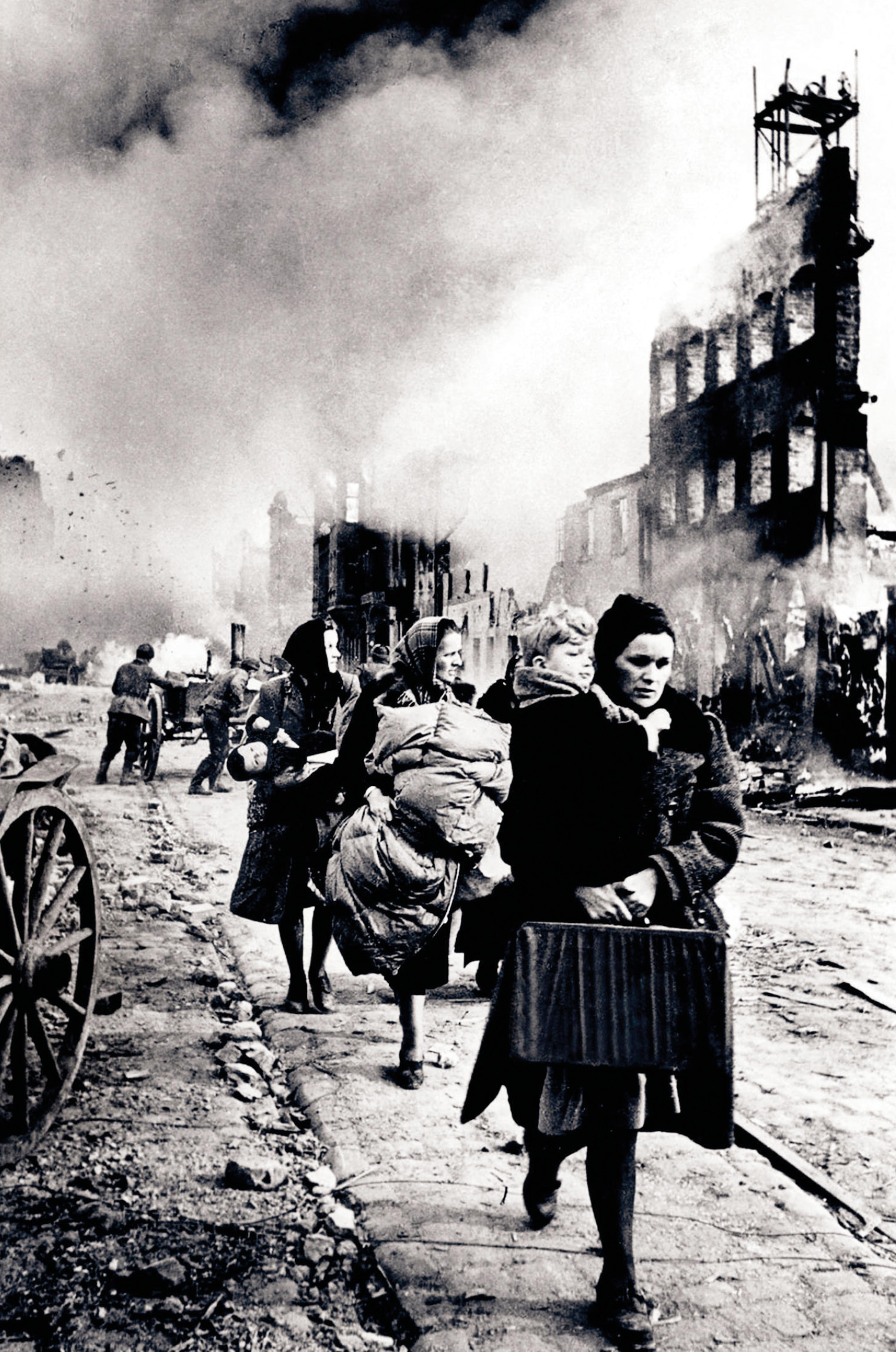
Inevitably, the Baltic evacuation ports fell one by one: Kolberg on 18 March; Gotenhafen on 26 March; Danzig on 30 March; Königsberg on 9 April; and Pillau on 25 April. The strongly garrisoned Courland Pocket held out until ordered to surrender by Dönitz in his capacity as Hitler’s successor on 8 May. Despite worsening fuel shortages, a flotilla of small boats and landing craft rescued more than 30,000 soldiers and civilians from Oxhöfter Kämpe, near Danzig, during the night of 4-5 April, depositing them on the Hela Peninsula, some 20 miles away. (The total includes 8,000 men of VII Panzer Corps, amazingly rescued with most of their AFVs and heavy equipment.) It is thought that around 265,000 people were evacuated to Hela from Danzig during April.

Surprisingly, the RAF proved to be the greatest threat to the Kampfgruppe Thiele’s major vessels. On 9 April, Admiral Scheer was in Kiel, having her guns replaced at the Deutsche Werke shipyard, when the port was raided by more than 300 RAF bombers. She took numerous hits and capsized, with relatively few casualties as most of her crew were ashore. On 16 April, Lützow was caught at Swinemünde by Lancasters of 617 Squadron. She was hit by three 1,000lb bombs, two of which failed to explode, but the real damage was caused by a 12,000lb Tallboy, which exploded between the ship and the dockside, tearing a large hole in her hull below the waterline. Lützow listed heavily, but her superstructure caught the quayside and prevented her from capsizing. Although the lower decks were badly flooded, it was possible to correct the list and partially restore power. The shallow water left her main deck above water, and her forward 280mm (11in) turret was repaired in a matter of days, firing on Soviet forces until ammunition ran out on 4 May, when the ship was finally scuttled. The old battleship Schlesien avoided any major damage until 3 May, when she was disabled by a British air-dropped mine. She was taken under tow to Swinemünde by the destroyer Z39 and scuttled in the shallows, where her guns were used to help defend the city.
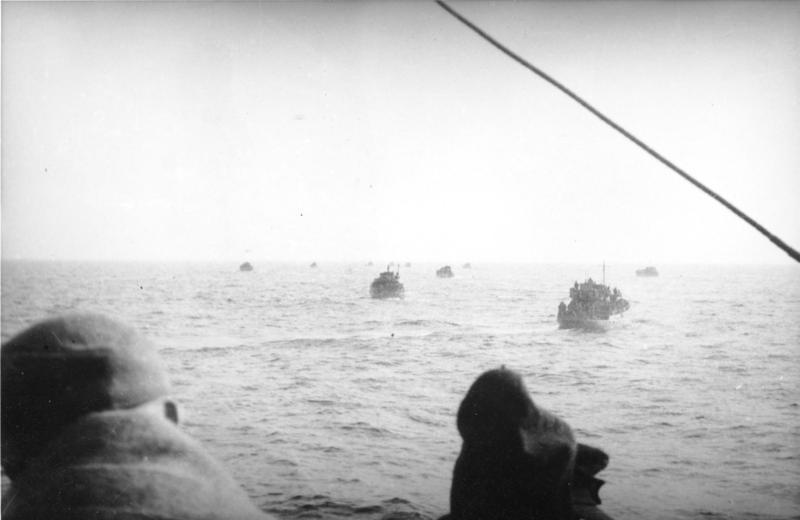


The evacuations – which the troops dubbed unser kleines Dünkirchen (‘our little Dunkirk’) – continued right up to the last day of the war. On the evening of 8 May – the day of the German surrender – a small group of destroyers and torpedo boats docked at Hela, picking up astonishing numbers of men. The torpedo boat T28, with a displacement of less than 1,300 tons, left the harbour with 1,237 soldiers aboard, and the similar-sized T33 managed to pack in almost 2,000 men. Later that evening, an equally crowded final convoy of freighters and ferries left the port, bringing out a further 55,000 troops, although at least 60,000 more had to be left behind.
Despite the constant threat from Soviet aircraft and submarines, an estimated 900,000 civilian evacuees and at least 350,000 troops were carried to the relative safety of western Germany and German-occupied Denmark. For comparison, the 861 assorted vessels used in the Dunkirk evacuation rescued a similar number of troops (338,226) between 26 May and 4 June 1940, but had far better air cover, with the RAF flying more than 3,500 sorties in support.
Dönitz was justifiably proud of what Hannibal had accomplished. Writing in his memoirs ten years later, he noted that ‘99% of the refugees brought out by sea succeeded in arriving safely at ports on the western Baltic. The percentage of refugees lost on the overland route was very much higher.’ While the true scale of the losses at sea was rather higher – probably 3% – it was certainly less than that suffered by those escaping overland. An estimated 1,000,000 civilians fled from East Prussia by land, of whom up to 10% died from exposure and Soviet air attacks. MHM
All images: Wikimedia Commons, unless otherwise stated