Subscribe now for full access and no adverts
The story of Roman Carlisle is a tale not of two cities but of two forts. Having brought much of southern England under imperial control in the years after the Claudian invasion of AD 43, in the AD 70s the Roman army surged north, annexing swathes of new territories and consolidating these gains by building forts within them. One such military base was at Carlisle, positioned to guard the junction of two major Roman roads – one running east–west on a line that, half a century later, would be fortified by Hadrian’s Wall, and the other heading north into modern Scotland – as well as the confluence of the Rivers Caldew and Eden. Today this site is covered by Carlisle Castle, but excavations have explored some of the fort’s remains (see CA 101, CA 164, and CA 183), and surviving timbers confirm that it was founded c.72-73.
A civilian settlement soon grew up around the fort (CA 353), and Luguvalium Carvetiorum – named after Lugus, a local god whom the Romans equated with Mercury, and the indigenous Carvetii people – flourished into an important border town, and a vital administrative and supply hub. The fort continued in use after Hadrian’s Wall was constructed a short distance to the north in AD 122, but, as part of these new defences, a second fort was built on the opposite side of the Eden. This was Uxelodunum (Stanwix), the largest fort on Hadrian’s Wall, which was home to a 1,000-strong auxiliary unit known as the Ala Gallorum Petriana – the only cavalry unit of its size documented in Britain.
These two garrisons bracketed a landscape of intense military activity, but this was not simply a buffer zone on a contested border. Just 400m south-west of Uxelodunum, and within around 250m of the presumed site of Milecastle 66, evidence is emerging of an enormous and very grandly appointed building – the largest building yet identified on Hadrian’s Wall – which would have been a dominating feature of the local landscape. Why was such a sumptuous structure built in a relatively remote part of the Roman Empire?

Frontier finds
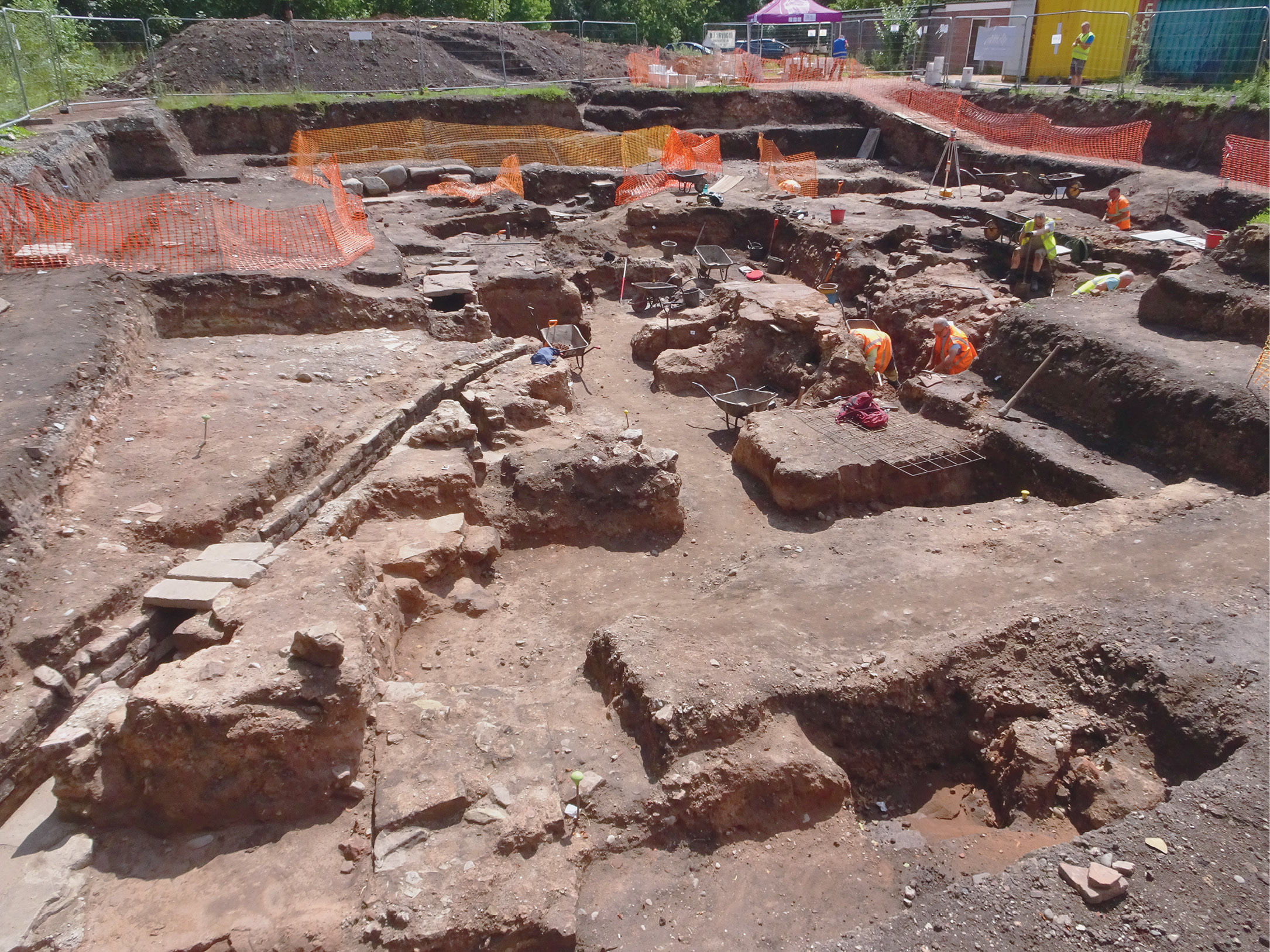
Today, the building’s remains lie in rather more genteel surroundings, beside the smooth green lawns of Carlisle Cricket Club. Despite the structure’s impressive scale, its presence was unknown until an inconvenient episode in the Cricket Club’s history presented a unique archaeological opportunity. Some years ago, the River Eden burst its banks, flooding the club’s pavilion. Constructing a replacement so close to Hadrian’s Wall required careful consideration of the potential impact on any underlying archaeology, and so in 2017 Wardell Armstrong were commissioned to carry out an evaluation on the proposed site. The archaeological potential of this location was exciting – and the team, who were led by Frank Giecco, were not disappointed.

Their initial evaluation uncovered unmistakable evidence of a Roman hypocaust system, indicating the presence of a bathhouse or another building with heated rooms, as well as quantities of animal bone, pottery, and metalwork. A particularly intriguing find, however, was a fragmentary inscription referring to Julia Domna: the wife of one emperor, Septimius Severus (r. 193-211), and mother of two more, Geta (d. 211) and Caracalla (d. 217). Significantly, Severus and his family are known to have visited northern England: although Britannia was a small province on the edge of the Roman world, between AD 208 and 211 the entire empire was ruled from York (Eboracum) after the imperial household took up residence. The reason for this relocation was Severus’ ambition to bring the unconquered lands north of Hadrian’s Wall under Roman control (see box ‘Severus in Scotland’, opposite), and during these campaigns, the late Roman Historia Augusta attests, the emperor visited a mansio, a grand official stopping place, while inspecting the Wall. Could Severus have travelled to the empire’s northernmost border town as part of his invasion plans? This might explain why Roman Carlisle gained civitas (regional capital) status in the early 3rd century, and why the town underwent an intense period of rebuilding at around the same time. Could the construction of a monumental building just across the river also be linked to the prestige of an imperial visit?
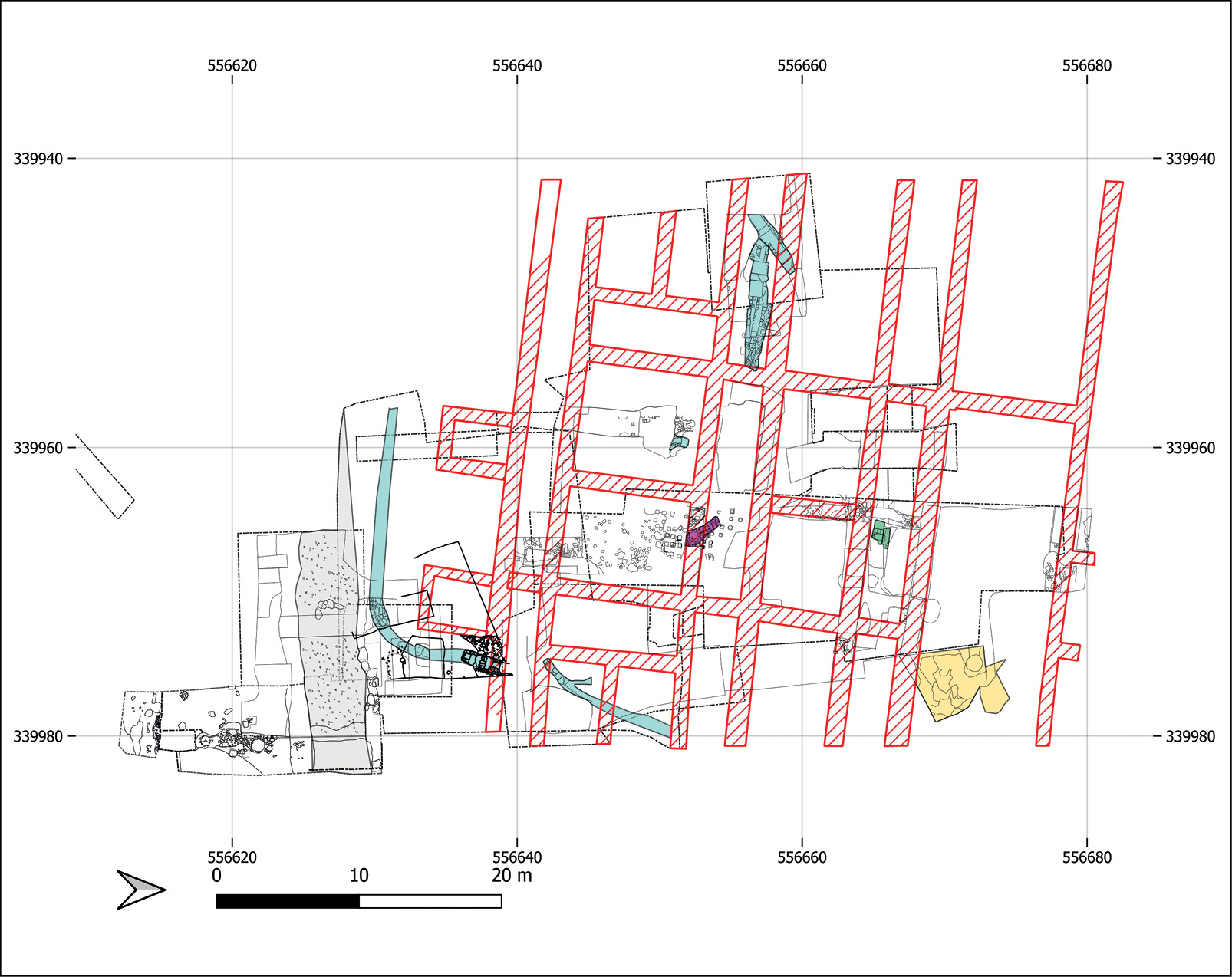
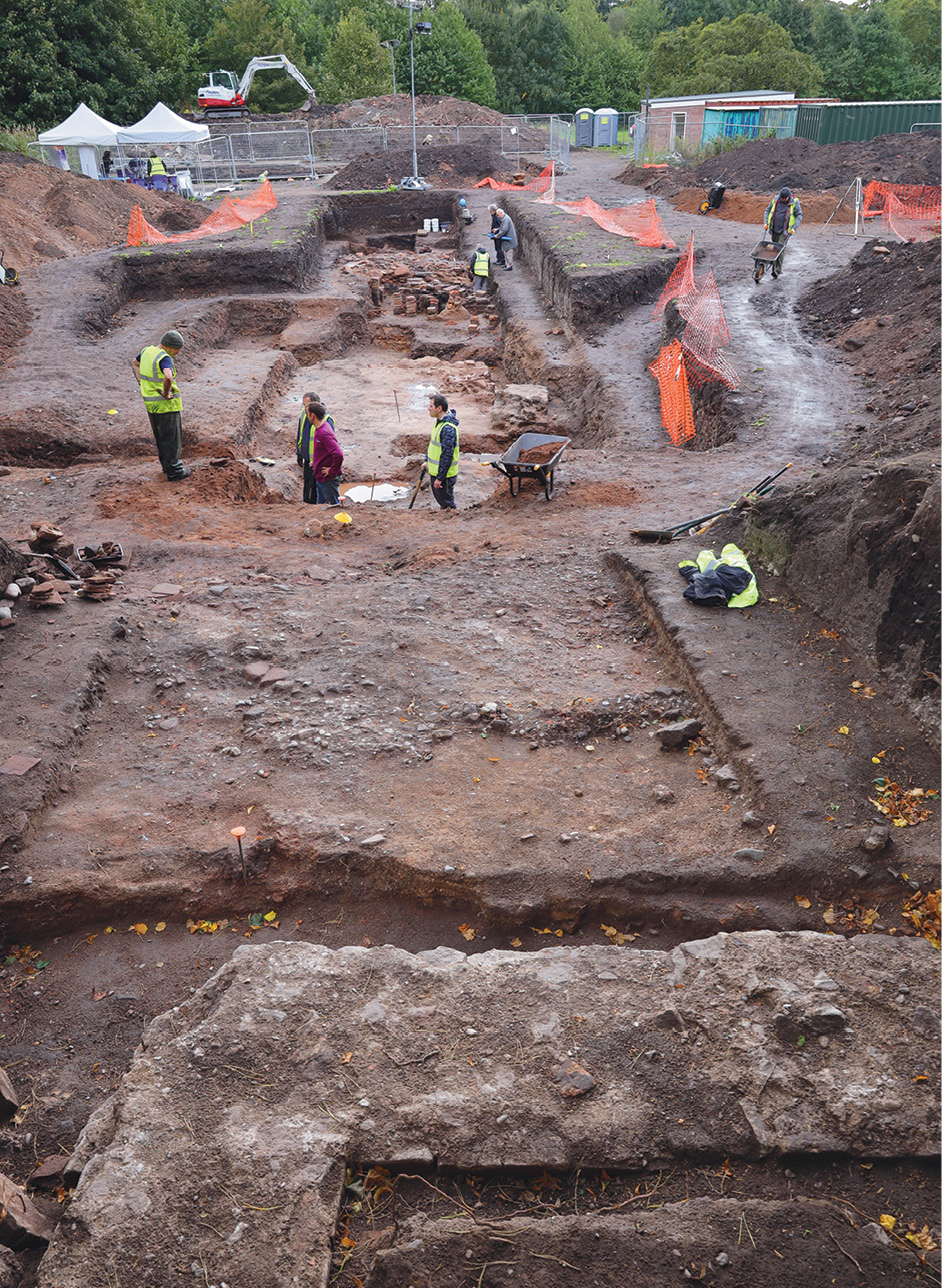
There was clearly much more to learn about the site, and – following a successful National Lottery Heritage Fund bid – regular excavations have been running there since 2021. Still directed by Frank Giecco, the community project is a partnership between Wardell Armstrong, Carlisle Cricket Club, Cumberland Council, and Tullie House Museum & Art Gallery, working with an army of volunteers aged 8 to 80. Each new phase of their investigations adds to our understanding of what was clearly an impressive and high-status building. Although its stonework was plundered during the medieval period, surviving wall remains and the size of later robber trenches testify to the scale of what once stood on the site. Its full extent is yet to be established, but the building’s footprint covered at least 50m by 60m, over five terraces. As we will explore below, among the more-than 5,000 small finds that have been recovered to-date, there are echoes of distinctly wealthy visitors to the site, and possible links to the imperial court itself.
The structure was originally interpreted as a very grand bathhouse, but as more of its plan has been reconstructed, and as more high-quality artefacts emerge, suggestions of something more significant are becoming stronger. Was this an exclusive facility enjoyed by the most privileged members of the nearby Uxelodunum community? A luxurious residence for the fort’s commander? Or, given the building’s early 3rd-century date, could it be connected to Severus’ travels within northern Britain?
Severus in Scotland
Septimius Severus was born at Leptis Magna, in what today is Libya, and rose to power following the short-lived civil war known as the Year of Five Emperors. His reign was marked by ambitious military campaigns, and he eventually set his sights on the lands of the Caledonians and the Maeatae beyond Hadrian’s Wall. In 208, he established his headquarters at York and reinforced Hadrian’s Wall, before pushing north as far as the Antonine Wall (which had been abandoned in the 160s) and re-establishing it as the new frontier line.
After these initial successes, Severus’ troops became bogged down in difficult terrain, plagued by guerrilla attacks from local warriors who knew better than to engage the imperial army in open battle. By 210, however, the Maeatae had been subdued. When peace talks failed, the contemporary historian Cassius Dio writes, Severus ordered a renewal of hostilities in terms that amounted to genocide. This bloodshed was short-lived, as the following year Severus fell ill and withdrew to York, dying there in 211. His sons succeeded him, ruling jointly, but Caracalla had his brother killed the same year, and rapidly abandoned the invasion. Soon after, the frontier was withdrawn to Hadrian’s Wall, where it would remain.
Grand designs
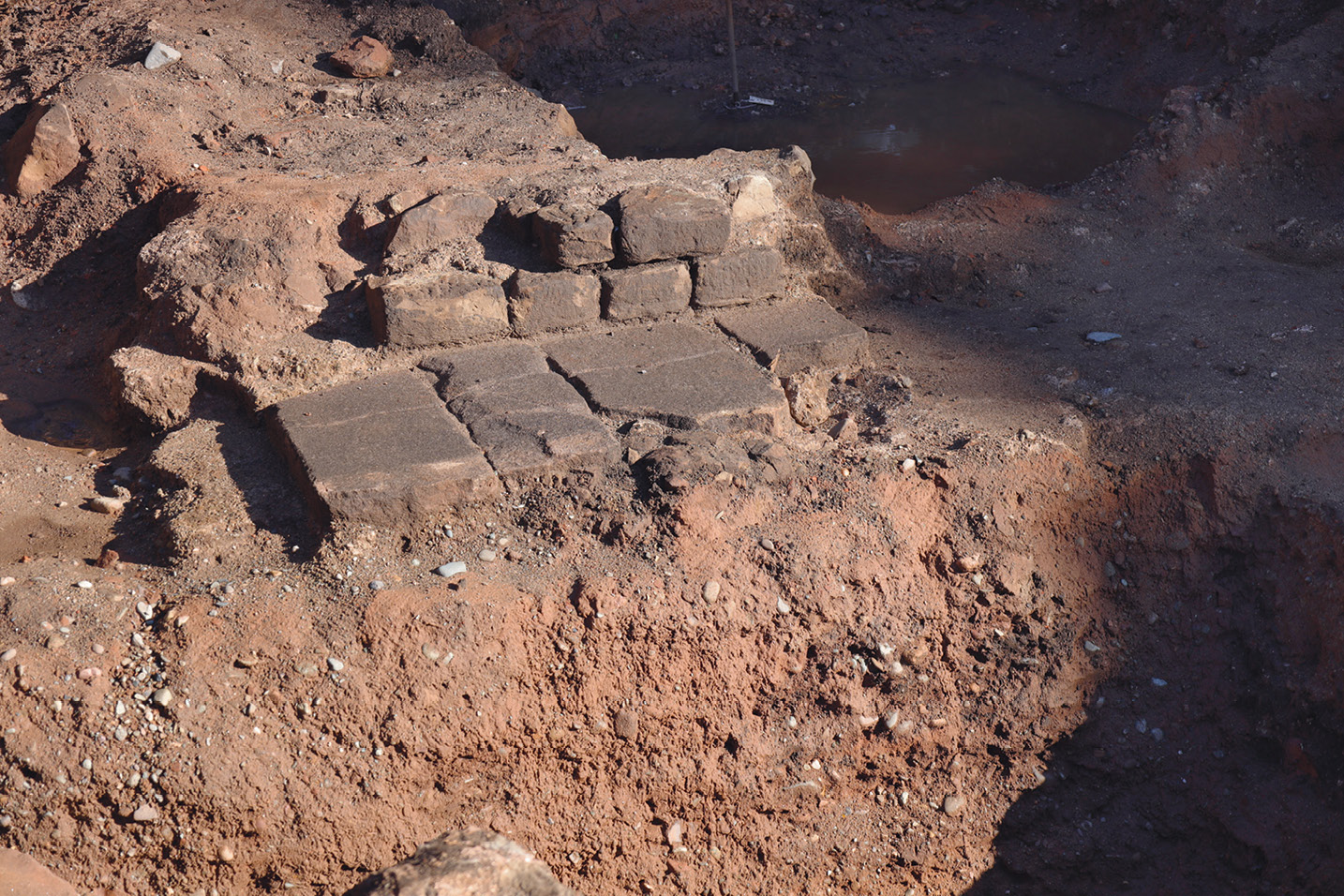
While excavating the remains of the monumental building, traces of a much smaller, 2nd-century structure were discovered underneath. Its remains had been largely destroyed by 3rd-century construction and later stone-robbing, so that only a couple of square metres survived: a short section of the northern wall and part of a flagged stone floor, and elsewhere part of a hypocaust. This earlier structure has been interpreted as a modest bathhouse, broadly contemporary with the construction of Uxelodunum, and possibly used by the fort community. Bathhouses associated with frontier forts tend to follow the same block-plan layout, so, if this function is confirmed, its footprint should be straightforward to reconstruct, despite its present fragmentary state.
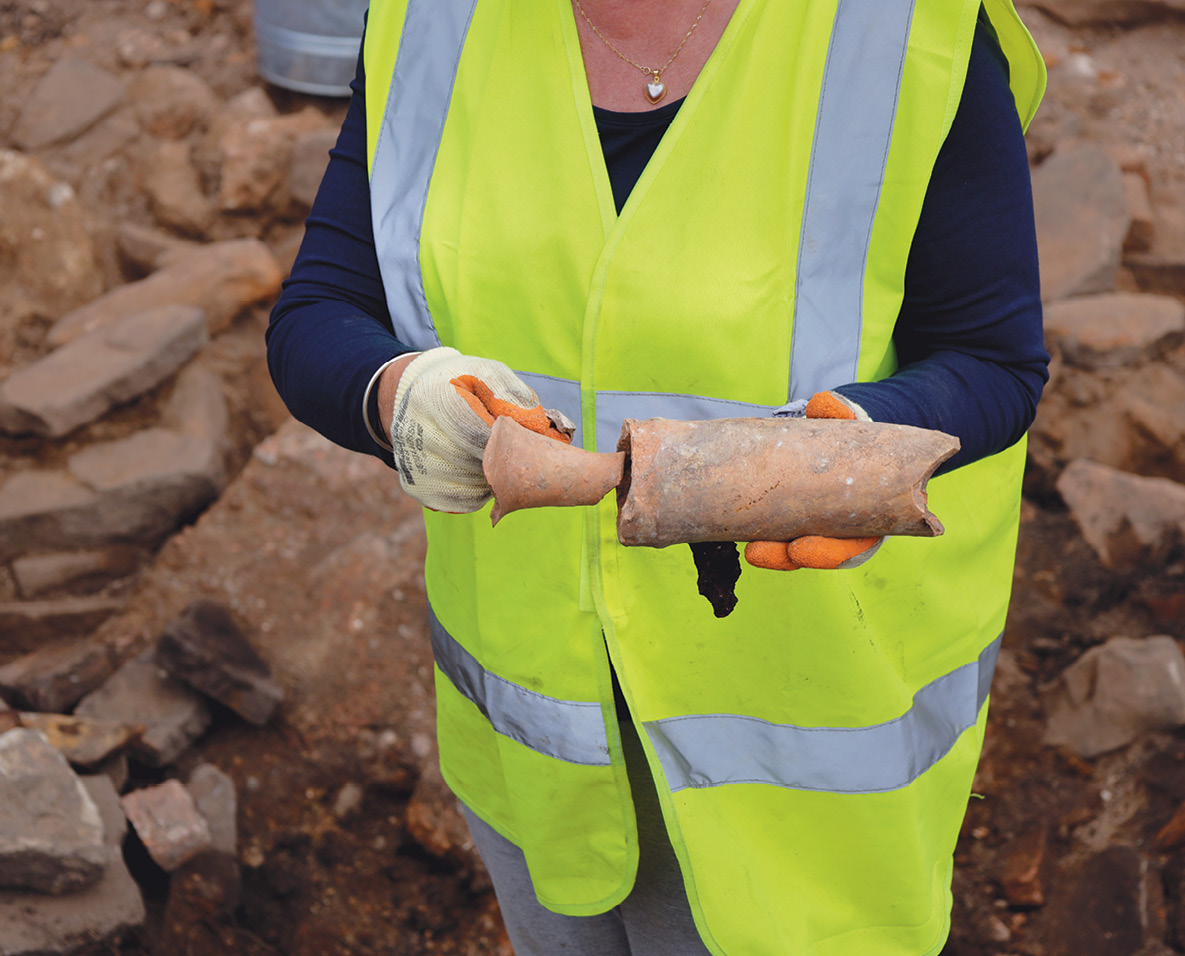
Whatever its purpose, though, the Hadrianic structure was swept away in dramatic style in the early years of the 3rd century. In its place rose a massive building complex with a bathhouse at its southern end, and four further levels arranged over gradually ascending terraces. Its foundations measure 2m deep and 1.2m wide, easily substantial enough to have supported two or even three storeys, and its walls would have been crowned with a soaring vaulted roof, as indicated by the discovery of a number of nozzled vaulting tubes that slotted together to form lightweight ribs. This technique is seldom seen in Roman Britain, but is more common in North Africa. Given Severus’ Libyan origins, it is tempting to interpret its use at Carlisle as being influenced by the emperor’s architectural preferences.

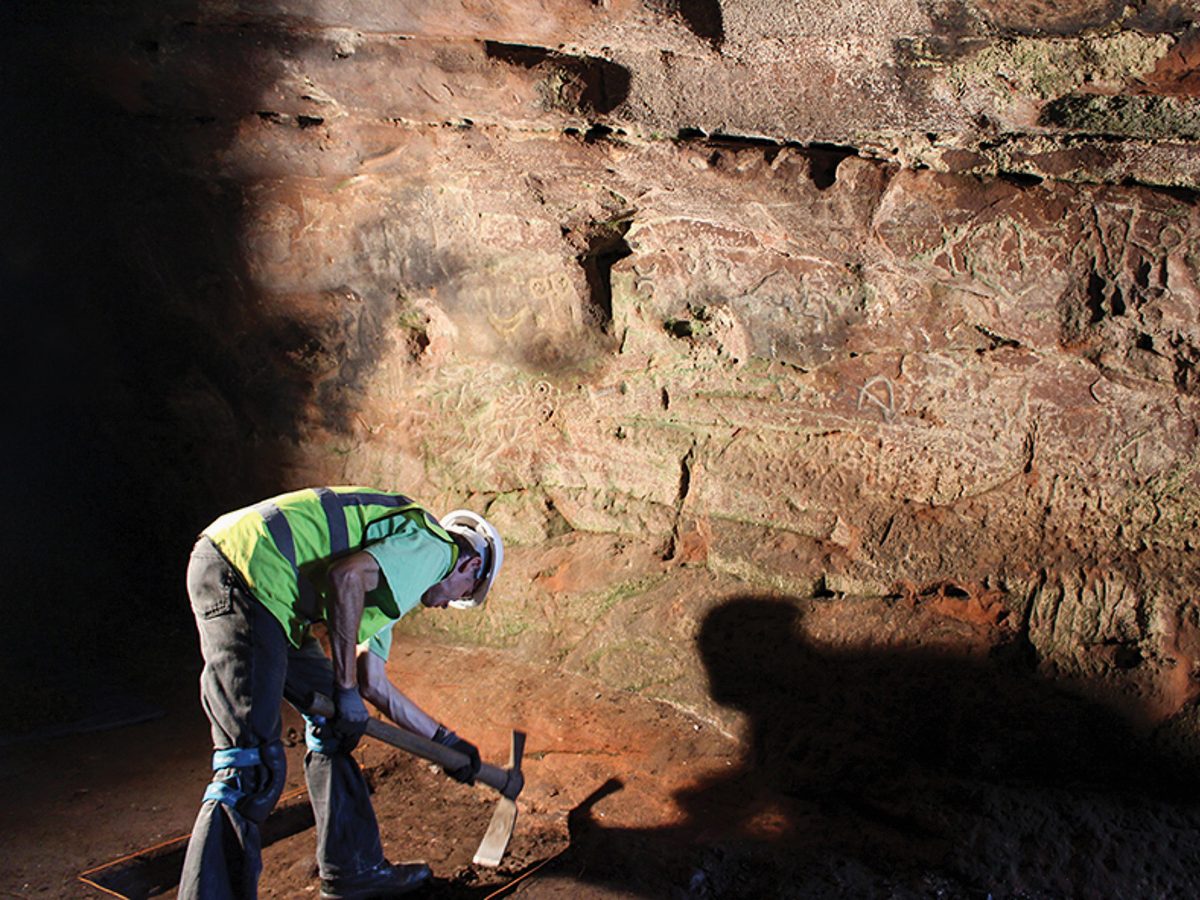
If the structure’s building techniques were exotic, however, its building materials were rather more local. Sandstone in its surviving walls has been traced to outcrops along the Eden and the Gelt. This latter river has long been associated with Roman quarry sites. One such location is known as the ‘Written Rock of Gelt’ because the soldiers charged with harvesting its stone left behind inscriptions – and a possible caricature of their commanding officer – which have been documented by intrepid archaeologists abseiling down the rock face (CA 351). One of the writings refers to the consulship of Aper and Maximus, which indicates that at least some quarrying took place in AD 207, just before Severus’ arrival in Britain. Could this activity be linked to his orders to refortify Hadrian Wall, and might similar operations have also been under way to source stone for Carlisle’s monumental building at this time?
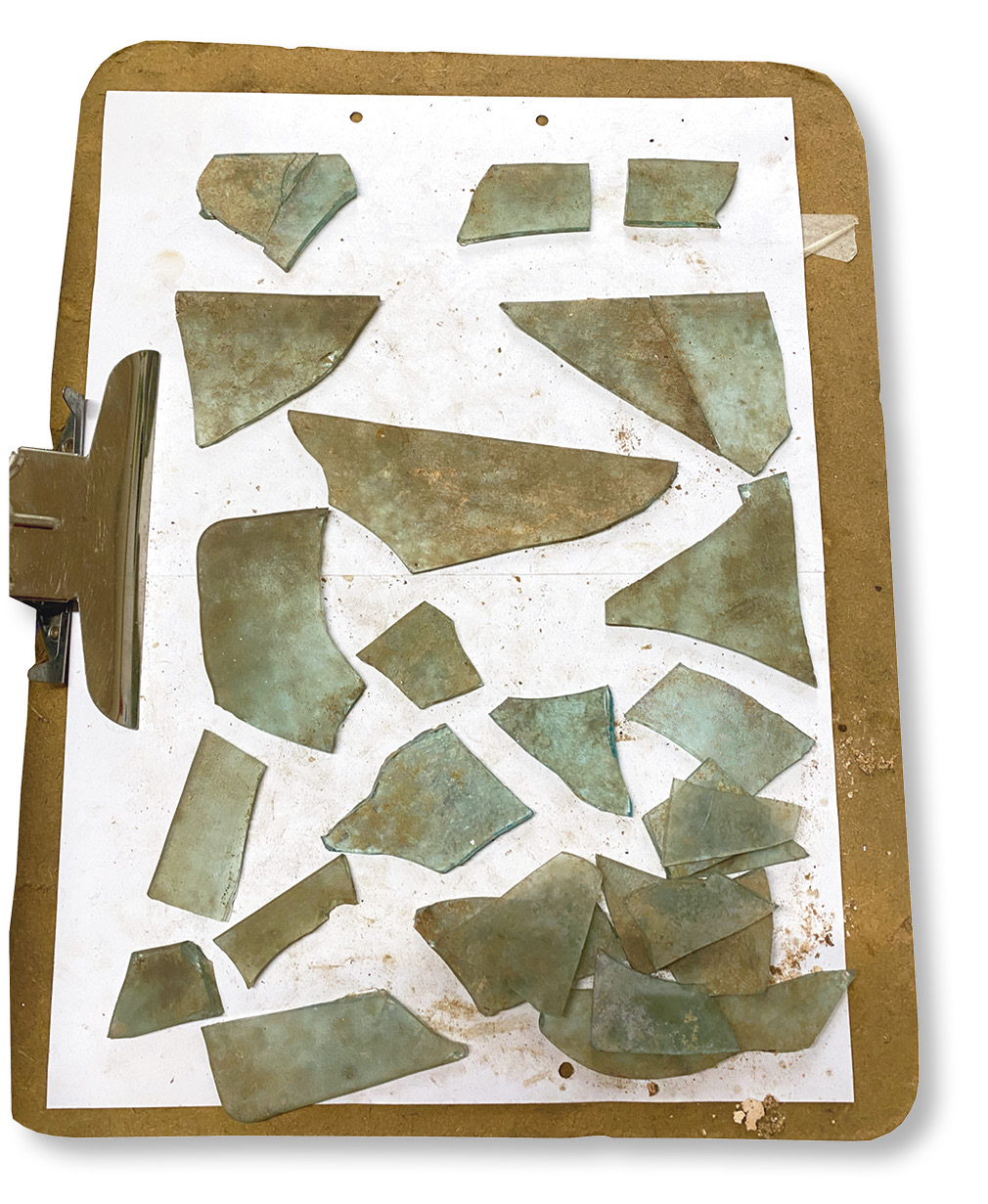
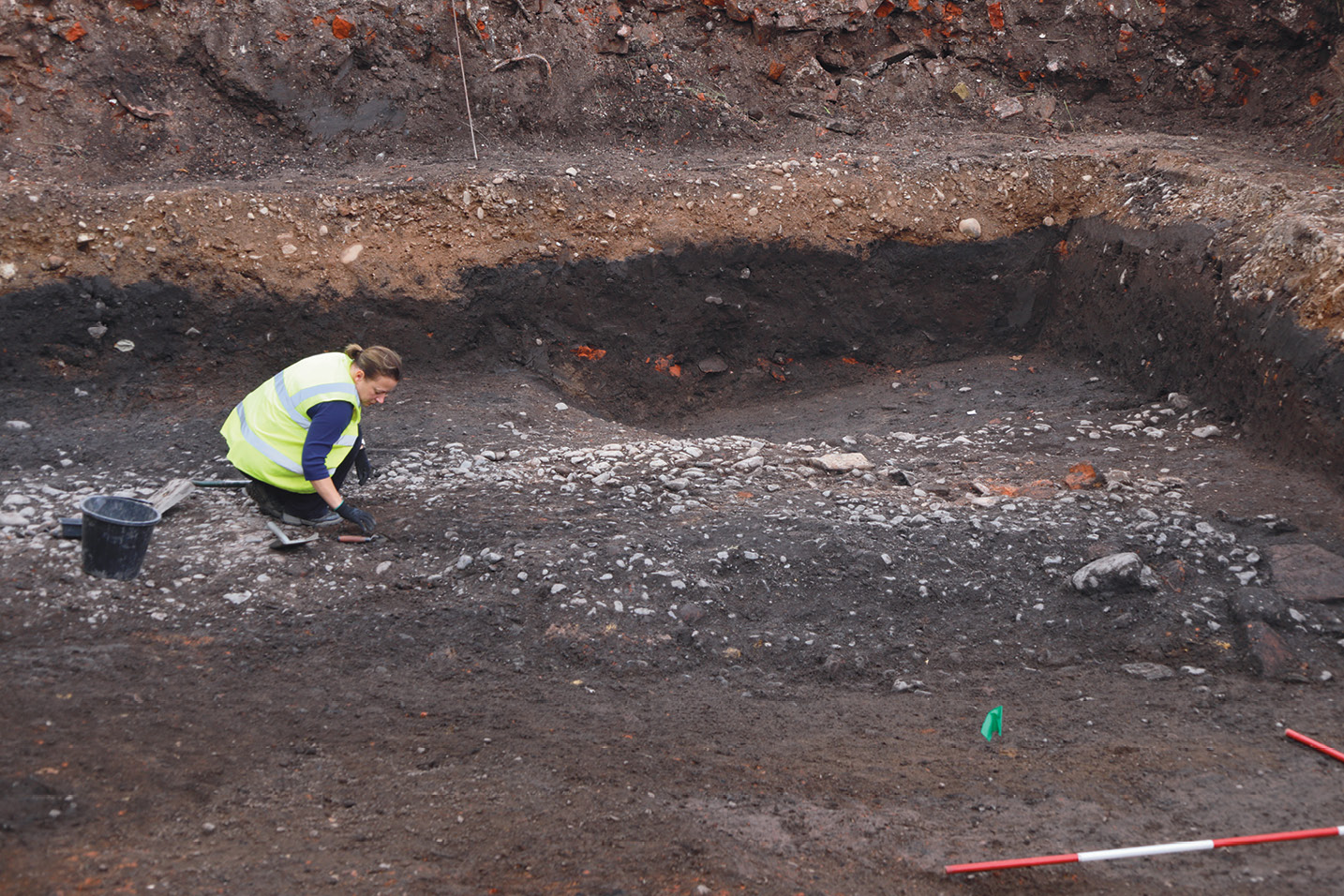
As for how the tiered structure was arranged, current thinking is that its main entrance was on the highest terrace, facing not towards the main Roman road running alongside the site, but towards Uxelodunum. The east–west wall has been entirely robbed away, but its north–south counterpart survives to a height of several courses of finely worked stone. A sharp corner connected to its outer edge has been interpreted as the remains of a possible buttress of perhaps the springer for an arch that may have formed part of an entranceway; traces of a slighter wall that may represent part of a façade also point to this being a way into the complex. This top terrace appears to have seen a lot of use, as it was resurfaced numerous times. One area has produced a sequence of no fewer than eight different floor surfaces, some quite crudely furnished, and others much finer; one is so delicately constructed that it could be described as a mosaic made of tiny pebbles.

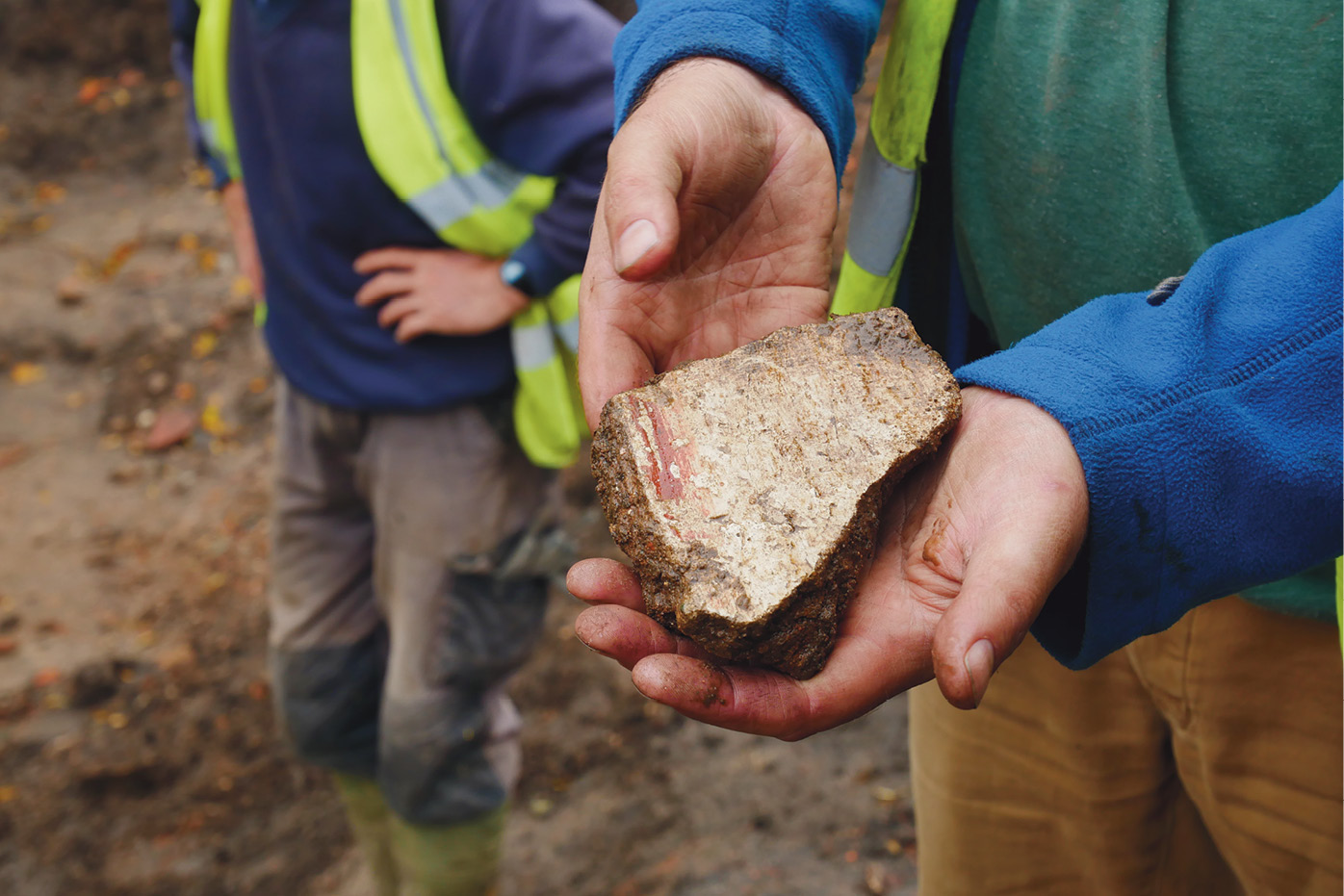
Close-by, the team have identified the remains of a large water tank, flat-bottomed with vertical sides. This may have been a storage facility – possibly fed by an aqueduct whose remains were discovered in 1816 during the construction of a nearby road-cutting – that served the bathhouse below; alternatively, Frank wonders if it might have been some kind of water feature, with the highest terrace designed as an atrium intended to impress visitors before they descended into the main indoor spaces. The complex that they would have entered was certainly sumptuous, with glazed windows and vibrantly decorated walls. A separate project is currently working to examine the masses of painted plaster that have been recovered from the site. They speak of a building that was used over a long period of time, and which had been repeatedly redecorated: some flakes preserve four layers of successive whitewashings and repaintings.

Down the drain
While much of the complex’s above-ground stonework has been lost, the drains that once served its bathhouse have survived intact. They are impressive feats of engineering, stone-lined and -floored, with sturdy flags capping their course. The contents of these channels have been double-sieved to catch any artefacts that may have washed down them, and this has produced a remarkable range of objects including gaming pieces, bronze and bone hairpins, and hundreds of glass beads that would have glittered on bracelets, necklaces, and hair ornaments. While their loss must have been grieved by their owners, these items shed vivid light on the people who visited the bathhouse, and the wealth that many of them evidently enjoyed.
Although Roman bathers typically removed all their clothing, high-status individuals often kept their jewellery on, to show off their social rank. In their pride, however, many seem to have come unstuck – or, rather, their ornaments did, as the steam melted the vegetable-based glues holding them together. This appears to have been a particular problem for signet rings, as over 70 intaglios (the carved gems with which they were set) have been recovered from the drains – the largest collection of such items from any single context in Roman Britain. Just as the presence of hairpins points to women as well as men using the baths, the tiny size of some of the intaglios (as well as the discovery of a Roman doll’s foot) suggests that children were visiting, too.
One of the most distinctive drain finds is a lump of purple material, which was recovered in 2023 (CA 412). Analysis by experts at Newcastle University, supported by the British Geological Society, established that the substance is organic, and contains bromine and beeswax. It is thought to be a chunk of Tyrian purple, a prestigious and very expensive pigment that was produced in modern Lebanon. In the Roman Empire, it was associated with the imperial court, and its use was strictly limited. The form of the Carlisle example suggests that it would have been used in painting frescoes (as has been documented in some particularly high-status rooms at Pompeii), though it remains to be seen whether any of the plaster fragments bear its trace. As the only example of this pigment known from northern Europe, its presence at the cricket club speaks of a structure of exceptional status.
Roadside and religious activities
This magnificent building complex did not stand in isolation. Immediately to the south of its heated rooms runs a well-preserved cambered road surface some 5m wide. A 14.2m-long section has been traced running east-to-west, and it is thought to represent a possible spur of the Stanegate, the main route that connected Carlisle to forts along the frontier as far as Corbridge. The stretch of road at the cricket club is thought to have been laid down during the site’s Hadrianic phase, but it appears to have continued in use throughout the Roman period and beyond: 4th-century pottery has been recovered from its surface, while a 12th-century silver penny of King Stephen testifies to much later footfall, probably reflecting medieval robbing of nearby masonry.

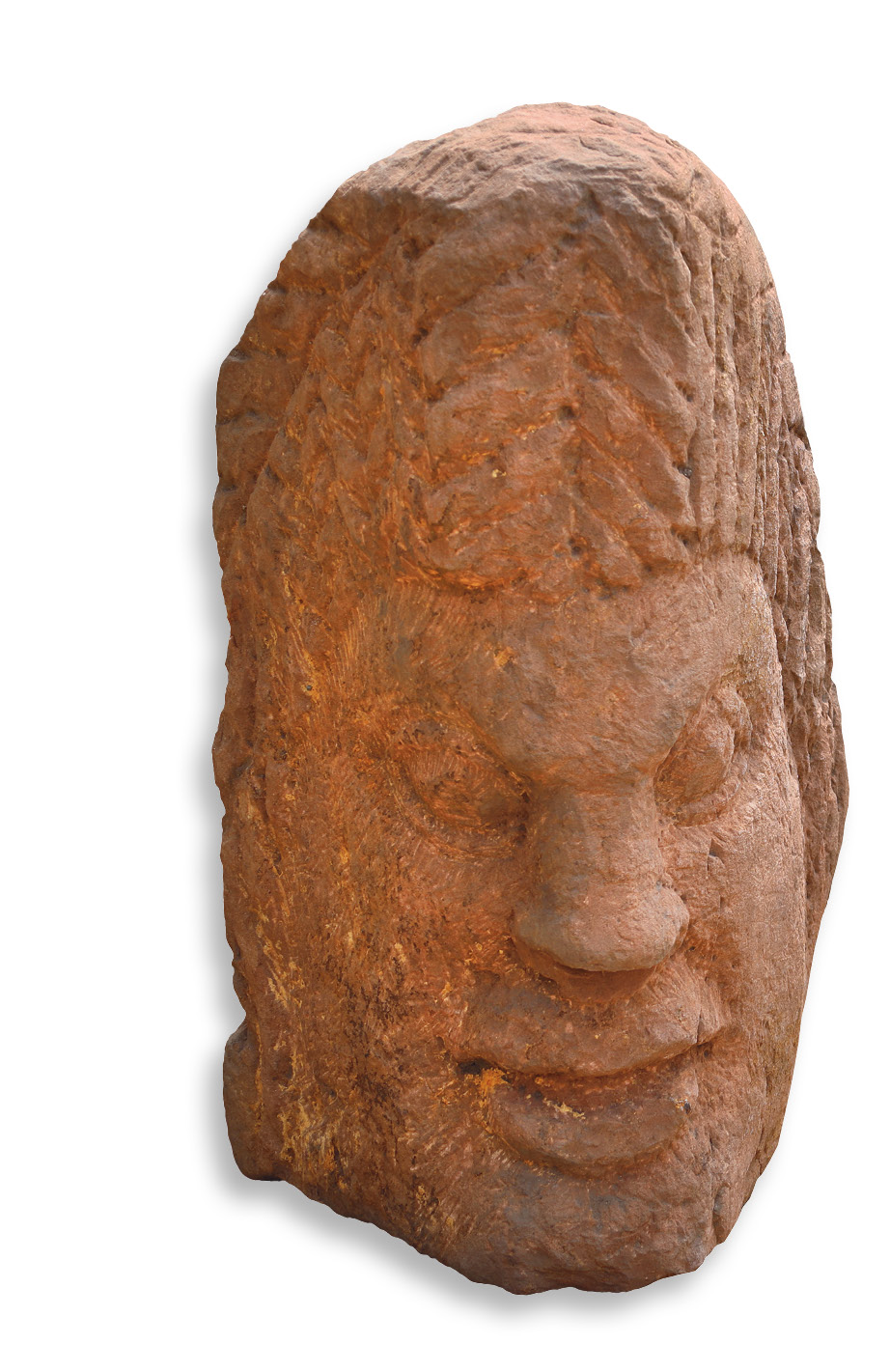
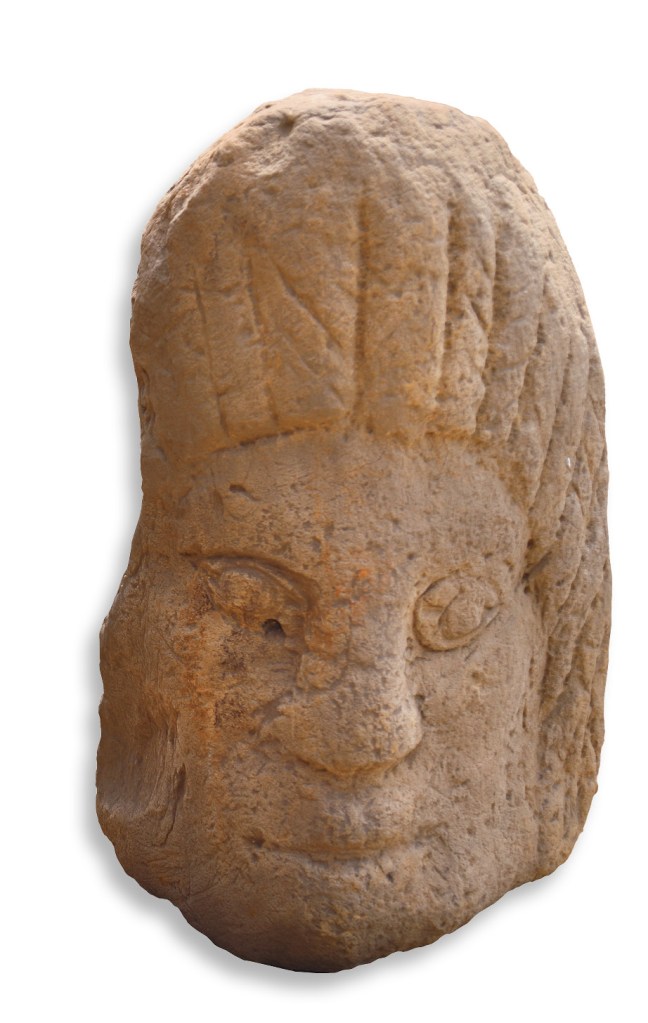
Medieval robbers may also explain the circumstances behind one of last year’s more unusual discoveries: two large, carved stone heads that had apparently been set down by the side of the road. It is suggested that they had been abandoned as their irregular shape made them unsuitable for recycling as building materials – but what were they? Sculpted from local sandstone and measuring just over half a metre tall, their elongated, angular appearance is unusual, entirely unlike Classical traditions. Their creation would taken a considerable effort – specialist stone-carver Tony Crellin (http://www.lostinstone.co.uk) made a replica over the course of nine days – but they nonetheless appear fairly crudely carved, even unfinished, with tool-marks covering their surfaces. Perhaps they were not intended to be seen up close: it is thought that they might have been positioned high on the bathhouse building, perhaps with a protective purpose.
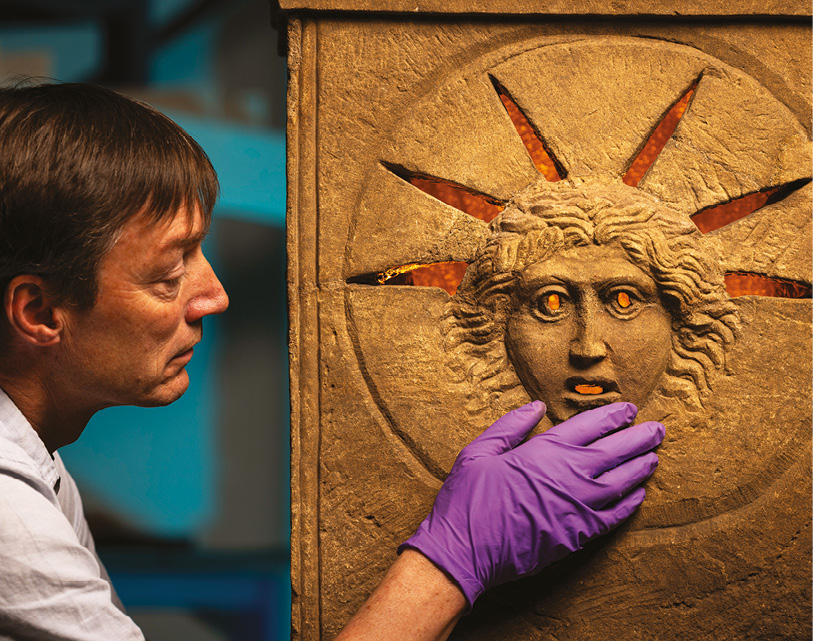
Evidence of rather more conventional roadside activity was also found within this area, including quantities of 2nd-century pottery, together with the remains of ovens, butchered animal bone, and quern stones. These are thought to represent the work of small shops serving passers-by, but this landscape was not only used by the living. The remains of one, possibly two, mausoleums have been identified, too, close to the road, together with an urn containing the cremated remains of a young woman, and a small, carved stone head that may represent a deceased individual or the goddess Fortuna. Measuring 18cm by 13cm, it is much smaller than the pair described above, and its features are more detailed, more carefully carved, and much more conventionally Classical in style. It depicts a female figure sporting a piled-up hairstyle reminiscent of a fashion that was popularised by Julia Domna.

While roadside burials are a familiar feature of Roman funerary practices, other finds within this area were more enigmatic. Project volunteers have discovered pits containing collections of large amphora sherds, and, in one case, just the handles of such vessels. Might these have been deliberate burials, even votive offerings, within a ritualised landscape? If so, this might aid interpretation of a large wooden building that once stood a short distance to the east, overlooking the area of funerary activity. Large sandstone post-pads pick out part of its footprint, which continues beyond the current limits of excavation but measured at least 15m by 10m. Strikingly, these post-pads are set on top of a deep layer of cobbles, which would have raised the structure above its surroundings. Creating this platform would have required a considerable amount of labour, perhaps indicating a special status for the structure. Might this have been some kind of roadside shrine or other building associated with the ceremonial activity taking place nearby? Its date is yet to be established, but its footprint slots neatly into the Hadrianic road pattern, indicating that it may have been an early addition.
Exploring interpretations
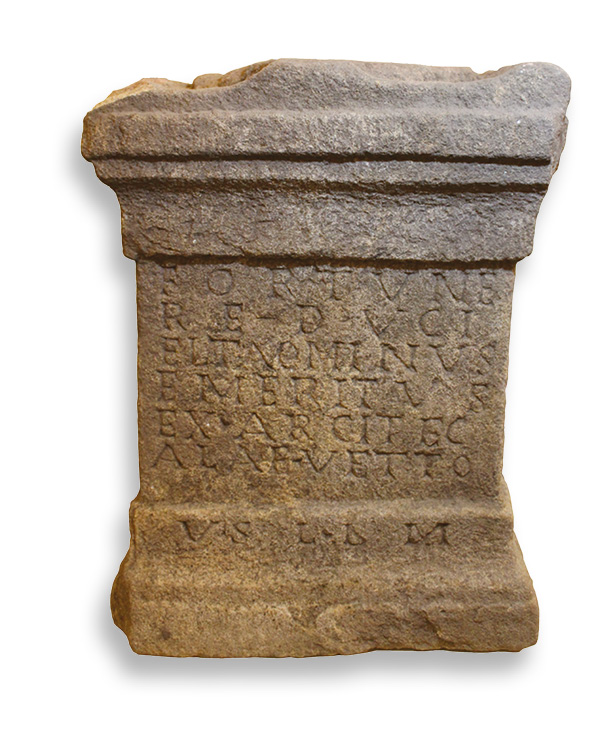
While the 3rd-century building’s remains are undoubtedly impressive, the question remains: why was such a lavish structure built on the very the fringe of the Roman Empire? The proximity of Uxelodunum may offer a clue. If, as Frank suggests, the main entrance faced the fort, that might suggest an association between the two sites. The cricket club excavations have also produced several military finds (a significant number for later 3rd- and 4th-century deposits), including belt-fittings, part of a possible scabbard, ferrules, and the iron hilt of a pugio (dagger) with silver inlay – as well as a more direct link to Uxelodunum’s garrison. This comes in the form of four lead seals of the Ala Petuaria, which would have been used to secure official documents, and a fragment of tombstone referring to the same unit. If military administrative tasks were being carried out within the complex, this strengthens its ties to the nearby fort. Could it have been the home of its commanding officer? If so, it would be far more extravagant than the residence of the commander at Luguvalium fort, part of whose praetorium has been excavated (CA 353), but this could reflect their differing status, as the prefect of the Ala Petuaria was the most senior officer on Hadrian’s Wall.
Was this elaborate building simply a vanity project for an elite officer revelling in his prestigious posting? Or might there have been someone in particular whom he was hoping to impress? Could the building have been constructed ahead of an anticipated imperial visit to Carlisle – or might it even have been commissioned by Severus himself?
The emperor is known for his enthusiasm for extravagant architecture, ordering the construction of a number of monumental nymphaea, or sacred fountain houses, across the Roman world. Known as septizonia, such structures are particularly associated with North Africa, identified at sites in Tunisia and Algeria, but one has also been located in Sicily, and the grandest and best-known example was built by Severus on the Palatine in Rome. No physical remains have yet been identified in Britain, but the word septizonium appears on a curse tablet from Roman Leicester (CA 388). Given its mighty scale and association with water (including a sandstone sculpture of a dolphin’s head, found within its southern range), could the cricket club complex, too, be a Severan design?
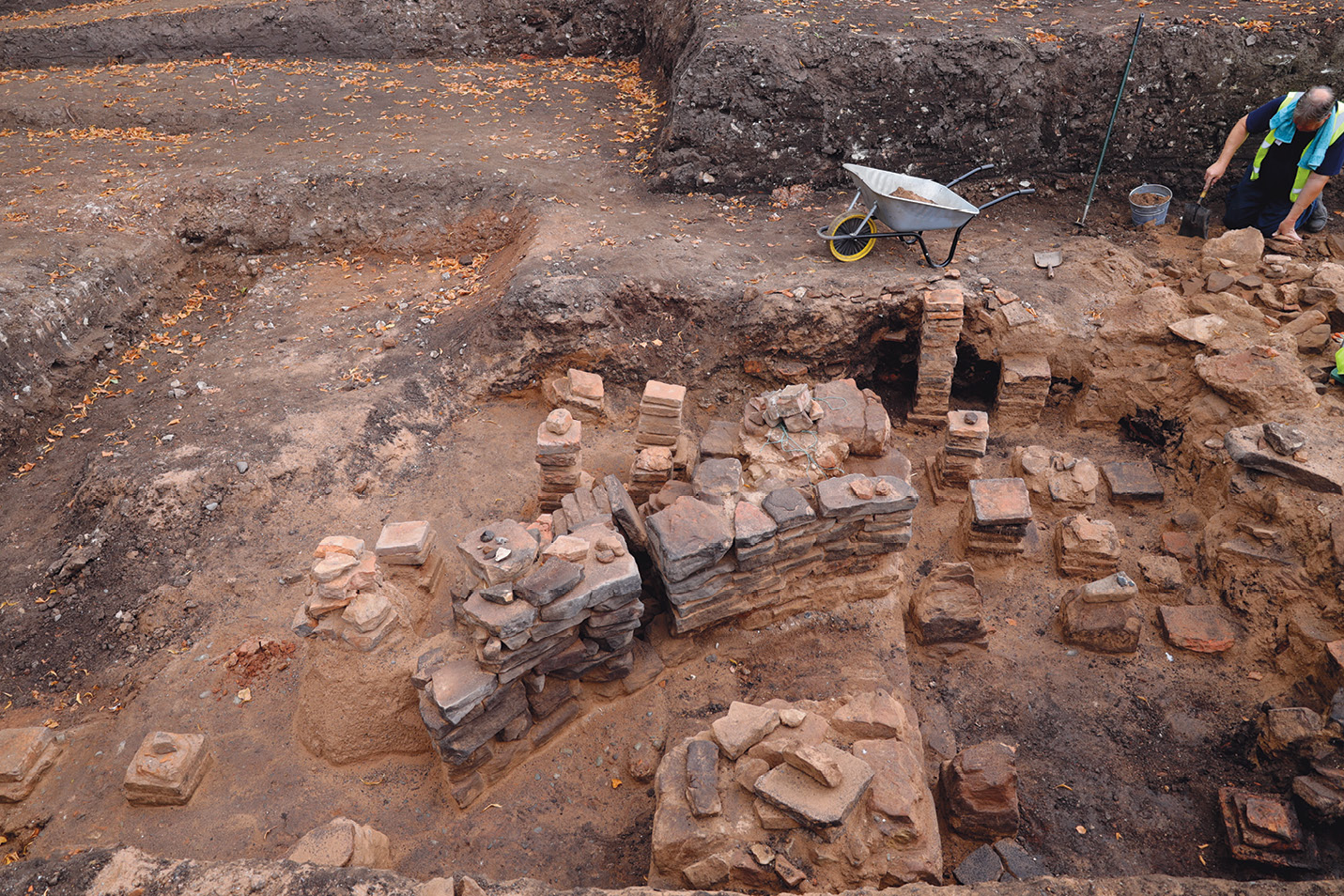
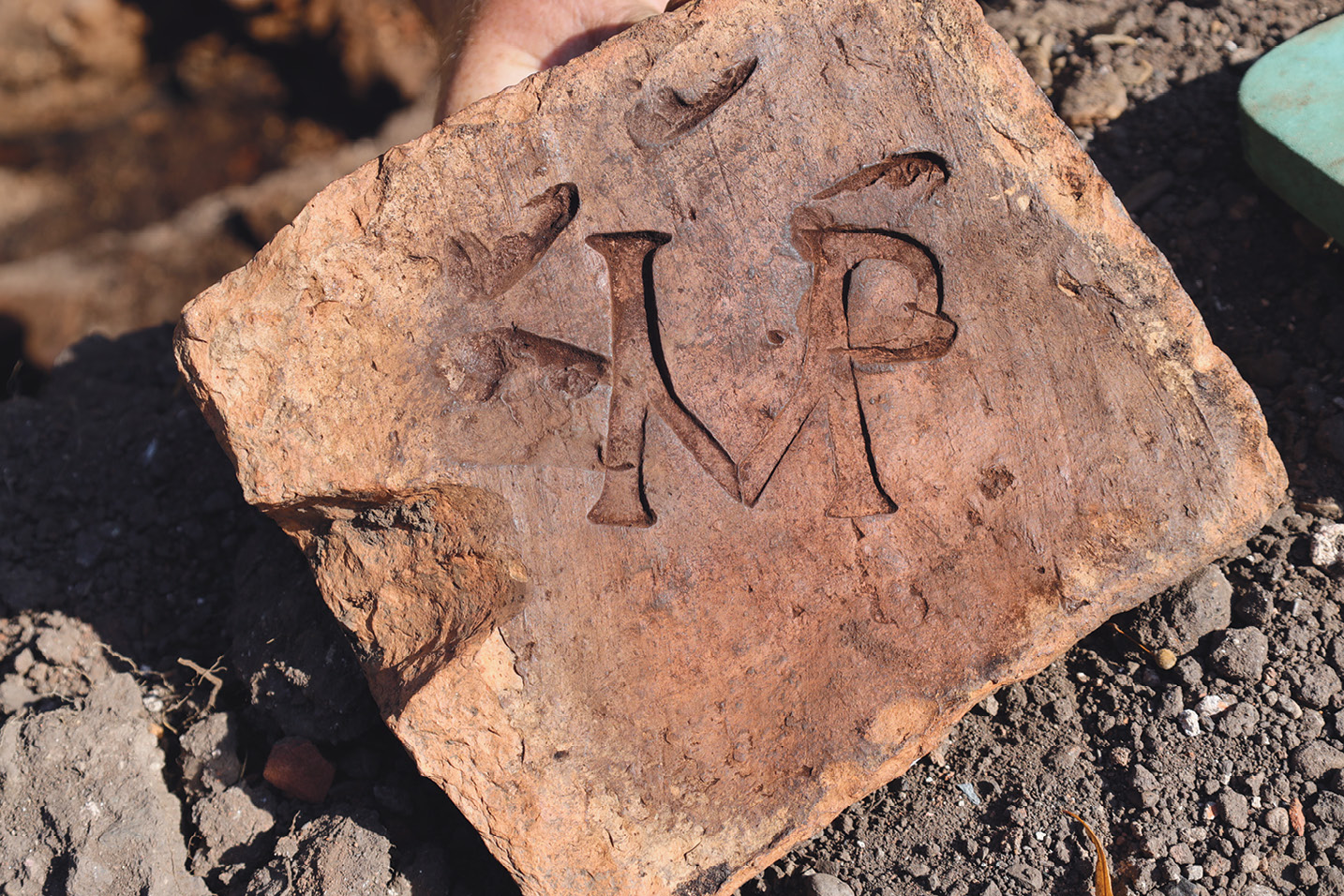
The unusual use of North African building techniques in its roof is telling, and the presence of so many high-quality, high-status finds – not least the Tyrian purple – also hints at imperial connections. The Julia Domna inscription provides a clear link to the Severan dynasty, as does the discovery of around 40 tiles stamped with the letters ‘IMP’ within the 3rd-century bathhouse’s pilae stacks. Standing for imperator, this monogram is usually interpreted as signifying a direct commission of the imperial household. If this building was intended as a symbol of Severan power or loyalty to the dynasty, though, it highlights both sides of what contact with the Roman Empire meant for the people of Britain. It demonstrates the material comfort and cosmopolitan connections that obedience to the imperial will could bring – but if its construction was associated with Severus’ northern campaigns, it also reflects a period of unimaginable brutality visited on those living outside Roman control.
However grand the building, its prestige did not last. There is evidence that the complex was heavily remodelled in the later 3rd century, and substantially rebuilt in the early 4th century, though not enough survives to produce a plan of the new structure. The most substantial remains comprise a curved red sandstone wall some 2.5m long, slicing through the 3rd-century bathhouse – but this later addition is of notably lower quality, both in terms of materials and building techniques. It has been interpreted as a crude modification late in the building’s lifespan, reflecting a final effort to keep it functioning, but – in a far cry from the structure’s glory days – the necessary skills or understanding had been lost.
Further information:
• For more details of the project, including videos, articles about key discoveries, and links to 3D models of some of the finds, see http://www.uncoveringromancarlisle.co.uk.
• You can also hear about the excavations at CA Live! 2025; see here.
All photos: Peter Savin (www.facebook.com/Wedigfrontier), unless otherwise stated