Subscribe now for full access and no adverts
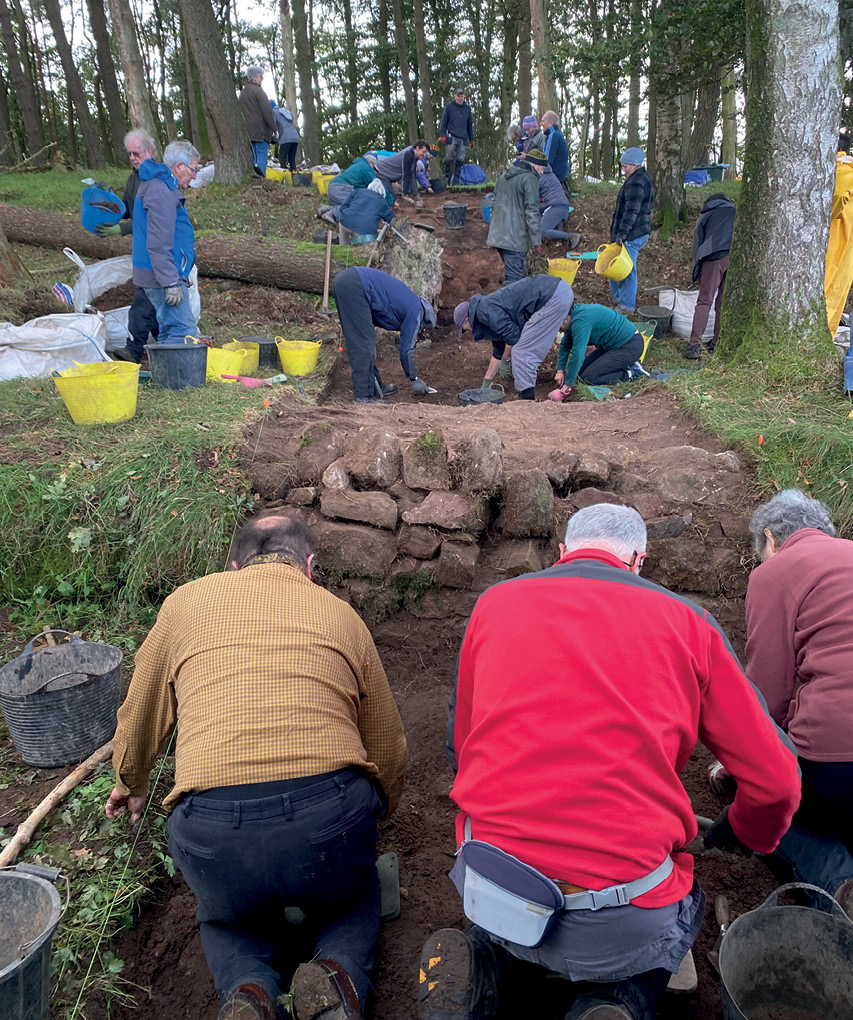
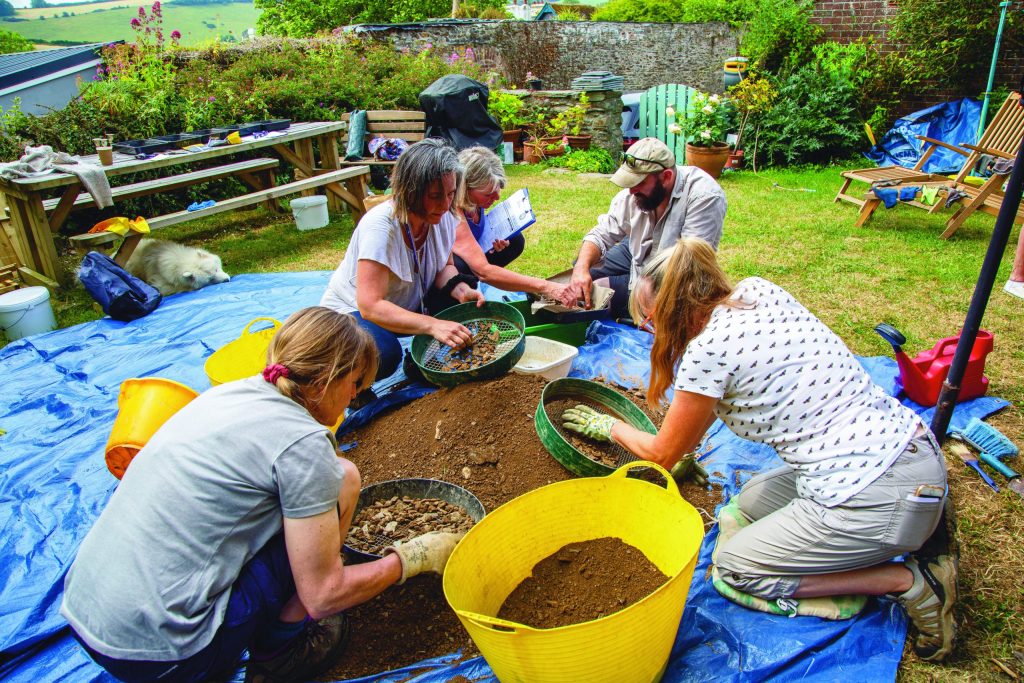
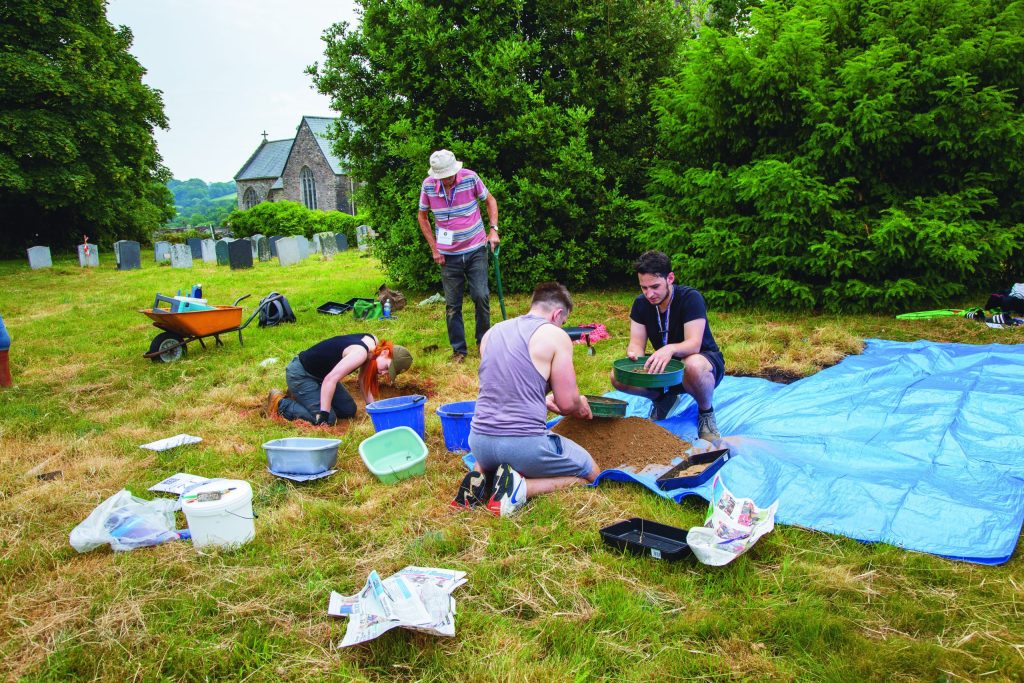
This year marks three decades since Time Team first appeared on our screens and, following the show’s relaunch online in 2021 (see CA 375), new episodes continue to appear on its official YouTube channel. Among the most recent releases is a dig that CA visited last summer, which focused on Modbury, a small market town nestled in Devon countryside 12 miles from Plymouth. The investigation was carried out in classic Time Team tradition, opening test-pits in back gardens across Modbury, as well as in the churchyard, pub courtyards, and the grounds of the local primary school. As well as the obliging residents, who nobly sacrificed (1m by 1m portions of) their lawns to the cause, the Team’s efforts were aided by an army of local volunteers, including schoolchildren and the town’s Scout Group.
Today, Modbury’s winding streets have a pretty village feel, peppered with pubs, boutique shops, cafes, and galleries, as well as elegant examples of Georgian and early Victorian architecture, but its history stretches back rather further into the past. Our first known mention of the settlement is found in the Domesday Book, and its name (deriving from the Old English for ‘meeting place’) points to Anglo-Saxon origins. Elements of its old street-plan survive, but widespread damage inflicted during the English Civil War, followed by a dramatic revival of the town’s fortunes that prompted extensive rebuilding during the Georgian period, has swept away most of its medieval buildings.
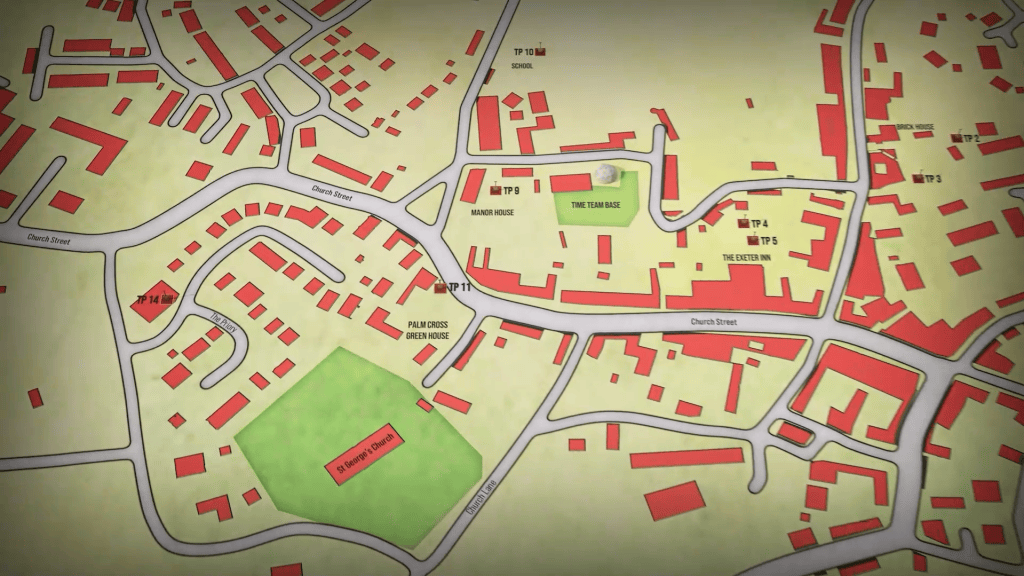
A highly visible exception to this pattern, however, is St George’s Church. Much of its fabric today dates to the 14th century, but the church was founded much earlier in the medieval period, and once stood alongside another ecclesiastical building. In the 12th century, the site was also home to Modbury Priory, a Benedictine community founded to administer lands owned by, and to send revenues back to, its mother house in Normandy. ‘Alien priories’ – those that operated under the control of a religious house in another country (usually, France) – were not uncommon in medieval England, but they became increasingly controversial during the periodic cross-Channel conflicts of the Hundred Years War (1337-1453), and in 1414 Henry V dissolved most of them once and for all. The monks of Modbury managed to escape this royal ire, and their home endured for almost three more decades, making it one of the longest-surviving Norman alien priories in England. But in 1441 their luck ran out, when Henry VI disbanded the community so that he could give its lands and possessions to his newly founded Eton College.
Two centuries later, when John Leland documented his Itinerary of England and Wales, he noted that ruins from the priory could still be seen immediately to the north of the church – but today no trace can be seen above the ground. Establishing whether anything could be found beneath the surface was one of Time Team’s key ambitions at Modbury, and although they were unable to locate any structural remains linked to the priory, their churchyard test-pit produced sherds of 13th- and 14th-century pottery, which Helen Geake suggested could represent rubbish that had been discarded by the monks.
Modbury’s missing manor house
Aside from the religious community, another dominant aspect of medieval Modbury would have been Court House, home to the Champernownes: a Norman-descended family who had been local lords of the manor (and patrons of the priory) since the 14th century. Their residence must have been grand – they were granted a licence to crenellate it in 1334 – and the family rose to even greater heights in the Tudor period. One daughter of the house, Catherine Champernowne, produced undeniably influential and intrepid offspring through her two marriages – Sir Humphrey Gilbert, who claimed lands in Newfoundland for the Crown, and Sir Walter Raleigh – while her aunt, another Catherine Champernowne but better known by her married name of Ashley, was governess to the future Elizabeth I, and became First Lady of the Bedchamber after her royal charge ascended the throne.
However impressive the residence of the Champernownes may once have been, today it has vanished from view. Like much of the town, it suffered severe damage during the English Civil War, and was ultimately demolished and sold for building materials in 1705. Modbury witnessed two outbreaks of violence quite early in the conflict: the first, on 7 December 1642, included an assault on Court House itself as Parliamentarian soldiers attacked a meeting of prominent local Royalists that was being held there; many were captured, and the house was badly damaged by fire. A more significant battle was then staged on 22 February 1643, when almost 10,000 Parliamentarians marched on Modbury, outnumbering resident Royalists four to one. While this engagement began in surrounding fields, defending forces were ultimately pushed back into the town, fighting in the streets until they were forced to flee down a green trackway that today is known as Runaway Lane. As a result of the rout, the Royalist siege of nearby Plymouth was abandoned, and Parliament took control of Modbury, reportedly stabling their horses within the church and defacing some of its effigies (including breaking off the feet of an alabaster figure of Sir John Champernowne).
The field where the Battle of Modbury began is marked on Ordnance Survey maps, and this area also featured in Time Team’s explorations, undergoing a metal-detector survey that produced a tiny, tangible trace of the engagement in the form of a musketball whose distorted outline testified to it having been fired. Similar objects, as well as cannon balls from the conflict, have previously been dug up in gardens across Modbury, while some echoes of the destroyed manor house have been identified within the town as well, including an old fireplace lintel built into the edge of the crossroads near the White Hart Hotel.
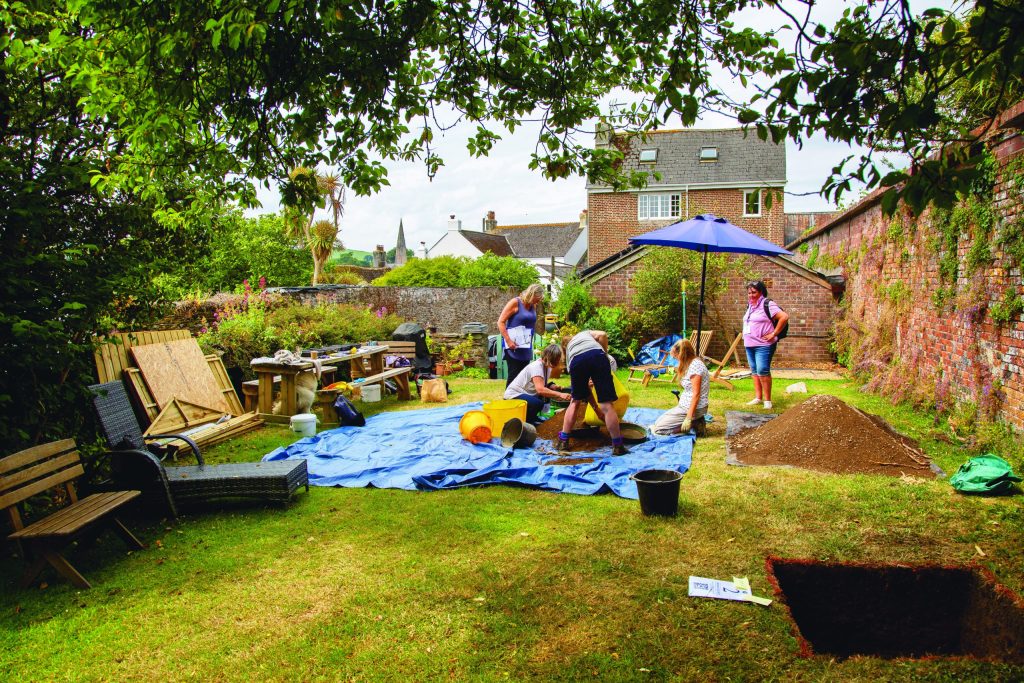
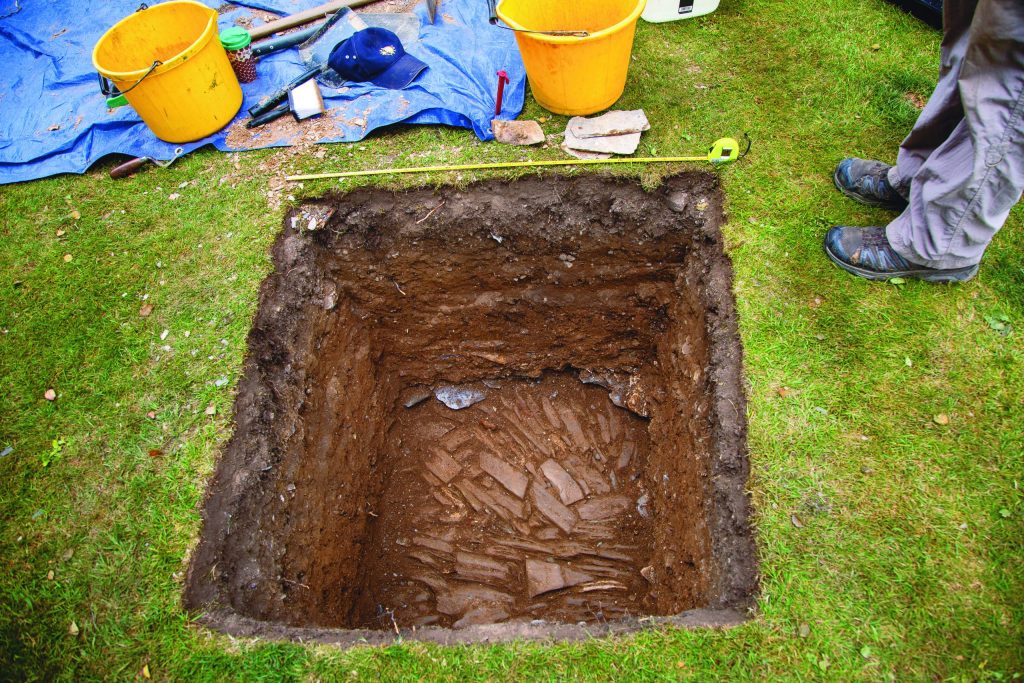
Other pieces of clearly architectural stone can be seen in the garden of nearby Palm Cross Green House, edging flowerbeds and making up steps. Time Team hoped to find further evidence of the manor house beneath the lawn, and sure enough geophysics expert John Gater was able to trace possible wall lines running for 4m within the garden, prompting Time Team archaeologist Matt Williams to set to work opening a new test-pit. Initially, the landscaping layers that he uncovered contained only disturbed archaeology – a jumble of mixed medieval and much later pottery – but 65cm down he uncovered something more promising: not wall remains, but a broad scatter of roof slates and some plaster, which he suggested could represent demolition material from the manor house.
Echoes of industry
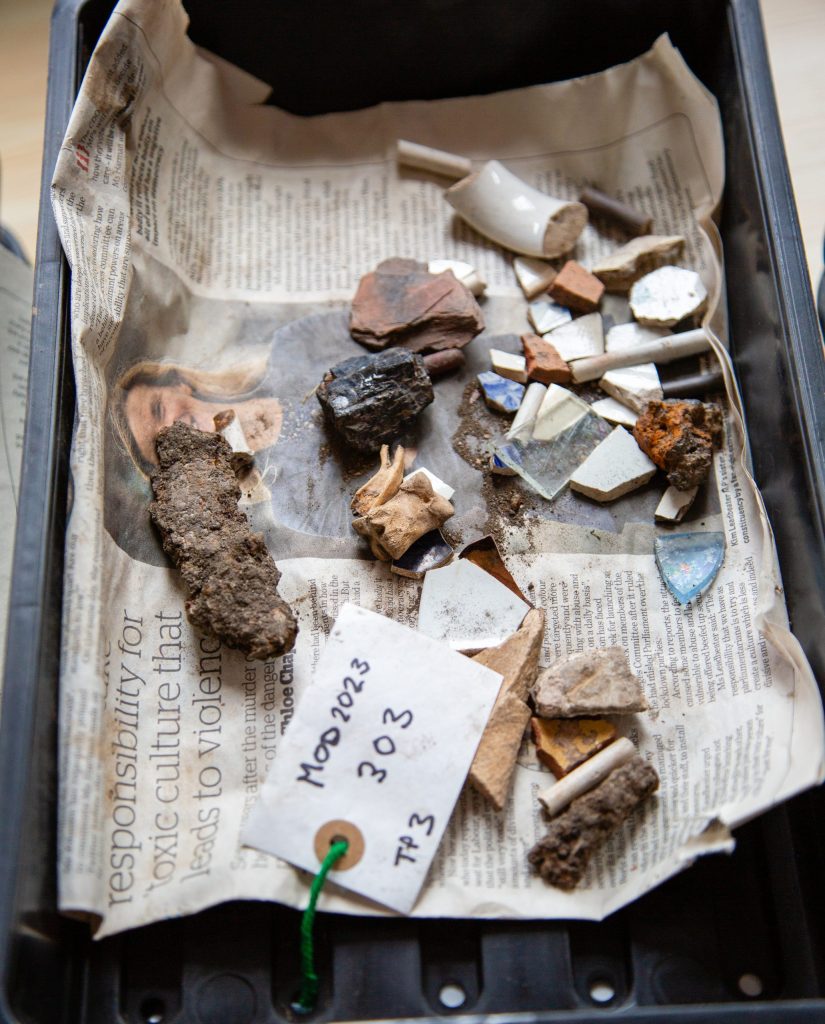
Although Modbury was ravaged by the Civil War, the later 17th century saw the town’s fortunes not only revive but flourish, as it became an important local centre of the wool trade, with almost half of its population engaged in this industry by 1801. Although the local trade would ultimately be left behind by the mechanised advances that super-charged the industry in the north of England, at the time this new prosperity sparked a wave of building in the town, creating elegant homes for wealthy merchants and clothiers that can still be seen today. Some of the test-pit finds also reflected this period of recovery: digging behind the old Rose and Crown pub produced echoes of leisure activities including fragments of clay tobacco pipes and 18th-century Westerwald stoneware tankards from Germany. Meanwhile, one of the back-garden pits yielded fragments of glass and fashionable black pottery dating to the 18th century, again reflecting the prosperity of some of the town’s residents at this time.
Buildings that once had a more industrial function were investigated by the Team as well. Today, Brick House is a private residence, but it was originally a factory producing felt hats, and a test-pit was opened in its garden with the hope of finding traces of this activity. Instead of industrial artefacts, however, the dig team found fragments of medieval pottery – mainly dating to the 13th century, but also including the earliest sherd found during the excavations, dating to c.AD 1000-1100 and taking the Team back to the time of Modbury’s earliest documented mention in the Domesday Book.
Hats continued to be an important theme in the town’s story. Plymouth might be the part of Devon most associated with transatlantic connections, thanks to it being the departure point for the Mayflower and its pilgrim passengers in 1620 (see CA 369), but Modbury boasts its own link to an American icon. Robert Stidson, or Stetson, was born in Modbury and was baptised in St George’s Church in 1615. Twenty years later, he married Honour Tucker of Plymouth, and the couple emigrated to Massachusetts, where they established a family whose many descendants (known as the Stetson Kindred of America; see https://theskoa.org) still send generous donations to support the church in Modbury today. The most famous member of this line is John Batterson Stetson, who in 1865 invented a hat that has become a household name across the world, but Time Team’s investigations were visited by a rather more recent guest in the form of Jim Stetson, a 12th-generation direct descendant of Robert, who returned to his ancestor’s birthplace to witness the dig.

Further family stories emerged from the back-garden test-pit that had also produced the fashionable 18th-century pottery mentioned above. While talking to the Team about what they might find, the homeowner mentioned that, in childhood, he had lost a tiny toy soldier while playing in the garden, and would love to rediscover it. Happily, the test-pit came down on exactly the right spot, and toy and owner were reunited.
Time Team’s Series Producer and Creator, Tim Taylor commented: ‘Working with a small village like Modbury to uncover the past was a real pleasure for Time Team. With many of the villagers getting involved, and a special visitor from the Stetson family in America, we had a fantastic weekend, and we hope this will encourage the community to continue to keep looking into the secrets of their past.’
Further information:
The excavation has been released as a trio of 45-minute episodes documenting each section of the three-day dig. To watch these, and for more details of the finds, the wider landscape survey, and hints of prehistoric earthworks, see http://www.youtube.com/@TimeTeamOfficial.
New episodes are supported through an online platform called Patreon, where fans pledge monthly donations in exchange for exclusive access to extra content and other benefits. For more information, see http://www.timeteamdigital.com/news/join-time-team-on-patreon.
All Images: Time Team/Darryl Owen