
Subscribe now for full access and no adverts
Military history is full of the large-scale exploits of armies and the men who wreaked havoc across the battlefields of the world. Nowhere is that broad sweep of military history more apparent than in the age of the Crusades, where religions and cultures clashed almost unceasingly for 200 years.
But there is another story too. A story of the overwhelming criminality that ensued when such men were set loose – and how the havoc of war seeps seamlessly into the fabric of human life, even when the battlefield blood has finally stopped flowing.
Rounding up the ‘usual suspects’ – young, armed, and rootless or otherwise dislocated men – is the perennial trope of lazy policing, as much so in the 12th century as it is today. The big difference between the Holy Land at the time of the Crusades and most other periods of history is that the ‘usual suspects’ did not need to be rounded up.
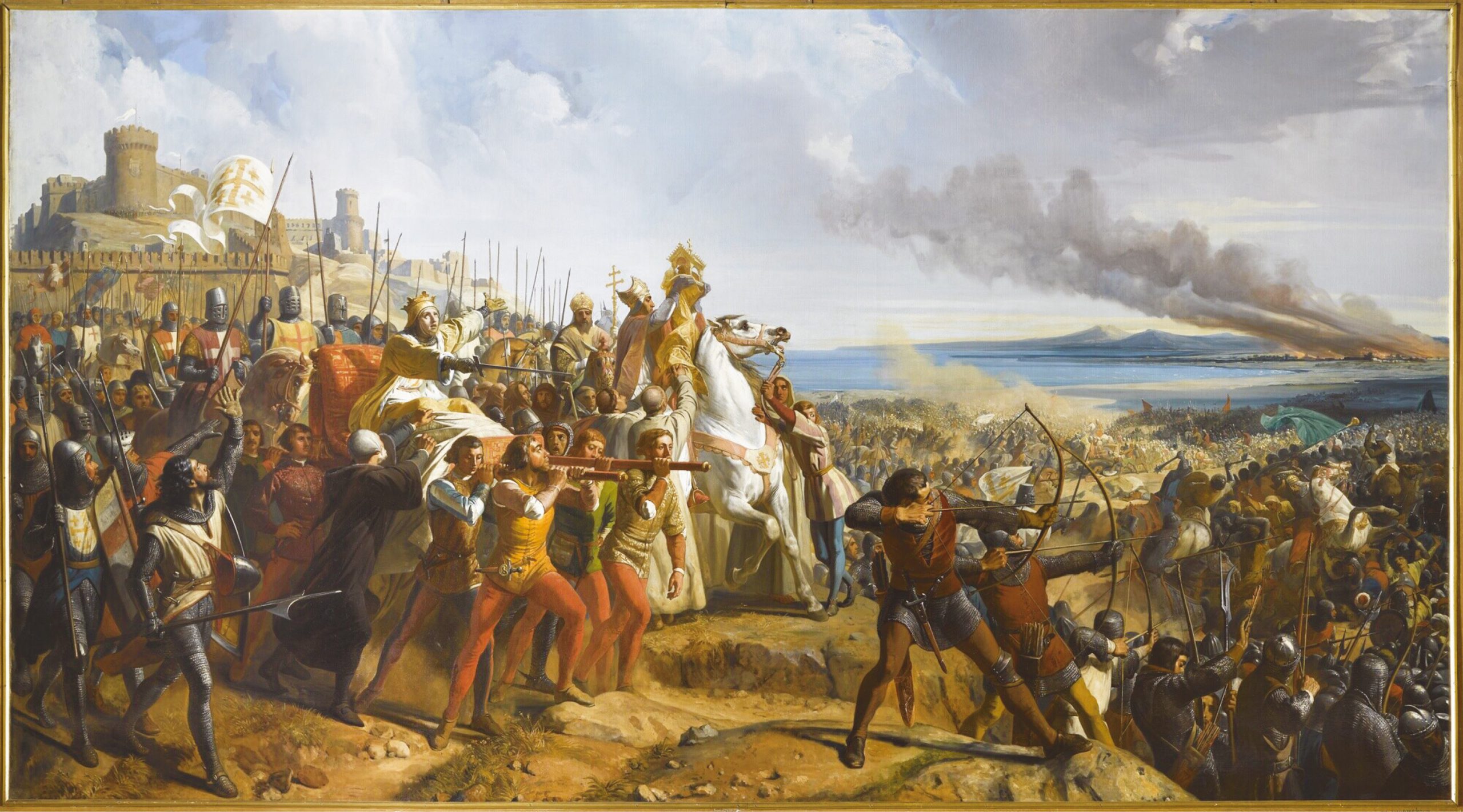
On the contrary, they rounded themselves up, throwing themselves in huge numbers and over extended periods of time into the political and social maelstrom that was the medieval Middle East. As these were truly international wars, they drew in troops from absurd distances: European troops from as far west as the Atlantic coast of Ireland, soldier-slaves from sub-Saharan Africa, or steppe cavalry from central Asia and the Silk Roads. All were welcome. All were useful. All were grist to the unremitting mill of blood and violence.
As we shall see, these men turned to crime easily, whenever they had the chance. In doing so, they changed history on a grand scale – while also destroying countless lives, families, and communities along the way. This was the other side of medieval soldiering.
Murdering monks
Headstrong and heavily armed soldiers have always been hard to police. But in the Middle Ages, even monks were a problem. The Church was ideologically pacifistic, at least in theory. It went to great lengths to try to keep violence under control. But there were profound tensions – and nowhere were these more apparent than in the Crusader states, where, somewhat ironically, the Church bore much of the burden of financing the defence of the frontiers.
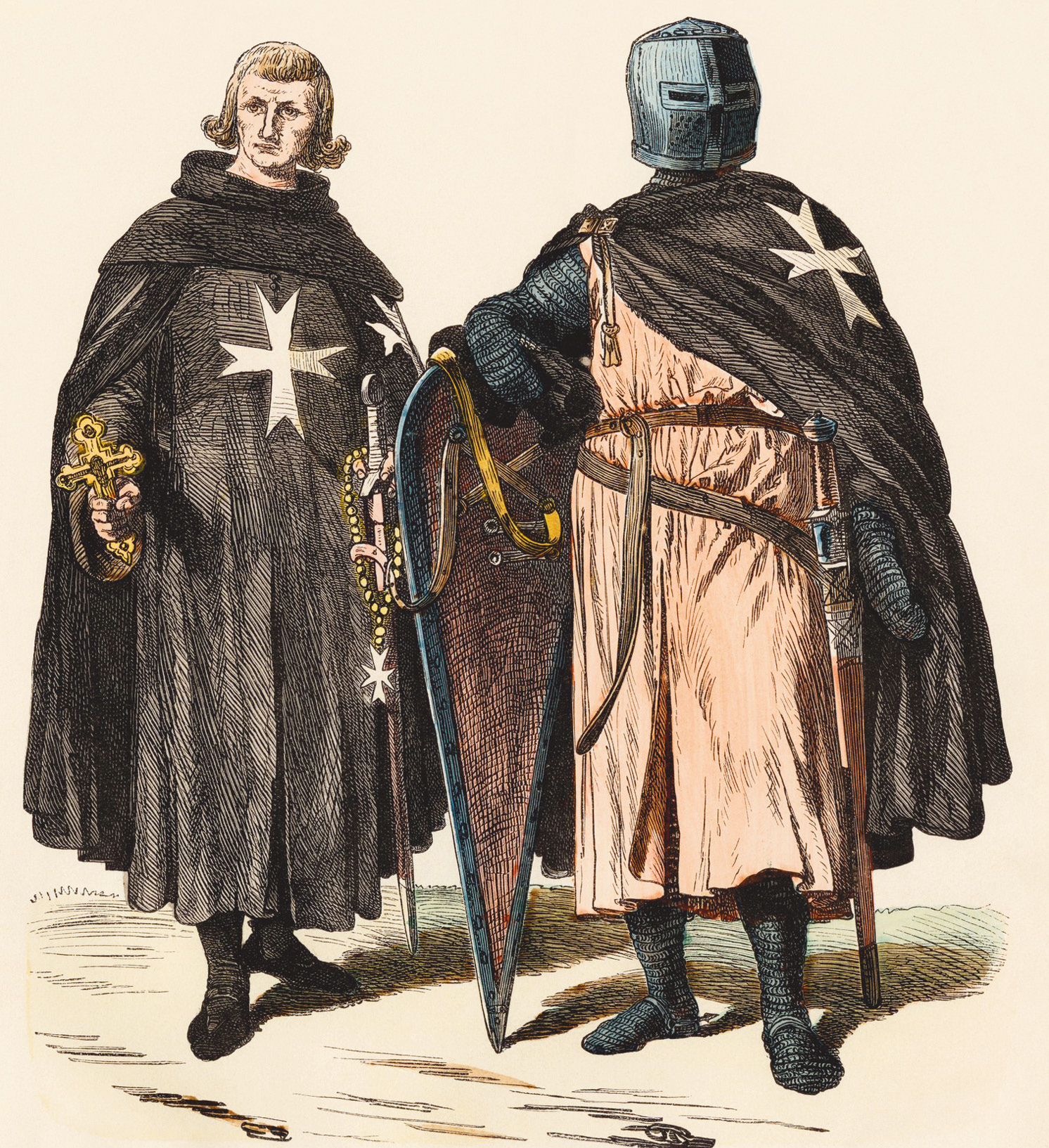
Christianity might abhor violence but the lives of the European settlers and the native Christian communities in this ‘Latin East’ depended to a very large extent on the effectiveness of militarised monks. Three main monastic orders – the Templars, the Hospitallers, and later the Teutonic Knights – had been established to help defend the Holy Land. In the absence of standing armies, they quickly took on the responsibility for looking after large stretches of vulnerable borders.
For these military orders, violence was an essential and fundamental part of their very existence. Their behaviour was often inflamed by a unique and occasionally toxic combination – the testosterone of active military service, the normalising and desensitising nature of the violence which they frequently encountered, and the frustrations of celibacy.

For warrior orders such as the Templars, for instance, where violence was tightly directed but simultaneously glorified, the tensions this presented proved particularly difficult to sustain. The possibility of murder, and perhaps even the existence of a predisposition towards it, was recognised in the order’s ordinances. ‘If a brother kills a Christian man or woman,’ the Rule of the Templars states at one point, ‘or causes them to be killed, he will be expelled from the house’. Reference to this law was repeated several times – so often, in fact, that one suspects that the frequency of its appearance bore a direct relation to the frequency of offences.
Case law cited in the statutes of the order gave examples of what this might mean in practice. One case recalled that ‘it happened in Antioch that a brother who was named Brother Paris and two other brothers who were in his company killed some Christian merchants’. When they were accosted about their crimes, the warrior monks had no real answer. When they were asked ‘why they had done such a thing… they replied that sin had made them do it’. Perhaps they were drunk. Or perhaps, Templars being elite warriors, their arrogance just got the better of them.
But, when it came to murder, even the Templars faced fierce competition from the Hospitallers, their long-standing rivals as military monks. The professional violence of the Hospitallers was impressive and essential. There were times in the late 14th century when the order’s garrison on Rhodes was almost single-handedly leading the defence of Christendom in the eastern Mediterranean. The fearsome monk-knights, however, still found time for bitter and occasionally violent fighting among themselves.
By the 1370s-1380s, the Hospitaller order on Rhodes was riven with criminality and disputes. The island’s effectiveness as a bulwark against further Muslim expansionism was being severely undermined by corruption and infighting.
Matters came to a head in 1381. Brother Bertrin of Gagnac was stationed at the Hospitallers’ castle on the island. He was a rich French knight and a leading member of the order, but his reputation was highly dubious. The senior knight of the Spanish brothers at Rhodes had recently been found dead, drowned on the shore. Rumours were circulating that Brother Bertrin was implicated in the affair, and was possibly even the murderer. Bertrin complained about the gossip, and in April 1381, in an effort to divert attention away from his own behaviour, he tried to implicate the local Master and his agents in the murder instead. Sufficient evidence could not be gathered, and the case had to be dropped, leaving the affair ominously unresolved.

As if that were not enough, the unstable and litigious Brother Bertrin went to court again a few weeks later, in May 1381 – this time he claimed that he should be given control of the affluent Hospitaller Priory of Toulouse, with, cynics noted, all the possibilities this would open up to him for personal enrichment. He had gone too far: in the course of the dispute, it emerged that he had already committed several other serious offences, including deserting his post in Cyprus, much to the detriment of his command. An enquiry was set up to examine his conduct. Matters quickly escalated. Bertrin was suspected of having embezzled large sums of money while he was serving on Kos – and, at the end of June, the accounts of Kos were audited to identify any shortfalls.
More and more evidence of his criminality emerged over the coming months. On 2 November 1381, an assembly of the brothers was convened on Rhodes to try Bertrin ‘for certain grave excesses and crimes he had perpetrated’. The evidence was overwhelming. He was eventually found – extremely – guilty.
The brothers gathered together in the castle’s main chapel, the church of St John the Baptist at Rhodes. It was agreed that as punishment he should be expelled from the Hospitaller order and, as a symbol of this expulsion, that he should be very publicly stripped of his cloak. As the knot of the cloak’s cord was being untied, however, Bertrin ‘rushed at the Master with a knife, which he drew from his own sleeve, with intent to kill him. The Master, using all his strength, repulsed him with his hands to avoid being struck, but Bertrin with his knife wounded the Master in the thumb of his left hand’. Bertrin continued to try to kill the aged Master (who was about 70 years old) but several of the other brother knights ‘rushed to the defence of their superior and Master, slaying the said Bertrin there within that church’.
The Master, Fernández of Heredia, defended himself well in the fighting but he was certainly no saint either – apart from this episode, he was mainly famous for having enriched himself at the expense of the order and had amassed huge wealth during his career. He was also known as a ladies’ man – his greed was largely driven, so it was said, by the many illegitimate children he had to support, as well as by a long line of money-hungry relatives who beat a path to his door.
Bertrin of Gagnac was even more corrupt. He seems to have been guilty of embezzlement, ‘grave excesses’, and, even more vaguely, ‘various crimes and defects’. Far more importantly, he had been implicated in the murder of the leader of the Spanish brethren – and, given his later behaviour, his guilt seems highly likely. The fact that he had a knife hidden up his sleeve that day in court shows that he had another murder in mind as well. It was only the Master’s surprisingly quick reflexes that prevented a further tragedy.

Brigands and bandits
A spring evening in Syria. The Frankish (as Europeans were known) and Armenian horsemen were travelling carelessly. They were familiar with the road, riding slowly through the gradually dimming light. They were relaxed because they assumed that they could be – they were, after all, a large and heavily armed party, deep in Christian territory.
Their leader stopped the column and dismounted. Strangely fastidious for a military man, he moved away from his men and walked off to find some privacy in the woods. Squatting and straining, he did not want his household knights to see him.
He succeeded all too well. None of his men ever saw him again.
Bandits could change the course of history by capturing or killing people at even the highest levels of society. The incident just described involved Joscelin II (the Younger), ruler of the County of Edessa (r. 1131-1159), the 12th-century Crusader state in Upper Mesopotamia. On 5 May 1150, he had made the mistake of setting out relatively late in the day for a meeting in the neighbouring Crusader state of Antioch.
As dusk was falling, he ‘left his escort and turned aside to relieve the needs of nature, when, unknown both to those ahead and those following, he was attacked by brigands who rushed forth from ambush’. These ‘brigands’ were semi-nomadic Turcoman bandits, skilled horsemen who swiftly trussed him up and sped off. They knew he was a knight of some kind, but were presumably unaware of his identity, or how valuable he might be on the ransom market. The raiders took him to Nur al-Din, lord of Mosul and Aleppo (and soon to be the ruler of Damascus). They sold their petrified prisoner for the knockdown price of 1,000 dinars and were quickly on their way.
Nur al-Din was elated. Joscelin was an old enemy. Torture would provide opportunities for entertainment. When that palled, and if there was a need for cash to pay for more mercenaries, there was in theory a massive ransom to be extracted. But it did not turn out that way.
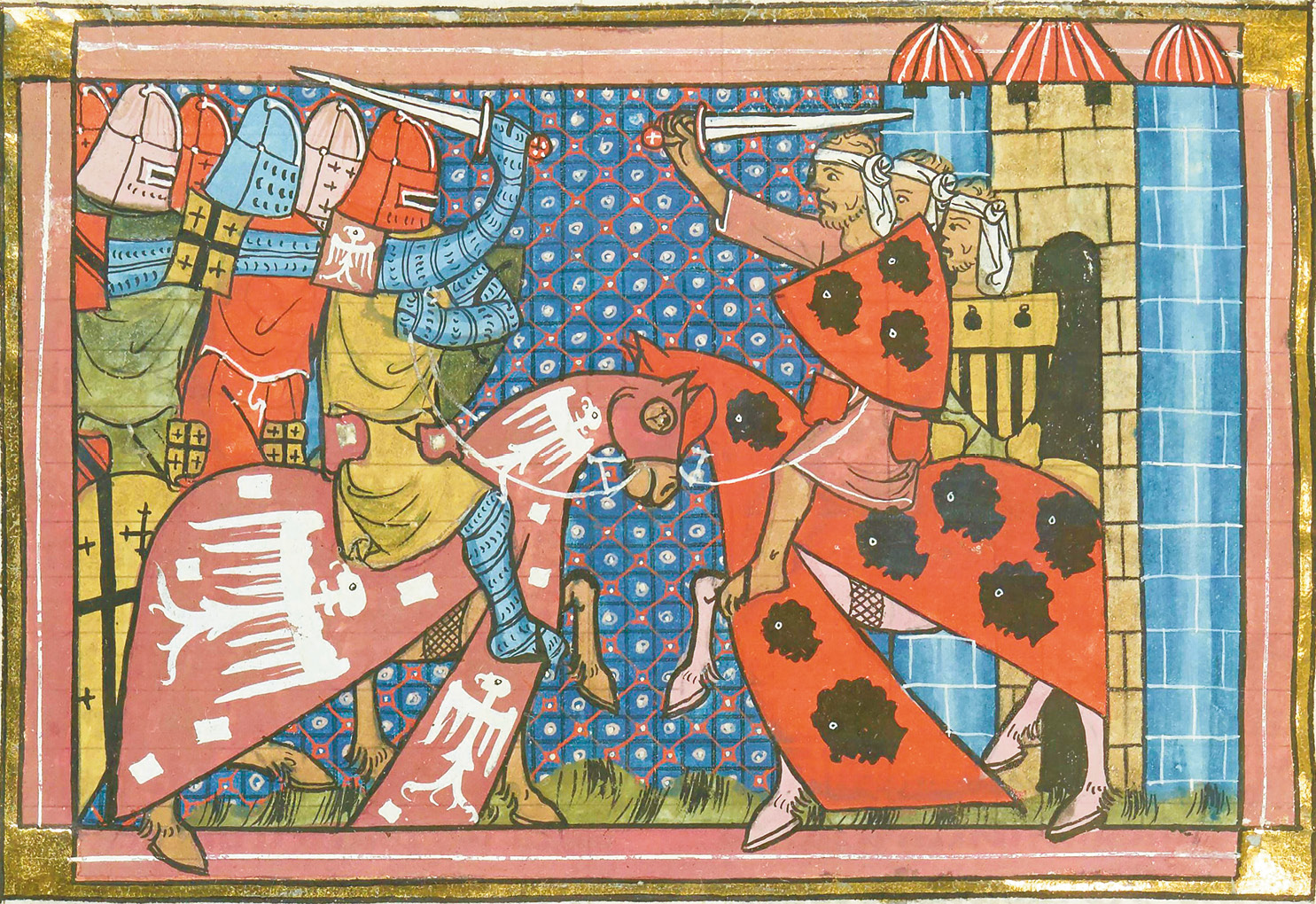
Joscelin was not a popular figure. He was contemptuously described by one Frankish chronicler as a ‘lazy, idle man, given over to low and dissolute pleasures, one who spurned good ways and followed base pursuits’. A contemporary Syrian Orthodox historian was similarly underwhelmed, describing his reign as ‘the tyranny of Joscelin’. In what was a remarkable achievement under the circumstances, he had succeeded in being despised both by his Frankish compatriots and by the native Christians.
Joscelin had presided over the loss of his entire county, and had never been forgiven. When the city of Edessa, his capital, had been besieged and captured, he was nowhere to be seen: he had chosen to set himself up in the more comfortable (and far safer) haven of Turbessel, far to the west, on the other side of the Euphrates. While his people had been enslaved and butchered, Joscelin found time for ‘luxurious pleasures of every kind, and he felt no responsibility, as he should have done, for the noble city’.
Being held prisoner in the medieval Middle East was a disturbingly tangible measure of popularity. Respected leaders were ransomed as quickly as possible, even if it bankrupted their vassals. Those who were widely regarded as losers, on the other hand, were quietly forgotten about – and Joscelin fell squarely into the latter camp.
Frustrated by the lack of ransom offers, Nur al-Din and his torturers settled in for the long haul. Joscelin was tormented for nine interminably long years in the infamous dungeons of the citadel of Aleppo. He died, missed by no one, in 1159. When his body was finally taken out of the citadel, his remains were found to be in a dreadful state – a curious crowd gathered and were said to be ‘astonished at what had happened to him’. He had, wrote one uncharitable chronicler, ‘reaped the result of his dissolute ways and came to a wretched end’.
For a man who was unpopular with the more judgmental kind of chronicler (which was most of them, given that the majority were priests) this was a salutary, perversely satisfying story – a suitably ignominious end for a seedy and ineffective leader.
It also, unwittingly, tells a different story – a story of how, deep in Christian territory, even the ruler of one of the Crusader states might be robbed and abducted by bandits.
Military freelancers
Many armies, and particularly Muslim armies campaigning near their major towns, had large numbers of bandits and criminals operating alongside them on a freelance basis. These loosely affiliated groups of young men had little to lose and were eager to scavenge. From the perspective of a Muslim general, they were of limited value on a battlefield, but they certainly had their uses. They were cheap – fighting for the opportunity of plunder rather than a salary. And they were an easy, low-cost way of occupying the enemy’s attention – sapping his strength and soaking up a lot of energy and resources.
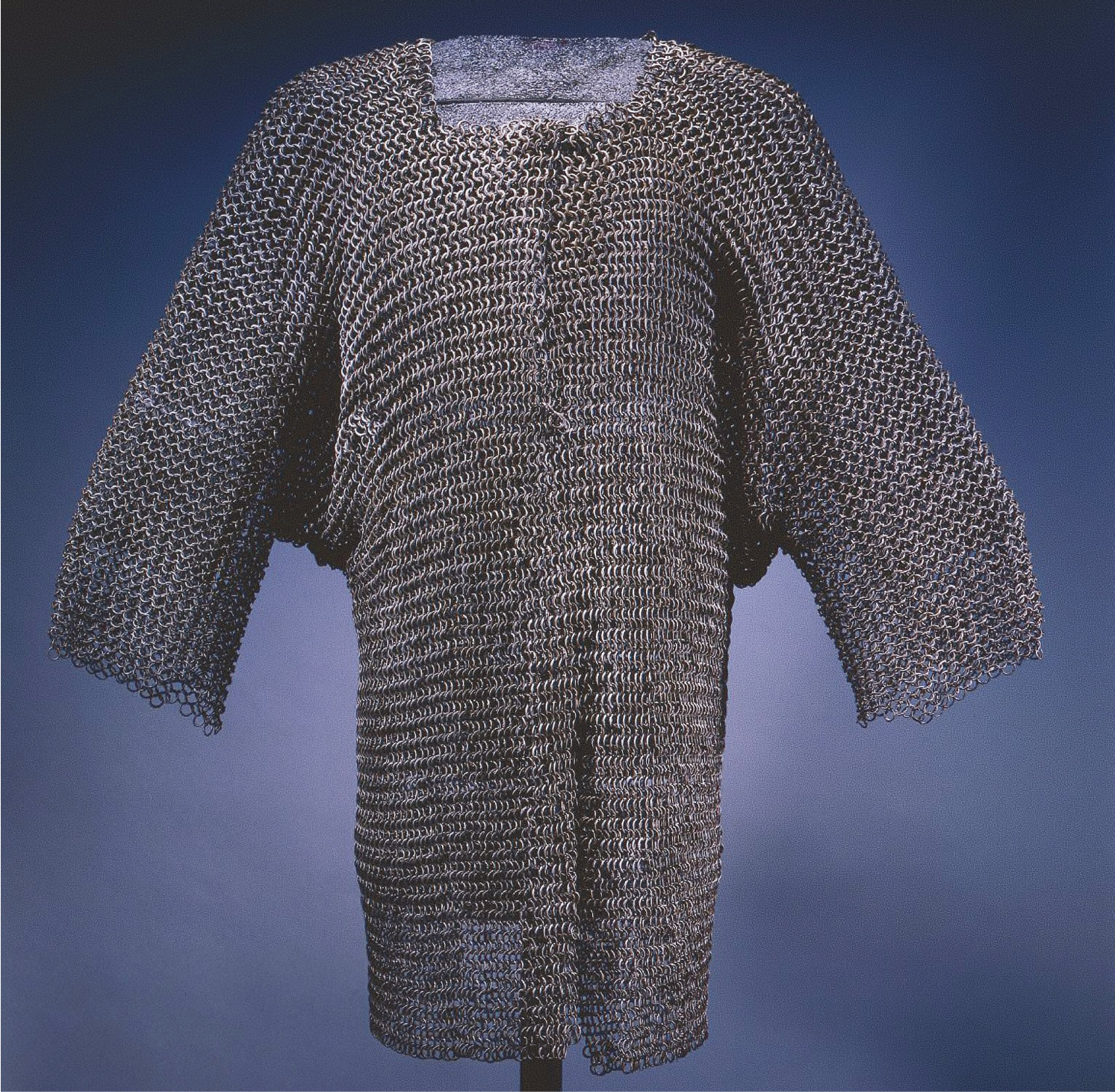
They could never stand up to a Frankish charge, but they could, as 19th-century strategists like Clausewitz astutely pointed out, add significantly to the ‘friction’ that degrades all armies on campaign.
Bandits and governments had an intimate relationship during the Crusades. For states with few resources for a police force and only limited funds for soldiers, they were a cheap form of temporary labour – the medieval ‘expendables’.
Not even hostile armies were immune from theft. Taking enemy supplies was yet another kind of pinprick damage that could be inflicted by the outlaws – who were primarily working on their own behalf, of course, but also acting, indirectly, in the interests of their state. The famous Muslim poet, diplomat, and raconteur Usama ibn Munqidh, himself often operating on the fringes of Muslim armies on campaign (albeit in a far more socially elevated capacity), had several run-ins with ‘bandit-auxiliaries’ skirmishing against the Crusaders. His anecdotes show that he was outraged and impressed by their activities in equal measure.
On one occasion, during an invasion of the territory of the town of Shaizar, in northern Syria, by the army of the nearby Crusader state of the Principality of Antioch, the Crusaders were harassed by a local bandit chief called al-Zamarrakal. This bandit had a larger-than-life reputation, and Usama heard several stories about him, gathered from multiple sources.
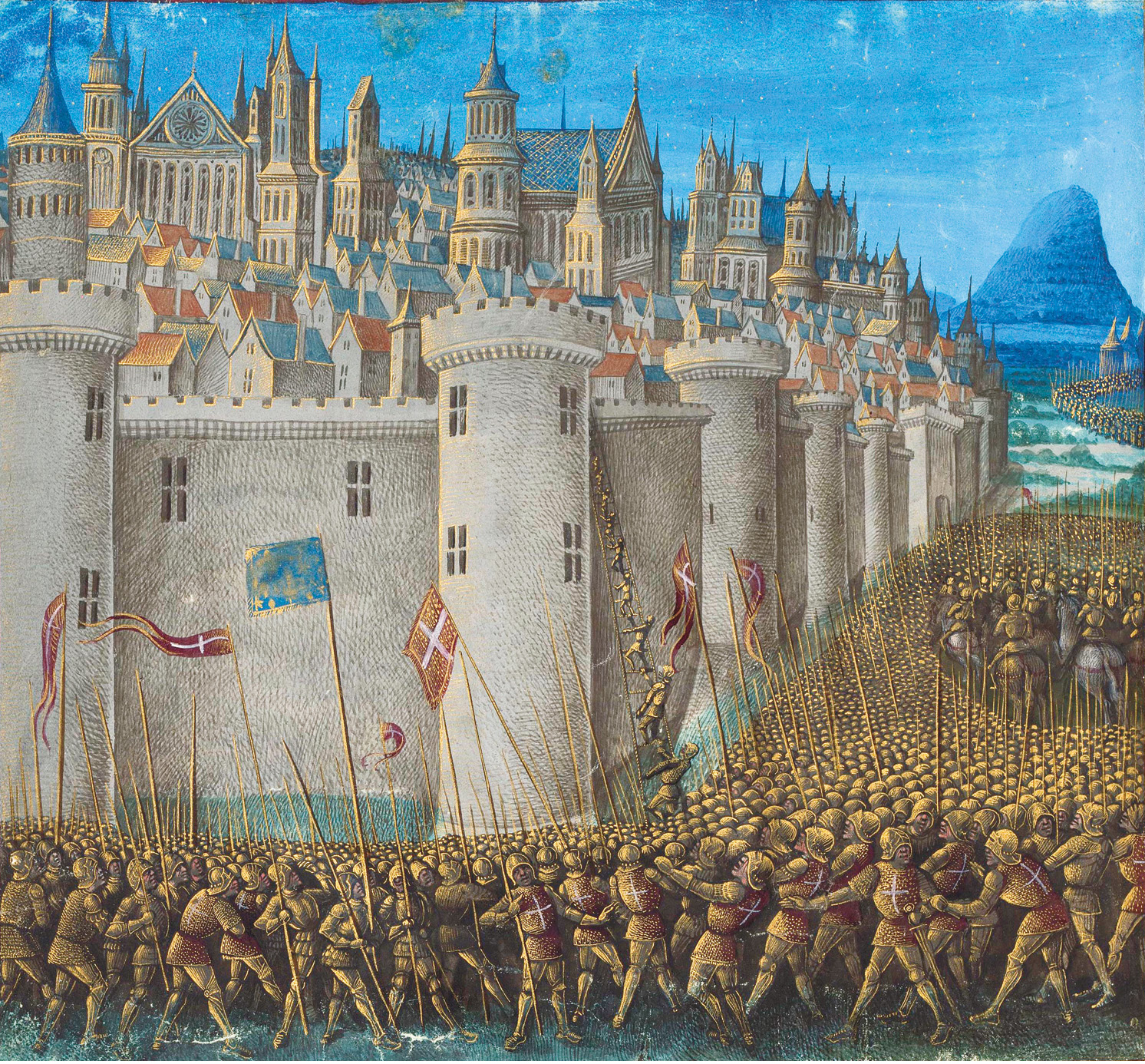
One evening, al-Zamarrakal, who was already an old man by this time, was found by Usama and his men, fetchingly dressed as a woman, together with one of his confederates, and hiding on the outskirts of the Frankish camp. This naturally raised a few eyebrows. When questioned about what he was doing, the bandit replied that he was ‘waiting for nightfall… and then I will ask God the Exalted to supply me with the horses of those infidels’.
The next morning, one of Usama’s household slaves ‘woke early and rode out to wait for whatever the Franks were going to do, when who should [he] see but that old man sitting on a rock in [his] way, with coagulated blood all over his leg and foot’. The veteran thief said that he had taken ‘a horse, a shield, and a spear from [the Crusaders], but one of their infantrymen caught up with me while I was on my way out [of the camp], in the middle of their troops. He jabbed at me and the spear went into my thigh. But I still made off with the horse, shield, and spear.’ This episode was trivial on one level, but it was also the kind of bloody and debilitating encounter that characterised the everyday experience of warfare and raiding on the frontiers – too insignificant for the history books, but an important part of the texture of criminal and military life.
There was another story about that same brigand, al-Zamarrakal, which showed that there was no honour, and precious little religious integrity, among thieves. In 1136-1137, the Franks were once more encamped near Shaizar. One of the Muslim soldiers went out in secret to try to enter the Frankish camp and steal some horses. Just as he was about to do so, however, al-Zamarrakal warned him off, saying that he had had his eyes on these horses for some time, and did not want anyone else competing with him. When the Shaizari soldier persisted in his attempt, the brigand shouted out to alert the Christian guards, who charged out and almost killed him.
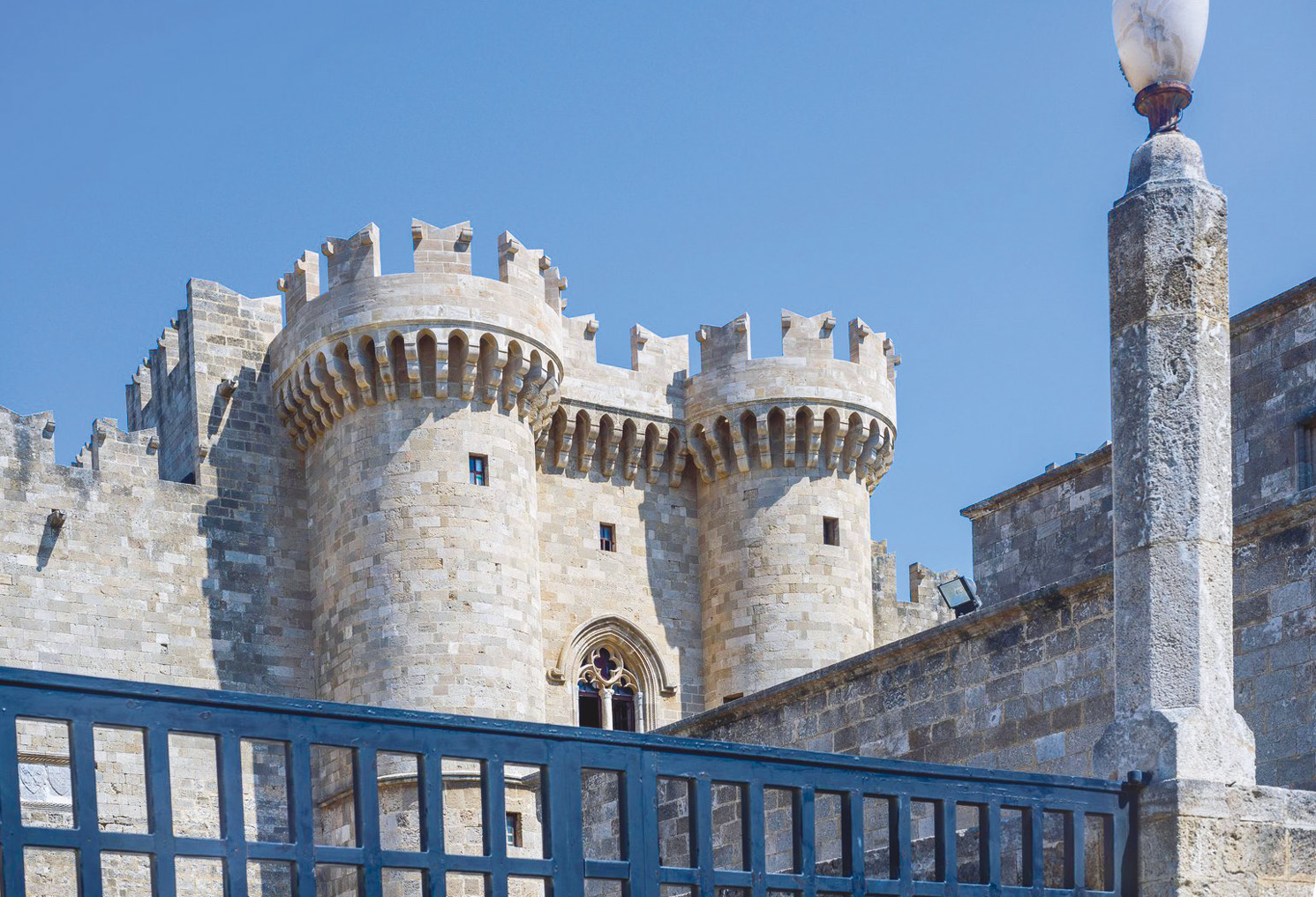
‘The Franks came out at me,’ the soldier later reported, and, ‘as for [the bandit], he took off. The Franks chased after me until I threw myself in the river, and I really didn’t think I would escape from them.’ This treachery, and the focus on plunder rather than defeating a common enemy, came as no surprise. There was no hint of any cultural or religious solidarity. Al-Zamarrakal would rather see a fellow Muslim killed than lose the chance to steal a horse.
Palestine and Syria were dangerous places in the Middle Ages. Soldiering was just the ‘day job’ for many men. They also indulged in muggings and murder, banditry and highway robbery – it was almost an art form. But it was the kind of art that could destroy a society.
Steve Tibble is the author of a new book, Crusader Criminals: the knights who went rogue in the Holy Land (Yale University Press, £25). His earlier books include The Crusader Armies (2018), The Crusader Strategy (2020), and Templars: the knights who made Britain (2023).
All images: Wikimedia Commons, unless otherwise stated