
Subscribe now for full access and no adverts
If the First World War saw great advances in science, then the Second witnessed even more dramatic progress. The war would be fought as much by the scientists – or ‘boffins’ as they were often affectionately known – as by soldiers, sailors, and airmen. And Prime Minister Winston Churchill gave them much support in what he called the ‘Wizard War’. Science would help to crack the codes that made it possible to listen in to top level enemy communications and would help to guide shells towards aircraft in the skies.
Entirely new ways of problem-solving – in a science known as ‘Operational Research’ – were applied to the challenges facing the RAF, the Army, and the Navy. A tiny device only a few centimetres long and invented at Birmingham University, the cavity magnetron, opened up revolutionary new possibilities for short-wave radar. And, of course, harnessing the power of the atom in the Manhattan Project became literally a war-winning invention. One leading scientist said that, during the period, ‘there is hardly a phase of the national life with which scientists are not associated’ and that you could ‘hardly walk in any direction in this war without tumbling over a scientist’. Churchill was keen that science should provide his generals, admirals, and airmen with every possible advantage over the enemy.
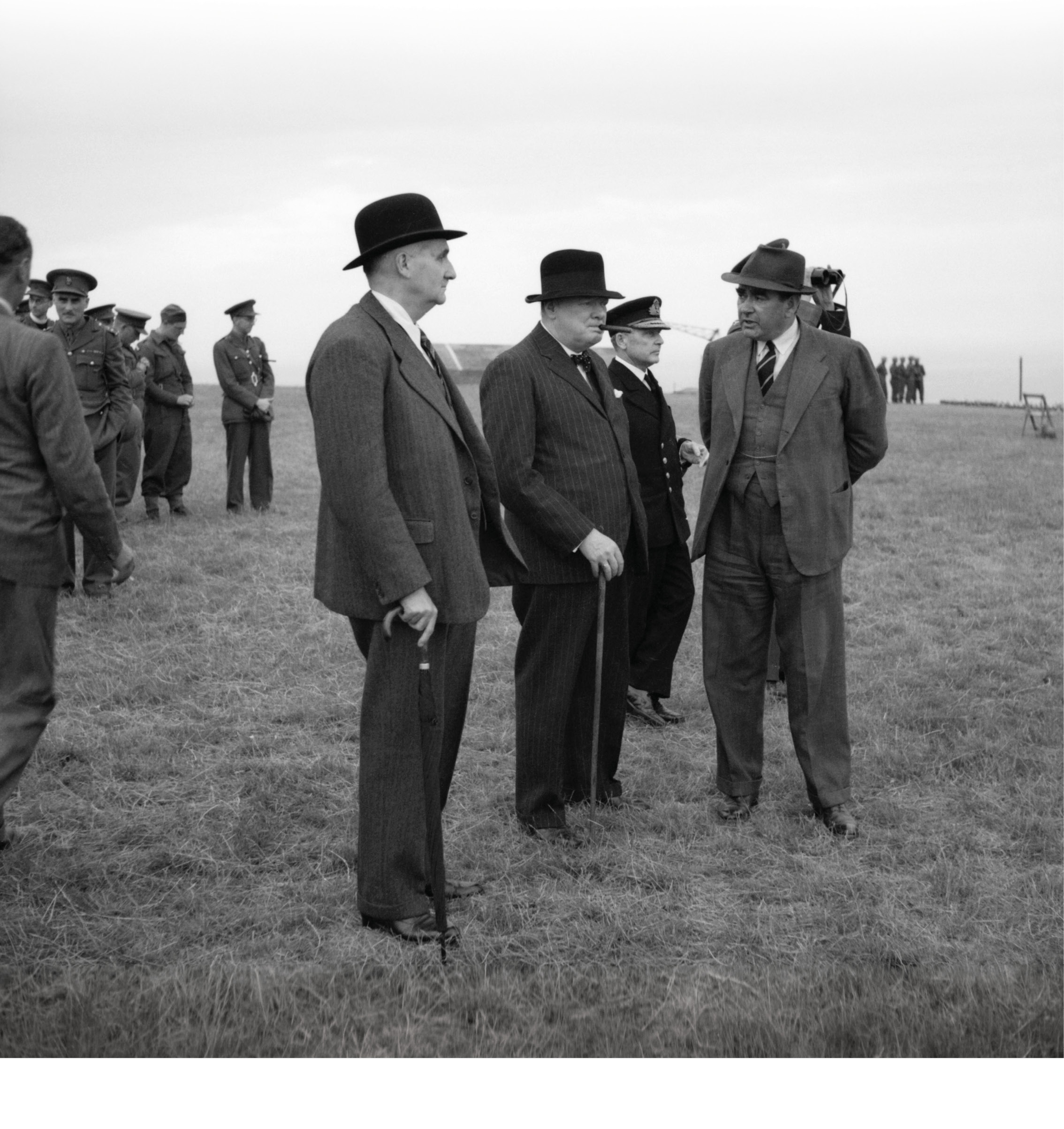
The great irony was that Churchill himself, as he would have been the first to admit, had only the shakiest grasp of science. It was his failure to understand even the most basic mathematics that nearly scuppered his chances of joining the Army when, aged 20, he tried to get into Sandhurst Military Academy. He twice failed the entrance examination because of his appalling maths, only scraping in on the third attempt after a period of cramming.
In his popular histories of the 1930s, Churchill wrote about the great forces that had shaped his country’s history and made the British people stand out from others, but he rarely included or even referred to the country’s industrial his- tory – based as it was on many key scientific advances. They seemed to have passed him by, or simply not interested him.
That is why, at the heart of Churchill’s relationship with science in the Second World War, the figure of his principal scientific adviser Professor Frederick Lindemann (known from 1942 onward as Lord Cherwell) looms large. Lindemann was universally referred to simply as ‘the Prof’. He wore a bowler hat and carried an umbrella, regardless of the weather, and always dressed in a dark, formal suit.
Lindemann became a good friend of Churchill during the 1920s and 1930s, when he was a frequent visitor to the family’s large country house at Chartwell in Kent. Lindemann used to advise Churchill on articles he wrote for the press in those days, something he needed to do continuously to maintain a steady income. Many of Churchill’s articles were about popular science, and had titles like: ‘Are there Men on the Moon?’, ‘Why is the Sky Blue?’, and ‘Fifty Years Hence’. Here, he speculated on future developments in science, predicting the development of the atomic bomb and also the eating of laboratory-produced meat.
In many ways Churchill and Lindemann were unlikely friends. Lindemann was a non-smoking teetotaller, a vegetarian, and a confirmed bachelor. Churchill was rarely seen without a cigar, liked his drink (especially Pol Roger champagne), enjoyed meat, and was devoted to his family. Rarely could two men have been more different.


Battle of ideas
By the time he got to know Churchill, Lindemann was already an internationally respected physicist. He had known Albert Einstein while carrying out research in Berlin before the First World War. In 1915, he had joined the Royal Aircraft Establishment at Farnborough, where he had carried out important work – including finding a way for pilots to get out of a ‘tailspin’, which in those days was nearly always fatal.
After the war, Lindemann went to Oxford as Professor of Experimental Philosophy – the name then given to physics. At the young age of 33, he was elected a Fellow of the Royal Society. In the 1920s, Oxford science was way behind that of Cambridge, but Lindemann gave a huge boost to the work and reputation of the university’s Clarendon Laboratory.
Lindemann was a complex and extremely difficult man, however. He came across as arrogant, prickly, and snobbish. He was obstinate, and always thought that he was in the right. He interpreted any criticism as a personal insult, and – once offended – never forgot a grudge. Despite his often rude and aggressive behaviour, he was rarely concerned or even probably aware of the effect he had on others. Indeed, the warmth of his friendship with Churchill seemed the mirror image of the coldness many others saw in his behaviour towards them.
Following the outbreak of war in September 1939, Churchill asked his friend ‘the Prof’ to leave Oxford and come with him to the Admiralty. Lindemann agreed to do so. When Churchill became Prime Minister in May of the following year, Lindemann went with him to Downing Street, where he became what today would be called a ‘special adviser’. He was made head of the newly created Prime Minister’s Statistical Section, better known as the S-Branch, with a tiny team of six or seven economists and a scientist.
S-Branch acted like an independent think tank for Churchill and had a roving commission to dig into any aspect of the wartime government and administration. Lindemann met up with Churchill almost daily, advising him on scientific matters, military issues of all sorts, on logistical problems, and on the economy. Most weekends, Lindemann joined Churchill and his entourage at Chequers.
Lindemann sent Churchill about 2,000 memos (or minutes) during the war, often two or three per day, but averaging out at about one per day for six years. They covered scientific subjects – everything from an explanation of what it meant to split the atom to the workings of the Mills hand grenade; and from how the Germans could use beams to help their bombers navigate at night to how a gas-turbine jet engine operated.
The memos also related to economic matters – anything where a quantitative or analytical approach could make a fresh contribution, from beer rationing to merchant shipping losses. Many of the memos were an attempt to throw new light on a subject or to penetrate what Lindemann saw as ‘sloppy thinking’ among civil servants. It needed someone of Lindemann’s abrasiveness, confidence, and hard-headedness to run this sort of unit.
Lindemann’s memos were rarely more than two pages long, always in large type, and double-spaced. He tried to digest into these bite-sized portions even the most complex or difficult ideas for his boss’s consumption. Churchill demanded brevity and would often forward to Lindemann a long civil-service paper with a note: ‘Prof – please summarise in 10 lines’.

The Butt report
At the beginning of World War II, RAF’s Bomber Command had the wrong planes, the wrong bombs, and crews who lacked the training or the navigational aids to fly for hours at night across a blacked-out Europe and get anywhere near their target. The official history of the bombing offensive concluded that ‘Bomber Command was incapable of inflicting anything but insignificant damage on the enemy’.
In August 1941, a civil servant in the War Cabinet Secretariat by the name of David Butt carried out a study of 650 aerial photographs taken after air raids to see how successful the attacks had been. The results were shocking. It seemed that only one in three aircraft got their bombs within five miles of their target. On nights without moonlight, that figure fell to one in 15. With losses among bomber crews so high, Churchill was deeply concerned, and that autumn called off the bombing offensive. As related here (see below), a paper written by Sir Frederick Lindemann in March 1942 played a leading part in restarting the bombing of German cities.
Power without responsibility
In his six-volume history of the war, Churchill described Lindemann’s value to him as one who could ‘explain to me in lucid, homely terms what the issues were’. Lindemann’s vast and wide-ranging scientific knowledge and his natural air of self-assurance enabled him to sum up almost any scientific, economic, or logistical question for Churchill. Lindemann’s biographer said his role as scientific adviser to the Prime Minister gave him ‘power without responsibility, [and] power greater than that exercised by any scientist in history’. Inevitably, with such a difficult and combative man, this would provoke controversy.
The most contentious area in which Lindemann had an impact was in the revival of the strategic bombing campaign in 1942. With the technology available at the beginning of the war, Bomber Command’s early attempts to hit at Germany had been a miserable failure. In the autumn of 1941, Churchill had called a halt to the bombing offensive, as the losses were too great for the minimal results achieved.
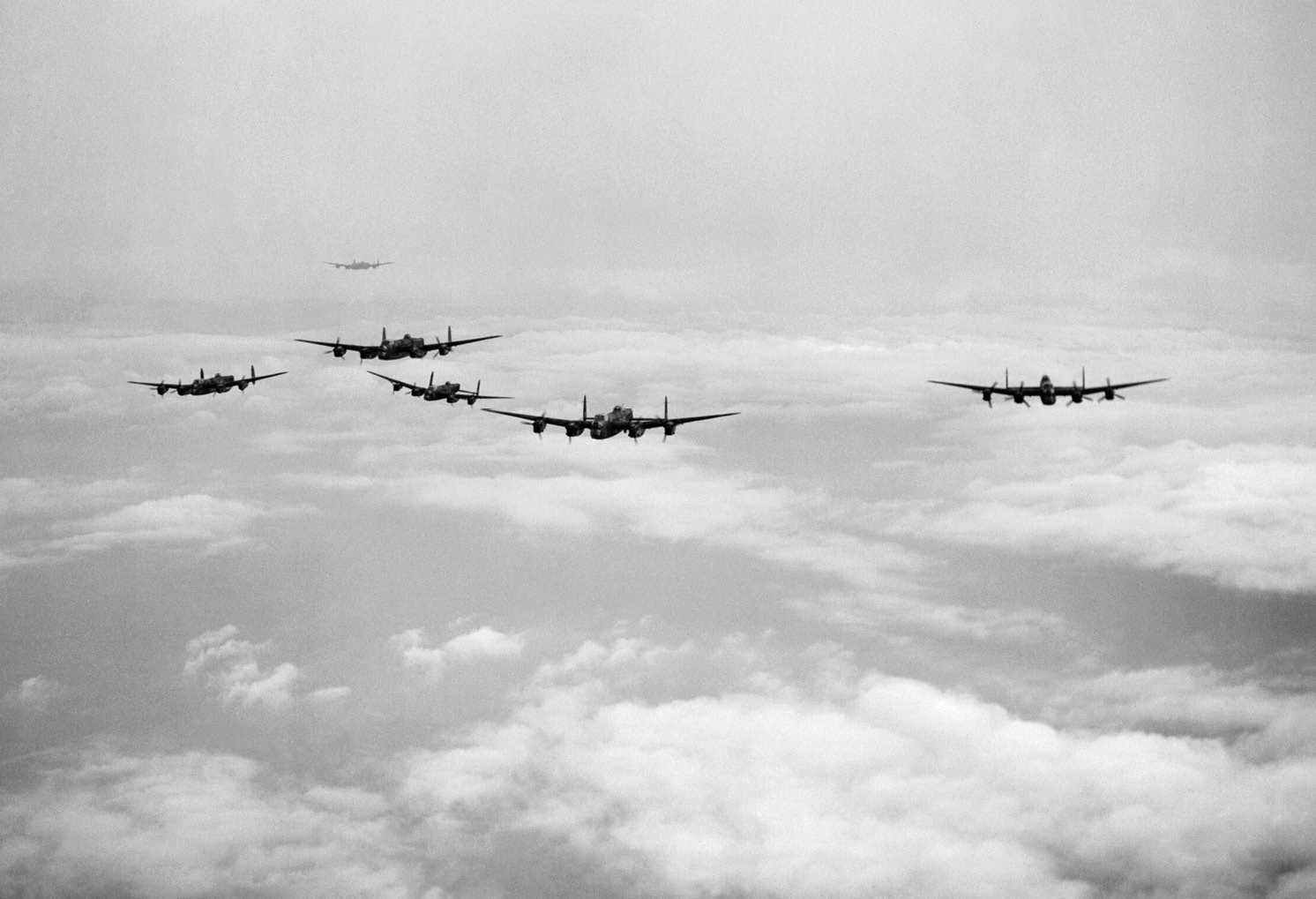
This began to change in early 1942, when new four-engine heavy bombers like the Lancaster came in, along with new technologies to aid navigation. And there was an intense debate about reviving the bombing of Germany. Lindemann wrote a paper, which he sent to Churchill on 30 March that year. In it, he claimed that one ton of bombs dropped on a built-up area demolished 20-40 houses and turned ‘100-200 people out of house and home’.
He argued mathematically that if each of the new heavy bombers dropped about 40 tons of bombs during its service life, then each plane would make between 4,000 and 8,000 people homeless. He then calculated that if half of the bombers in a bombing force of 10,000 aircraft dropped their bombs on the biggest cities in the German Reich, then ‘about one third of the German population’ would be made homeless.
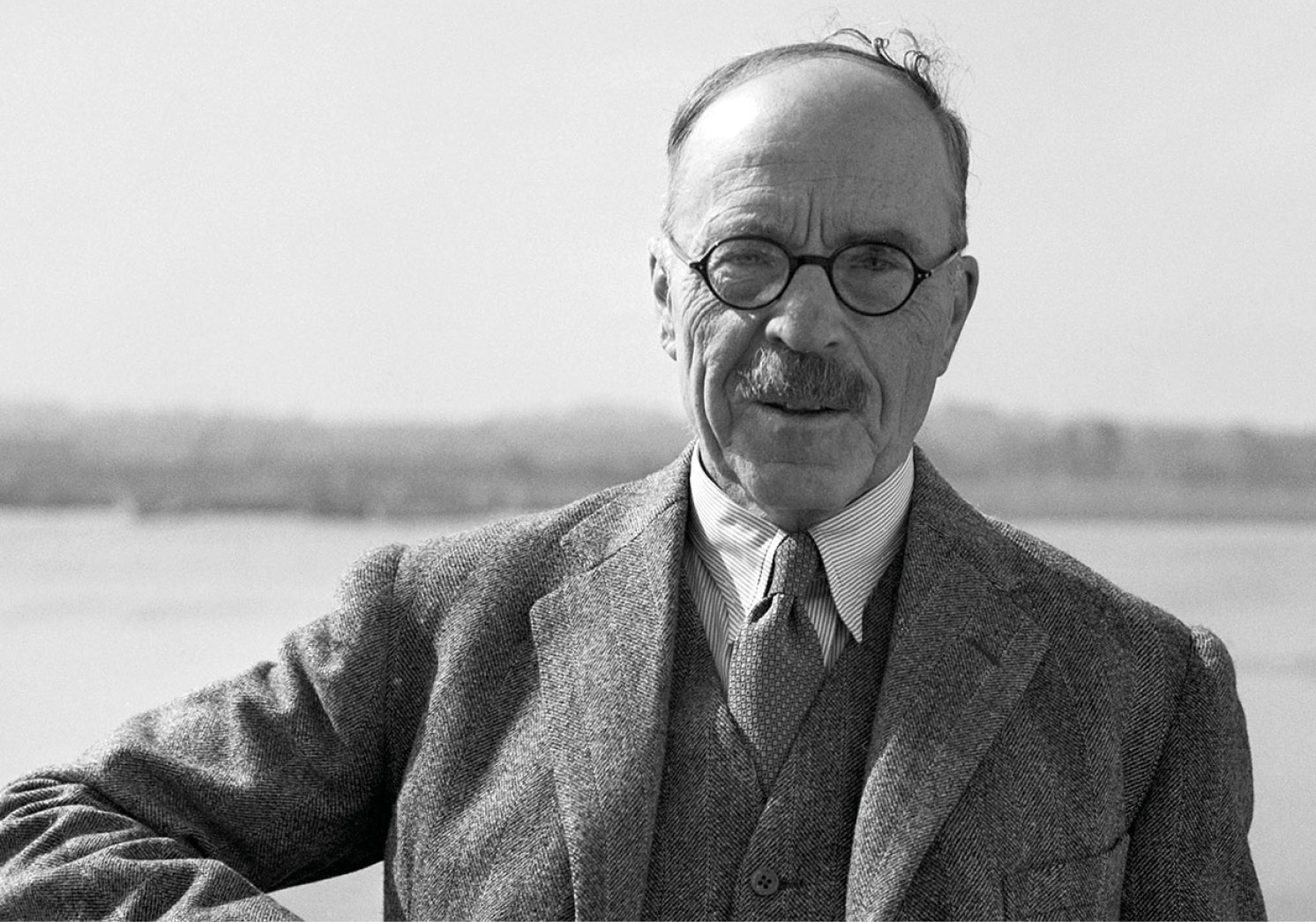
Lindemann noted, in terms that today sound pretty repugnant, that ‘investigation seems to show that having one’s house demolished is most damaging to morale. People seem to mind about it more than having their friends or even relatives killed.’ Lindemann concluded that the area bombing of German cities could ‘break the spirit of the people’ and prompt a breakdown of communications, supply lines, and the collapse of public services. In other words, bombing civilians could definitely help the Allies win the war against Germany.
Lindemann’s paper is often said to be the prime document that persuaded Churchill to restart the bombing offensive. However, it provoked great controversy at the time and has continued to do so ever since. Other scientists criticised the mathematics by which Lindemann had made his calculations, and challenged his assumption that there would ever be a bombing force of 10,000 heavy bombers.
Sir Henry Tizard, who has been called one of Britain’s greatest defence scientists, was Rector of Imperial College, London, and chaired several vital defence committees. He told Lindemann bluntly: ‘I think that you have got your facts wrong.’ He added that ‘this may lead to entirely wrong decisions being reached with a consequent disastrous effect on the war.’
Lindemann was not the type to take a rebuke like this sitting down. He had Churchill’s ear and he continued to press his case, claiming that his figures had simply been presented in a way that meant Churchill didn’t need to do the maths himself.
Lindemann fell out with Tizard because of the dispute and developed a deep animosity towards him. As a consequence, Tizard, whose contribution to the development of radar and the beginnings of atomic science had been immense, rapidly fell out of favour. His marginalisation by Lindemann was a great loss to the war effort.
London to Los Alamos
In the end, of course, it was Churchill who had to take the final decision. He came down on the side of Lindemann and his new chief of Bomber Command, Sir Arthur Harris, against Tizard and the other doubters. The official historians of the bombing offensive concluded that because of his position at the time, when he submitted this memo ‘Lindemann’s intervention was of great importance. It did much to establish the concept of strategic bombing.’ The area bombing of German cities and hitting German civilians had now become official British policy.
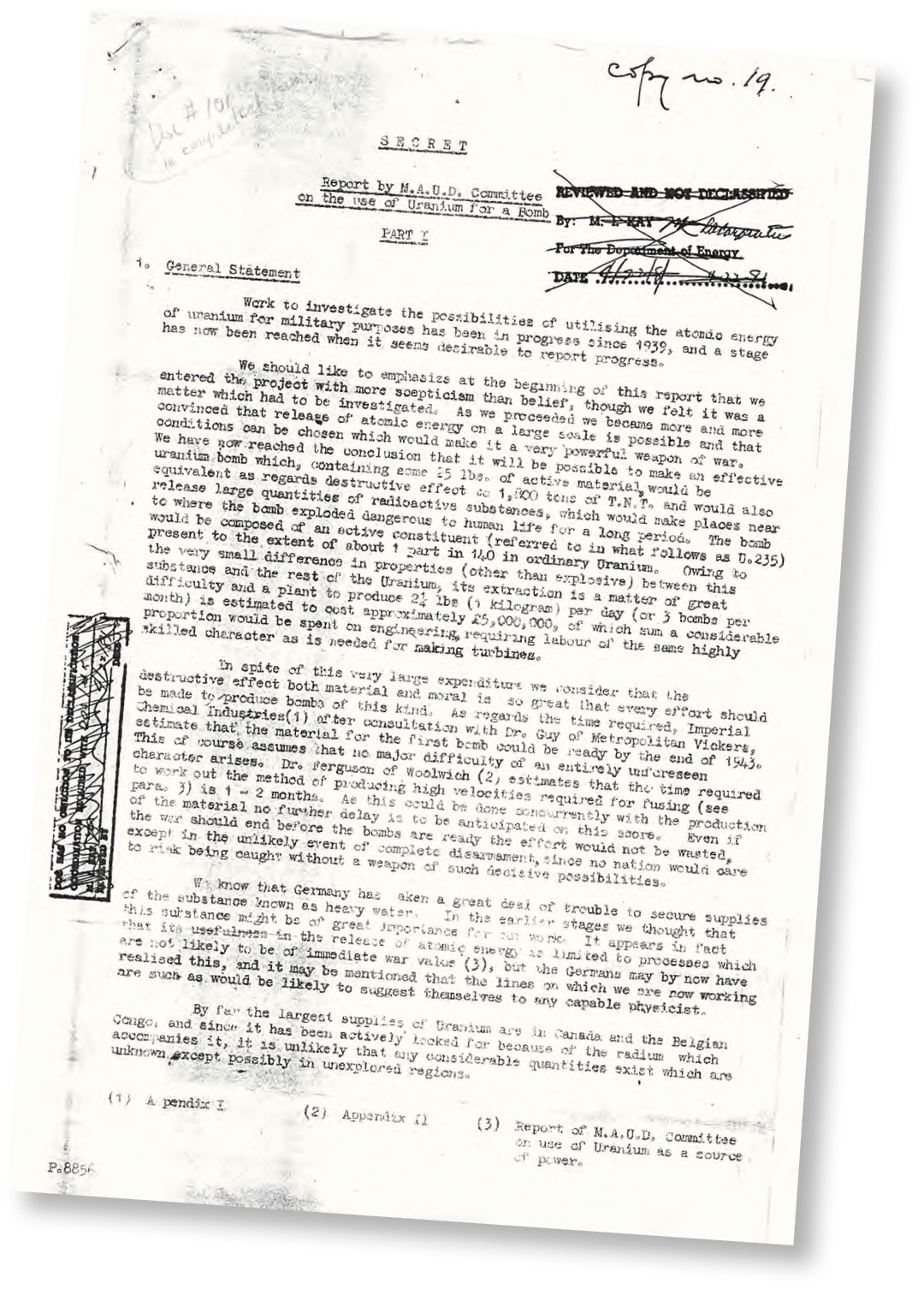
When it came to the early development of atomic science, Tizard had set up a committee to investigate the claims of German émigré scientists in Britain that vast energy could be produced from uranium through the process of nuclear fission. The committee produced what became known as the MAUD Report in July 1941. It concluded that it was possible that an effective atomic bomb could be produced within two years.
When Lindemann read the report, he was sceptical, as the science was not yet proven, and the production of an atomic bomb would involve a massive reallocation of valuable resources that could be committed elsewhere. However, Lindemann concluded to Churchill in one of his memos that: ‘I am quite clear that we must go forward. It would be unforgivable if we let the Germans develop a process ahead of us by means of which they could defeat us in war.’ Churchill agreed with the need to keep ahead of anything the Germans might be developing, and so set up a new top-secret organisation under the codename ‘Tube Alloys’ to develop a nuclear bomb.
Far more important, however, was Churchill’s agreement to forward the MAUD Report to the Americans. James B Conant, the president of Harvard University and senior scientific adviser to the United States government, finally persuaded President Roosevelt in October 1941 to commit the US to developing and building an atomic bomb. Once America came into the war after Pearl Harbor in December that year, the progress of work on the atom bomb sped up and rapidly pulled way ahead of anything going on in Britain.
The Manhattan Project, as it became known, developed into one of the biggest scientific operations of all time, employing 120,000 people across 37 different research sites spread around the US. Theoretical physicist Robert Oppenheimer was put in charge of bringing the various research operations together in the building of an atom bomb in a remote, closed, and secure research establishment at Los Alamos in the desert of New Mexico.
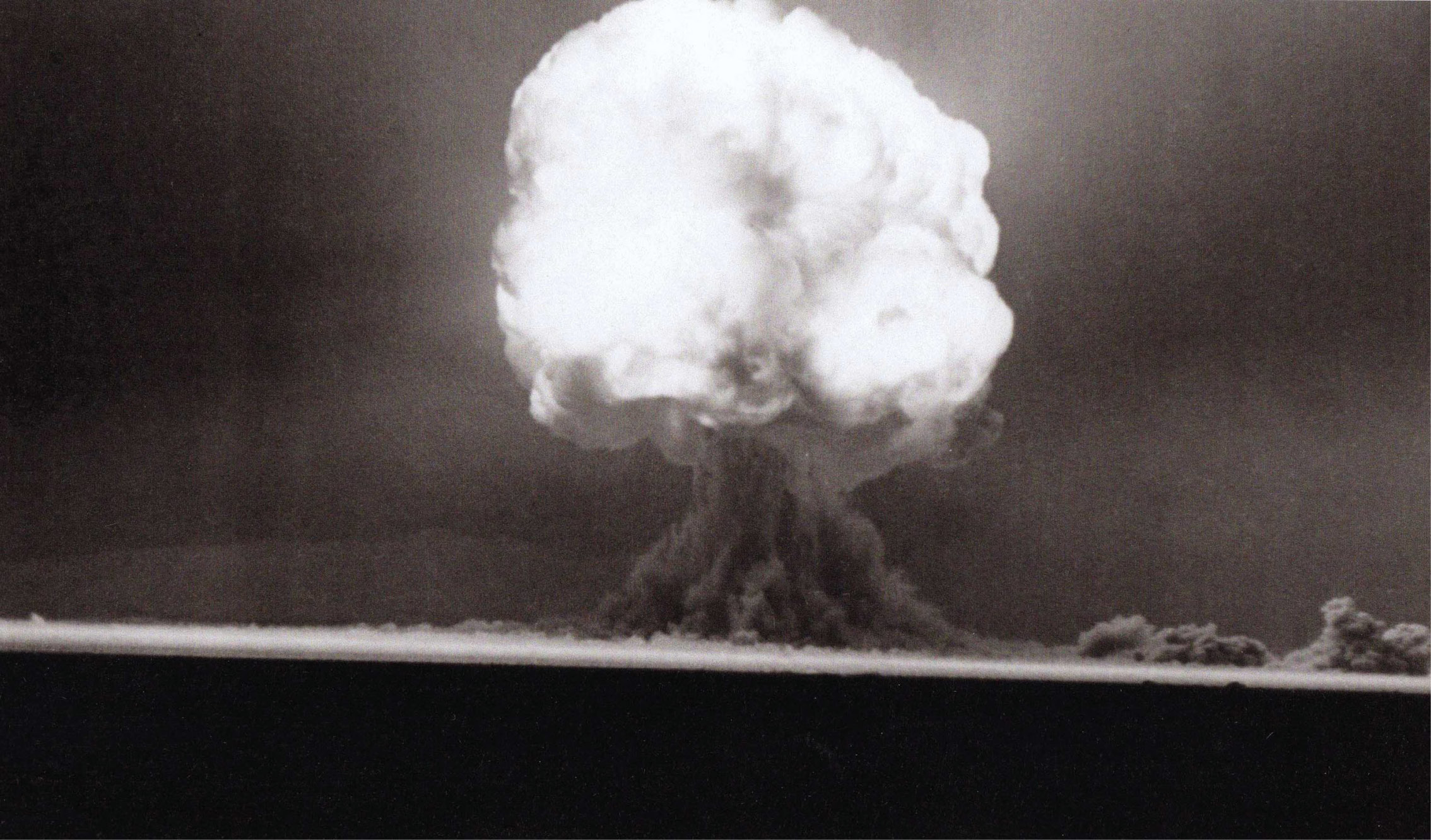
After several years of intense and unremitting work, the scientists finally carried out a test explosion of the bomb on 16 July 1945. It was a success. The use of the weapon in August that year on the Japanese cities of Hiroshima and Nagasaki not only brought the Second World War to an end, but also ushered in the Atomic Age.
The development of the atomic bomb had a strange lineage: from Germany to Britain, through Tizard and Lindemann to Churchill, and then to the United States and into the Manhattan Project. Only in this way could the vast allocation of resources be made available for the development of a weapon that would transform world politics and the balance of power for the next 50 years.
For good or ill, the partnership between scientists and soldiers had finally produced the most destructive weapon known to mankind.
Taylor Downing’s new book The Army that Never Was: D-Day and the Great Deception is out now.

In the next issue of MHM
Churchill and the mavericks: from bouncing bombs to floating tanks

All images: Wikimedia Commons