
Subscribe now for full access and no adverts
‘No part of the Great War compares in interest with its opening,’ wrote Winston Churchill of the world changing events that took place 110 years ago this summer, as Europe’s ‘Great Powers’ found themselves sliding inexorably towards a new type of conflict. ‘The measured, silent drawing together of gigantic forces, the uncertainty of their movements and positions, the number of unknown and unknowable facts made the first collision a drama never surpassed.’
More than a century on, interest in this extraordinary drama shows few signs of fading — as new generations ask themselves, how could Europe’s leaders have allowed such a thing to happen? How could a continent that had for so long prided itself on its so-called ‘civilisation’ sleepwalk into a conflagration that would claim the lives of between 15 and 22 million soldiers and civilians over the following four years?
Such interest is not purely historical, of course. For inside this complex tale of imperial rivalries and short-sighted diplomatic blundering, many are tempted to discern a parable with enduring relevance to the world we live in today. That is why the US President John F Kennedy famously found inspiration at the height of the 1962 Cuban Missile Crisis in The Guns of August, Barbara Tuchman’s celebrated account of the outbreak of World War I (see MHM 133, April/May 2023). And it is why the events of that far-off summer of 1914 are still referred to even today by those who warn of the dangers of escalating conflicts around the world, from Ukraine to the Middle East.
In our special two-part feature in this issue to mark the 110th anniversary of the First World War, Graham Goodlad looks first at how Europe’s alliances broke down as the continent lurched closer to catastrophe, and then analyses in detail the ‘Miracle of the Marne’ — the key early battle, fought in September 1914, that saved Paris and checked the German advance, but in doing so set the course for four long years of bitter conflict.
Five steps to catastrophe
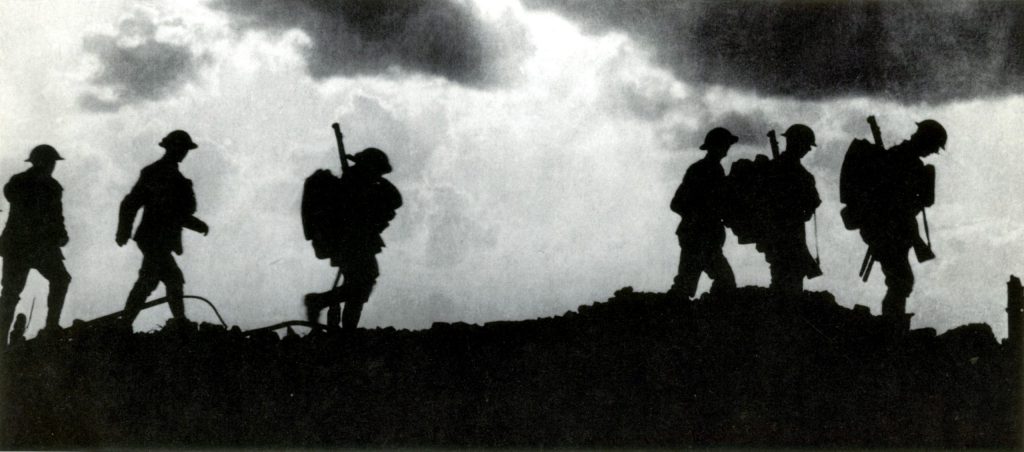
This summer sees the 110th anniversary of the outbreak of the First World War. In our special, we mark this sombre milestone with two related articles. Our featured battle is the ‘Miracle on the Marne’, the week-long engagement in September 1914 by means of which Franco-British forces ended German hopes of a rapid victory. As a result, the opposing armies dug in to face each other in the trench lines that have become synonymous with the Great War. The Marne effectively determined the shape of the next four blood-soaked years.
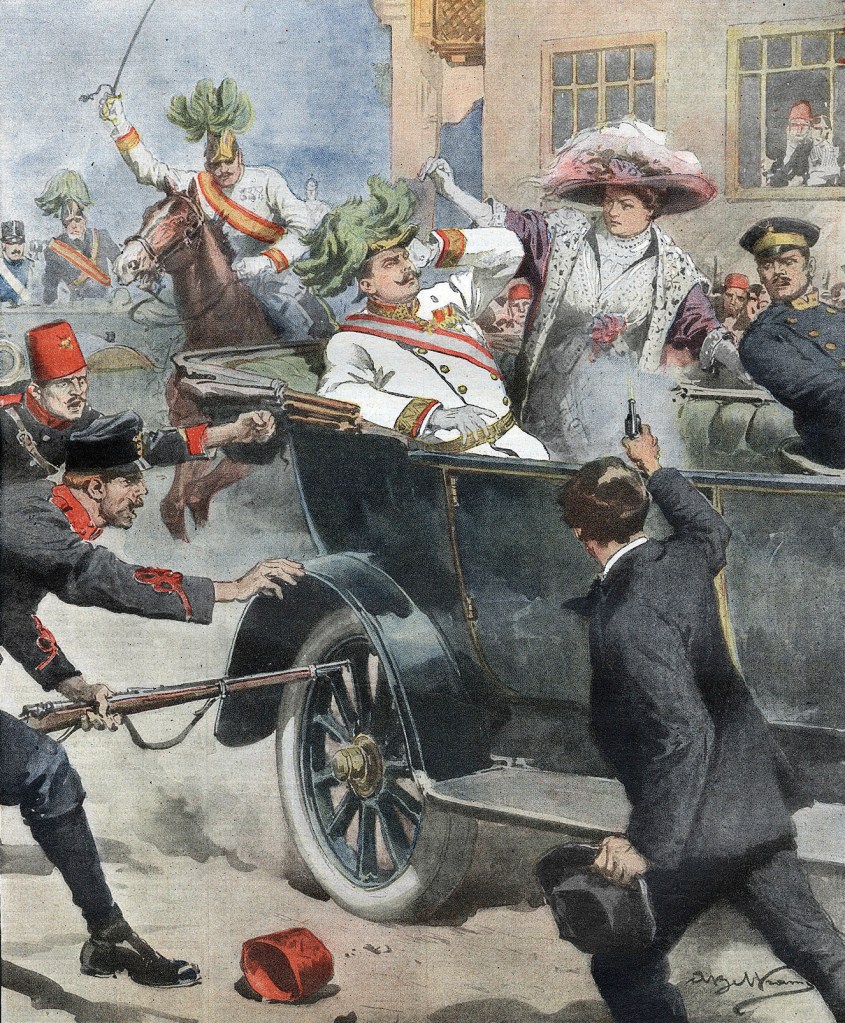
First, however, we focus on the causes of the war. We identify five key developments that put Europe on the road to conflict – from imperial rivalry in Africa to the ‘Great Power’ arms race, from growing strife in the Balkans and the assassination of Austrian Archduke Franz Ferdinand to the German army’s violation of Belgian neutrality.
The origins of the war have long been a subject of intense debate. In the interwar period, it was widely viewed as the unintended consequence of blundering by the Great Powers. Former prime minister David Lloyd George wrote that ‘the nations slithered over the brink into the boiling cauldron of war’. To many commentators on the political left, the fault lay with the pre-war international system and the machinations of ‘secret diplomacy’. A variant of this was the view, propagated by Lenin, that the conflict arose from a struggle for economic resources waged by competing empires as capitalism entered its final stage of development.

Controversy was reignited in the 1960s, when revisionist historian Fritz Fischer argued that Germany had planned a war of territorial conquest against its neighbours. This was a more nuanced version of the case made by the victorious allies at the time, that the Reich alone bore responsibility for the war. At the Paris Peace Conference in 1919, this claim had been used to justify a punitive settlement, in which defeated Germany was stripped of land, economic resources, and military hardware.
Historians continued to debate the war’s origins as the centenary approached in 2014. In different ways, they stressed contingency rather than inevitability, complexity rather than simplicity. Christopher Clark’s acclaimed study The Sleepwalkers saw the war as the outcome of decisions taken not just in Berlin but in the capitals of the other Great Powers. The leaders of Germany, Austria-Hungary, and Russia in particular may not have actively sought war, but they were prepared to risk provoking hostilities to uphold their various national interests.
Central to the development of the crisis was rising nationalist tension in the Balkans, where the decline of the once-dominant Ottoman empire invited intervention by European powers. The region became a cockpit for the rival ambitions of the large multi-ethnic empires of tsarist Russia and Austria-Hungary.
The coming struggle might have been limited to south-east Europe had it not been for the alliance networks to which these two sprawling giants belonged. Tsarist Russia – allied to France from 1894 – drew closer to Serbia, the strongest independent Balkan state, in the first decade of the new century. Serbia’s desire to unite the Slav peoples of the region under its banner threatened the viability of the Austro-Hungarian empire, fuelling a bitter sense of hostility.
From 1879, Austria-Hungary was yoked to Germany in the Dual Alliance. Italy joined the two ‘Central Powers’ in 1882, although it remained neutral when war broke out, throwing in its lot with Britain and France the following year. Britain was not part of a formal alliance, but by 1907 had resolved its imperial disputes, first with France and then with Russia, forming the more loosely associated Triple Entente. The alliance system initially maintained an uneasy equilibrium between the Great Powers. In the summer of 1914, however, it was to break down with catastrophic consequences for European peace.
Step 1: Flashpoint in Morocco
Competition for overseas colonies played only an indirect role in the build-up to the First World War. But on two occasions, in 1905 and 1911, the North African state of Morocco was instrumental in worsening relations between the European Great Powers.
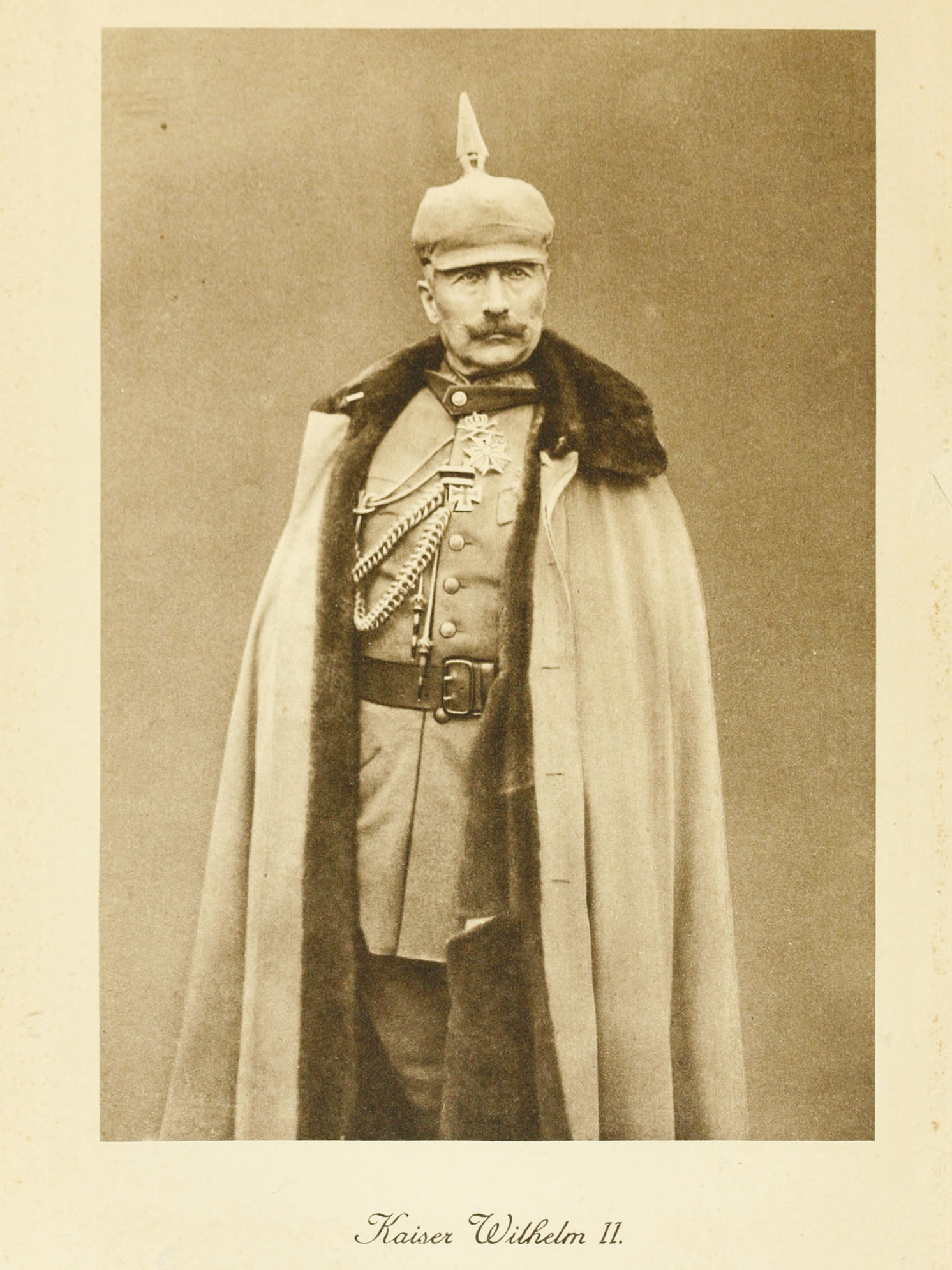
In 1904, Britain and France had concluded an entente – an agreement to resolve their colonial disputes in the interests of a better relationship. Britain was to be the unchallenged imperial power in Egypt, while France was to extend its influence in Morocco. Although this understanding fell some way short of a military alliance, it played into a narrative that was gaining ground in Germany. Kaiser Wilhelm II believed that his country was being encircled by a potentially hostile Anglo-French com-bination, linked to Russia in the east, and that Germany was being denied a ‘place in the sun’ – a position of equal standing with older-established imperial powers.
Wilhelm had little interest in Morocco for its own sake, but he was not willing to give France a free hand there. He also believed that German intervention might weaken the ties between France and Britain. Accordingly, in a move that created diplomatic waves, he visited Tangier at the end of March 1905 and publicly declared his support for Moroccan independence. Empire was a politically sensitive subject in France. Colonial expansion had become a way of compensating French nationalist sentiment for Germany’s annexation of the eastern provinces of Alsace-Lorraine, following the Franco-Prussian War of 1870-1871. After some threatening troop movements on both sides, the French agreed to a conference at Algeciras in Spain in January 1906.
The outcome was the reverse of what Germany had intended. The conference left France’s position in Morocco unaltered. It also demonstrated that Germany’s high-handed behaviour had won it few friends. In an early indication of its later detachment from the Triple Alliance, Italy sided with France. Even Austria-Hungary, Germany’s only reliable ally, urged it to take a more conciliatory stance. The overall effect was to tighten the bonds of the Anglo-French Entente Cordiale. From January 1906, the French and British held secret military conversations. Although non-committal, it was in this forum that the idea of sending a British expeditionary force to France was discussed.
Morocco was once again the cause of international tension in April 1911, when France deployed troops to the country’s interior, ostensibly to suppress a revolt. Germany took the opportunity to demand territorial concessions from France elsewhere in Africa, backing up its demands by sending the gunboat Panther to the Moroccan port of Agadir. The crisis was resolved through a deal that gave Germany part of the Congo in return for recognition of a French protectorate over Morocco.
This was less than the German leaders had wanted. More importantly, the crisis drove France and Britain closer together. A convention drafted in July 1912 proposed that their navies would share responsibilities, the French patrolling the Mediterranean while the British concentrated on the Channel and North Sea. Britain was careful to avoid making a binding commitment to support France in the event of war. Yet its actions over time created an expectation in Paris that it was obliged to do so.
Step 2: Arms races
The decade and a half before 1914 saw European countries engage in arms races on both land and sea. The technological revolution in warfare that had been gathering pace since the late 19th century affected all the Great Powers in differing degrees. The invention of smokeless powder, breech-loading magazine rifles, machine-guns and semi-recoilless quick-firing field guns had the potential to transform the land battlefield. The use of railways to move troops rapidly over long distances was supplemented by the first moves towards the application of air power to war. Meanwhile, the appearance of steel warships, powered by steam turbines, and the development of submarines, torpedoes, and sea mines opened new possibilities for navies.
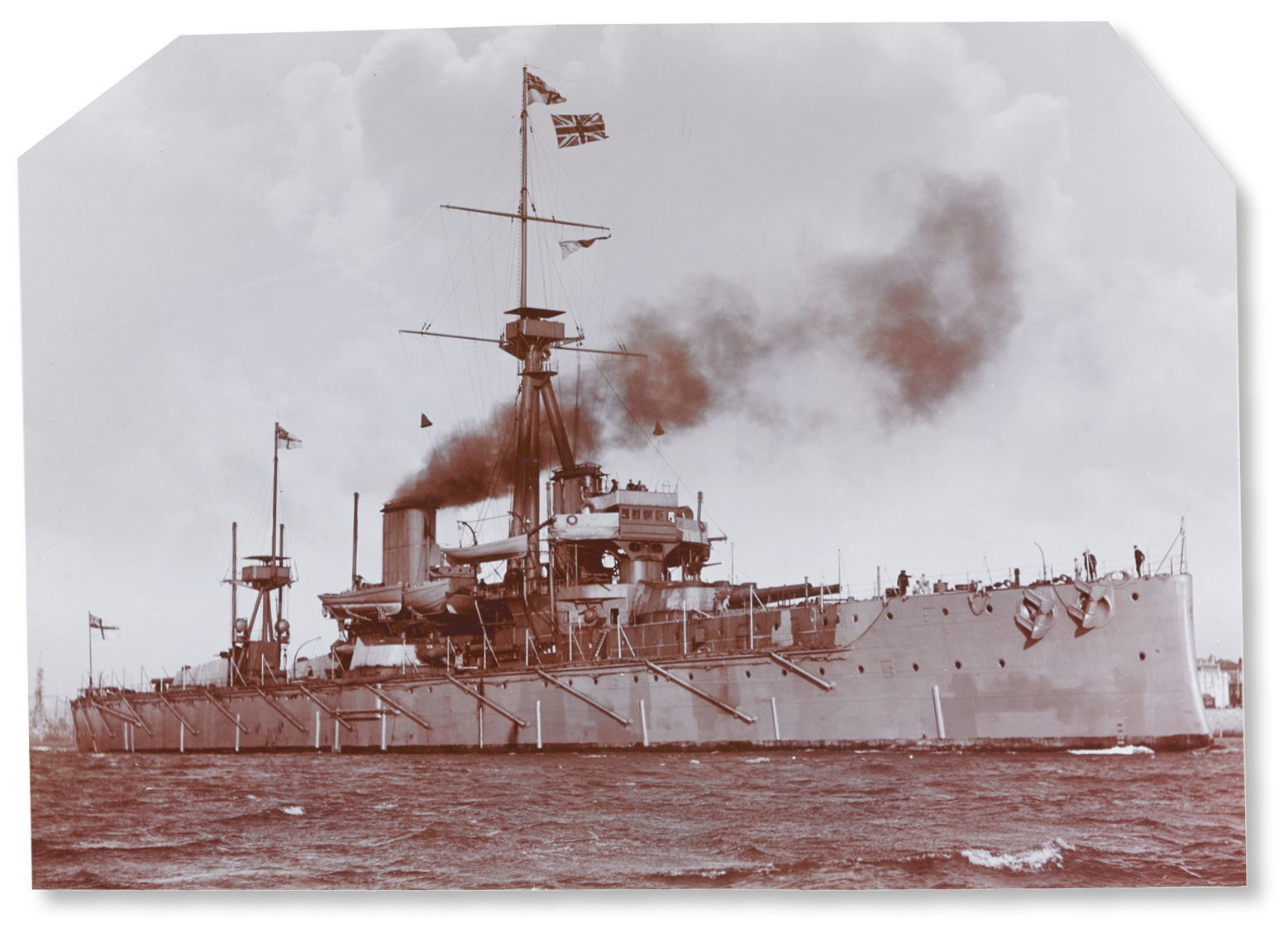
The best-known of the pre-war arms races was the Anglo-German naval rivalry, triggered by Germany’s 1898 and 1900 navy laws. The Kaiser’s navy secretary, Admiral von Tirpitz, did not seek to defeat the British in battle. However, he believed that Germany could build a fleet large enough to deter the Royal Navy from seeking combat in the North Sea. In response, Britain increased its own shipbuilding programme and, from 1906, unleashed a new phase in the contest with the construction of the revolutionary, all- big-gun Dreadnought class of battleship.
Anglo-German naval rivalry was not a direct cause of the war. By 1912, Germany had effectively accepted that it could not match the expansion of the Royal Navy and had abandoned the naval race. Nor did the expansion of land armies necessarily signal a European conflict. But the arms races undoubtedly added to international tensions. Armaments were inextricably linked with the desire of all the Great Powers to uphold their interests and prestige.
Russia seemed a less formidable antagonist after its unexpected defeat by Japan in 1904-1905. The smashing of the tsarist fleet at Tsushima, at the hands of an emerging Asian power, dealt a devastating blow to its image. But, as Russia began to recover, Germany decided to insure itself for the future. The Reichstag passed two laws in 1912-1913, diverting significant expenditure to the army. In response, France increased the length of its compulsory military-service term from two to three years. Russia embarked on the so-called ‘Great Programme’, designed to increase the size of its army by 40%, accom-panied by major investment in strategic railway-building on its western frontier. This enabled the tsarist army to mobilise more rapidly against Germany than expected in July 1914, even if the Russian economy proved unable to sustain the initial impetus.
These developments encouraged the German high command to think in terms of a narrowing window of opportunity before the French and Russian armament programmes reached fruition. If war was unavoidable, they concluded, then it was best for it to occur sooner rather than later. Delay could only benefit Germany’s opponents.
Step 3: Balkan cauldron
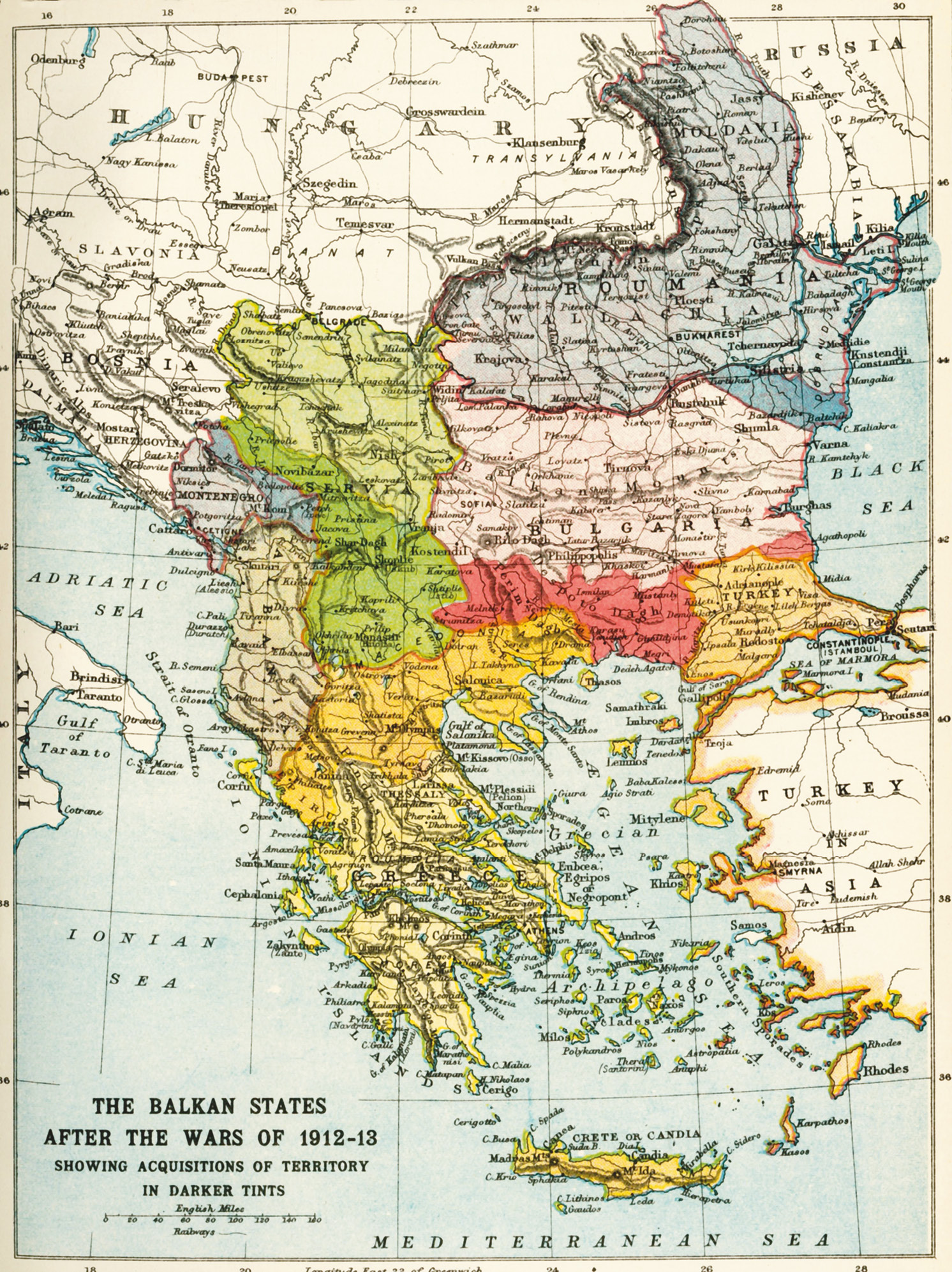
From the 1870s, the once formidable Ottoman empire’s hold on the Balkans declined sharply as nationalism grew in strength. The two Great Powers whose domains bordered the region, Austria-Hungary and Russia, initially cooperated warily with each other through a common interest in maintaining equilibrium. This came to an end in 1908-1909, when Austria-Hungary abruptly annexed Bosnia-Herzegovina, an Ottoman province which it had administered for a generation. Although at one level this regularised an existing situation, Russia interpreted it as evidence of Austrian expansionism. The tsarist regime’s prestige was hurt by its rival’s unilateral action. It also perceived a threat to its long-term interest in the Balkans, where it sought an opening for its warships through the Black Sea straits.
Following a violent change of dynasty in a palace coup in June 1903, Serbia had become aligned with Russia. Its ambition was to create a greater South Slav state, taking in Bosnia-Herzegovina and ethnic Serbian populations elsewhere within the Austro-Hungarian lands. This presented the government in Vienna with a potentially serious challenge to the integrity of its empire.
In February 1912, a new blow to regional stability was struck when Serbia, Bulgaria, Greece, and Montenegro formed the Balkan League with Russian encouragement. This was an alliance directed towards eliminating the last vestiges of Turkish influence in south-east Europe. The first Balkan War, which broke out in October, ended in May 1913 with an almost total defeat for Ottoman forces. Turkey lost Macedonia, which was divided between the victorious Balkan states, and Albania, which on the insistence of the Great Powers became an independent state. Shortly afterwards, fighting erupted again, when Bulgaria disputed its share of territory with its former allies. The second Balkan War ended in Bulgaria’s comprehensive defeat and new gains for Serbia, while Turkey recovered some of the land it had lost in the earlier conflict.
The two Balkan Wars had important consequences. Turkey and Bulgaria were seriously weakened, and moved into the orbit of the Triple Alliance. Under the tutelage of General Liman von Sanders, Turkey received German help in carrying out a badly needed modernisation of its army. The defection of Bulgaria to the Central Powers left Serbia as Russia’s only client-state in the Balkans. This made it more likely that when a crisis like that of July 1914 arose, Russia would give its support to Serbia.
Austria-Hungary lost confidence in concerted European action as a way of maintaining its interests in the Balkans. Alarmed by the rise of Serbia, key decision-makers – notably the chief of the general staff Conrad von Hötzendorf – came to favour a pre-emptive war as the only way to avert a slow disintegration of the empire. Austrian hostility to Serbia was a key reason why the 1914 crisis escalated into a wider conflict.
Step 4: Death in Sarajevo
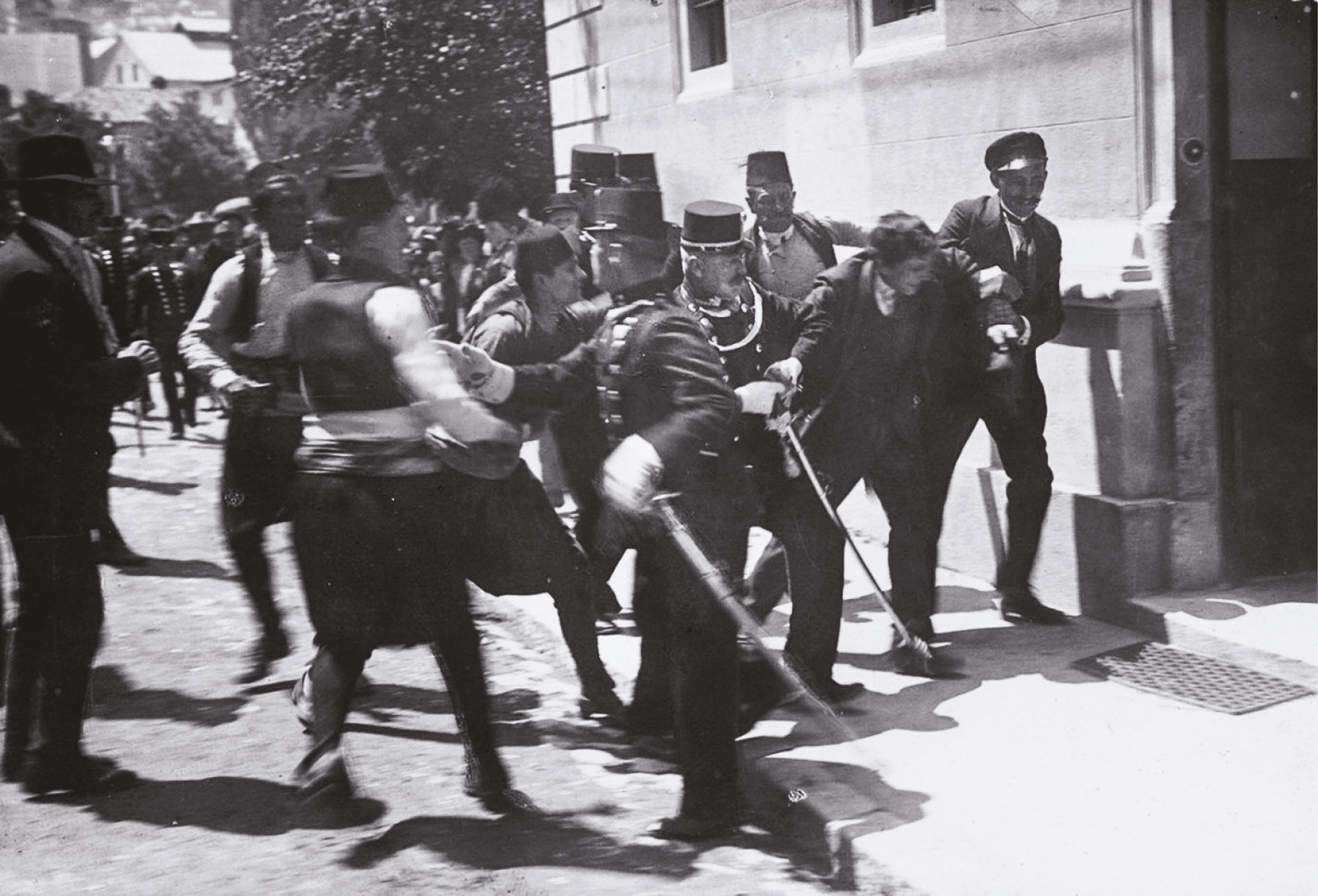
The event that brought the tension between Austria-Hungary and Serbia to a head was a terrorist attack carried out in Sarajevo, capital of Bosnia, on 28 June 1914. This was one of the most infamous events of the 20th century – the murder of the heir to the Austrian throne, Archduke Franz Ferdinand, and his wife, by a Bosnian Serb. The unfolding of the assassination plot is a classic example of the role of chance in history. After an earlier bomb- throwing incident failed to hit its target, the Archduke decided to change his itinerary to visit wounded bystanders in hospital. A wrong turning by the royal car’s driver inadvertently placed the couple in the firing line of a second assailant: 19-year-old Gavrilo Princip.
The terrorists were members of a shadowy group, the Black Hand, that had been trained, armed, and assisted by rogue elements in the Serbian intelligence community. This was not the same as the active complicity of the country’s government. Nonetheless, Austria-Hungary was determined to use the crisis to crush Serbia, which it saw as presenting a direct threat to its position in the Balkans.

Crucially, the Habsburg government made sure of Germany’s support for a hardline response before taking action. With the so-called ‘blank cheque’ of 5 July, Berlin offered its partner unconditional support for action against Serbia. Both Austria-Hungary and Germany had thrown caution to the winds. They did not think that Russia would intervene – but they were prepared to take the risk. On 23 July, Austria-Hungary presented a deliberately provocative ultimatum to Belgrade. Under pressure from Russia, Serbia accepted all the Austrian demands, except for one. This was the requirement that they allow Habsburg officials to investigate the killings on their own soil – a severe humiliation for any self-respecting nation-state.
Russia had counselled restraint and did not have a formal alliance with Serbia. But it was nervous of the German challenge that lay behind Austria-Hungary’s growing assertiveness. On 26 July, Russia took the first steps towards partial mobilisation. This may have been intended to deter Germany from getting involved but it had the reverse effect. Two days later the Austrians initiated hostilities against Serbia.
At this late stage, Kaiser Wilhelm urged compromise. But Russia could not halt its preparations without leaving it highly vulnerable in the event of German mobilisation. By this stage, the tsar’s government believed that war was inescapable. It also expected to rely on French support. Russia therefore ignored German demands to call a halt. On 1 August, Germany – followed shortly afterwards by Austria-Hungary – declared war on Russia.
In this way mutual suspicion and anxiety, together with the seemingly unstoppable mobilisation timetables of the continental Great Powers, combined to produce war in eastern Europe. To understand how this led to a general European conflict, we need to look at Germany’s war-planning. This was heavily determined by the threat of a two-front war with Russia and its French ally.
Step 5: Germany moves west
German policy centred on the Schlieffen Plan, drawn up by Count Alfred von Schlieffen, Chief of the General Staff from 1891 to 1906. The intention was that if war broke out with Russia, German forces would also invade France. It was assumed that French resistance could be crushed in six weeks, allowing German forces to transfer their weight to meet the Russians, who were expected to mobilise more slowly. In order to work around the heavily fortified Franco- German border, the plan envisaged a wheeling movement further north, through neutral Belgium and Holland. Outflanking the mass of the French army, and making use of massive force, four German armies would sweep south-west to take Paris.
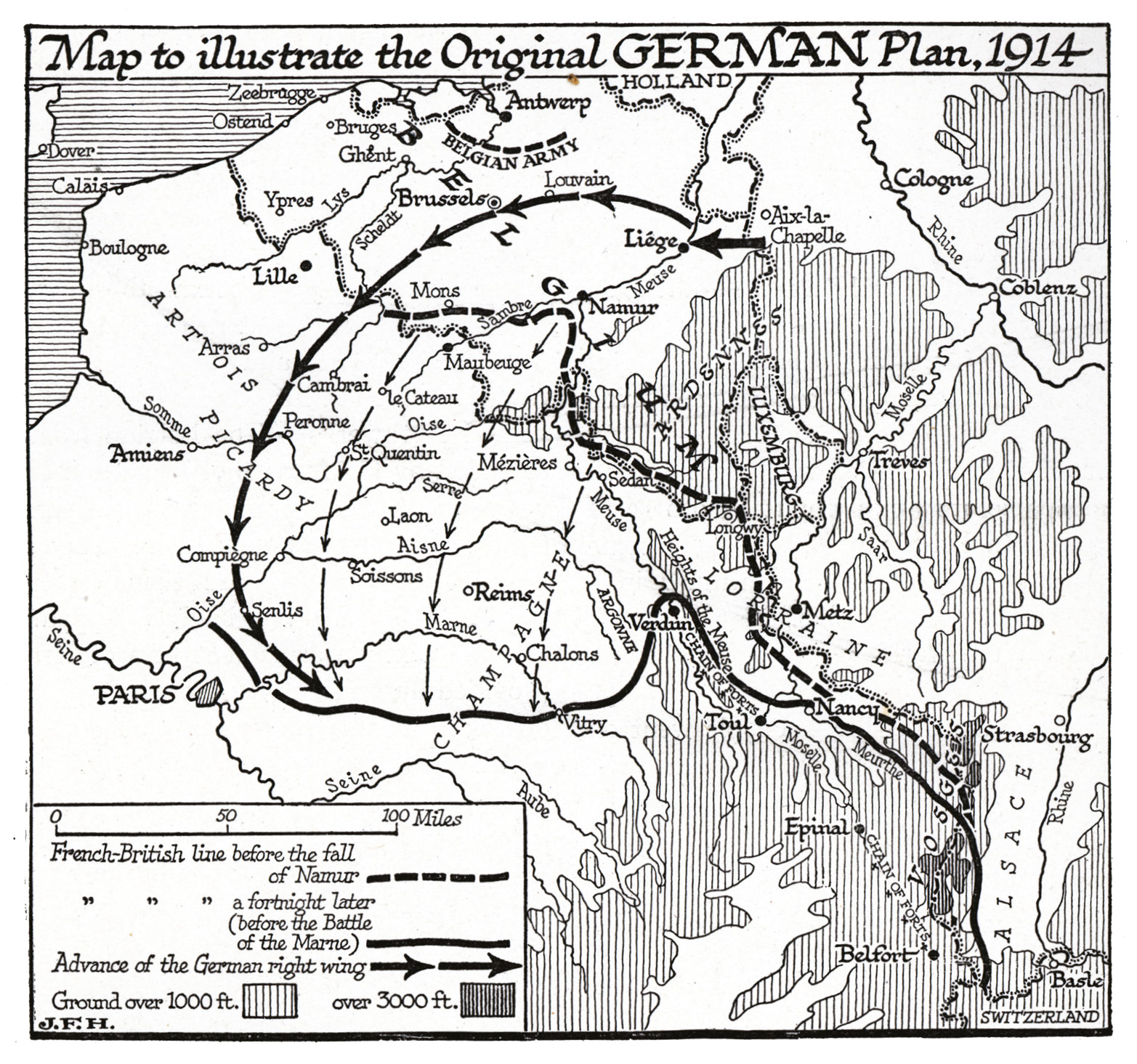
Schlieffen’s successor, Helmuth von Moltke, reduced the numbers of German troops assigned to the manoeuvre and removed the Netherlands from the line of march. But German troops still crossed into Belgium after declaring war on France on 3 August. The possibility that this might draw Britain into a continental war in support of Belgium, with whom it had a treaty dating back to 1839, was considered unimportant. Political considerations were subordinated to military and organisational priorities.
Britain was not legally bound to assist France, and might have stood aside but for Germany’s violation of Belgian neutrality. This provided the necessary moral grounds to justify intervention in a land war. The key policy-makers in Britain’s Liberal government, headed by Prime Minister Herbert Henry Asquith and his Foreign Secretary Sir Edward Grey, were primarily influenced by calculations of national interest. They reasoned that Britain would be damaged if it stayed out of the conflict, whichever way events unfolded.
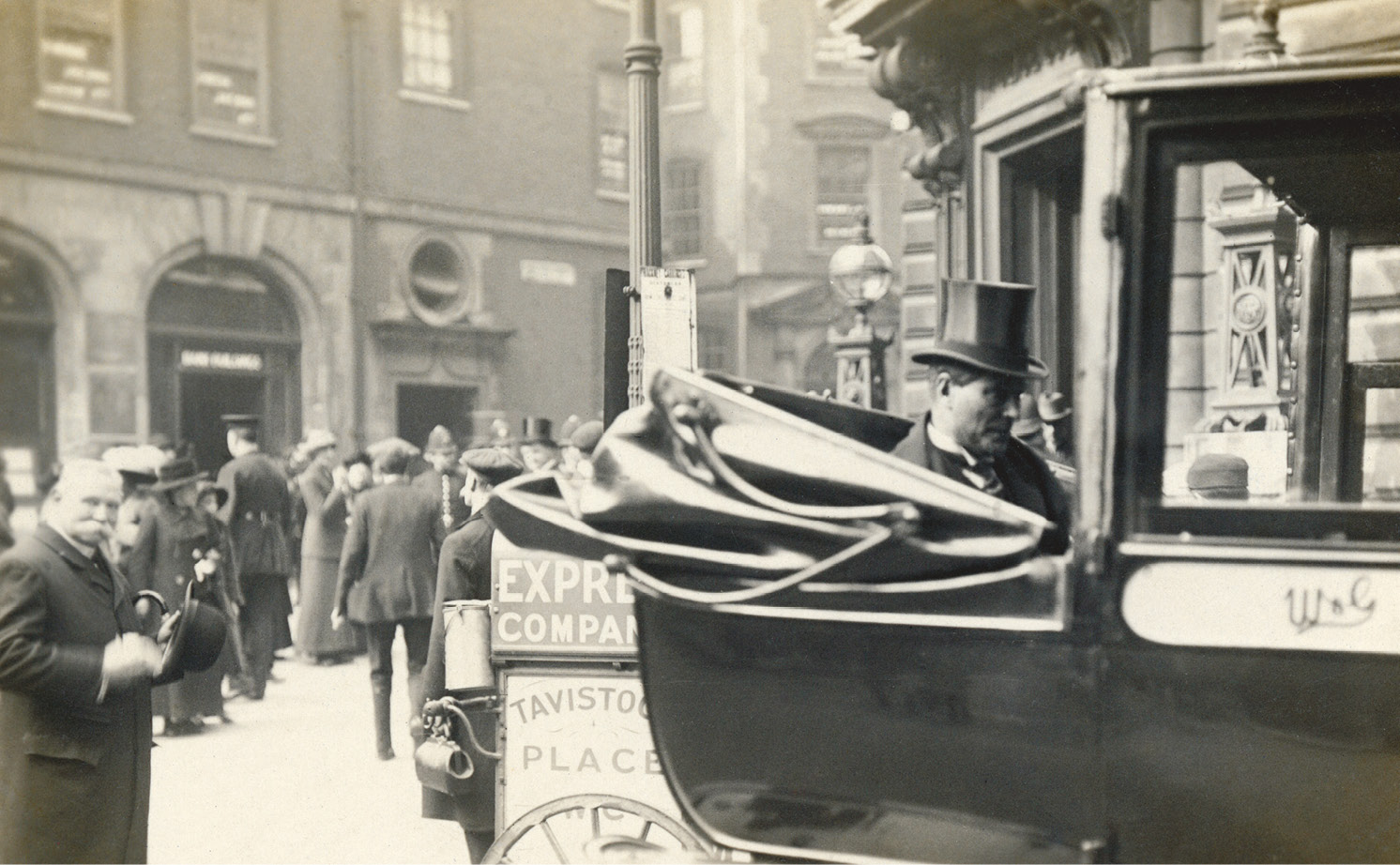
German occupation of the Channel ports would threaten British security and open the way to domination of the continent by a hostile power. If, on the other hand, France and Russia prevailed without its participation, Britain’s credibility as a European partner would be fatally undermined. On 4 August, Britain entered the fray.
Britain was the last of the major participants to decide that taking part was preferable to remaining aloof. It is not true to say that the Great Powers stumbled accidentally into war, but nor did they have a fully formulated idea of what they wanted to achieve by fighting. In the summer of 1914, in their different ways, they all felt that their interests and prestige were under threat. Amid a fast-escalating crisis, they decided that war offered escape from what they believed would be a worse fate.
Further Reading:
Christopher Clark (2013) The Sleepwalkers: How Europe Went to War in 1914 (Penguin).
T G Otte (2015) July Crisis: The World’s Descent into War, Summer 1914 (Cambridge University Press).
All images: Wikimedia Commons, unless otherwise stated
You can read the second part by Graham Goodlad here and find Calum Henderson's infographics here