Subscribe now for full access and no adverts
South Uist and the other islands of the Outer Hebrides are unusually rich in archaeological remains. Since the late 1980s a major multidisciplinary project, led by the Universities of Sheffield, Cardiff, and Bournemouth, has investigated island life from prehistory to the present. With 14 research volumes now published, our second and final volume on Cladh Hallan brings together the findings from this remarkable site (see ‘Further information’ below). Preserved in the calcareous machair sand of South Uist’s west coast, Cladh Hallan’s deep stratigraphic sequence has provided layer on layer of intact house floors and walls, middens, and yard surfaces, allowing us to reconstruct how human activity on the site evolved over many centuries.
Our first Cladh Hallan volume, published in 2021 (see CA 382), explored the long-term sequence of the site from its Beaker-period beginnings as a ploughed field 4,000 years ago to the eventual abandonment of an Iron Age settlement around 500 BC. In the centuries in between, this location served first as an Early to Middle Bronze Age cemetery and then as a Middle to Late Bronze Age settlement that was reorganised as a row of roundhouses in the 11th century BC. It is the site’s exceptionally rich assemblage of artefacts and environmental remains that forms the focus of our second volume, including metalwork of bronze, gold, and iron; bronze-casting debris; ceramics; tools of bone, antler, stone, and flint; pendants, rings, bangles, and beads; the bones of land and sea mammals, fish, birds, and humans; and even coprolites. Complementing these diverse finds, scientific analyses of land snails, carbonised plant remains, isotopes of human and animal bones, animal DNA, and bone histology all provide further insights into life and death within this once-thriving prehistoric community.
From fields to burial ground to settlement
Neolithic land surfaces on the islands’ west coast were already deeply buried under encroaching sand when Beaker-using farmers laid out their fields and settlements on the machair around 2200 BC. Cladh Hallan is one of three such sites discovered on South Uist, and cross-ploughed ard-marks and carbonised plant remains reveal that they grew barley, the staple cereal crop of the Uists ever after. After the 19th century BC, however, Cladh Hallan’s fields were used as a burial ground, with evidence for funerary pyres and cremation burials.
One of the pyre grounds was used for successive cremations but the other, dating to 1735-1530 BC, was covered by a burial containing the cremated remains of a young adult. Three more represented a child, an adult, and an adult with an infant, with the latest dating to 1425-1250 BC. Strontium isotope analysis by Jacob Griffith and Christophe Snoeck reveals that these people had probably lived locally in the islands, and although none was provided with pyre goods that survived other than the occasional potsherd we know that Early Bronze Age cremation urns were discovered during previous investigations at Cladh Hallan more than a hundred years ago.

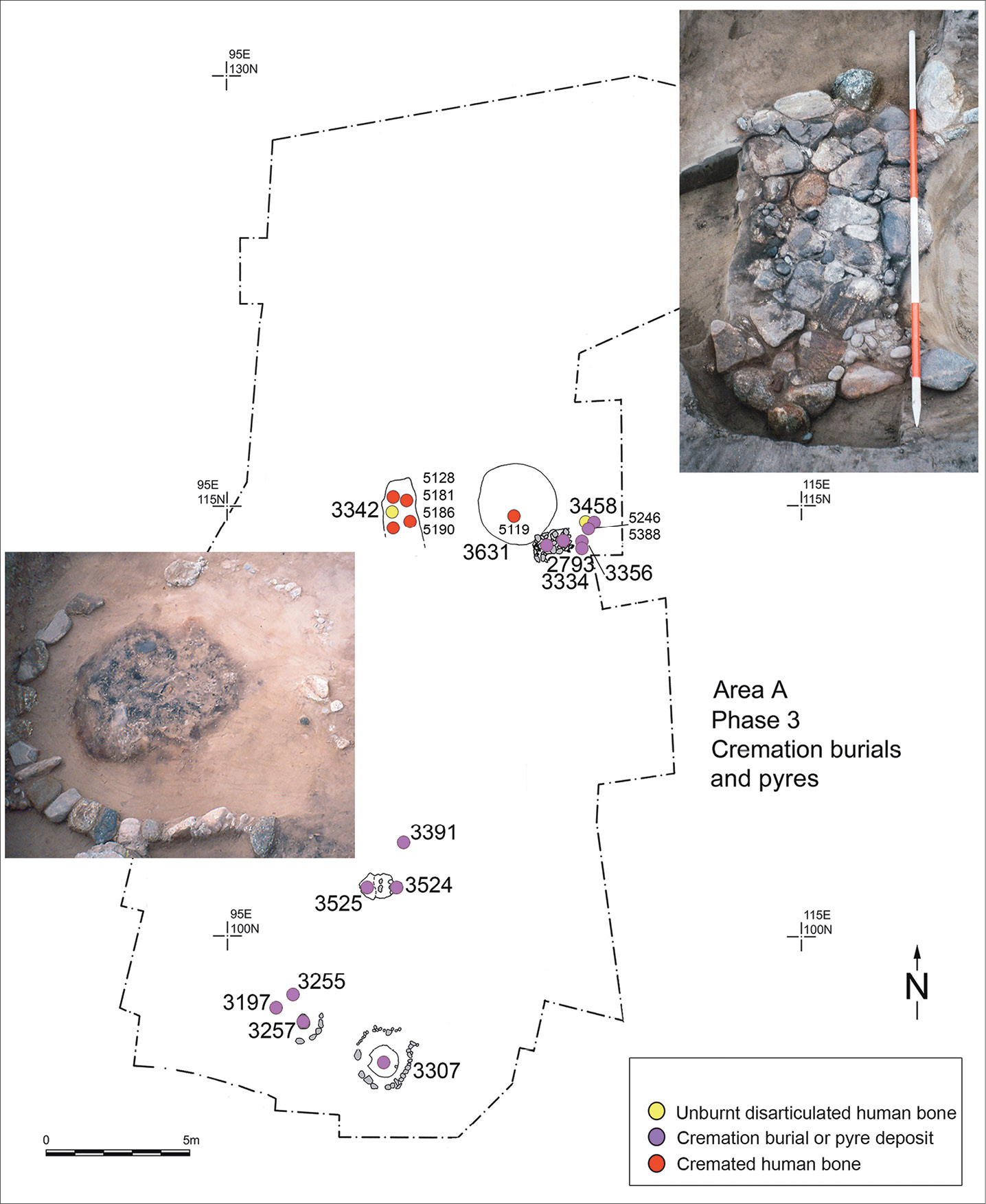
In 1380-1175 BC, the living returned to coexist with the dead. A boat-shaped wooden house was built on top of the cemetery and, intriguingly, its hearth was positioned on top of the child cremation burial mentioned above. The site’s inhabitants must have been aware of this because, after they dismantled the house once more, someone dug a pit next to the hearth and tunnelled beneath it into the burial to remove some of the bones. This pit was one of eight that bored into the cemetery. Three contained small quantities of cremated and unburnt human bone and a fourth, dug in 1300-1125 BC, held the articulated knee of a woman. Where was the rest of her body? Remarkably, we can answer that question: more than a century after her original burial, the woman’s remains were exhumed and moved to a new location, where her head was replaced by that of a man who had died in 1435-1260 BC.
This was one of the two famous ‘composite mummies’ that were buried in 1080-1020 BC beneath the northernmost dwelling in Cladh Hallan’s row of three roundhouses. The other mummy was composed of a head, mandible, and torso from three different men who died variously in 1615-1420 and 1500-1225 BC. Beneath the central roundhouse, meanwhile, we found largely disarticulated remains representing a single individual: a girl aged 18 months to three years old, whose burial had taken place more than two centuries after her death in 1445-1195 BC.
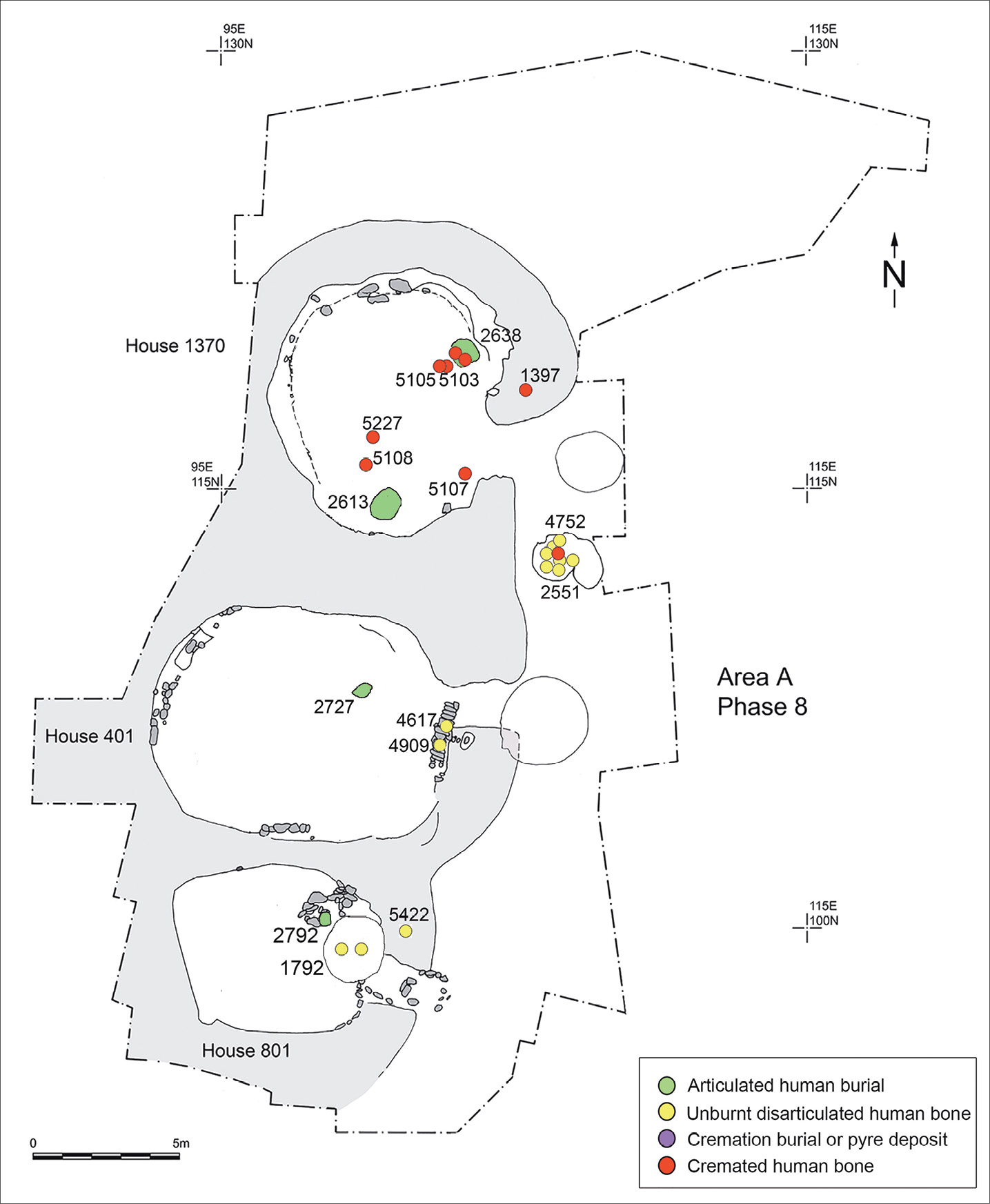
It is difficult to avoid the conclusion that ‘resting in peace’ was only temporary, and that the various exhumations and refittings were part of a ritual process in which the dead were recycled. Christie Willis’ detailed osteological analysis has revealed a minimum number of 11 cremated individuals and 20 unburnt ones at Cladh Hallan, of which only four were not disturbed after their initial burial. These remains were distributed throughout the history of the settlement, and were increasingly those of infants and children. All except possibly one are likely to have been local to the Outer Hebrides, and while analysis of their DNA is ongoing, preliminary results hint at some interesting revelations still to come.
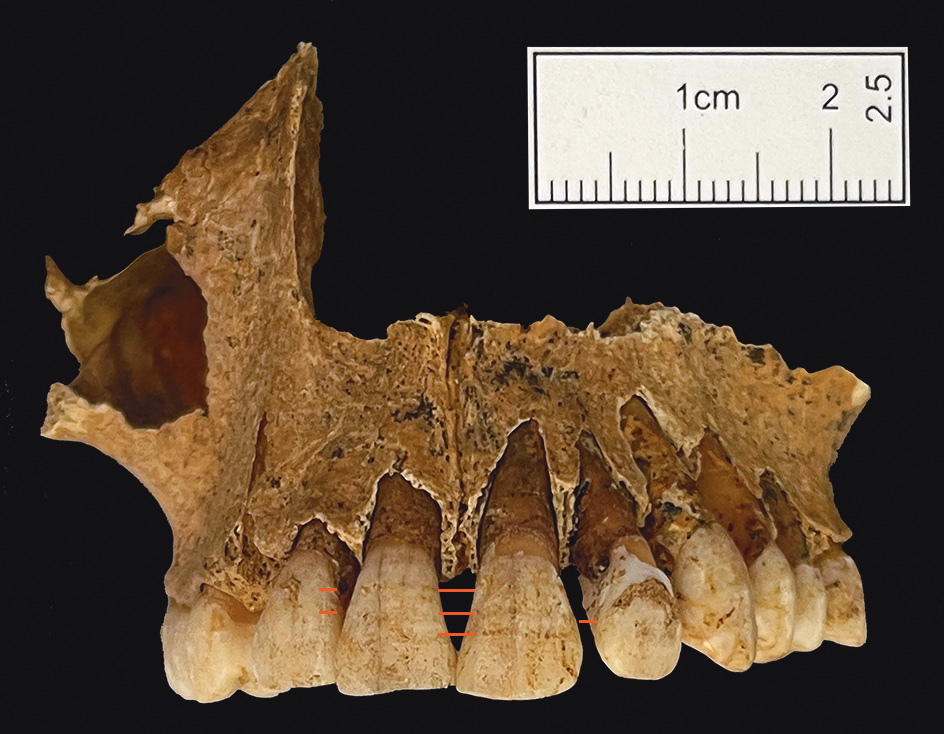
Perhaps the most poignant of all the burials is that of a 10- to 14-year-old child, who was found beneath the roundhouse row. Probably female, she had a largely terrestrial diet that was different to everyone else at Cladh Hallan, quite unusual among this maritime community, and three instances of dental enamel hypoplasia and traces of possible cribra orbitalia suggest that she may have been in poor health during her short life. As she died around the time of the roundhouse row’s foundation in 1080-1020 BC, we have to wonder whether she might have been a human sacrifice, perhaps even captured from the mainland of either Scotland or Ireland.
Metalworking in the home
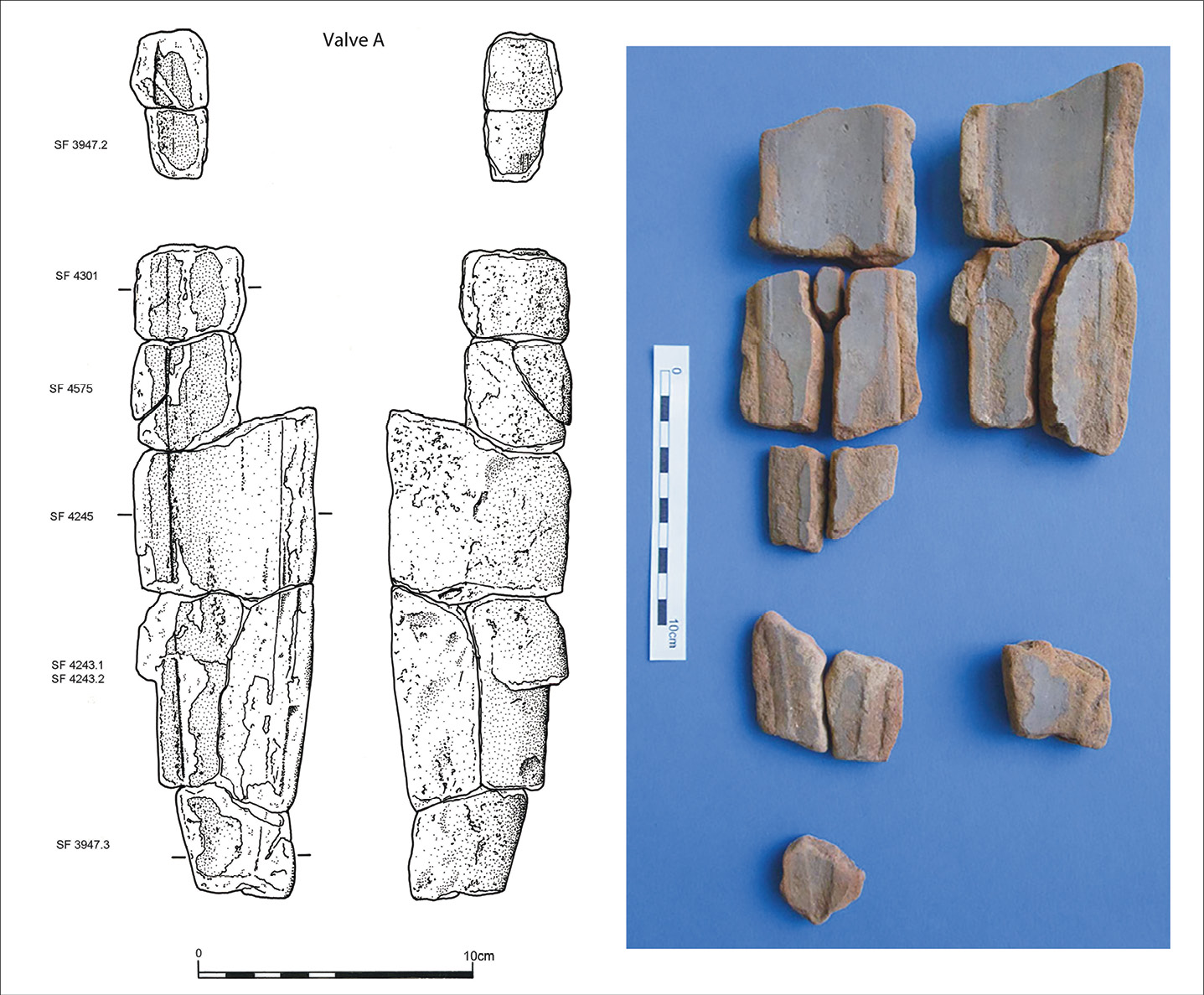
Another set of rituals accompanying the founding of the roundhouse row involved the casting of bronze weaponry and tools, and the deposition of the discarded mould fragments in the doorway of the central (and largest) roundhouse. Other mould fragments, along with crucible sherds, molten bronze droplets, and metalworking chisels made of antler, were concentrated around its central hearth. Further confirmation that metalworking was carried out here at this early stage was provided by Laura Hamlet and Ian Simpson, whose soil micromorphological analysis identified burnt phytoliths (microscopic silica remains from plants) indicating high-temperature metallurgy.
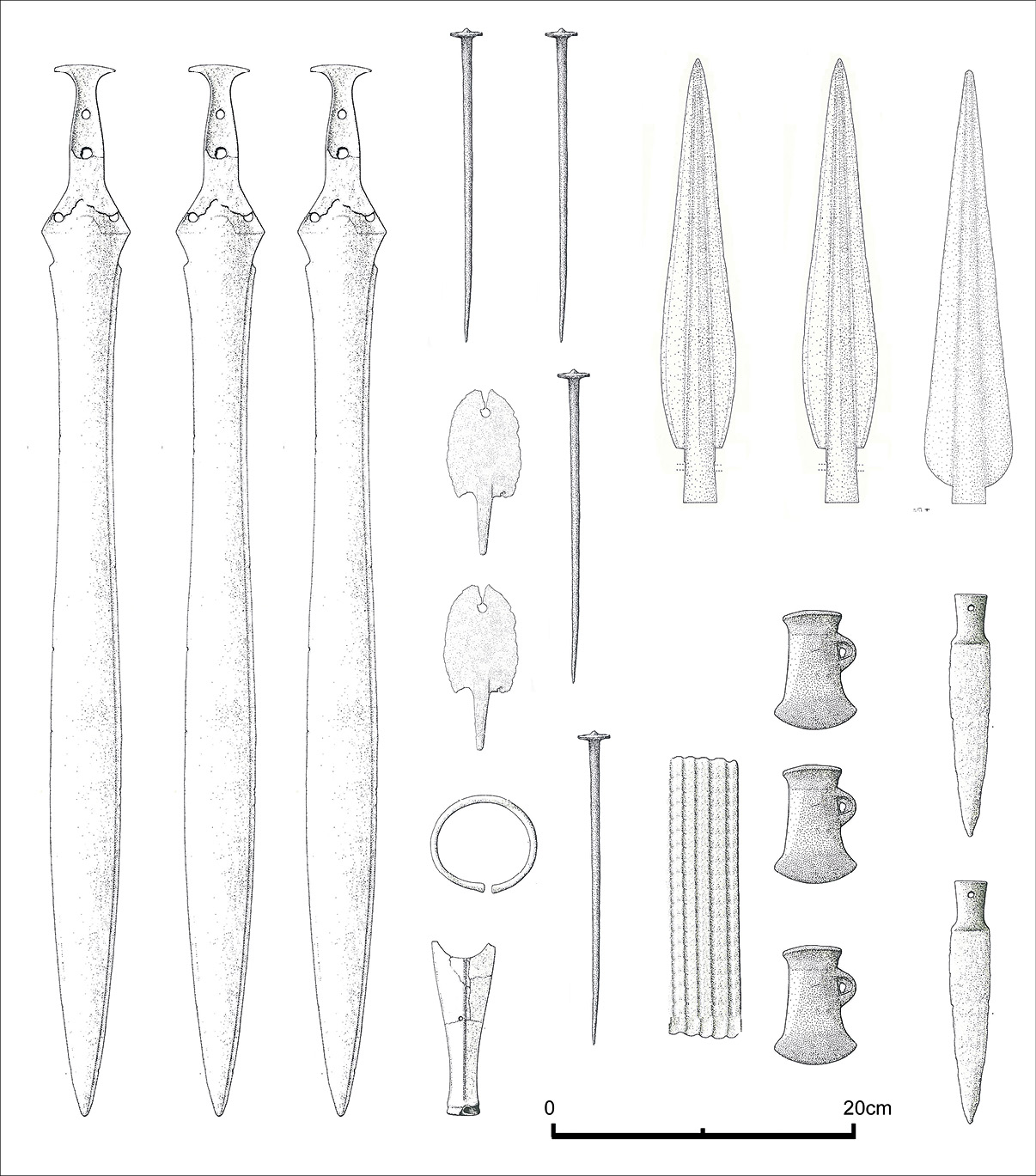
Adding to this picture, Trevor Cowie has meticulously analysed more than 420 clay mould fragments, revealing the presence of conjoining fragments between the central hearth and the heap in the doorway – as well as highlighting the wide range of equipment that had been cast at Cladh Hallan. This included three swords, three spearheads, three axes, two knives, two bifid razors, four pins, a bracelet, a scabbard chape, and an ornamental corrugated sheet. At least eight of these (two of the swords, a spearhead, a socketed axe, two pins, a bracelet, and the corrugated sheet) were cast in a foundational event, while the remainder may also have marked important milestones for the community. It appears that they derive from two successive episodes of casting within the central roundhouse, reflecting it having been rebuilt on two occasions, in 1045-985 BC and 1015-930 BC, and from a single casting in the northern roundhouse in 1045-985 BC. Bronze-smithing had ceased by the time of the central house’s third rebuilding in 815-765 BC, however: the period of transition to the Iron Age.
Where did all these bronzes end up? Even though we recovered 16 bronze artefacts from Cladh Hallan, none match those cast in the moulds. Their character is quite different, too: rings, discs, rivets, bracelets, a tiny chisel, and two blades that could have been spokeshaves. These unusual tools and one of the bracelets had been placed on the floors of the central and northern roundhouse, in their north-east quarters on top of the human burials, perhaps intended as offerings and probably closing deposits prior to rebuilding the houses in 1045-985 BC. The rest were small items, most likely casual losses that are typical in Late Bronze Age settlements elsewhere in Britain and Europe. Presumably the missing bronzes had been recycled and recast into other objects.
It seems that bronze production at Cladh Hallan was a domestic activity, carried out periodically at times of founding new houses or rebuilding existing ones. Perhaps these were opportune moments when the absence of a roof meant that there was less chance of the unfinished house catching fire. There may also have been a symbolic significance. Timed approximately every 60 years, these casting events replaced the old with the new by providing a new set of equipment for the renewed household.
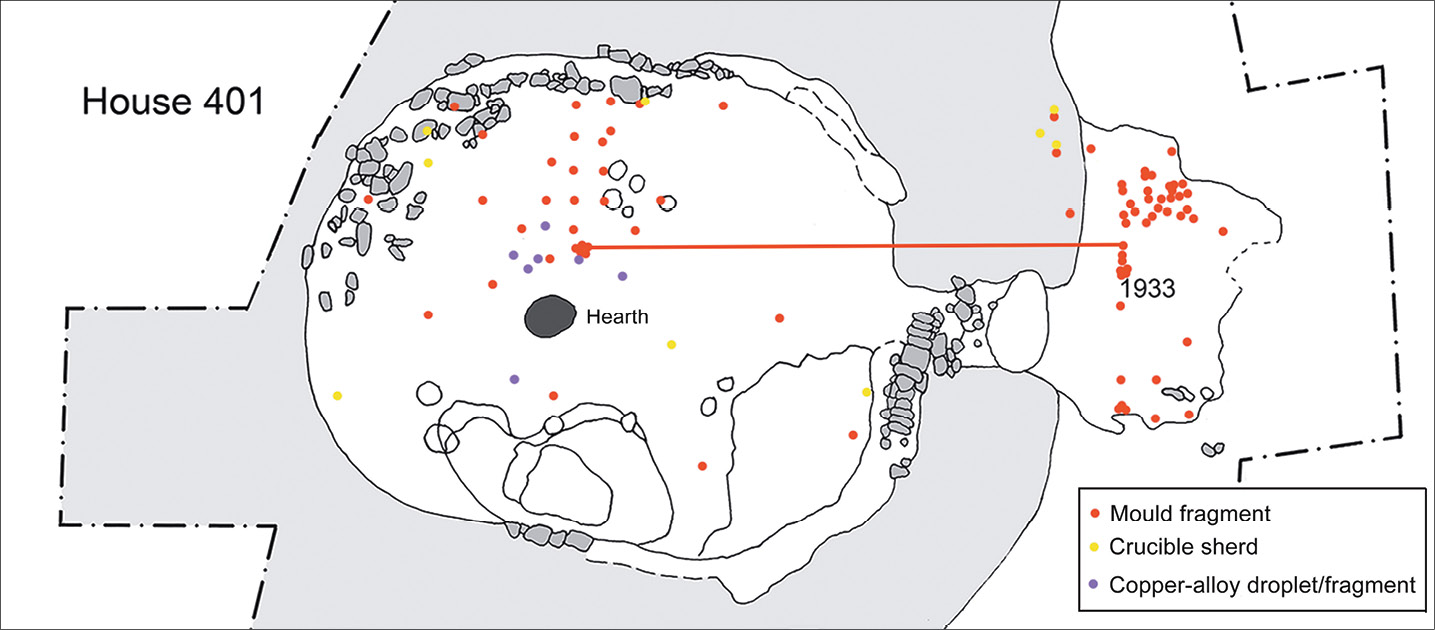
Who were the metalworkers? The idea of itinerant bronze-smiths has been current for more than a century but, at first sight, Cladh Hallan’s evidence for a domestic mode of production would seem to contradict this. However, the decades-long periods between castings do not fit with the need to maintain the necessary specialist skills. Perhaps travelling smiths visited many differently timed house-building ceremonies over a wide area of the islands and even beyond. Sword-mould fragments that we found when excavating a nearby settlement at Cill Donnain, 4 miles (6.4km) away, raise the possibility that bronze-casting took place within each of South Uist’s Late Bronze Age communities.

Ornaments and tools
Among the metal finds from Cladh Hallan is a gold-plated bronze ring of a type known as a ‘hair-ring’. It lay in the sand outside the doorway of the northern roundhouse, presumably representing a not-so-casual loss. Analysis by Lore Troalen and Thibert Verolet has revealed that it is exquisitely made, with gold and electrum stripes visible on the inside of the ring and no trace of any welding or joins where the ends of the gold foil meet. Such rings are well known from Britain, Ireland, and the near-Continent (see CA 375 for examples from the Sculptor’s Cave near Covesea, Moray) and could have been worn through the nose or the lips as well as in braided hair. It is unlikely that gold ornaments were available to everyone in society, and the metal’s association with the well-appointed, three-house community at Cladh Hallan would seem to confirm their social and economic standing. In this respect, another intriguing find is a small fragment of iron, possibly from a bracelet, that was found in the floor of the central house, located over the young girl’s burial. Since this floor layer was laid down in 1085-965 BC, it is potentially the earliest piece of iron yet found in Britain, and its date suggests that it was most likely a trade item from somewhere in southern Europe.

The majority of tools and ornaments at Cladh Hallan, however, were made of bone and antler. Since South Uist was largely deforested by this period, some tools which might otherwise be made of wood were fashioned in bone. Glyn Davies has analysed over 800 of these artefacts, which include points, pins, needles, hafted tools, spatulas, scapula tools, ornaments, spindle whorls, containers, and discs. Stone tools, meanwhile, include saddle quernstones, pounders, pestles, grinding slabs, and pumice rubbers, as well as worked flint and quartz. Thanks to microwear studies by Victoria Alexander, Linda Hurcombe, and John Compton, we can even deduce some of the likely tasks that they were used for, with tiny traces of wear and polish speaking of a wide range of activities, among them hide-cleaning, basketry, weaving, and plant-processing.
Living off the land and sea
As well as crafting tools from antler and bone, the inhabitants of Cladh Hallan made extensive use of local fauna for food and clothing. Thanks to the rich and varied animal remains from the site (analysed by Sally Evans, Julia Best, Claire Ingrem, Adrienne Powell, and others), we know that they raised livestock (sheep were the most common, followed by cattle and pigs), and calves were killed young so that milk could be regularly obtained from their mothers. Animal hides were pegged out and cleaned in the houses, and must have been important for making clothing out of sheepskin and calfskin. The large number of red deer, especially fawns, identified among the remains would have provided soft buckskin, as well as venison. There were also dogs present in the settlement, and they were unusually numerous, even meriting burial in the central house. We can tell, too, that their faeces were carefully collected, possibly for use in fulling hides.

The sea provided resources, too; inshore fishing yielded saithe and other fish species, while limpets, winkles, and cockles were collected from rocky shores and tidal strands. Seabirds were numerous among the 35 avian species identified from the site, and scavenged carcasses of stranded whales (including blue, sperm, fin, and humpback whales), dolphins, and porpoises would have provided blubber, oil, and materials for making tools and constructing fixtures and fittings in the house. Despite the sea’s bounty, however, isotope analyses by Jennifer Jones, Oliver Craig, and Gillian Taylor reveal that people’s diets were not especially marine-based. Indeed, studies by Lucy Cramp and her colleagues of residues in Cladh Hallan’s cooking pots point to an emphasis on dairy and, to a lesser extent, meat.

The dairy signature in many of the pots could indicate the consumption of porridge made from barley. This was the settlement’s main crop, and its associated weeds of cultivation indicate that it was grown on the dry sands of the machair as well as on the margins of the damper peaty soils inland. Sedges, grasses, reeds, and heather were used for flooring, roofing, matting, and bedding; analysis of mollusc remains by Matt Law and Nigel Thew has identified snail species associated with these flora within the houses where bedding would have been arranged on the communal sleeping platforms. Other plants were edible, such as dock, sorrel, knotweed, and goosefoot, while heather flowers and chickweed could have had medical uses.
Five hundred years of living at Cladh Hallan
The three roundhouses built in 1080-1020 BC were clearly domestic in purpose. The main, central house was the largest, with a circular forecourt building constructed on top of the heap of metalworking mould fragments in the entrance. Within the north side of the house’s interior, an extensive sleeping platform implies a sizeable household or family group were in residence. The southern house, by contrast, was the smallest, with a sleeping area that might have accommodated only a couple of people. While it had hosted many of the same activities, notably food preparation and hide-working, these residues were sparse by comparison, except for a collection of fish heads. We wonder if the house was inhabited by dependents of the main household: a ‘granny flat’ or the quarters of servants or even the enslaved. If so, they may have carried out duties in the larger house such as food preparation and cooking.
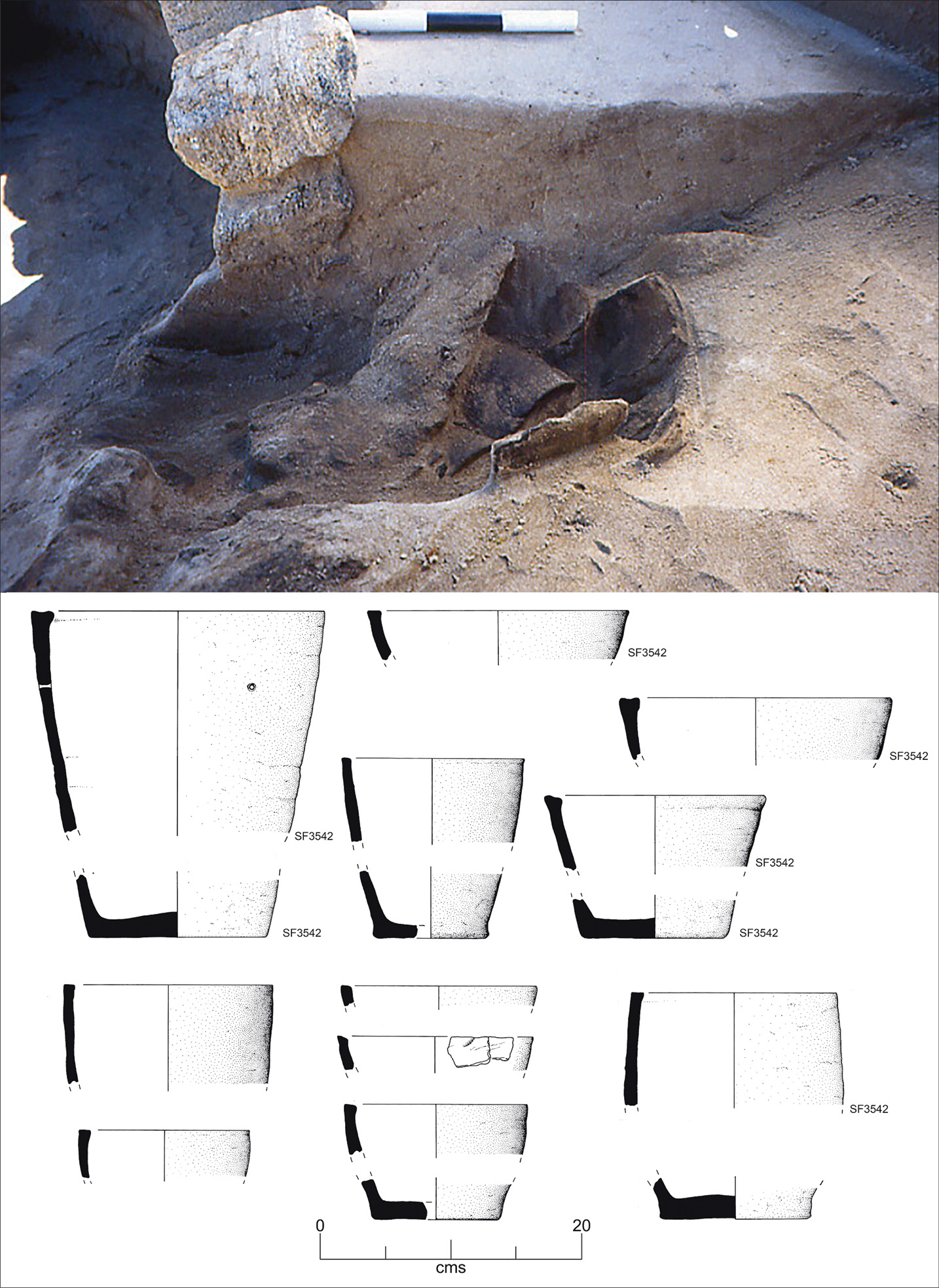
Image: Irene de Luis (drawing)/Mike Parker Pearson (photo)
The north house had greater quantities of debris across its floor, but nothing like the densities of the main house. We can tell, however, that pottery and other craft-working was carried out inside this building and, although there was a small sleeping area in its northern half, the house was also used as an animal byre. Its multipurpose use could indicate that it was inhabited temporarily as a ‘guest room’ when needed, or housed dependents along with younger or vulnerable livestock.
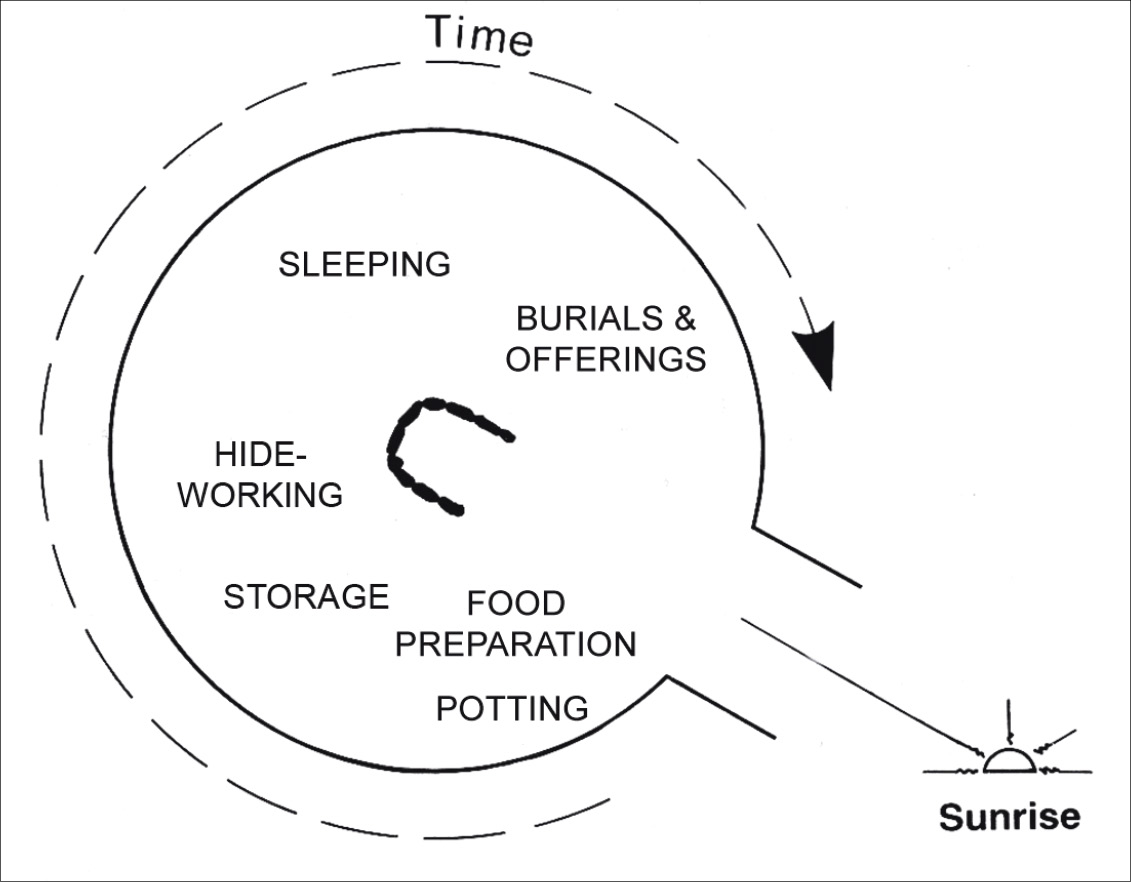
When the roundhouses were renewed in 1045-985 BC, the south house was abandoned and its central and northern neighbours rebuilt. Rituals of renewal associated with this process included the burial of many broken pots, perhaps the remnants of a large feast, in a pit that was dug through the side of the house and covered by the new wall. As in later renewals, the central house was rebuilt by retaining a small part of the old wall and also shifting its centre of gravity so that its hearth was always in a different location to the previous phase. There were other acts, too, that must have carried a significance lost to us today; during the rebuilding of the north house, the remains of a baby were buried in a hole left by removal of a roof-support post. Despite these changes, however, activities in the main house continued to follow the arrangement of ‘sunwise’ ordering: food preparation in the south-east, craft-working in the south-west, and sleeping in the north-west, mimicking the sun’s diurnal passage from rising in the east, setting in the west, and continuing below the horizon in the north.
Both of the surviving roundhouses were rebuilt again in 1015-930 BC, marking the last time that bronze casting was carried out in the main house. Struck quartz tools also went out of use at this time, but there were innovations as well. The first of many fragments of shale bangles was deposited in this phase, and Fraser Hunter has noted that this and some other bangles were imported to Cladh Hallan as unfinished items probably from the Scottish mainland. Complementing such personal items, the presence of a stone gaming counter and carved side-plates of antler, fastened with bone pegs, offer hints of the community’s leisure activities.
When renewal came to the settlement again in 815-765 BC, only the main house was rebuilt. During its subsequent occupation, use of flint tools increased, as Mark Edmonds and Katherine Martin have shown, possibly responding to a shortage of metal tools during the transition from bronze to iron that was occurring at this time. The appearance of spindle whorls and bone needles, too, suggests that spun textiles were now being made at Cladh Hallan alongside the leather garments described above. Following another rebuilding in 780-720 BC, though, the now-isolated main house appears to have seen a more significant change of use. It no longer had a sleeping area or food-preparing facilities but, although quernstones were absent, craft activities continued within its interior; a pair of post-holes may have supported a vertical loom.
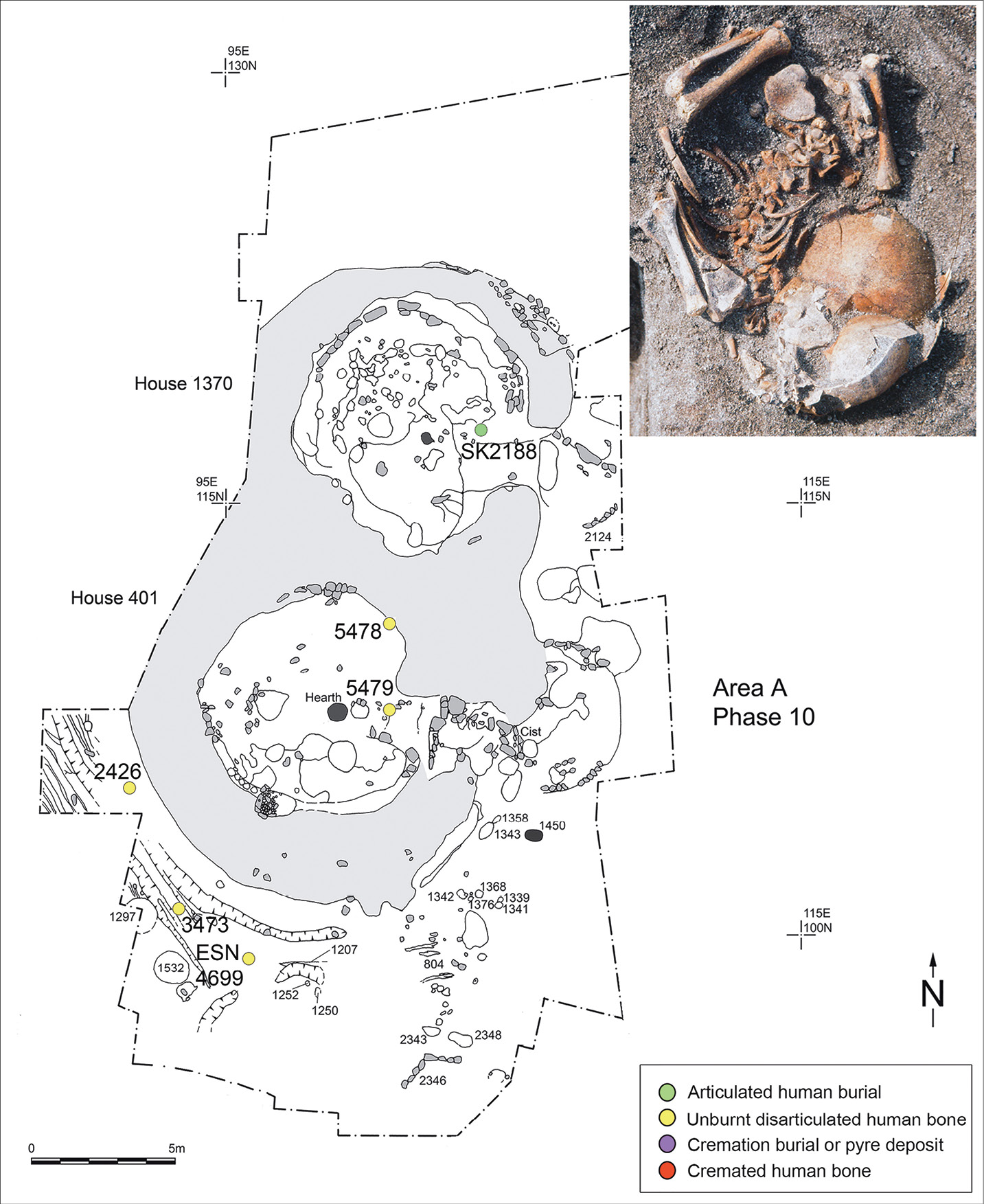
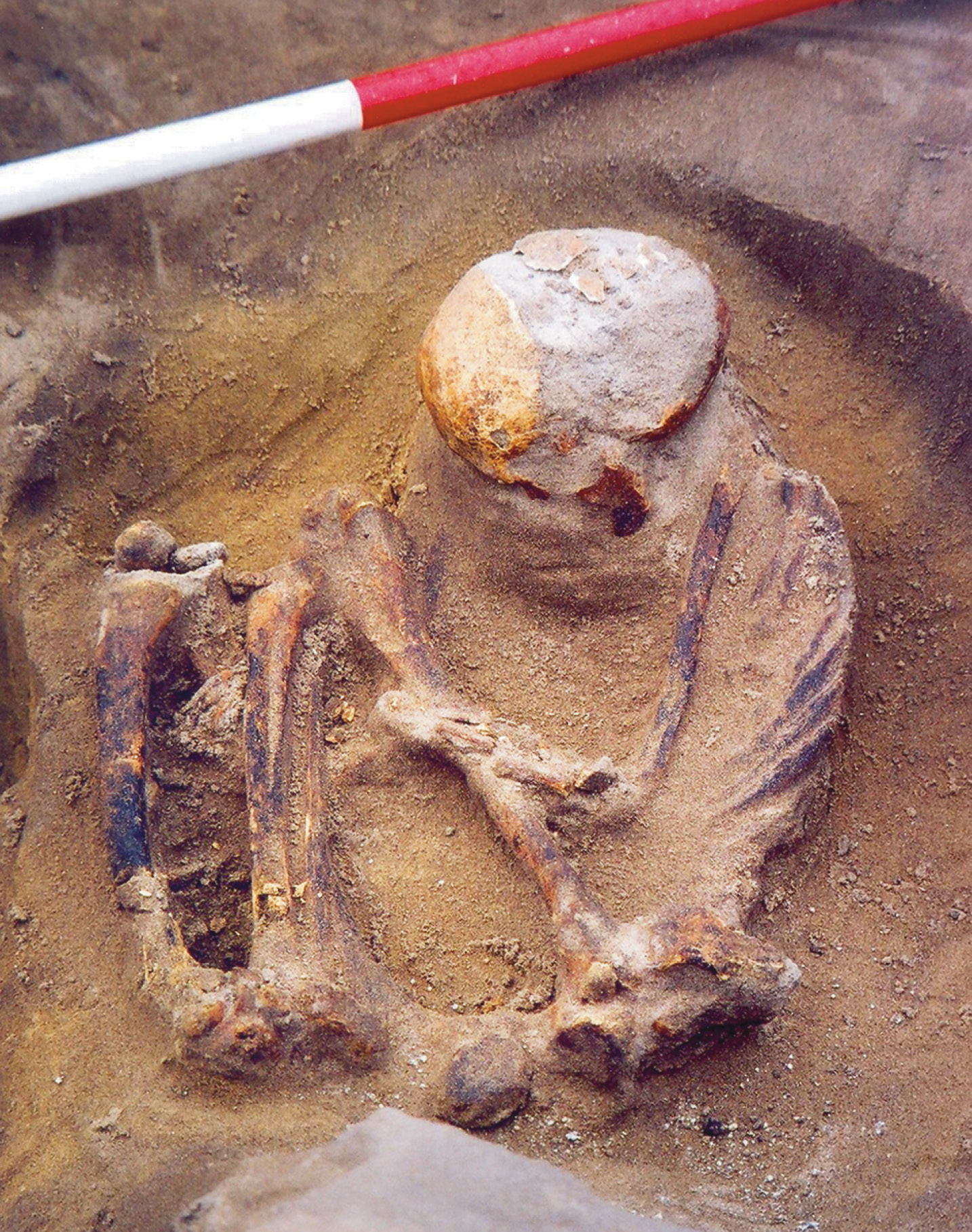
Human remains from features dating to 1045-930 BC, by which time the roundhouse row had been reduced to two buildings. The skeleton of a baby shown top right was found in a repurposed post-hole. Image: Irene de Luis (drawing)/Mike Parker Pearson (photo)
Despite the house’s switch to daytime use, ritual offerings of special animal deposits were made in its north-east quadrant, while other animal remains testify to what must have been a noteworthy event for the community: although the quantity of cetacean bones declined at this time, fragments from a blue whale indicate that this giant of the seas had been stranded nearby. Following two further rebuilds in 750-610 BC and 725-575 BC, the house still maintained a central fireplace and was used for craft activities, but it was now used increasingly as an agricultural store, housing useful tools like antler picks and cattle scapulae. These were probably used for cultivation: the picks as hand-held ards to score furrows in the soft machair sand, and the scapula shovels as crude spades.
After this, evidence of domestic activity becomes scarce. We do not know where the Cladh Hallan household moved its main residence after 780-720 BC, but three other houses with different uses were built on the site during this later part of the Iron Age sequence. Two of them are unusual double-roundhouses, one used for bronze-casting and the other employed as a smokehouse and steam room.

Continuity and change
Cladh Hallan was certainly prosperous and long-lived. Its roundhouses were occupied over the course of 15 to 19 generations, with each phase of use lasting for a couple of generations before the buildings were renewed, on average every 60 years. It is tempting to equate this with the death of the successive heads of household, from parent to eldest child, but this would require remarkable and unlikely longevity for people of this period.
Against the ever-changing backdrop of living and dying, however, some things stayed the same. The continuity of the sunwise arrangement of domestic space remained unaffected from the 11th to the 7th century BC despite the rebuilds, changes of use, and decreasing size of the modular unit – from three to two to a single house. The degree to which the practicalities of life were embedded in ritual is also startling, with foundings and renewals incorporating human and animal burials, and the houses’ ‘rites of passage’ marked with closing deposits, the renewal of bronzes, and the breakage of quernstones and pots preceding renewal. Ritual and religion were woven into the domestic fabric in a world where ritual and practicality, life and death, came together within the roundhouse.
Embedding Heritage Craft: The Embedding Heritage Craft project (http://www.guerillaarchaeology.com/themes-and-projects/embedding-heritage-craft), funded by the Arts and Humanities Research Council, uses the crafts and creativity found in archaeological objects from Cladh Hallan and other Hebridean sites to stimulate sustainable economic growth, social regeneration, and conservation on Scottish islands. Staff are embedded within a heritage and cultural organisation to work with trusted community partners and develop skills to support sustainable and creative island economies and encourage new models of heritage engagement.
Further information:
• Cladh Hallan: roundhouses and the dead in the Hebridean Bronze Age and Iron Age – Part 2: material culture, subsistence, skeletons and synthesis (Oxbow Books, ISBN 979-8888571163, £31.95), is the second of two volumes about this excavation by Mike Parker Pearson, Jacqui Mulville, Helen Smith, and Peter Marshall. The project began when the team were all at Sheffield University and grew to include staff and students from the universities of Bournemouth, Cardiff, Southampton, and Oxford, as well as King Alfred’s College, Winchester.
• Uist Unearthed (Brepols, ISBN 978-2503616346, £36.20) is a mixed media interactive book on Cladh Hallan and other sites by Emily Gal and Rebecca Rennell.