
Subscribe now for full access and no adverts
Bloodshed and warfare are all too familiar to us today. We think of wars fought by armies and nations, of conquests and invasions, of weapons of mass destruction. But the origins of war and the devastating effects that accompany it have deep roots that stretch back into prehistory. A new exhibition at the National Museum of Scotland in Edinburgh, entitled Scotland’s First Warriors, draws on archaeological evidence from Scotland to explore the nature of early conflict and violence from the Neolithic to the Roman Iron Age. This evidence is highly variable, represented at different times by numerous bladed weapons, fortifications scattered across the landscape, and the remains of people who suffered traumatic injuries.
Scotland’s First Warriors takes a broadly chronological approach, focusing on each period in turn, though with a strong emphasis on developments during the Bronze Age, notably the invention of the first specialised weapons. The exhibition invites visitors to think about the people behind prehistoric conflict, too, rather than imagining it as a straightforward technological development of longer and sharper blades. Conflict and violence did not happen in a vacuum, and their social consequences were wide-ranging and long-lasting. For every sword or spear displayed in a case, there were craftspeople making weapons instead of tools, individuals spending time training instead of farming, and communities whose fate lay in the hands of warriors.
Trauma in Neolithic tombs
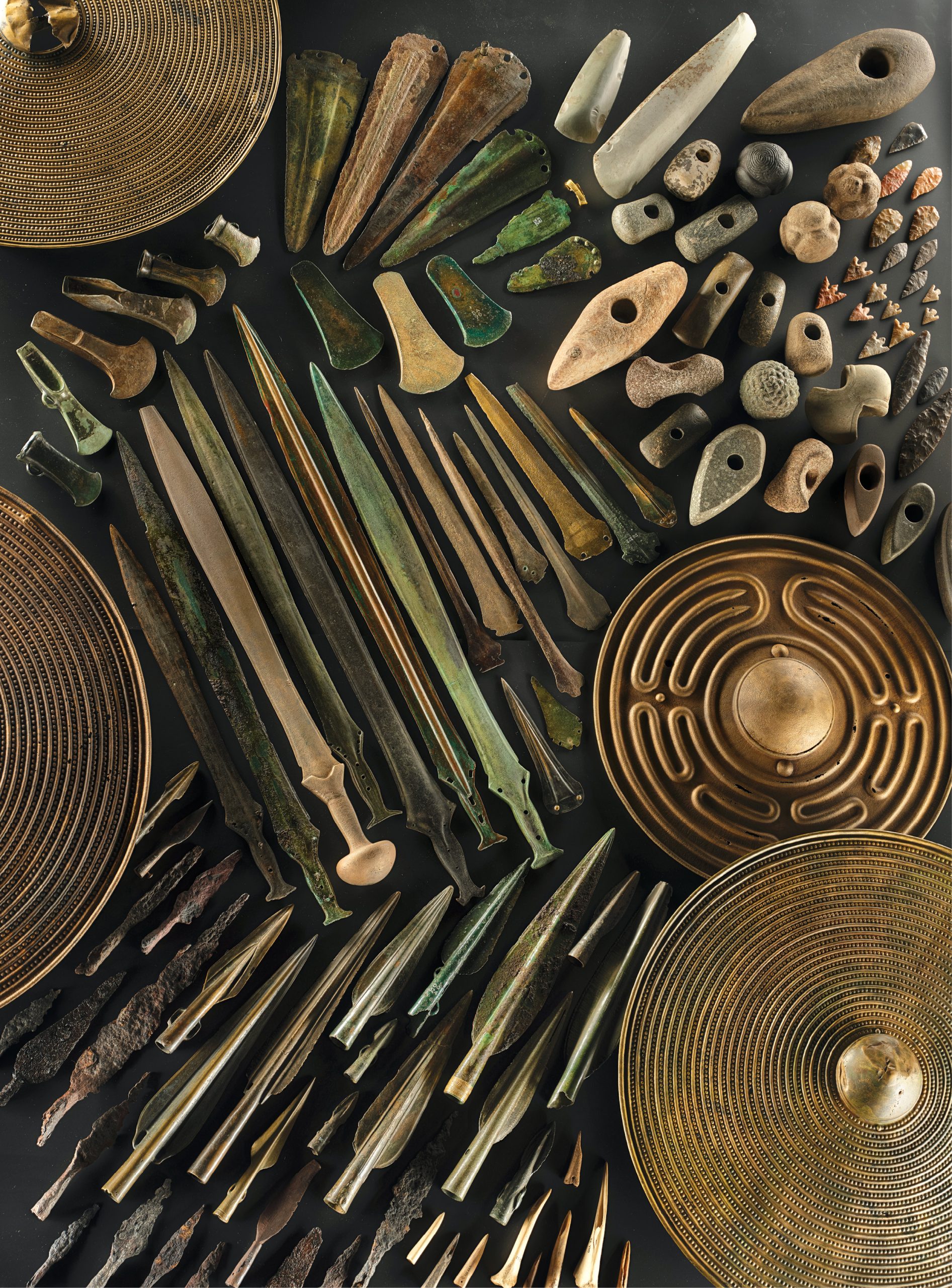
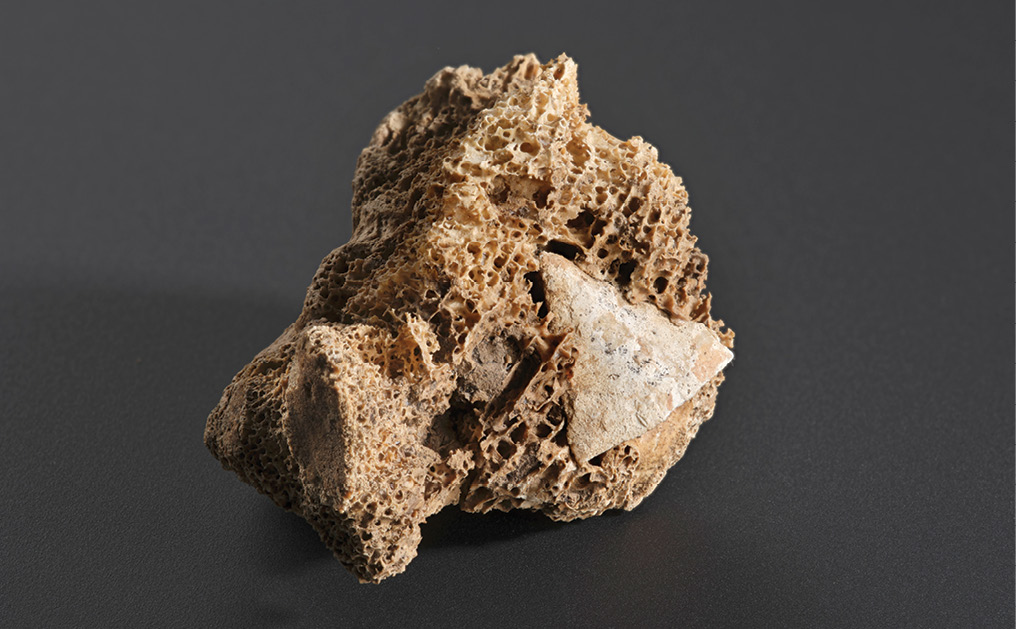
There is mounting evidence for conflict and violence during the Neolithic period in Europe. In Scotland, this is represented by the remains of people buried in chambered tombs who show signs of fatal injuries. Intriguingly, these discoveries are highly localised, being associated with several tombs on Orkney, as well as in Caithness on the northern tip of the Scottish mainland. The numbers of individuals with evidence of fatal or healed wounds are much higher in Orkney than elsewhere, affecting men, women, and children alike. Some preserve the marks of sharp-force trauma from axes or arrows; others have blunt-force trauma, perhaps from maceheads or carved stone balls. These objects were originally conceived for other purposes, such as hunting or tree-felling, but each could be turned to violent means if required. A particularly evocative example is a human vertebra, found in a chambered tomb at Tulloch of Assery, Caithness, which has a flint arrowhead still embedded in it. This person was shot in the spine. Does the arrow reflect a hunting accident? Or was it fired in anger?
The first bronze blades
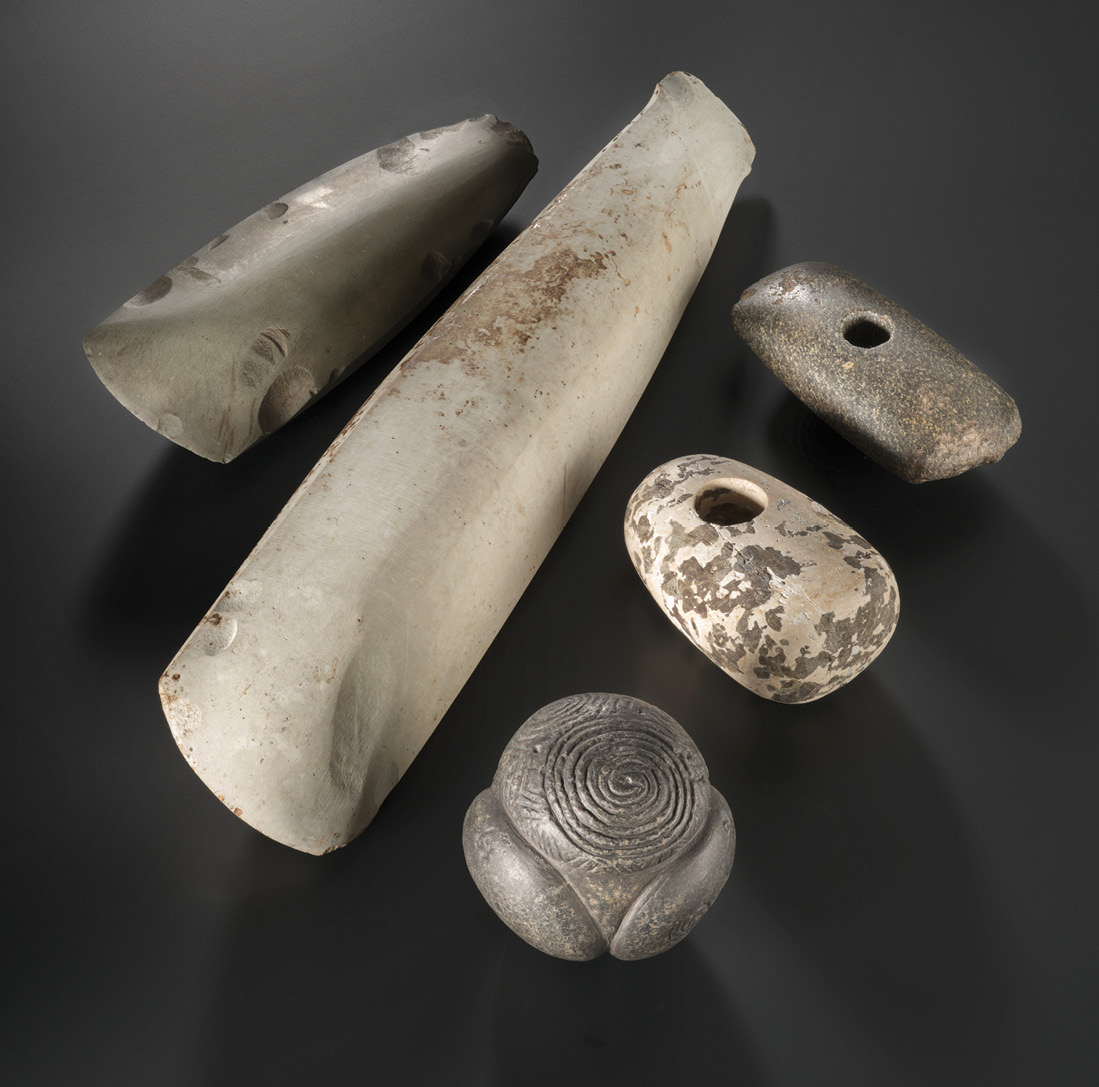
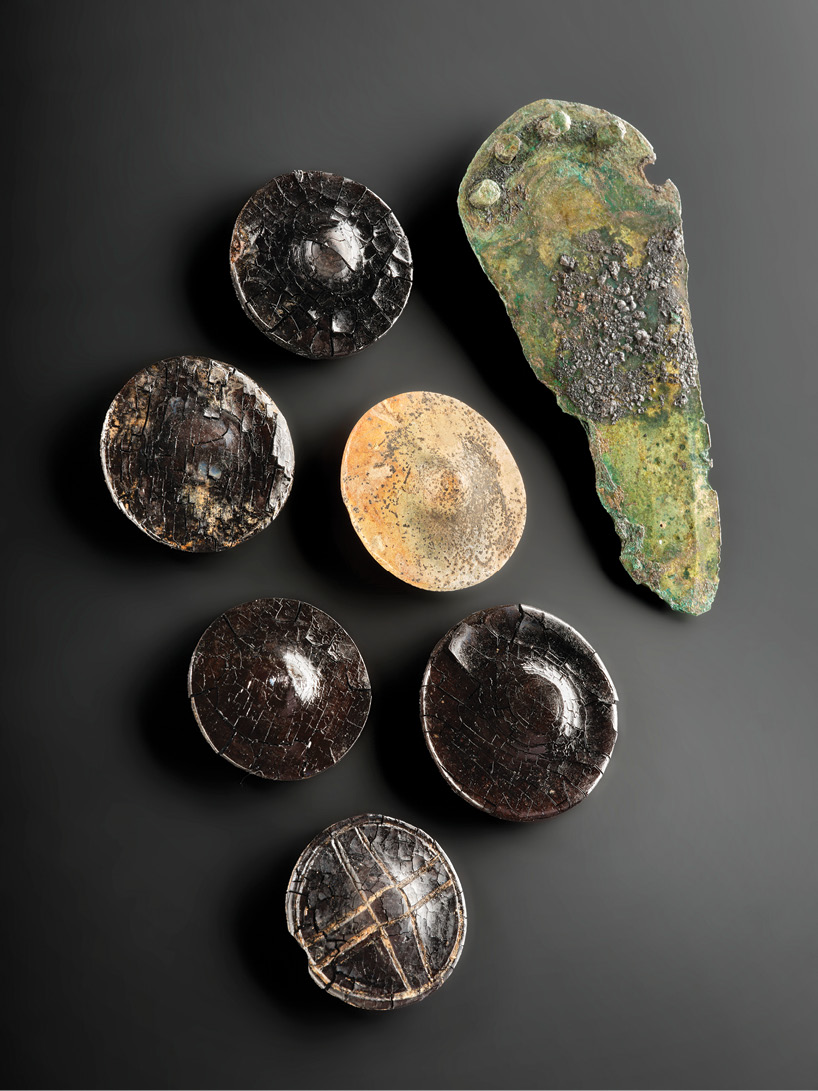
In the earlier Bronze Age, too, we must face the ambiguity of evidence. The inception of metalworking technology around 2450 BC allowed new metal axes and daggers to develop, alongside large, perforated stone tools. Do these reflect violent preoccupations? It is common to interpret people buried with daggers as ‘warriors’, but their graves often include a range of other material, such as pottery and jewellery. At Rameldry, Fife, a young adult male was found in a cist with a sheathed bronze dagger. He had been buried in clothing adorned with five jet buttons and one made of stone. One of the jet buttons was inlaid with tin – an exceptional preservation, and one that suggests this was either a well-travelled individual or someone who had access to extensive trade networks. Apart from the presence of the dagger, there is nothing to suggest that this person had ever engaged in conflict. Indeed, across the Bronze Age in Scotland, we very rarely see any other signs of warrior-related activities, such as evidence of trauma, preserved on the skeletal remains.
Nonetheless, this is the period that saw the development of the halberd, a copper or bronze blade hafted at a right angle to a long shaft. These objects occur in varying numbers across north-western Europe, and they have long been considered as ceremonial weapons, though archaeological experiments with replicas have highlighted their effectiveness at piercing animal bone. Wear analysis, too, has indicated that many may have been more intensely used than previously considered.
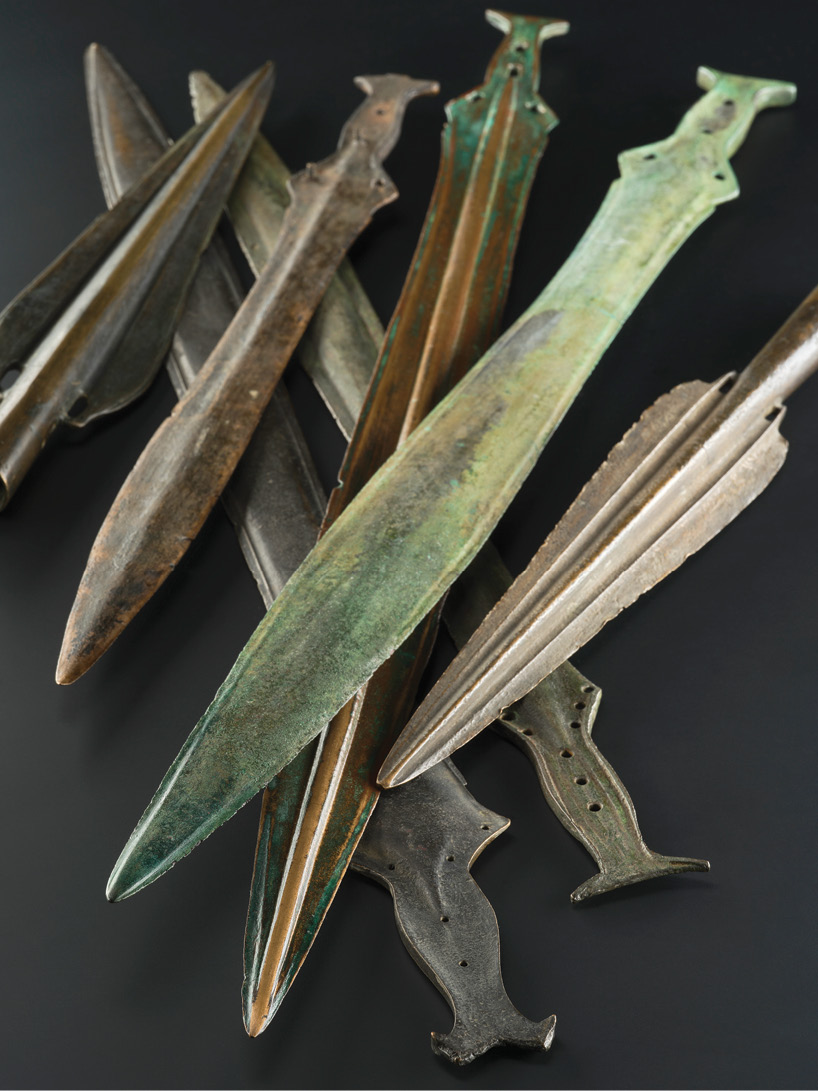
By the mid-2nd millennium BC, though, unambiguous metal weaponry was increasingly present. Earlier daggers transformed into longer and slenderer blades, known by the archaeological misnomers ‘rapier’ or ‘dirk’. These preceded the evolution of the first true swords in Britain, with a ‘leaf-shaped’ blade and integrated hilt on to which a handle was riveted. This development marks a significant shift within human history. Swords were the first weapons developed with the sole intent of harming another human – they had no other function as a hunting weapon or a farming tool – and they were produced in their thousands.

Beyond the sword
This generalisation of technological and typological development across several hundred years is the most common way that Bronze Age weaponry is presented. However, we should not forget the range of societal implications that come with these innovative implements. The invention of the sword indicates that conflict was such a necessary preoccupation that it required a dedicated object. Moreover, people were sufficiently fearful of violent encounters that it was worth diverting resources away from other occupations and crafts (for example, farming and pottery-making) to allow the production of offensive and defensive weapons. It is easy to overlook the fact that a sword in a museum case represents substantial metal resources invested in a weapon rather than a tool (the metal weight of one sword might equal three potential axeheads). Craftspeople had to refine their skills in making weaponry, and those who took up arms had to spend time training with them. It can take months, if not years, to become proficient in using a sword or spear effectively.

The same need for weapons (and those equipped with them) also prompted the rise in defensive equipment. Bronze cuirasses, helmets, and greaves have been found in parts of Europe, but, so far, no body armour of this period has been discovered in Britain – we must assume that organic counterparts were used. About 50 bronze shields have been found in Britain, though, with more than ten so far known from Scotland.
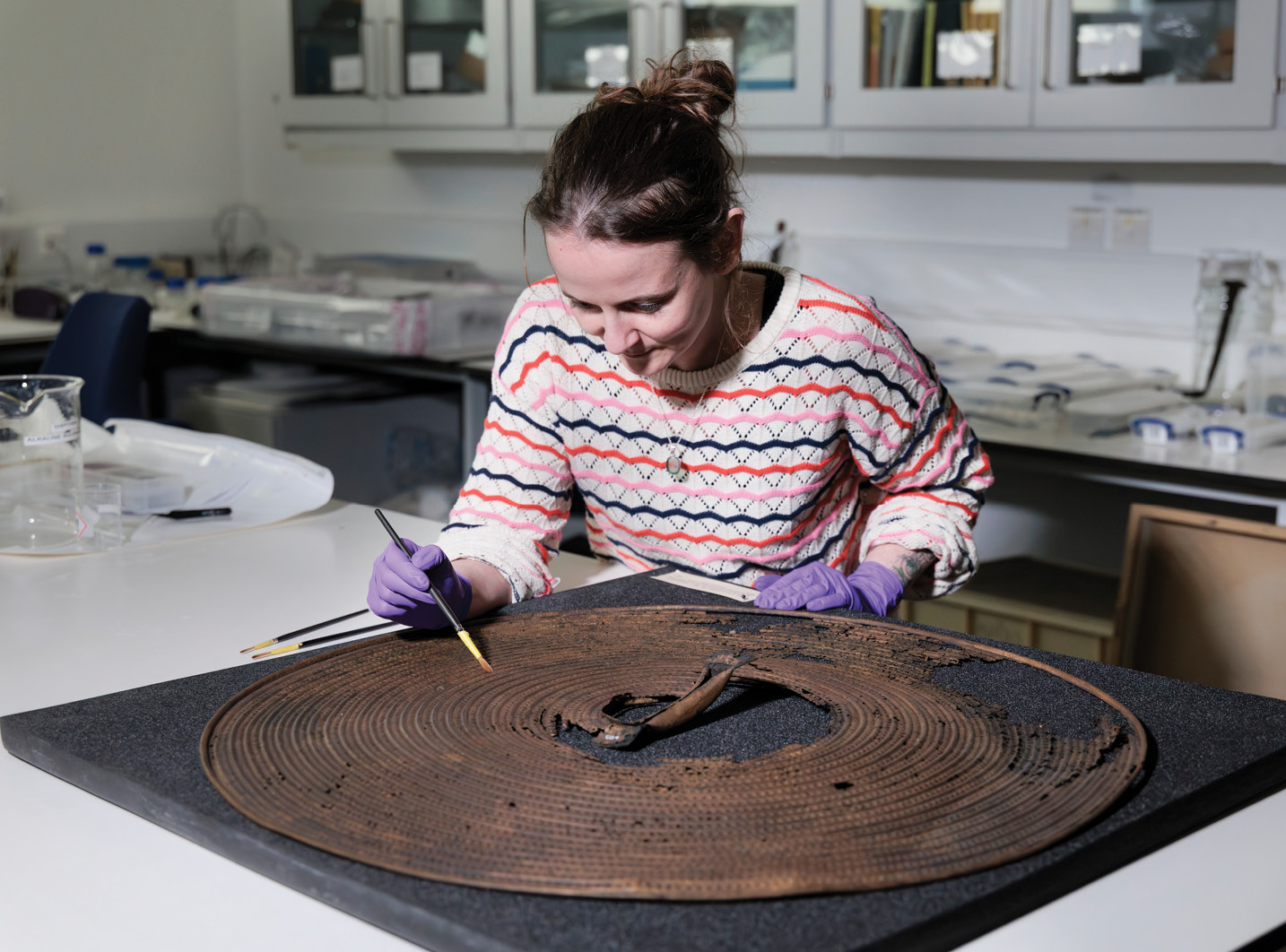
Undoubtedly, the most accomplished style is the Yetholm-type shield, so-named after three shields found near Yetholm in the Scottish Borders. These shields are thin, circular discs of bronze, hammered from a single ingot and ornamented with alternating concentric ribs and rows of thousands of individually crafted bosses. Dating to around 1300-1100 BC, they represent the pinnacle of Bronze Age craft.
Another example, from Beith, Ayrshire, is the only one now surviving from a group of five or six shields that were found, arranged in a ring, around 1779. This shield was presented to the Society of Antiquaries of London in 1791 and has been loaned to the exhibition, marking the first time that it has ever been displayed in Scotland. The suggestion that the shield had been placed in a ring of such objects is evocative and sparks the imagination, conjuring the idea that multiple people or communities might have come together to give up their shields. Was this a peacekeeping ceremony?
Like halberds, prehistoric shields have traditionally been considered as purely ceremonial items, but experiments over the last 20 years have demonstrated the effectiveness of a bronze shield for deflecting sword and spear blows. It appears that these seemingly thin and fragile objects were sometimes utilised in conflict.
A farewell to arms
Part of the reason that so many objects survive for us to study is because they were deliberately buried, in acts traditionally called ‘votive deposits’. Many of the artefacts committed to the ground during the later Bronze Age were weapons, and this has much to tell us about how societies felt about these items.
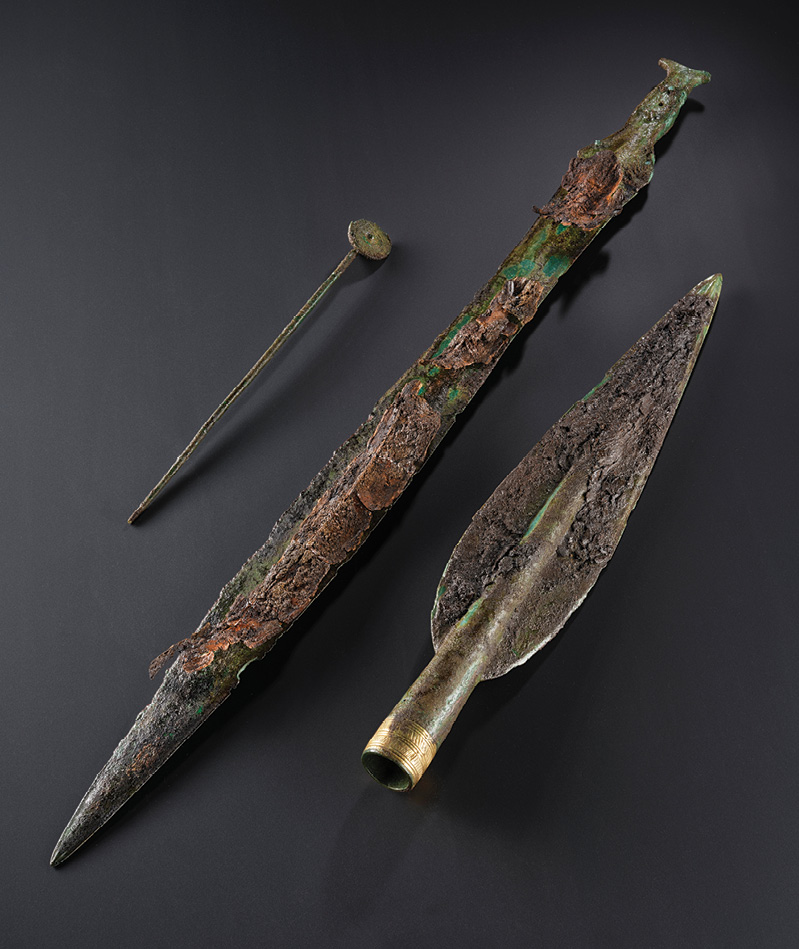
Among such finds, an exceptional survival is the Carnoustie Hoard from Angus, where a sword and a spearhead were carefully wrapped and buried in a pit close to a contemporaneous structure (CA 428). The sword survived in its wooden scabbard, and had been swaddled in woollen textile secured with a disc-headed pin. The bronze spearhead had been buried without its shaft, and its socket was decorated with gold foil: an exceedingly rare discovery. This object had also been wrapped before its burial, with sheepskin surrounding the spearhead’s blade and a finer fabric identified around its socket. This was a carefully assembled and placed deposit, which suggests that these objects held a value to the community beyond their role as weapons.
In other instances, though, swords, spears, and other objects were bent, burnt, and broken – such as at Duddingston Loch in Edinburgh, into which 40-50 weapons had been sunk. It is tempting to imagine this as a sacrifice of weapons, captured from vanquished foes and destroyed to prevent their further use.

Rising fortifications
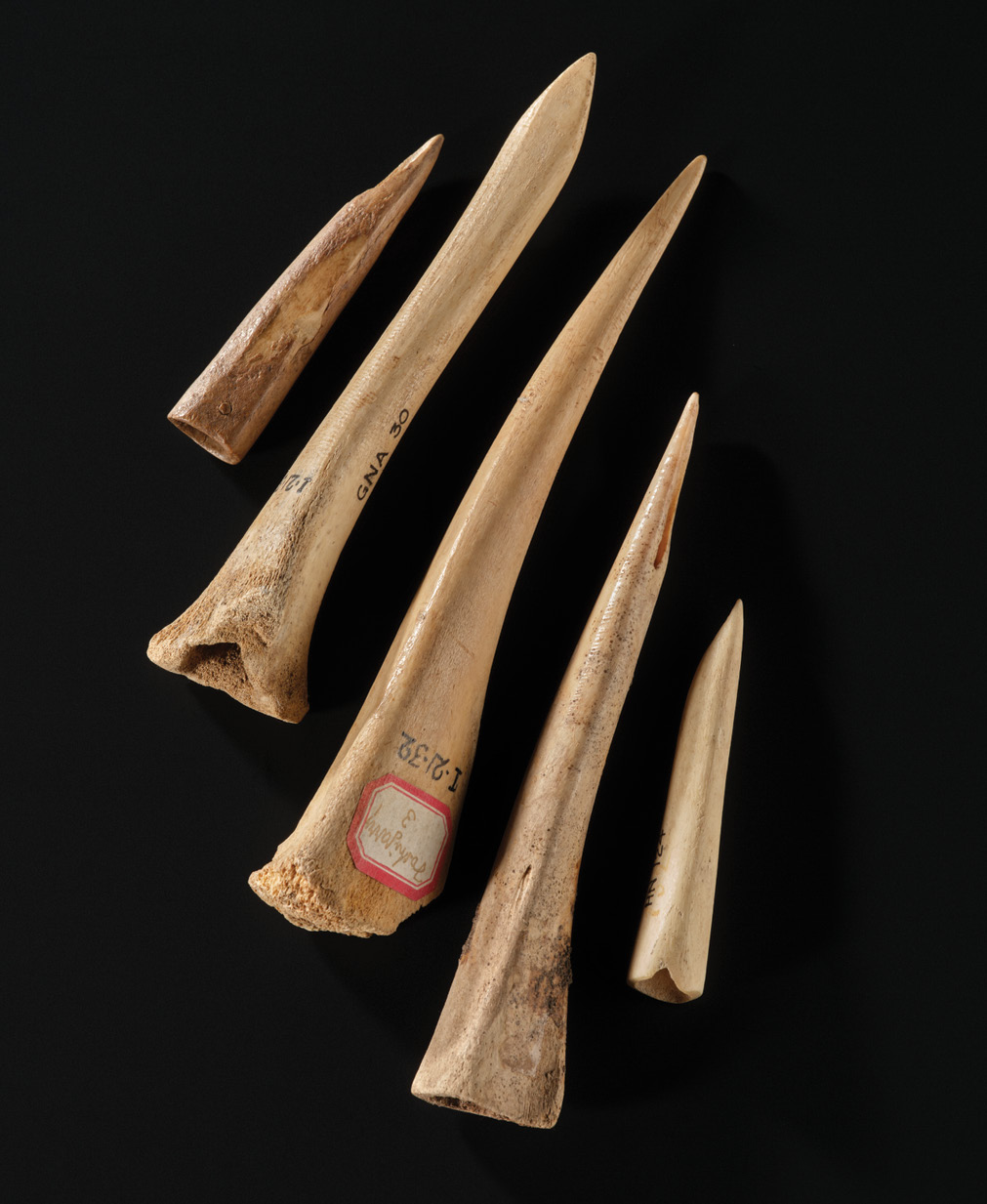
In common with much of Britain, deposits of weaponry and other artefacts largely ceased in Scotland around 800 BC. Small iron daggers and spearheads were produced during the Early-Middle Iron Age, as well as bone-tipped spears, but these survive in limited numbers. From this evidence alone, we might envisage a less conflict-focused society, one that was not obsessed with producing and using weapons. More broadly, it does not suggest the existence of a dedicated warrior class. This is, however, the period during which we see a growing number of hillforts and enclosures dug into Scotland’s landscape, with many established from 800 BC onwards. The debate around the purpose of hillforts is well-established – some were likely gathering places or settlement enclosures, while others probably had a more defensive intent or were intended to convey power and authority.
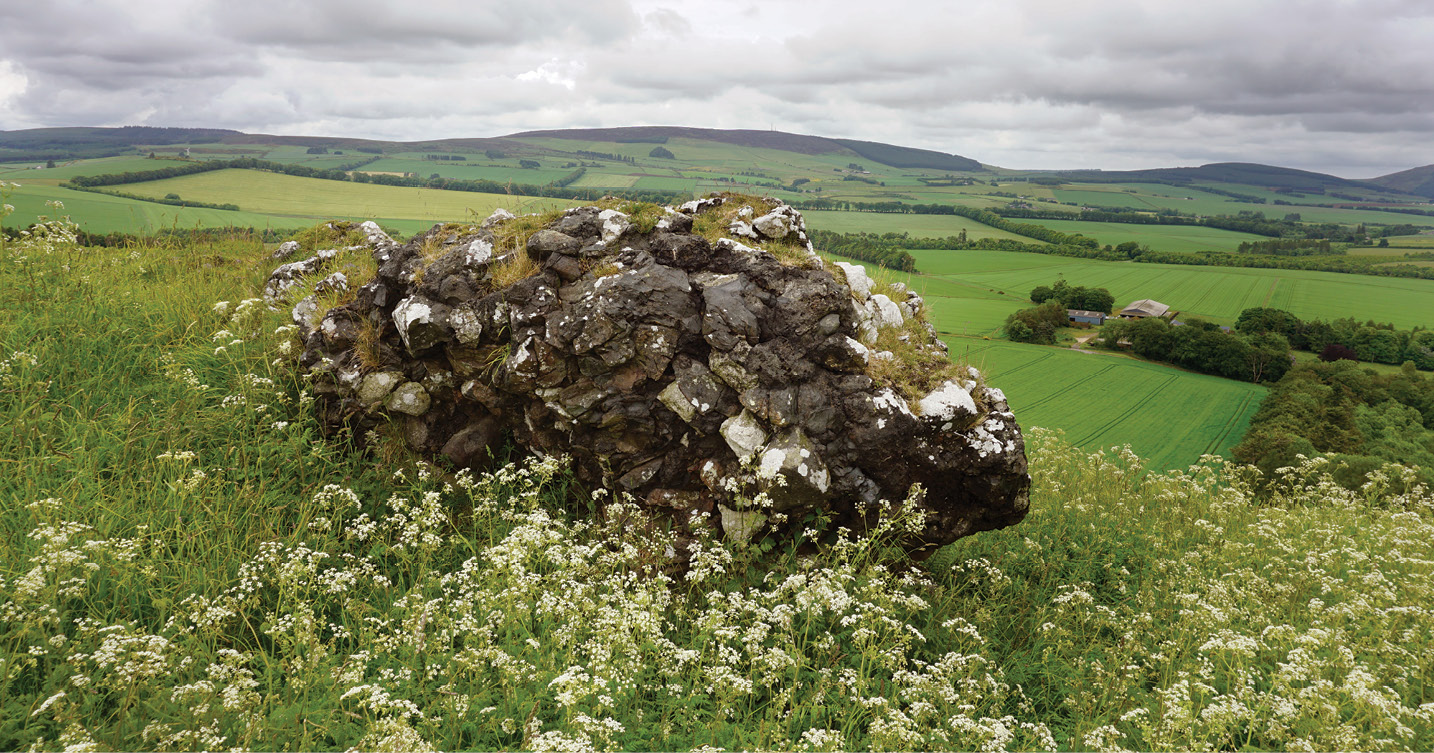
In Scotland, a particular form of these monuments, known as a vitrified fort, is widespread. Such sites are defined by stone enclosures that have been partially or fully vitrified by an intensive fire that caused the stones to melt and fuse; many are positioned on hilltops, with surrounding ditches or ramparts. They were previously thought to be unique to Scotland, with around 60–70 Iron Age examples and others dating to the early medieval period known, but these forts have since been identified in other parts of Europe, spanning the 1st millennia BC and AD.
Again, these sites have been the subject of much debate. Typically considered to have been deliberately constructed as part of defensive measures, experiments have shown that vitrification of enclosures is hard to reproduce, and particularly hard to control. It is more likely these enclosures were purposefully destroyed, either at the end of a settlement’s life, or when it had been captured by an enemy. The burning of a fort would have created a powerful visual spectacle, signifying destruction, that would have been visible for miles around.
From warriors to soldiers
Towards the end of the 1st millennium BC, evidence started to re-emerge of dedicated iron weapons, and the people who used them. Although not known in large numbers, swords and scabbards were deposited in Scotland from around 200 BC, either buried alone or accompanying graves. Bladed weapons are also sometimes reflected by the injuries that they left behind: occasionally, evidence of those who suffered from such attacks has been identified at or near enclosures, like the possible sharp-force trauma preserved on cranial fragments at Broxmouth, East Lothian, and at Rispain Camp, Dumfries and Galloway. Clues like these are sparse, however.
A particular cluster of finds comes from around the Firth of Forth, where several individuals buried with weapons have been discovered. One of the most striking (who features in the exhibition) is a young adult male who was buried in a stone cist from Marshill, Clackmannanshire. This man had been laid to rest with a rich array of ornaments and weapons, including a sword in a scabbard that lay across his torso (though it would have originally been worn on his back), and a complete iron-tipped spear that had been wedged into the cist. On each of his feet he wore a toe ring, suggesting he wore sandals, a sign of his status. This person had been buried in the 1st century AD, at a time when the threat of Rome was looming from the south. It was perhaps a time when socially visible warriors were necessary.
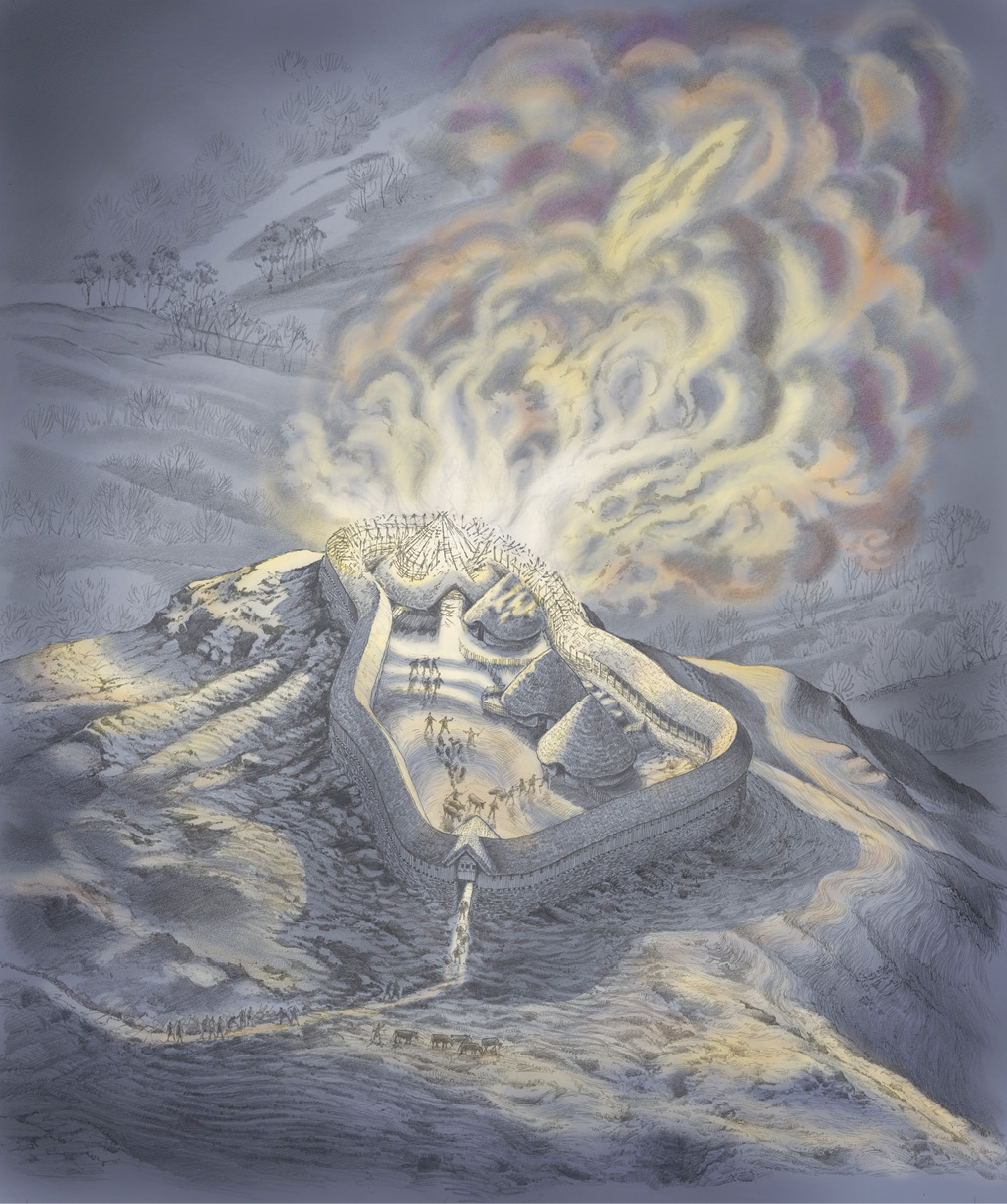
The Roman army arrived in Scotland during the late 1st century AD. Until this point, people armed with swords, spears, and armour in Scotland might have conveyed status or skill. For the Romans, though, this same martial equipment represented a profession, marking its wearer as one of thousands marching across Europe. Insular warriors were not equipped to face the first Western European army of trained soldiers. Roman encampments were set up across the Scottish lowlands, and rare evidence for possible siege warfare is seen at the hillfort at Burnswark in Dumfries and Galloway, where hundreds of Roman projectiles have been recovered (CA 316; they are sometimes interpreted as signifying a practice exercise). From the great Roman fort at Trimontium (Newstead) in the Scottish Borders, finds of cavalry parade armour highlight Roman celebrations of military might. Nonetheless, the area that we now call Scotland was never fully conquered.
Displaying invisible people
This overview of conflict and violence in prehistoric Scotland covers a large expanse of time (some 4,000 years) and hides many of the nuances of the archaeological record that are challenging to present in any exhibition. Moreover, the modern sociopolitical climate in Europe means that any display of conflict must remain sensitive to the potential to glorify or sanitise warfare. The exhibition development team thus spent many hours considering angles for communicating prehistoric conflict in meaningful and evocative ways, presenting the human stories behind the objects that will connect with museum visitors today. To achieve this, we used a range of interpretative tools, including commissioned artworks, films, and soundscapes.

We also had to consider how to portray the people who lived and died in the periods that we are exploring. Although this exhibition is called Scotland’s First Warriors, paradoxically we are faced (or, rather, not faced) with a distinct lack of identifiable warriors in much of the archaeological evidence from prehistoric Scotland. However, we wanted to connect the objects on display to the prehistoric people who wielded them. The displays are therefore punctuated by the stories of six imagined people, including the Neolithic Farmer swinging an axe, the Bronze Age Warrior armed with a sword and shield, and the Roman Soldier forming part of a wider army. Each is presented with an expressive large-scale illustration, commissioned for the exhibition.
Moving away from traditional archaeological drawing styles, we looked for artistic ideas that would convey movement and ambiguity, and commissioned life artist Alan McGowan to work with curators and the exhibition development team to create bespoke works of art that brought the people behind the objects to life. It was no easy brief: to present a figure who is both accurate and ambiguous – faceless, genderless – but the results are striking. At around 1.8m (5ft 11) tall, the warriors are a little over life-size, but allow the visitor to look each individual in their ambiguous eyes.

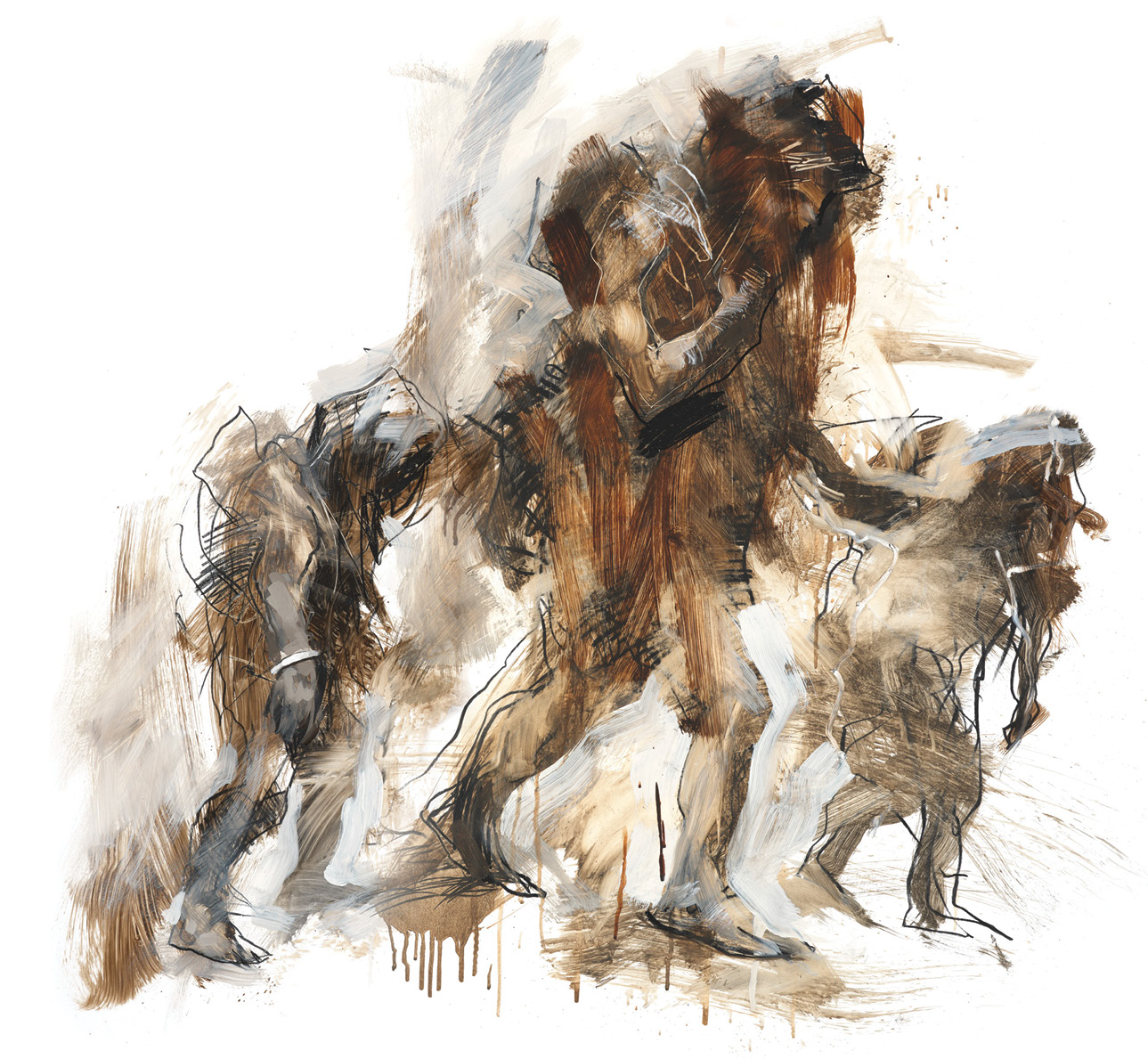
Alan McGowan’s The Displaced, an imagining of the prehistoric victims of conflict. Image: © National Museums Scotland
Undoubtedly, warfare is too-easily conceptualised as a male-dominated sphere. Where Iron Age burials are found with weapons in Britain, most, if not all, of their occupants are male. Similarly, in Bronze Age Scandinavian rock art, those armed with spears, axes, and shields also bear oversized phalluses. In contrast, evidence for female involvement in prehistoric conflicts is largely unknown. Nonetheless, we have growing genetic evidence suggesting that matriarchal societies were well-established in the British Iron Age, which complements Roman accounts of female leaders like Boudica. Even if women were not warriors, they were probably leaders, negotiators, or played other central roles before, during, and after conflicts. It was therefore critical that they were not left invisible in the exhibition, nor portrayed simply as victims lacking agency. We may assume that, if attacked, they would have sought to defend themselves and their families – so the exhibition includes filmed interviews exploring the roles that women may have had in prehistoric communities, as well as the wide-ranging effects that conflict has on society more broadly, impacting all demographics.
Adding to this complex picture is the fact that, although we have plenty of weapons and forts, human remains representing the actual people impacted by conflict are remarkably few. We may attribute some of this to the poor preservation of bone in Scottish soils, or the ‘invisible’ burial practices that characterise certain periods (for example, the later Bronze Age and the earlier Iron Age). Nevertheless, this needed addressing if we wanted to display the impact of conflict on past societies. One of the commissioned artworks features figures deliberately depicted unarmed. Named The Displaced, it shows a group of people on the move, with few visible belongings. These are the victims of conflict, representing the invisible communities whose lives were disrupted and who were forced from their homes by violent acts that have long faded from memory.
Communicating conflict
The exhibition team also worked to move beyond traditional displays of warfare that present conflict as a series of technological developments. We were keen that visitors understood that the weapons on show were never intended to be static. Much recent experimental research has highlighted the extent of use-related wear surviving on Bronze Age weapons. While we may stand in front of a case and admire the skill involved in producing a shield, or create technical typologies of swords, these were dynamic objects, capable of deadly intent. We worked with re-enactors from Regia Anglorum to capture fight sequences, using replica swords, spears, axes, and shields, to give motion and sound to these objects. (Please note: no re-enactors were harmed in the making of this exhibition!)
Scotland’s First Warriors represents the UK’s first dedicated exhibition presenting the nature of prehistoric conflict and violence. Elsewhere in Europe, this narrative is portrayed more assuredly, based on more widespread warrior burials or mass graves containing skeletons with traumatic injuries. Here in Scotland, though, we remain constrained by the ebbs and flows of the archaeological evidence. At times we see deliberately buried weapons, glimpses of skeletal trauma, and forts of highly debated function, but never all at once. The long chronological approach of our displays is central for challenging visitors to think about the nature of conflict in the past. What motivated people to take tools and turn them into weapons? At what point might we consider the first ‘acts of war’ to have happened? Was it when someone loosed the first arrow into someone else, or does it come with the invention of the sword?
Such questions are, of course, academic, but through the evidence we have we are able to build complex stories of the individuals who fought, the nature of the combat they engaged in, and the broader impact that this violence had on contemporary communities.
Source:
Dr Matthew Knight is Senior Curator of Prehistory at National Museums Scotland. He specialises in the treatment and deposition of material culture in the Bronze Age.
Hannah Boddy is an Exhibitions and Displays Officer at National Museums Scotland. She specialises in interpretation and has worked on many of the museum’s archaeological exhibitions over the last 10 years.

All images: © National Museums Scotland, unless otherwise stated