Subscribe now for full access and no adverts
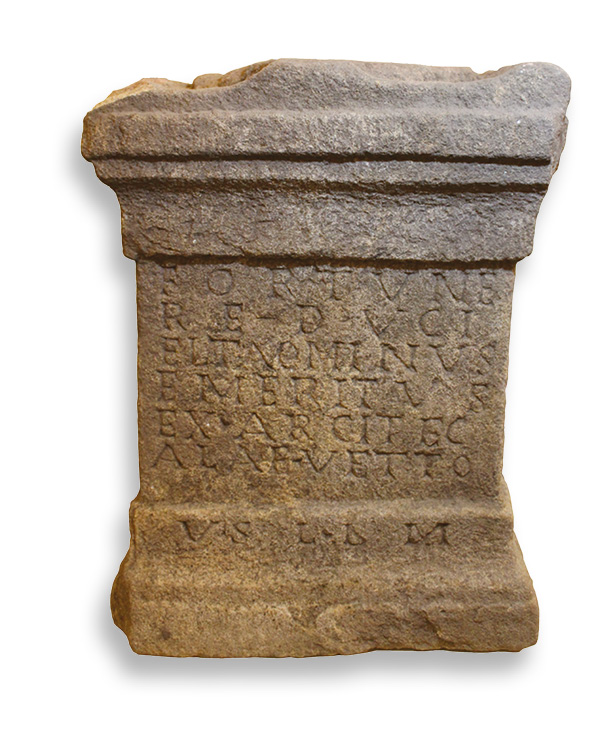
What did rocks ever do for the Romans and their northern frontier? The short answer is: pretty much everything. As a geologist, I admit I’m biased, but judge me when you have finished reading. My thesis is twofold. Part 1: geology defined the northern edge of Hadrian’s empire and supplied the materials to build and sustain it. Coal ensured Roman warmth and fuelled their industry; groundwater fed their wells and bathhouses. Ores were available for weapons, ornaments, and jewellery, paint pigments, and even cosmetics. Minerals shrouded and coffined their dead. Without stone, there would be no Roman Inscriptions of Britain, and far fewer voices from the past. The bottom line is: Roman knowledge of the area’s geological assets and how to put them to use was comprehensive and expert. Part 2, however, concedes that, here in Wall Country, where the Roman military imprint on the landscape is arguably more profound than anywhere else in Britain, we know so little about the origin of the natural resources they used. This article is intended as an introduction to what we do know – and what we don’t. There is a knowledge gap that can only be filled by archaeologists and geologists working together, and filling it will add richness and credibility to so many social, economic, political, and military narratives from the Roman frontier.

But first, a little geological scene-setting, just to provide some essential context. The geology of northern England is incredibly diverse and spans almost 500 million years. I could divide and describe that enormous period of time using soulless stratigraphy – Ordovician, Carboniferous, Permian, Triassic, and so on – but I’d rather you kept reading. What you need to know is that the reason the northern landscape is so rich in natural resources is precisely because of its varied and dramatic past. Deep oceans and evaporating seas; cataclysmic volcanic eruptions and magmatic injections; coral reefs and vast rivers; tropical swamps and red-hot deserts; and, less than 20,000 years ago, frozen wastes. These very different environments bequeathed to the north terrain that may have been challenging to control but offered a bounty of materials to those willing to try.
Why build the frontier here?
It is not geologists but archaeologists with long experience of the Wall who credit the Whin Sill – a 295-million-year-old, 30-plus-metre-thick (100-plus feet) slab of once-molten dolerite – for the choice of the line of Hadrian’s Wall. The emperor simply had to add his own 4.5m-high augmentation to this natural north-facing barrier, then complete the subservient limbs to the east and west coasts. The same Whin Sill was also the chosen foundation for medieval castles and priories. It is hard to overstate the significance of this landscape-defining, iconic rock: without it, Northumberland would be culturally (and, as the millions of tourists who visit annually underscore, financially) much poorer.

The second major linear component of Hadrian’s frontier is the Vallum: a 6m-wide (20ft), 3m-deep (10ft) ditch with earth mounds on either side. For much of its course, the Vallum stays immediately south of and parallel to the Wall, but in the central, Whin Sill, sector it deviates – and it deviates a lot. Because this feature is a trench, Roman surveyors had to be even more conscious of underlying geology during its creation. Choosing the wrong course across the ground would have meant significant delays and even failure of the earthwork. Excavating the incredibly hard dolerite would have increased construction time enormously, while digging through the peat bogs and soft lake sediments that are common in this area would have been more than arduous – the trench sides would have collapsed and the high water table meant it would have filled with water almost immediately. Dolerite and peat were best avoided if at all possible. Other archaeological explanations have been put forward, but from a geologist’s perspective the meandering course of the Vallum here demonstrates well the geological understanding and pragmatism of legionary surveyors.
Earth, turf, and stone
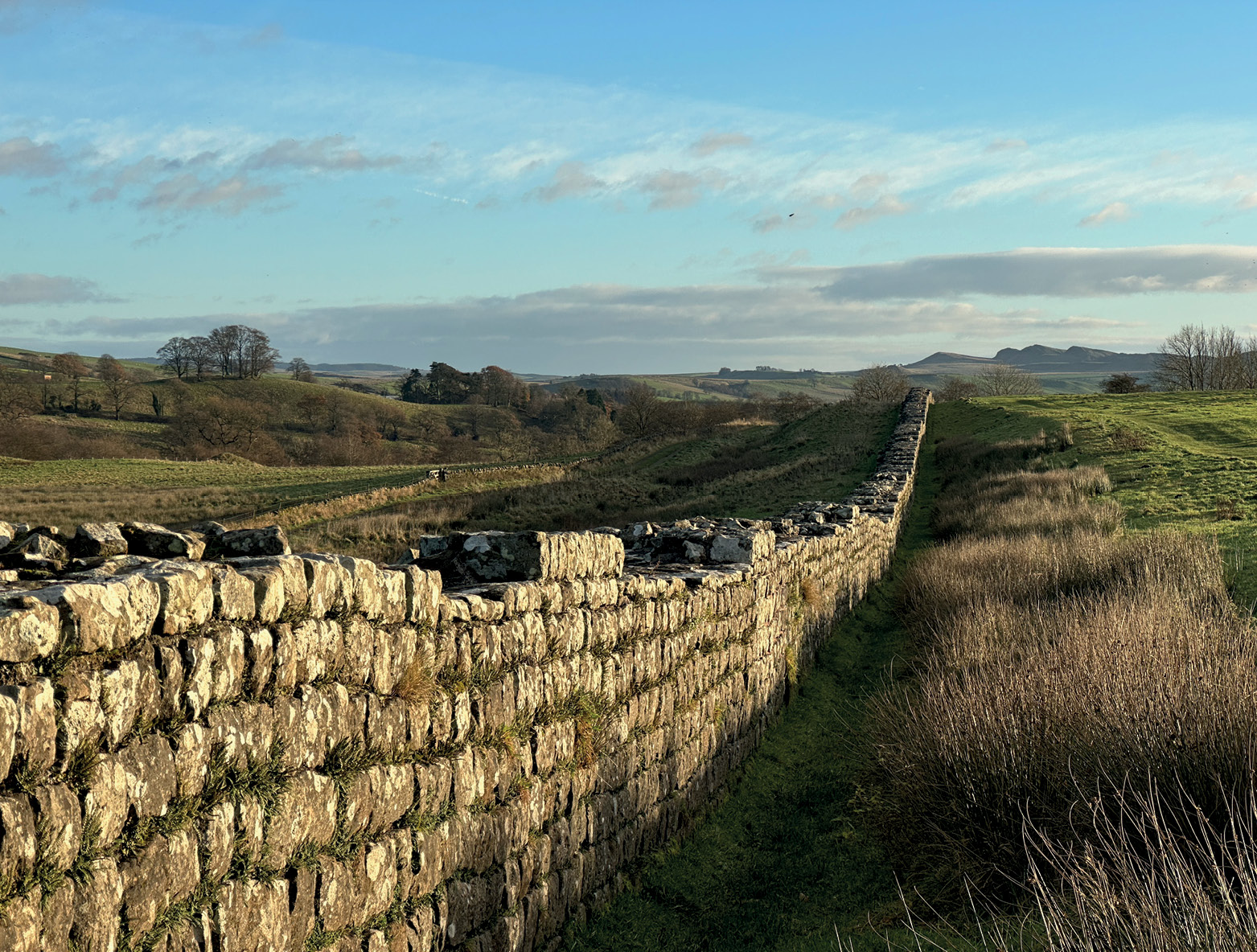
Geology was the prime influence, too, on the different materials used to build the Wall, especially in its first incarnation. In the eastern and central thirds, bedrock is rarely far from the surface and stone was the obvious choice. That changes just east of Birdoswald Fort, however, and from there to Bowness-on-Solway it is the soft Ice Age and more recent river and coastal deposits, not bedrock, that are the dominant influence on the shape and composition of the terrain – and, it appears, on Roman plans. These ‘Quaternary’ sediments are thick, and the bedrock is deeply buried. It would no longer have been possible for Roman builders simply to open multiple small, near-surface sandstone and limestone quarries close to the Wall. Instead, the building materials that were readily accessible in this area are clay, stones, soil – and turf. West of the River Irthing, the ‘Turf’ Wall starts its march to the Solway, a change in building material that is unlikely to have been a coincidence.
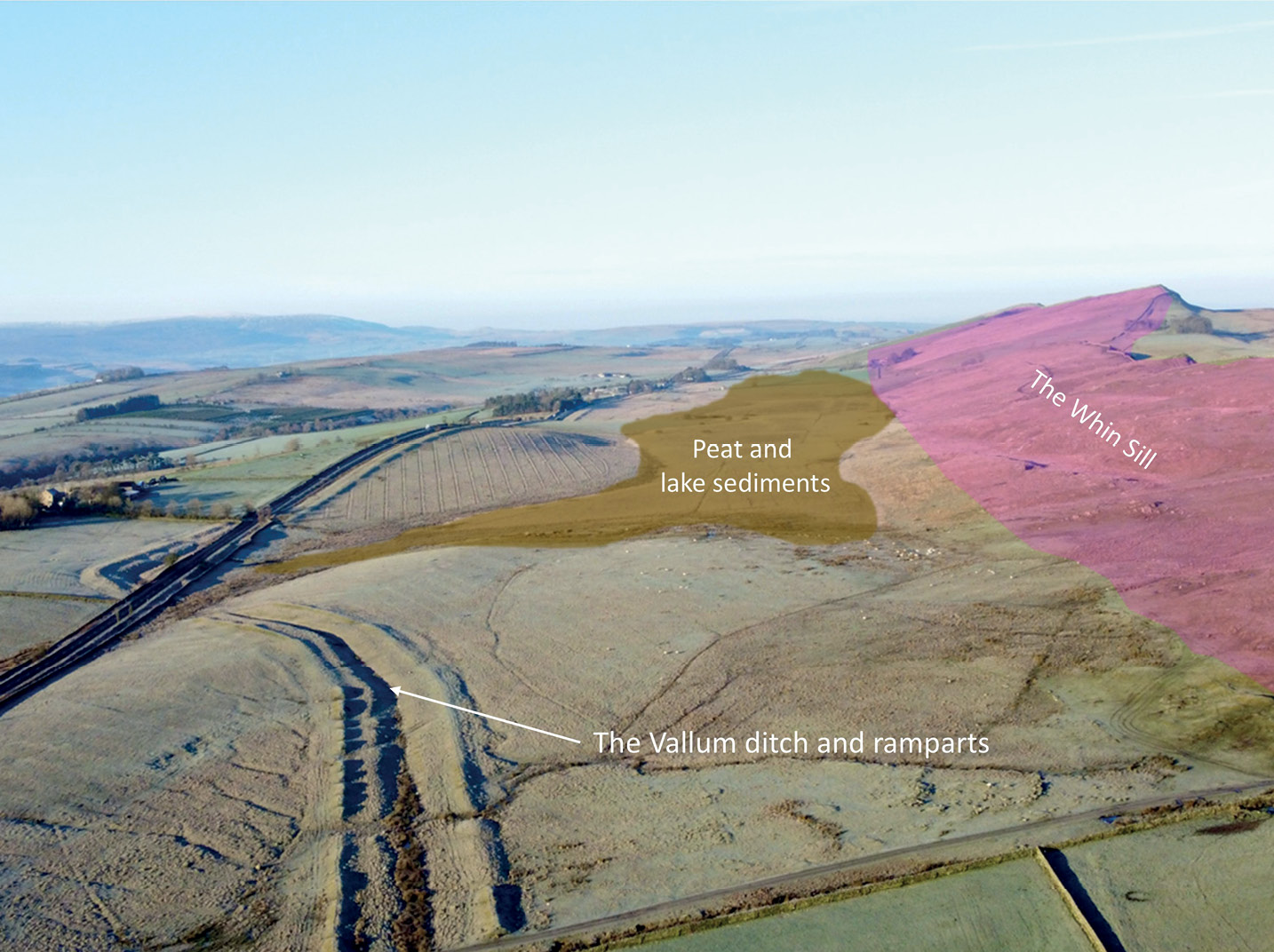
The course of the Vallum appears to have been carefully designed to deal with difficult geology. In the photograph (above) its line diverts to avoids a peat bog (and the Whin Sill) near Milking Gap, and the plan (below) shows the same area, demonstrating how the earthwork’s excavators threaded their way between Whin Sill dolerite (red) and peat and former lakes (brown). The Vallum itself is shown as a dotted line.

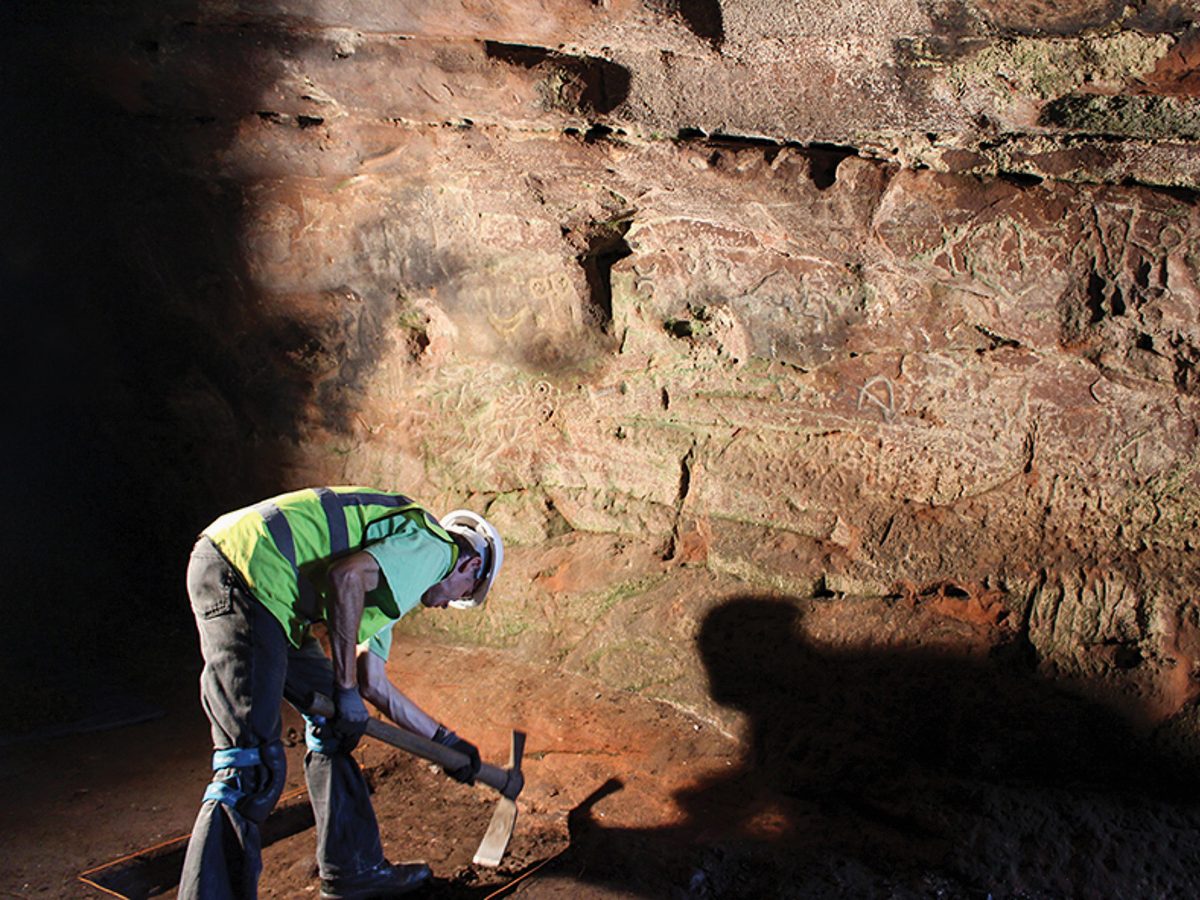
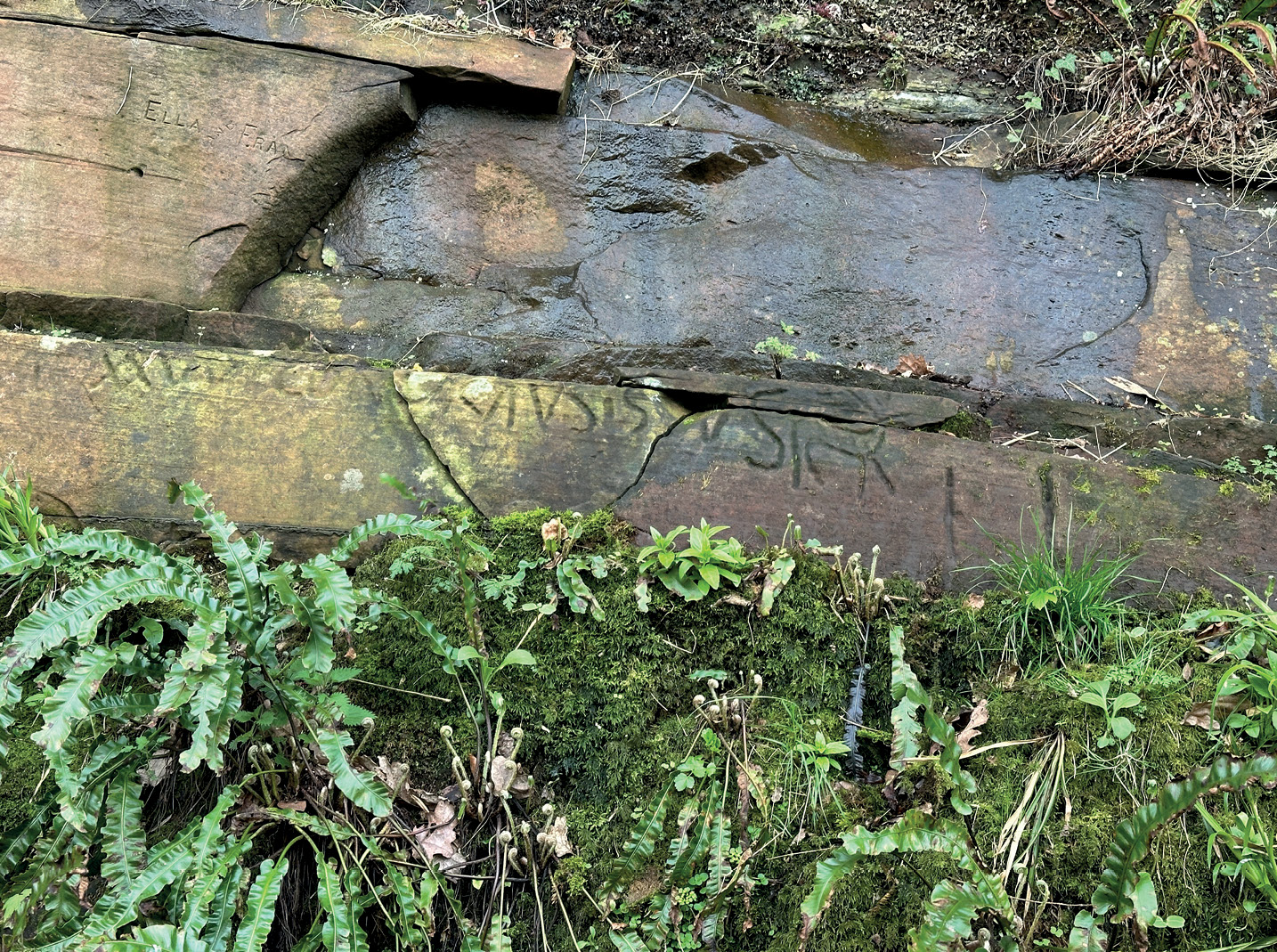
Sandstone was the eventual facing stone for all of the Wall and its associated infrastructure: forts, milecastles, turrets, and civilian settlements. In the east and centre, the source was near-surface local bedrock: 330-million-year-old, grey-brown Carboniferous sandstone. In the west, however, the source was the 270-million-year-old red Permo-Triassic sandstones that are exposed only in river gorges. The Romans opened many quarries to provide stone, and in some of those locations – such as the Written Rock of Gelt, located near Brampton about 5.5km (3.4 miles) from Hadrian’s Wall (see CA 351) – they left behind inscriptions bearing witness to this extractive activity. Initiatives like the WallCAP community project have also striven to learn more about the stones of Hadrian’s Wall (CA 390), and there has long been an archaeological aspiration to establish a precise provenance for its building materials – but geologists knew from prior experience that, with very few exceptions, it was a futile quest.
Digging through peat bogs and soft lake sediments… would have been more than arduous – the trench would have collapsed and filled with water almost immediately.
Why? The answer lies in how the rocks originated. The Carboniferous sandstones were once billions of tons of sand in large rivers flowing from a mountain chain far to the north. Over 20 million years the environment cycled repeatedly, with river channels giving way to deltas, then lagoons, beaches, and seas. These transitions left behind huge thicknesses of sand and other sediments that were constantly being redistributed. The outcome is billions of tonnes of rock that are rarely, if ever unique. The younger red sandstones are a product of a completely different environment – Triassic and Permian deserts with transient rivers, lakes, and dunes – but, millions of years and vast amounts of sand later, their outcome is equally anonymous.
More geological pragmatism
‘Follow the principle of least effort’ would be good geological advice. If there is a pattern in the Wall’s composition, it seems to point to legionary, even centurial, autonomy and a pragmatic approach to sourcing building materials locally. It applied to Wall facing stones and the standard rubble core too: broken sandstone or river cobbles and, near their outcrops, Whin Sill dolerite and limestone. But what held all this material together? Because its facing stones and core have often been restored and pointed with mortar and because the Wall was so tall, most casual visitors assume that mortar was used when the legions first built it. There is no archaeological consensus on this, however. Some believe the evidence shows that blocks were laid dry, while others argue that they were mortared in places but not everywhere; it is even possible that trampled clay was used.
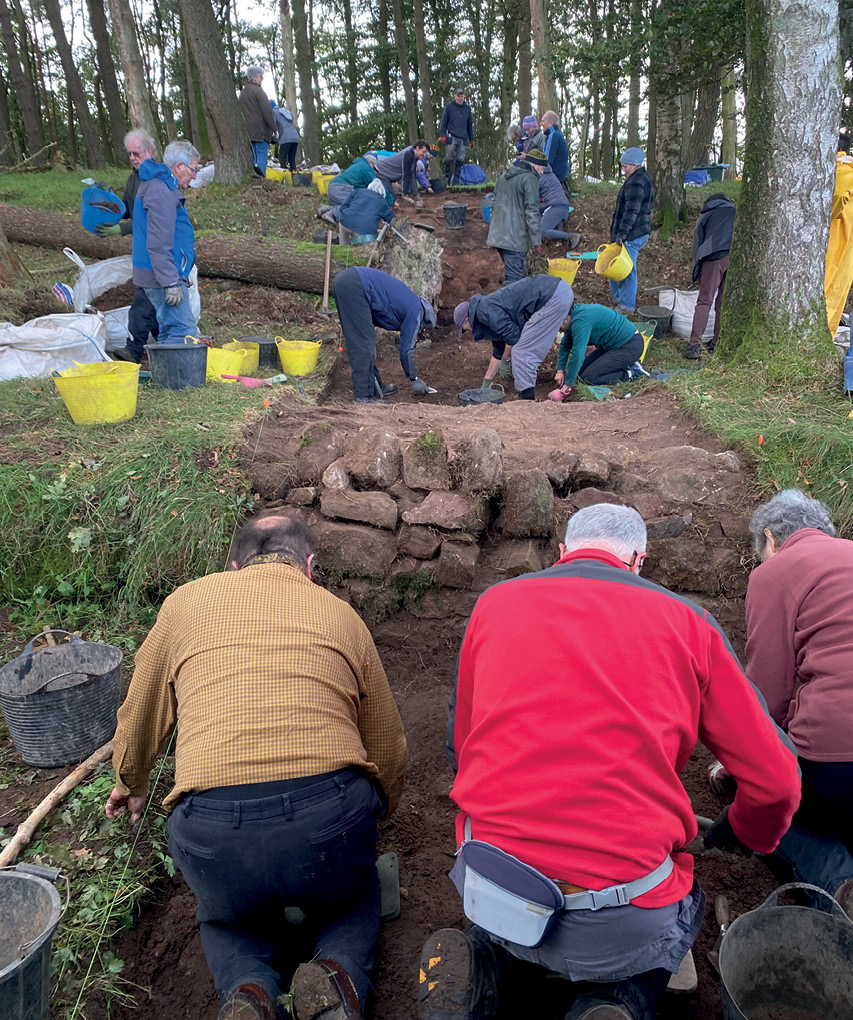
Bonding with lime mortar did seem to become the norm eventually, but where did they get the huge amounts of lime needed, not just for mortar but for rendering internal walls? Northumberland is not short of limestone (a product of those ancient coral seas) but to produce lime you need to burn it, and evidence for Roman kilns of this kind is rare. One was excavated beside Housesteads Fort in 1909, another reported at Vindolanda, and a third recently exposed at the outlying fort of High Rochester on Dere Street, all places where limestone outcropped close-by. Everywhere else, lime production remains a mystery – but, from a geological and quarrying perspective, it seems logical that the Romans would have extracted and processed limestone as close to source as possible. This suggests many kilns along the Wall, perhaps ephemeral ‘clamps’ – hollows in the ground, filled with layers of crushed limestone and the fuel to burn it, covered with turf – which would leave little trace.

Coals from Newcastle?
Producing lime needed heat, and so did metal-smelting and -smithing, and heating barracks and bathhouses. The Carboniferous is Northumberland, Durham, and Cumbria’s dominant geological period, and (as the name suggests) this means that the region is blessed with an abundance of coal. There is evidence from many places along the frontier that the Romans exploited this fuel. The clues do not come from mines (ancient mineral workings are nearly always destroyed by later ones) but from coal-storage bunkers, and brazier and furnace debris. Coal has been recovered from Arbeia, Benwell, Housesteads, and Vindolanda, among many other sites, and in addition to extensive local use it is likely that coal was being transported to the Thames and the Fens, which would imply its widespread use and a very organised distribution operation.
Most coal may have been burnt for warmth, cooking, and metallurgy, but there is also evidence of its use in drying grain, ceramics, and brine production, and even for cremations and (in the form of jet) making jewellery. A recent research project using index fossil plant spores has shown that Roman coal age and thus provenance can be identified, and applying the technique more widely will allow us better to understand the origin and use of a key energy source and the sociopolitical stories that follow. The frontier zone is equally rich in a more modern carbon source: peat. Its use as a fuel is rarely considered, and it is almost always thought of as a deposit that preserves things (not least the organic remains for which frontier sites like Vindolanda are famous). It was used by prehistoric societies, though, and peat turves found in York and during last year’s excavations at Magna fort may change minds about Roman habits. Elsewhere in the empire, the pragmatic Romans used animal dung and maybe even bone as fuel. In our wetter climate, with an abundant heat source on their doorstep, is it unreasonable to assume that peat provided Romans with warmth too?

A broken roof tile with the stamp of the Ninth Legion, probably made from stone-free glacial lake clays just south of Carlisle.
The metal conundrum
While the circumstantial evidence is compelling, we don’t definitively know if, or where, the Romans mined iron, lead, and copper here in the North. We do know that the region’s rocks are rich in their ores, and tens of thousands of artefacts and the activities of fort fabricae (workshops) show that these metals were in use all along the frontier. There is no proof the Romans transported iron long distances from the Weald, the Forest of Dean, or Northampton, nor that they used local ‘bog ore’ – a secondary and highly variable, low-quality iron deposit. When abundant primary iron-ore sources – siderite and haematite – were available along the frontier, any presumption of importation would be unsafe.
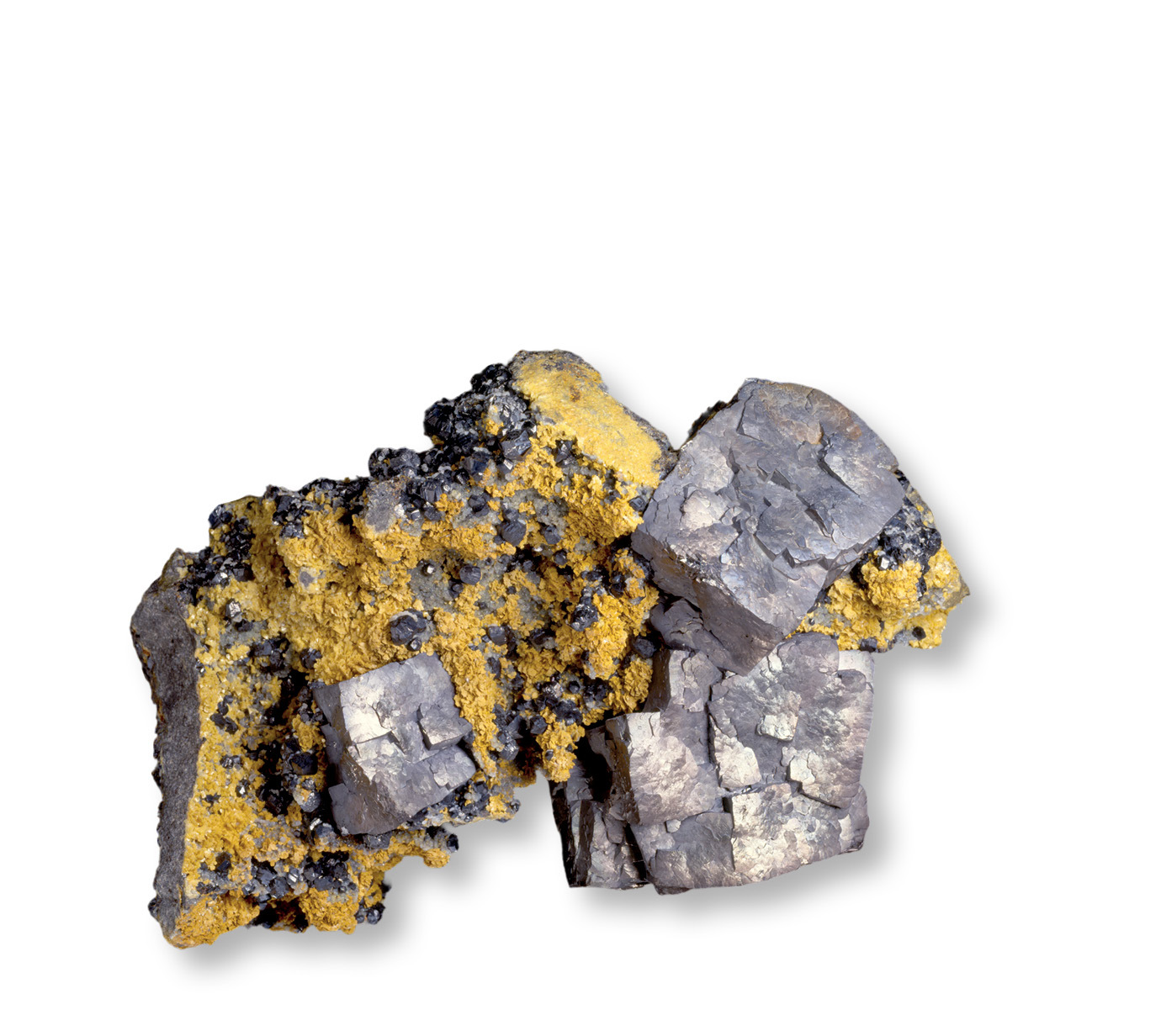
The origin of the lead that was used in everything from pipes to sling shots and coffins is equally uncertain, although the North Pennines and the Lake District are rich sources. The many objects made from this material, as well as the presence of possible smelters, lead seals, and even the justification for outpost forts, are cited as explanations, but hard geological evidence remains elusive. Assertions that silver in the lead ore was a reason for Roman presence in this area are much less convincing: precious metals may seduce many, but available geological data does not support these claims. Copper-alloy items were also made in workshops along the frontier, but where did the copper originate? Solid proof of Roman copper-mining is found in Wales and Cheshire, but was copper transported from these places, or were local ores used? There are rich deposits in the Pennines, the Lake District, and North Yorkshire, but as yet there are no definitive signs of Roman copper-working in these areas.

There’s more…
So many materials still to cover! Where was tufa – nature’s lightweight thermal block, and a classic component of bathhouse ceilings – sourced? Which querns and millstones were local and which were imported? Were imperial-stamped roof tiles really made from the delicate sediments of lakes fed by glacial meltwater? Where did the liquid gypsum come from that shrouded high- status burials in Roman York? What was the origin of the microscopically crystalline silica – jasper and carnelian – that was transformed into intricate intaglios in Carlisle in such large numbers that it has been argued that the border town may have been home to a specialist school? Could it have been local?
This article is both an exploration of geological insights, and a cautionary tale about the use of such data in archaeology. My science has much to offer but, like archaeology, it is an interpretive discipline, not the silver bullet some would wish it to be. It is by combining forces that we can start to chip away at the questions posed above – and many others in archaeology.
Source: Ian Jackson worked for the British Geological Survey for 38 years, starting as a field geologist and retiring as Operations Director. He returned to the northern landscape where he grew up and worked, and in 2020 he began to write about rocks, aspiring to reach out and engage non-geologists. This article is an abstraction from the fourth of his five books: The Rocks at the Edge of the Empire.
All images: Ian Jackson