Subscribe now for full access and no adverts
How do we best conceive the deep past? For some, bygone events can be brought alive through the medium of stories and detailed descriptions – for others, the process will be mostly visual, perhaps represented by maps, reconstruction drawings, replicas, and even re-enactments. This isn’t very surprising when you discover that neurodevelopmental scientists tell us that approximately one quarter of the population conceptualise mainly in words, about a third use predominantly visual thinking, and the remainder utilise a mixture of words and images.
So, when the Trimontium Trust was looking for new ways to depict the complex events that took place during the Roman invasion of what is now modern Scotland, in its recently refurbished museum in Melrose (see CA 386), it opted for state-of-the-art 3D modelling to create the imagery that would give visitors an enhanced experience of what life was like for soldier and civilian during this turbulent period.

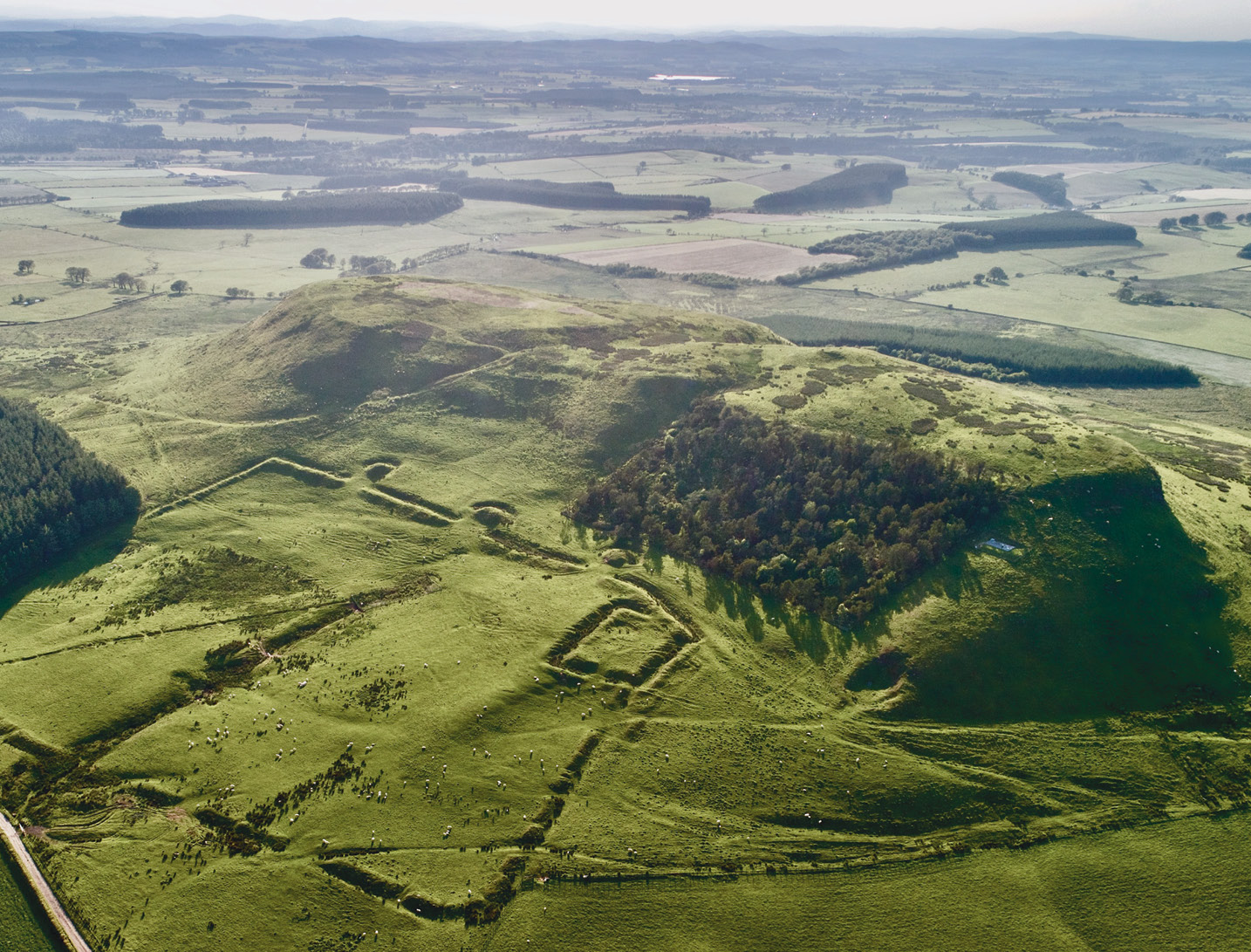
Now the Trust has been working in collaboration with Robert Gapper of Virtual Histories, to find a contemporary way to tell the story of the complex and tumultuous events that surrounded the Roman siege of Burnswark Hill in Dumfriesshire. The site comprises a 17-acre hillfort – the largest in south-west Scotland – which lies in the deadly grip of two massive Roman assault camps, an ancient but still graphic portrayal of the use of disproportionate force. The complex of surviving earthworks, unique in Europe, is also a monumental testament to this period of the Empire’s aggressive expansion and to the formidable single-mindedness of Roman military engineering.
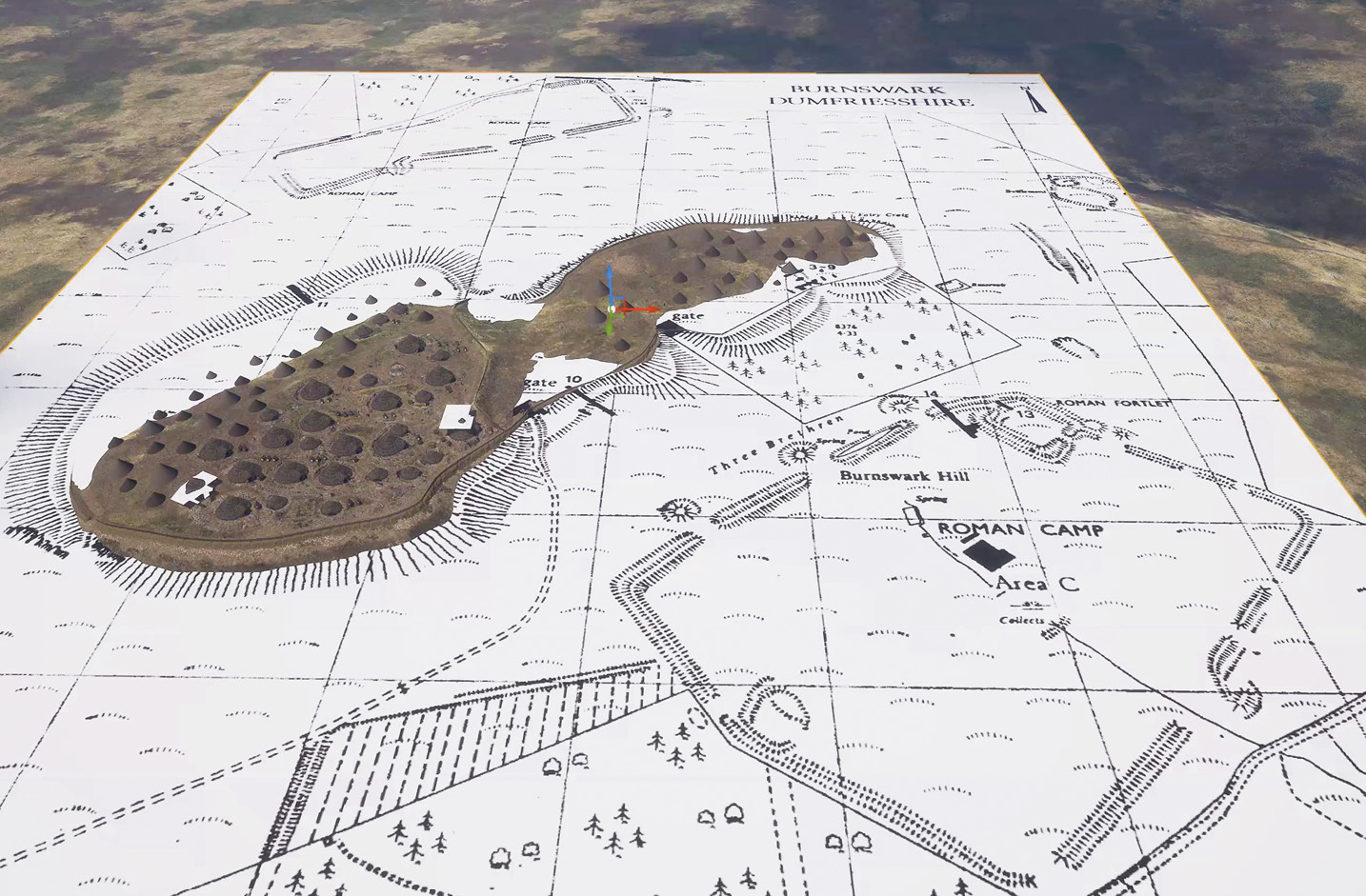
From the outset, it was decided to base any reconstruction of what may have taken place on the published archaeology – not only the highly detailed ballistic mapping carried out by the Trust (CA 316), but also earlier evidence uncovered by George Jobey in the 1960s, R G Collingwood in the 1920s, and D Christison and J Barbour in the 1890s. Wherever possible, modelling would use the available survey data, ranging from the macro (natural features like gradients, watercourses, and residual Roman and indigenous earthworks) to the micro (gateposts, roundhouse post-holes, gateway flagstones, and the find sites of individual Roman weapons). All these data points would prove helpful in adding weight to our understanding of the choreography of the action. Underpinning this information would be a completely new terrain model generated by the Trust’s lead archaeologist, Professor Stuart Campbell, who captured the striking topography in sub-metre photogrammetric detail using the Trust’s RTK drone. This allowed the checking of excavation plans and their rectification to reflect the surviving remains.
Populating the landscape
Once the basic landscape had been established, but before further reconstruction could get under way, a few key assumptions needed to be considered and agreed by iterative discussion, starting with what phase of the Roman invasion to set the reconstruction in. For a long time, it had been assumed that the event was related to Gnaeus Julius Agricola’s initial advance into Scotland in the late AD 70s, at the behest of the Emperor Titus (r. AD 79-81), but pottery and coin finds from Jobey’s investigations on the summit of the hill had suggested that native occupation had ceased at some point significantly later in the 2nd century. In support of this, the Trust’s analysis of the type of sling bullets used for the bombardment, which were almost exclusively made of lead, pointed to the Antonine period – indeed some of the ammunition was isotopically identical to securely dated bullets from the closest Roman fort at Birrens.
Based on these findings, it was suggested that this attack on Burnswark Hill in fact represented the opening conflict of the second recorded invasion of Caledonia by the Roman army (commencing sometime in the late 130s), involving troops led by an imperial legate, Quintus Lollius Urbicus, on the orders of Antoninus Pius (r. AD 139-161). Urbicus, recently returned from Judea after playing a major role in Hadrian’s brutal suppression of the Bar Kokhba revolt (AD 132-136), was a man who clearly had considerable experience of dealing with recalcitrant foes and also delivering large imperial projects. This hypothesis goes some way to explaining the impressive investment in Roman resources involved at Burnswark Hill and the dating of some of the finds.
As a result, Robert was able to clad the Roman troops in late 1st- to mid-2nd-century armour, with lorica segmentata and chain mail featuring prominently. Clothing the indigenous peoples, however, was a shot in the dark, and so we opted for a cinematic mix of tunics and trousers with a smattering of pieces of armour. Archaeological finds from further afield in Dumfriesshire suggest this equipment may have been appropriated by indigenous warriors at some earlier period from their Roman adversaries – however, within our financial and time constraints, especially when dealing with thousands of characters, we had to accept the anachronistic appearance of the head gear of some of the native levies.
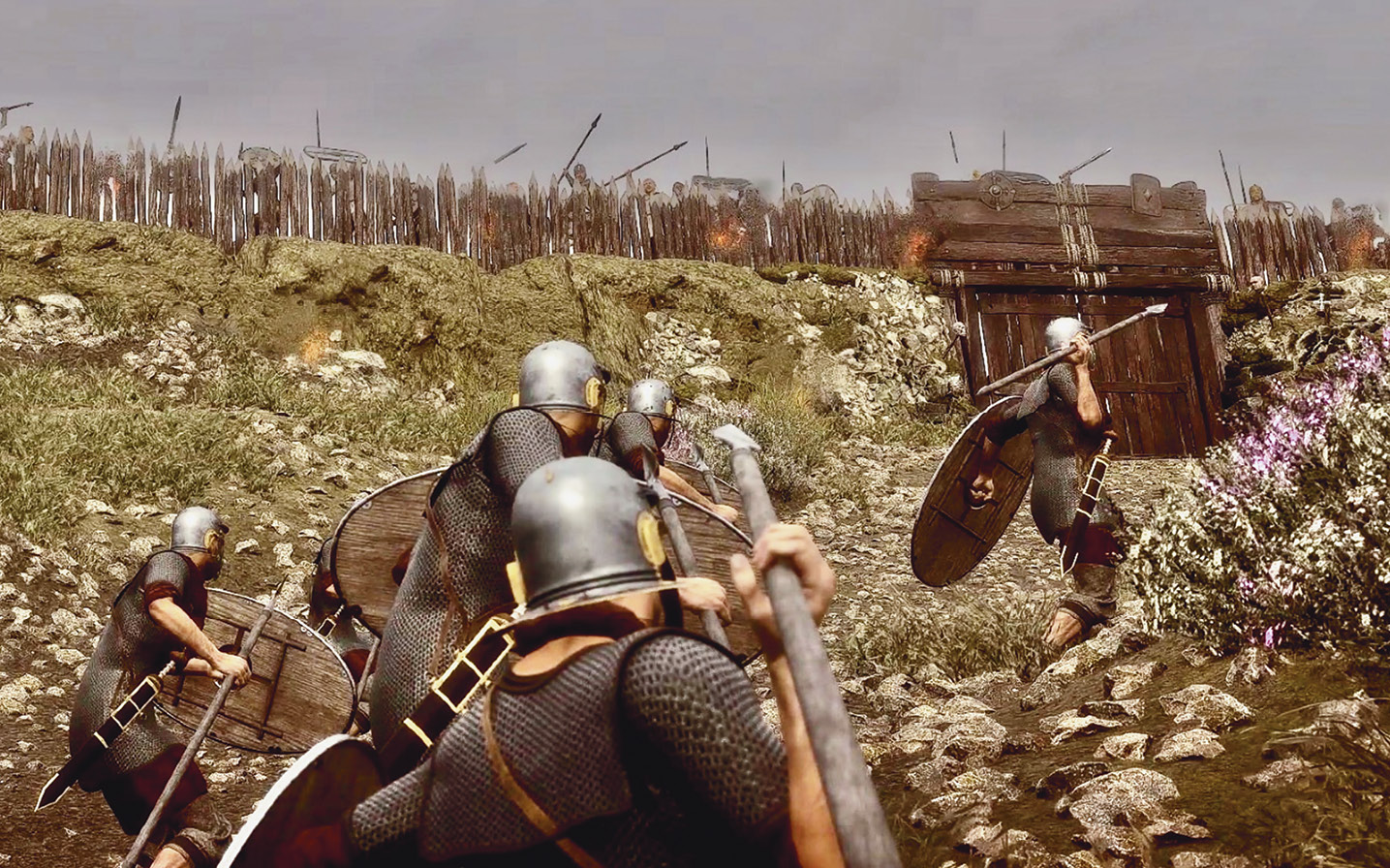
The next issue to be addressed was the number and variety of Roman troops that would have taken part in such a major assault – this proved slightly easier. By adapting a formula provided by Pseudo-Hyginus (the enigmatic author of a probably late 1st-/early 2nd-century description of a Roman military camp, De Munitionibus Castrorum), the surface areas of the Roman enclosures suggested that a total of about 5,000 troops could have been proportionately divided between the two assault camps. The presence of heavy artillery, as witnessed by the ballista platforms – ballistaria – at the hillfort-facing Roman camp gateways, and the finding by Jobey of larger ballista stones targeted at the hillfort, would suggest the force was made up of a significant complement of legionary troops. Following usual Roman logistical practices, this legionary detachment may have been accompanied by at least an equal number of auxiliary infantry, who would probably have been in the vanguard of any assault.
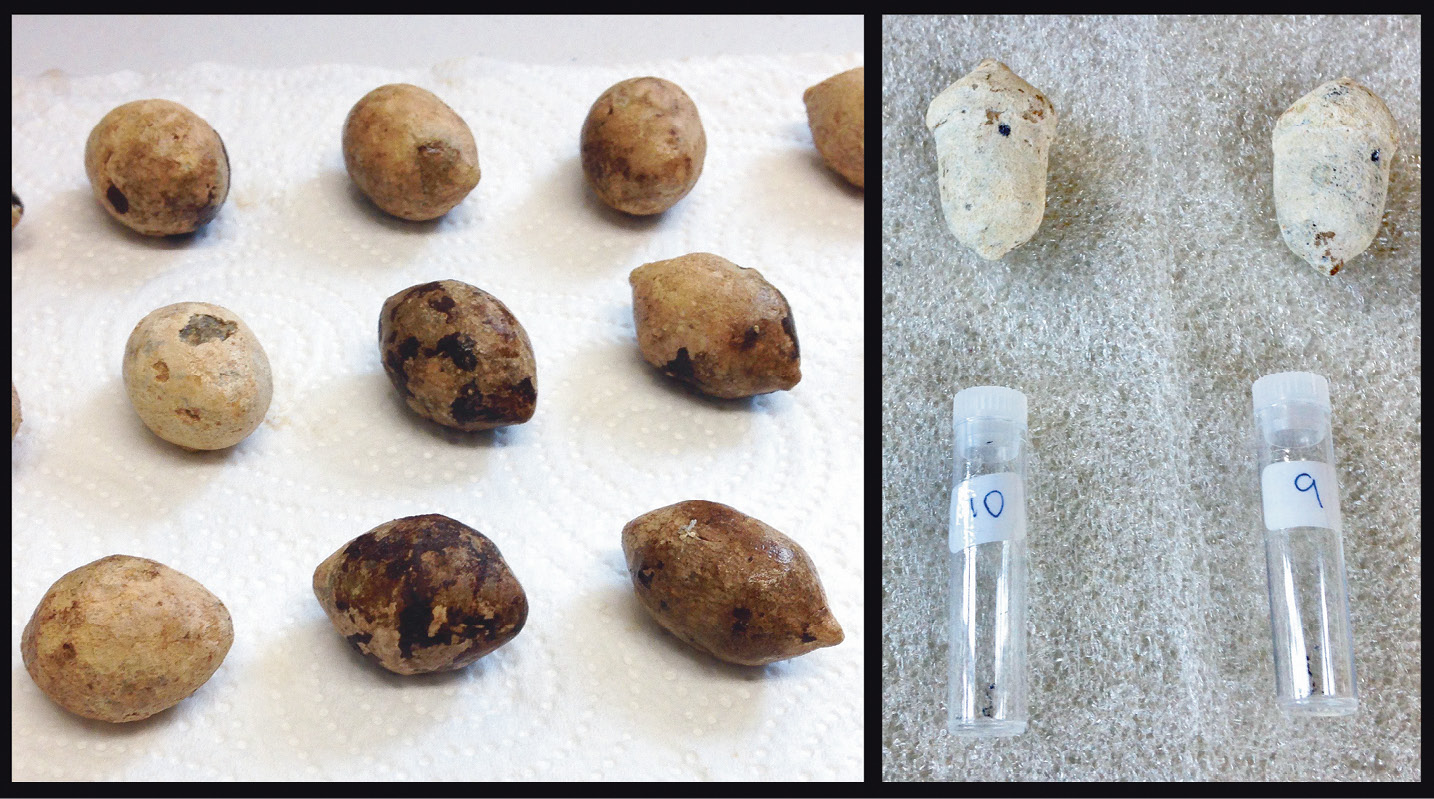
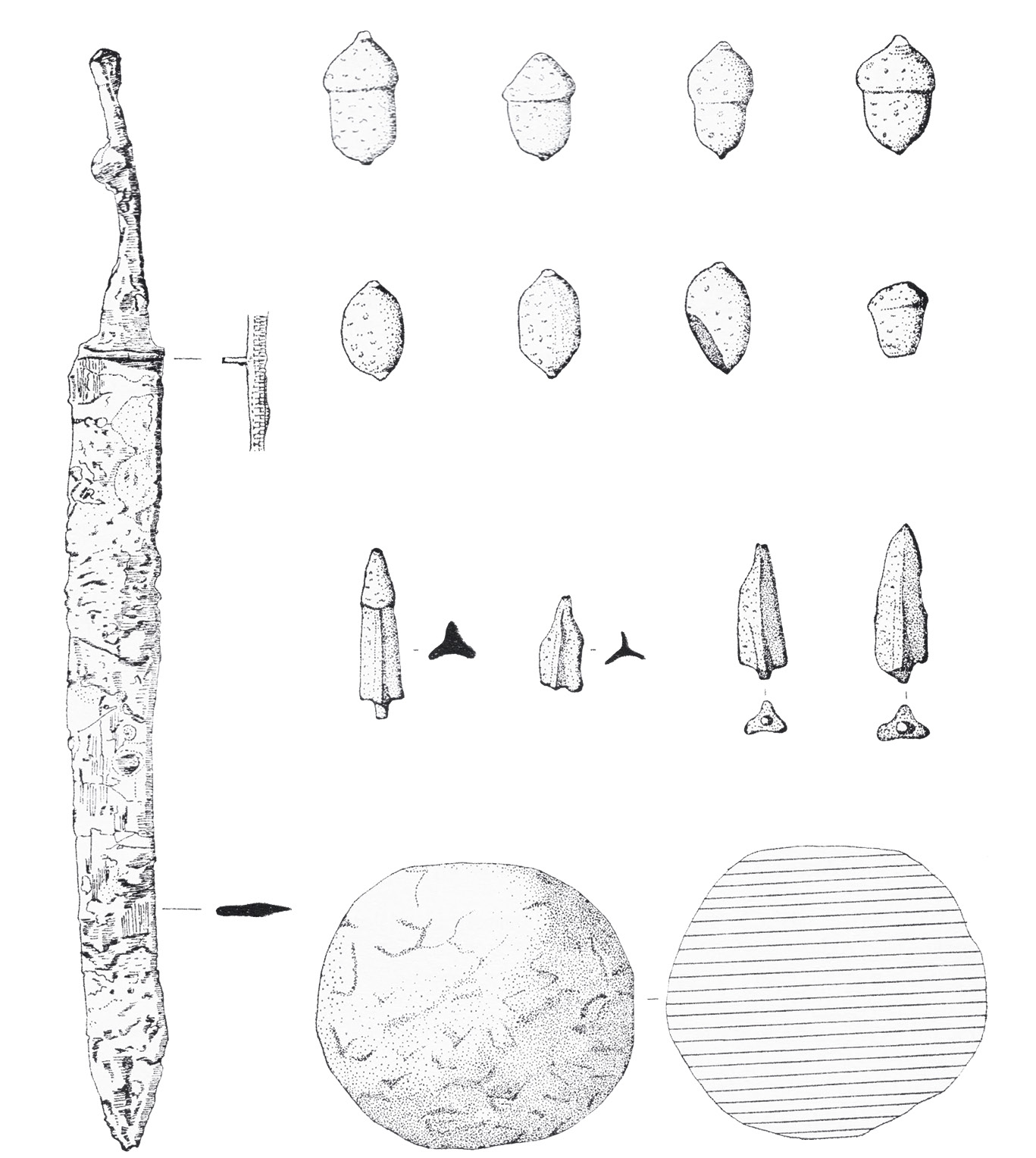
The excavation of a wide variety of missile types, particularly lead sling bullets and trilobate Syrian-pattern arrowheads, also pointed to the presence of significant numbers of ‘specialist’ troops, such as slingers and archers, who would have supported the heavy infantry with covering fire. It would have been their job to complement the larger torsion guns by laying down a blizzard of smaller but equally deadly projectiles prior to any storming of the summit of the hill. One further interesting equipment find from the 1960s investigations was a complete Roman short sword, found lying on the northern hillfort rampart. No attempt had been made reverentially to conceal this weapon, indicating it was not a ritual offering of any kind. It may have been accidentally dropped into the interstices of a long-decayed wooden breastwork during hand-to-hand fighting on the walls of the fort.

Recreating a hillfort community
The logistical brilliance of the Roman army is sometimes overlooked as one of the key ingredients of the Empire’s success. It was important to consider the large numbers of pack animals and enslaved people used in support of the assault troops to bolster the movements of such a large body of men and equipment. In our recreation, Robert showed these support teams furiously baking bread, anticipating the return of hungry Roman troops. On the other hand, the number of defenders represented in the model – approximately 2,500 – was based on the hillfort surface area, a guesstimate of the influx from adjacent hamlets, and working backwards from the number of Roman troops – who, in a coldly calculated siege, would have factored in significant numerical superiority.
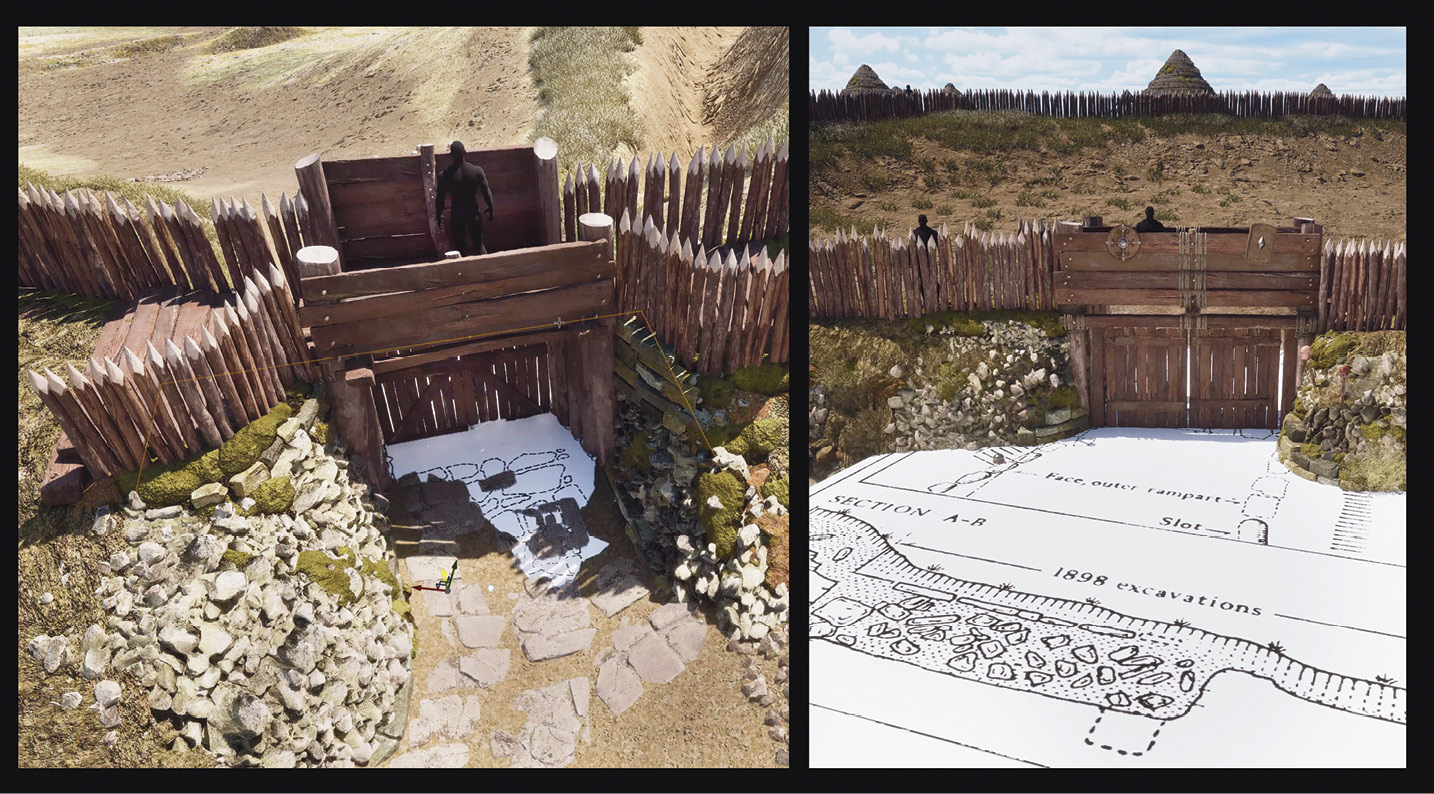
Another important feature that needed to be addressed in the primary formulation of the model was the envisioned extent of the hillfort defences at the time of the attack. It had been emphasised by previous authors that the original stone rampart of the fort had already been felled by the time of the missile barrage. From the archaeological evidence, confirmed both by Jobey and by our own investigations, this was unequivocally true – the old stone walling, which probably had its origins in the late Bronze Age or early Iron Age, had indeed been forcibly cast downhill at some point in the past, significantly in advance of the Roman assault. When and by whom, however, had never been seriously considered. Was it the result of chronic decay (odd, because the tumble was very noticeably downwards and outwards)? Or was this, perhaps, the result of an earlier punitive act (by Flavian-period troops, for example, who would certainly have stormed through the area a few generations earlier)?
Tellingly, there are vestiges of a further rampart superimposed on this older residue of tumbled masonry – an observation that doesn’t feature prominently in any of the more recent archaeological reports. The scale of this residual hillfort rampart, particularly around the western plateau of the hilltop (when compared to other 2,000-year-old earthen or turf ramparts in the south of Scotland) suggests it was originally of a significant and defensible magnitude, despite the dilapidated nature of the old stone wall below. It was therefore decided to portray a dump or turf rampart in the model as a secondary feature, surmounted by a hastily constructed palisade – while fully acknowledging this latter element as artistic licence, yet to be confirmed or refuted by excavation.
The indigenous infrastructure inside the hillfort, in essence a township, was addressed by creating replica roundhouses over the foundational ring grooves revealed by Jobey’s excavations in the 1960s, and scaling up the numbers based on the easily habitable space on the hill’s almost flat summit – primarily the large western and eastern plateaux. Storage compounds, animal pens, and even the pre-existing Bronze Age cairn were then superimposed on the basic network of alleyways and yards that had to be deduced from geophysical surveys, excavations, and reconstructions made at other Iron Age sites. The landscape surrounding the hill, meanwhile, was modelled on what we think we know of farming practices in the region and some information gleaned about trees, shrubs, and heathers from pollen analyses.
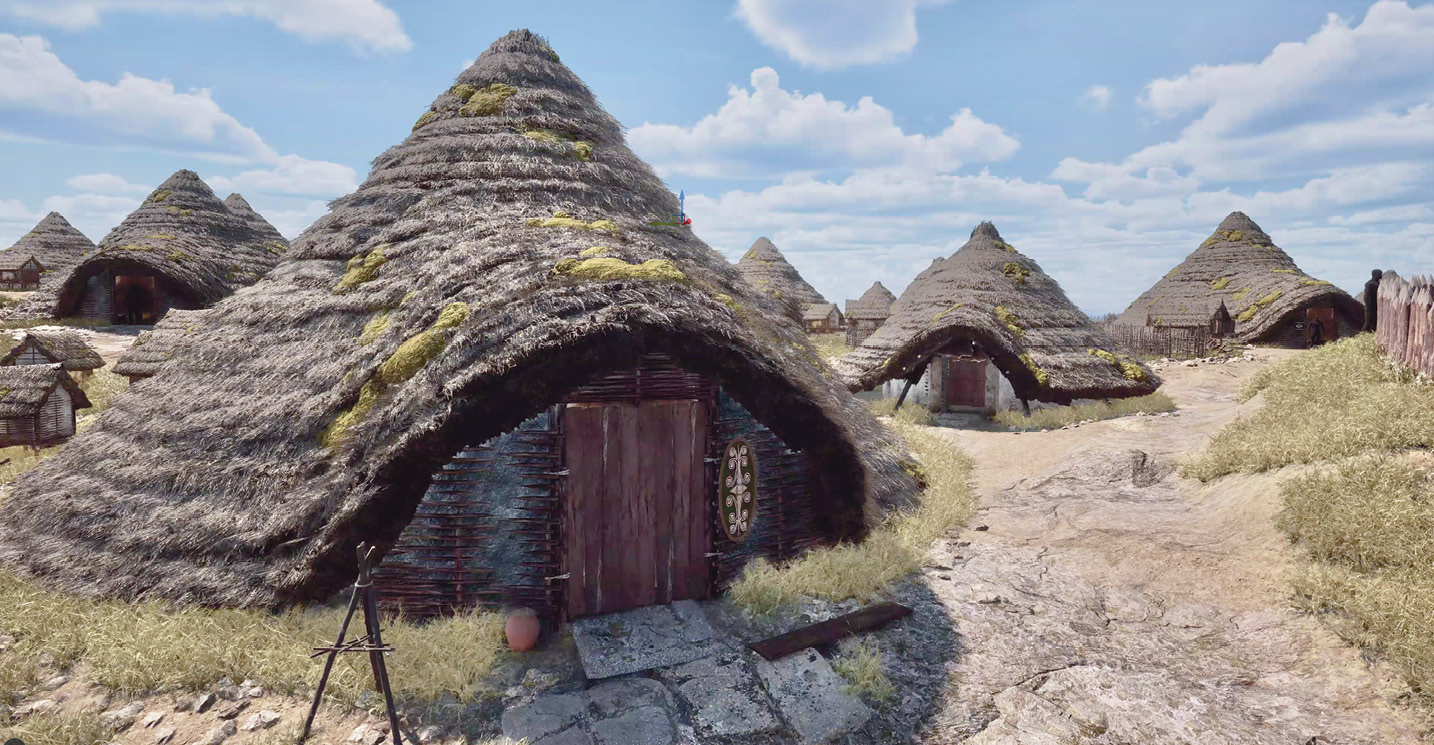
Factors such as the season, weather, and time of day were relatively easy to select, bearing in mind that Burnswark’s proximity to occupied territory suggests it was likely to have been attacked early in any campaigning season – and that, from a meteorological perspective, slingers, archers, and torsion guns wouldn’t have performed well in rain. However, overcast days are common in this part of Scotland, and the option for a darker sky contrasted helpfully when showing any attempt by Roman forces to employ incendiary missiles – a high likelihood in view of the contemporaneous specialised fire-arrowheads found at the Antonine Wall fort of Bar Hill – which would have been employed to set fire to defences and thatch.
Action stations
How then to portray the action? Populating a 3D reconstruction of such a large site – almost a square kilometre had been surveyed – with 8,000 animated figures would have proven to be prohibitively time-consuming and beyond the immediate resources of the Trust. So it was decided to ‘freeze’ the characters at a crucial point in the assault that showed the full offensive might of Roman artillery and the beginnings of the storming assault by auxiliaries, but before it had reached the point of the massacre that would very likely have ensued – always a controversial topic for public engagement, especially where schoolchildren will be part of the intended audience. This also afforded the opportunity to create small-scale vignettes, including emotionally charged events within the hillfort itself.
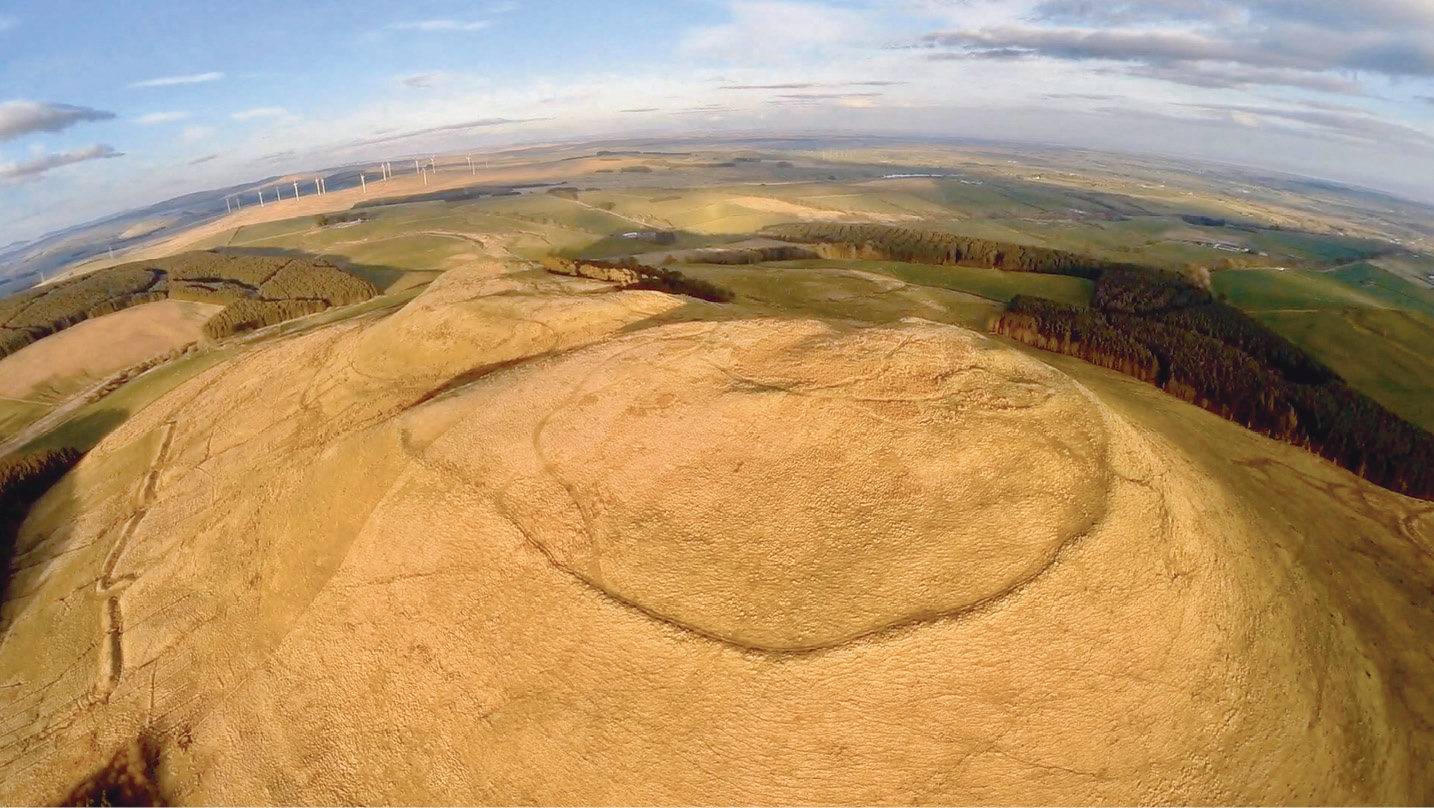
One possible disposition of Roman troops in an early phase of the engagement – and the orientation of any potential defenders who may have been on the receiving end of this episode of asymmetric violence – had already been suggested by Andy Nicholson, Dumfries and Galloway’s County Archaeologist. Andy, who was excavation director of the Trust’s Burnswark Project, and is himself a re-enactor, brought his detailed knowledge of weapon-handling to help make sense of the strategy of the overwhelming assault on the hilltop, as indicated by the wide but revealing distribution of Roman missiles. Not least in this consideration of strategy was how a smaller body of defenders could have managed such a large rampart perimeter. Andy had picked up, too, on the scatter of accidently dropped sling bullets in the south camp, behind the hill-ward facing Roman ramparts, which served as an excellent clue to where the Roman slingers had been positioned to deliver their salvos. A further spread of bullets was identified just outside the north gate of the hillfort, suggesting that a shower of missiles had been used to bring down a group of natives attempting to flee through the encircling cordon of Roman troopers.
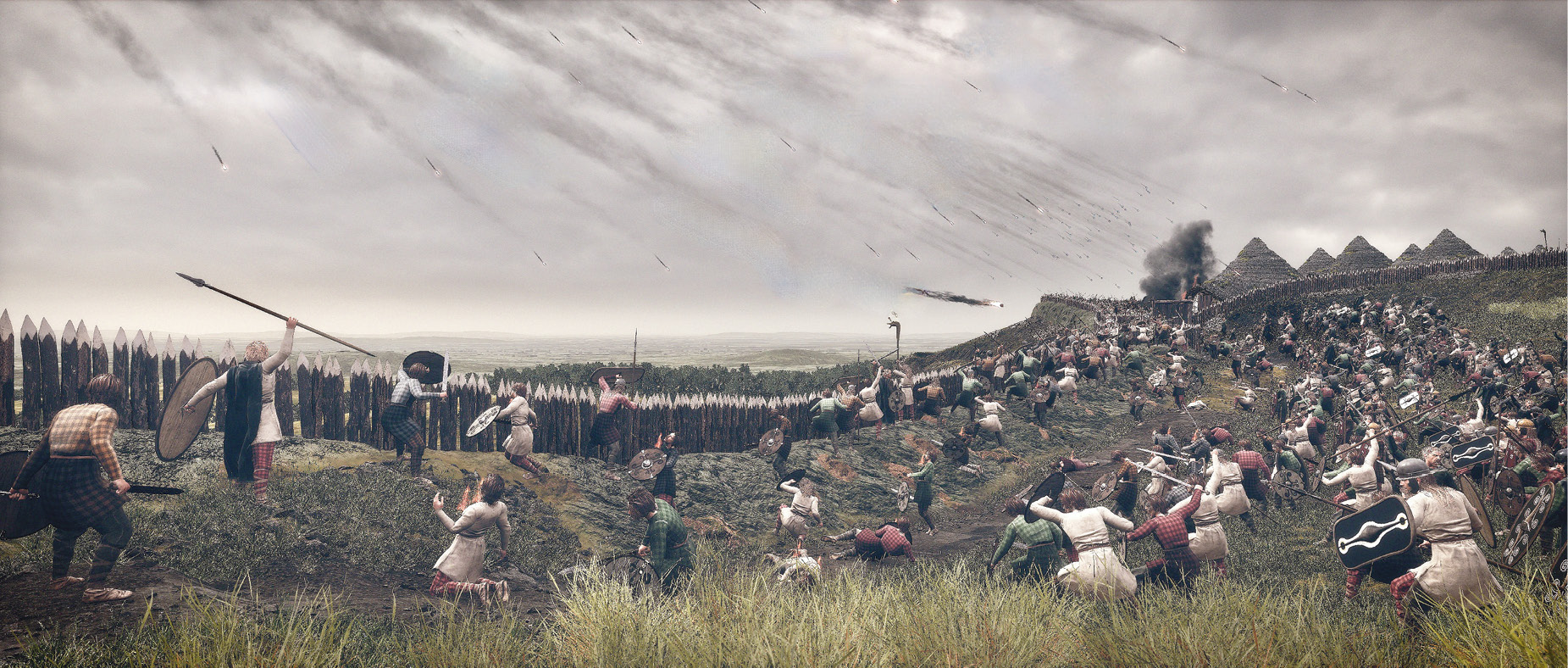
Above & below: The digital model depicts the use of incendiary missiles along with conventional arrows (above). Examples of this former kind of arrowhead have been found at the Antonine Wall fort of Bar Hill (below).

The output is a dynamic and highly detailed flythrough of a tragic episode of warfare that graphically demonstrates the full punitive might of the Roman army. Specific details from the model (which is almost infinitely extendable and represents a work in progress) will be incorporated into an immersive experience at the museum in the autumn, where it will compliment our new Trimontium Experience opening in June. We look forward to hearing what visitors make of this humanising insight into a defining episode of the site’s past.
Acknowledgements: Thanks to Dumfriesshire and Galloway Natural History and Antiquarian Society for granting access to Jobey’s plans.
Further information: Further details can be found at http://www.trimontium.co.uk, while more information on Robert Gapper’s digital reconstructions is available via contact@virtualhistories.uk.
John H Reid and Andrew Nicholson (2019) ‘Burnswark Hill: the opening shot of the Antonine reconquest of Scotland’, Journal of Roman Archaeology 32: 459-477.
Source: John Reid is Chair of the Trimontium Trust.
All images: Trimontium Trust, unless otherwise stated