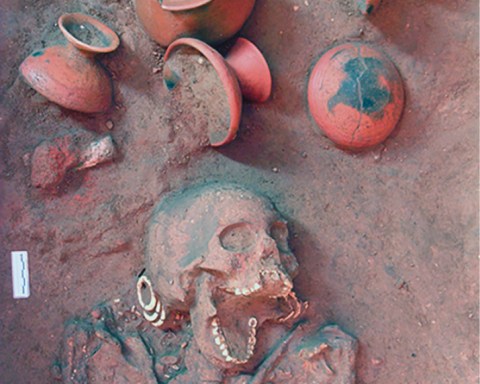
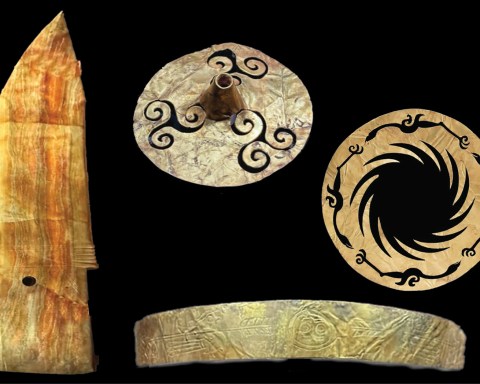
Subscribe now for full access and no adverts
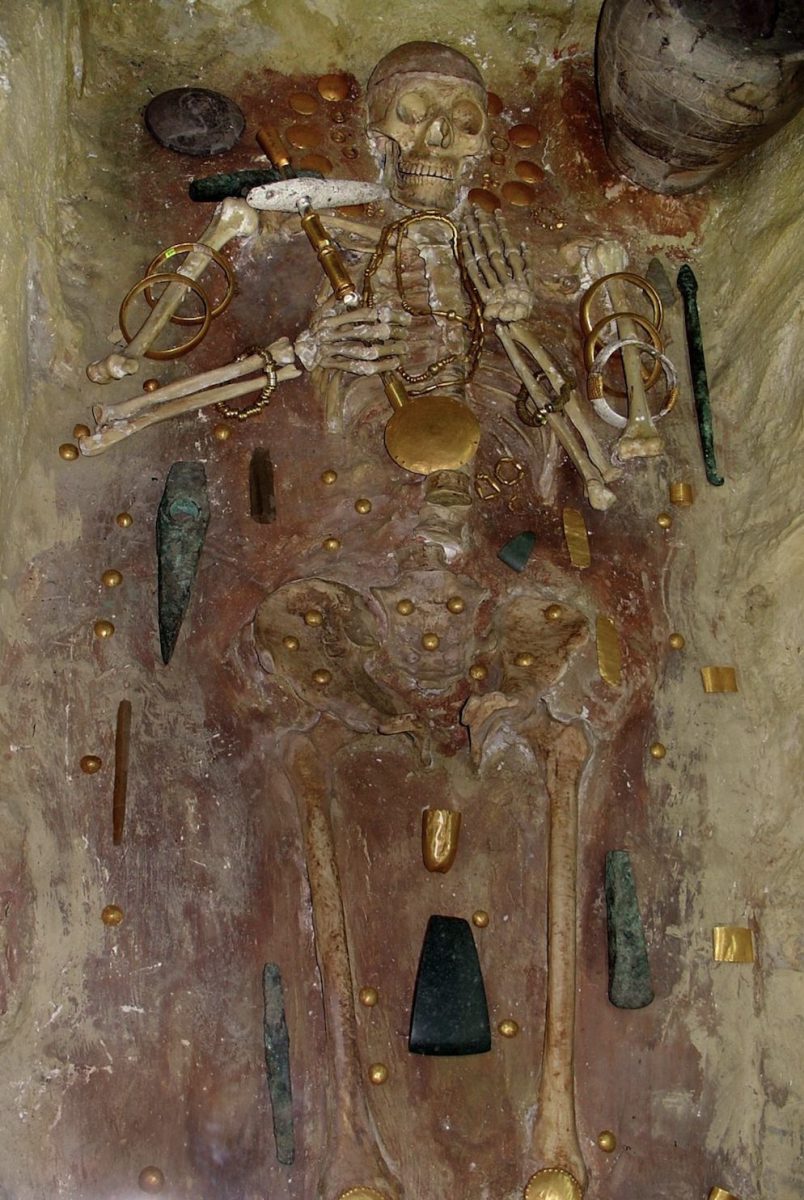
The other day, a package turned up in my mail from the National Geographic Society. I opened it and out came a copy of their latest issue, in Thai. Slightly bemused, I did as I always do with their magazine and looked at the excellent photographs. I came across an article on the world’s most dramatic archaeological discoveries. On the first page, I found myself looking at three members of the terracotta army. Next, there was the golden mask of Tutankhamun, and then some monks at the Ta Prohm temple of Angkor. Intrigued by this high-flying list, I carried on to two men just recently uncovered at Pompeii, apparently the master and his slave according to reports. Then there was the prone corpse of the Ice Man undergoing an autopsy, surrounded by five doctors. Finally came a big surprise – and the reason why I had been sent this journal – for the next image was a photograph that I myself took in March 1985 of burial 15 at Khok Phanom Di.
A distant bell sounded in my memory: I must have been asked to supply this image to National Geographic, and then quite forgot about it. After all, burial 15 has been illustrated many times in different outlets. Then something struck me that led to a train of thought. All the images prior to burial 15 concerned men. The monks at Angkor, the terracotta soldiers, and all five doctors examining the ice man, were men. But burial 15 was a woman. What made her so remarkable?

She lived in a community that it has been my privilege to return from oblivion. Khok Phanom Di is a steep-sided mound that commands the flat floodplain of the Bang Pakong River. I first visited it in 1982. Two of my Thai colleagues and I drove for an hour or so east from Bangkok, and ascended the steep track to the monastery on the top. We met the abbott, who took us to a still-open square opened by a local school teacher. I climbed down a bamboo ladder, at least 8m or 9m, marveling at the stratigraphy, and promised myself that one day, when I had published my just-finished excavations at Ban Na Di, I would come back.
That day came on 27 December 1984. Armed with funding from the Ford Foundation and under a fabulous roof, we opened an area of 10m by 10m in the dead centre of the mound, a spot chosen for us by the abbott because, as he said, it did not involve cutting down any of his trees. How I bless that man. Last time I called by, he was still there, now nearly 100 and sharp as ever. The image of burial 15 took me back to a March day in 1985 as if it were yesterday. My colleague Amphan and I were trowelling away, exposing a marbled midden surface, when the texture suddenly changed to a grey ash. We traced this junction, and it formed a straight line, that we followed for about 3m. Then it turned a right angle. He and I had side bets, that this would or would not be a burial. If so, it would be a pretty big grave. I bet it wasn’t a grave, and we continued for a metre before the junction again turned a right angle, and within the afternoon, we had before us, a complete grey rectangle.
I deployed my most trusted excavators to delve into it the following morning, and down they went, tens of centimetres, until I was summoned to view the rims of some complete pots. Usually, this means that human remains are on the brink, but not this time: the pots were balanced on top of a pyramid of clay cylinders, some bearing the imprints of leaves. We skirted round this edifice and down more than a metre; I was called again to examine a spreading patch of bright red ochre. I watched spellbound as the skull was gradually exposed. I was so happy to lose my bet. The rest, as they say, is history.
Princess of the pots
We recorded and removed the pots and cylinders, to expose the complete skeleton of a woman who died aged about 30 years. We were all taken aback by the incredible weight of shell ornaments she wore. There were layers of disc beads, large I-shaped beads, horned discs on her shoulders, a bangle, and ear ornaments. Months later, my two daughters earned some holiday pay when they counted just over 121,000 beads. As I have often written, this woman whom we christened ‘The Princess of Khok Phanom Di’ must have dazzled in the rays of the sun. Beside her right ankle lay a shell container for her two stones to burnish pots before they were fired, and her clay anvil for shaping pots in the first place. So the clay cylinders were preforms for her to make pots in her afterlife. Her wrists showed evidence for strong muscles, presumably reflecting a lifetime spent manipulating clay.
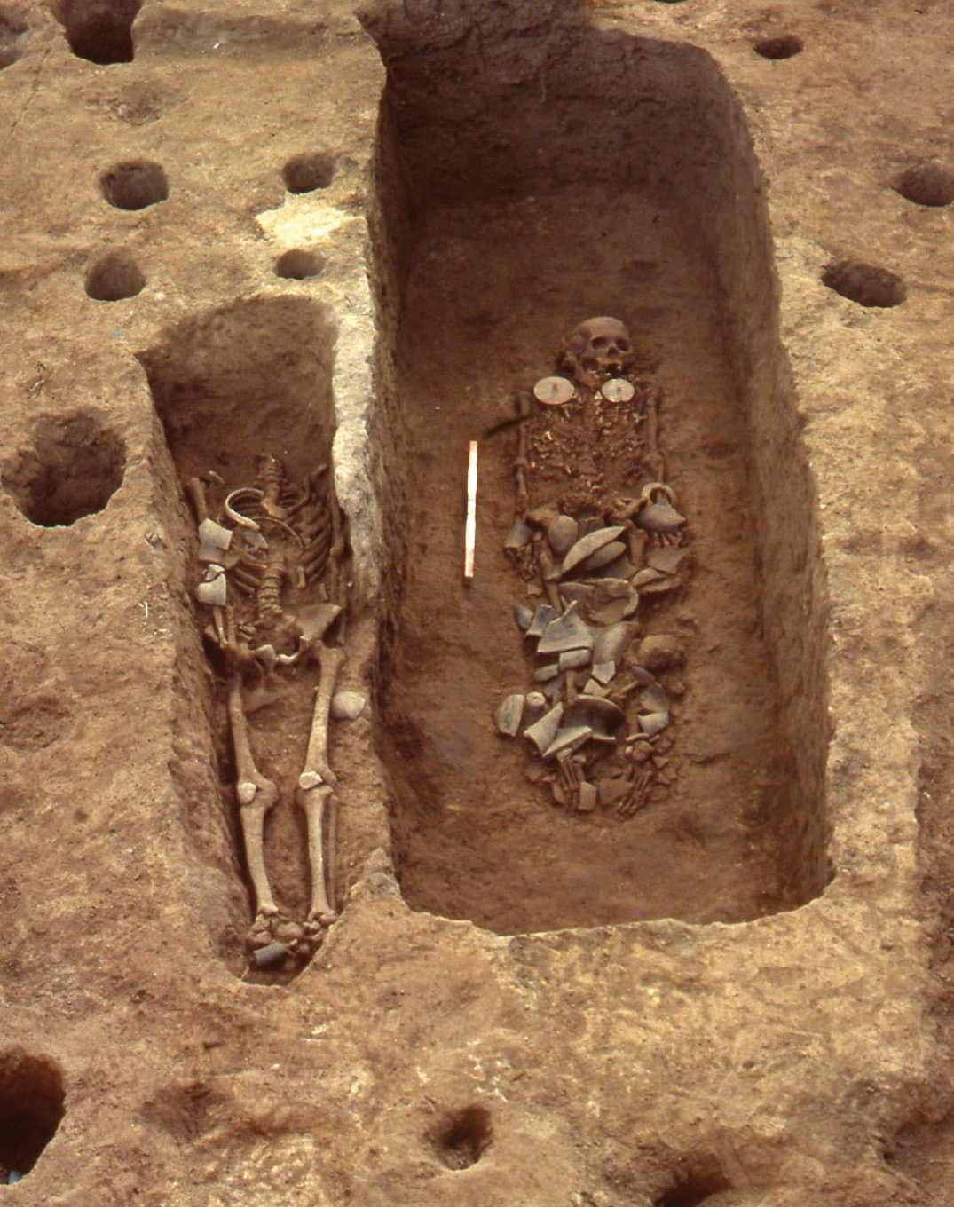
Our radiocarbon dates reveal that she lived about 3,600 years ago, in a village that commanded the estuary of the Bang Pakong River, a choke point in trading that brought all stone to the site, and from which cargoes of pottery vessels were dispatched. The wealth of the community – and we have traced 17-20 generations in the superimposed burials there – brought in the exotic shells that were transformed into ornaments. Her ancestors came to the estuary from their ultimate homeland in the Yangtze Valley.