
Subscribe now for full access and no adverts
I admire Lincoln for the humanity he brought to the presidency.
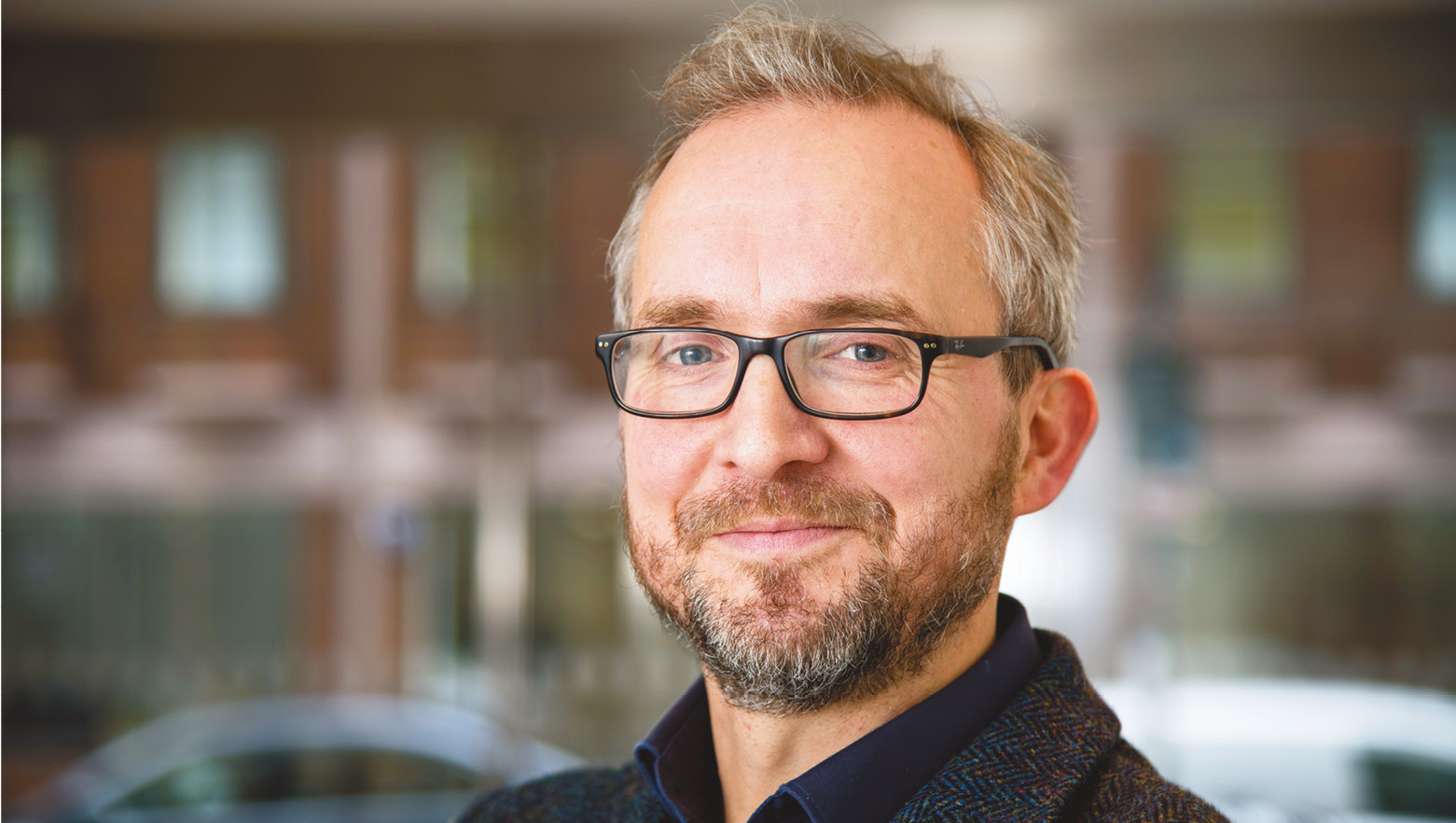
I became interested in the subject when…
I was a teenager in the late 1970s. I was lucky that I had politically minded parents who wanted to visit Eastern Europe. I was sent to East Germany on a Scout trip in 1979 – perhaps they were trying to get rid of me! – and two years later to Leningrad, as it then was, in the Soviet Union. My abiding memory is of the big belching American-made trucks, supplied to the Russians during the Second World War. They were everywhere.
I’m lucky that my passion for history translated into a job in publishing, where over the past 30 years I’ve had the chance to work with amazing authors such as Max Hastings, James Barr, and John Nichol. They influenced me to become a writer.
The figure that I most admire…
I’m fascinated by the American Civil War and have visited many of the historic sites. So I’d say the figure I most admire is Abraham Lincoln. Not just because he was the right man in the right place at the right time, but because of the humanity that he brought to the role of president and his effectiveness in prosecuting the war.
My dream dinner party…
I’d want my wife there! I’d have Lincoln along too, of course, and perhaps Oliver Cromwell and Hannibal, the Carthaginian general as well. This sounds weird, but I would love to meet Emperor Hirohito, as I’ve been writing about him recently. I’m sure they would make lively guests.

A novel I’d recommend…
Wolf Hall, the first in Hilary Mantel’s best-selling trilogy about Thomas Cromwell. I was lucky to be working at HarperCollins when it was published, so I got to meet Mantel briefly when she won the Booker for it in 2009. The entire trilogy is great, but the first book is the best. Mantel brilliantly recreates the turbulent world of Tudor England through Cromwell’s eyes. Although I specialise in 20th-century history, I find the Tudor period fascinating. It was a time of massive social, cultural, and religious upheaval – and it’s great to delve into.
My favourite war film…
Going back to my love of the American Civil War, I’d pick Glory (1989), the Oscar-winning film directed by Edward Zwick. You get a real sense of what it was like to be in the 54th Massachusetts Infantry, one of the Union’s earliest African-American regiments. It’s an emotional film, but it captures the era well.
A museum to get lost in…
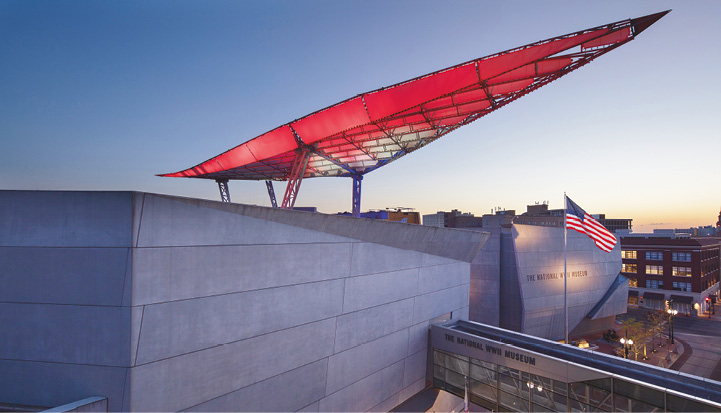
The National WWII Museum in New Orleans [below]. I was there last February to research my new book and found it incredible. It’s not just one building, it’s several. You could spend a week there and still not see everything.
Something I learned recently…
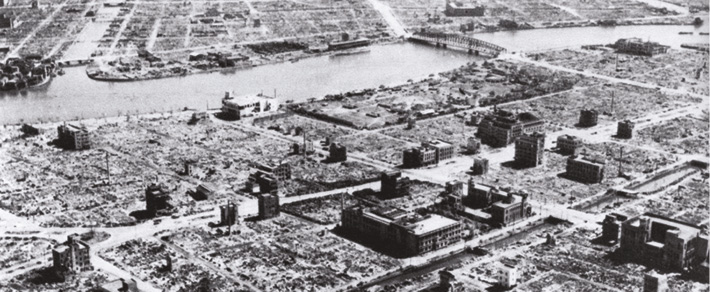
I learned recently that napalm, used in the Allied bombing of Tokyo in 1945 [below], was basically created at Harvard University. But for understandable reasons you won’t find any kind of commemorative plaque regarding this. Perversely, when I visited Tokyo, I realised how truly cataclysmic the bombing had been – how many people were killed and how much of the city was destroyed. But once again there is no official memorial or site of remembrance. All I found was a moving statue down a side street in a Tokyo suburb of a mother cradling her child. This was actually paid for by survivors’ families. It’s as if the authorities don’t want to dwell on this huge event in the city’s history, devastating though it was.
My next project…
I’m writing a new history of warfare as told through the prism of various factors, such as leadership, logistics, timing, morale, and technology. What I want to do is look at a series of consequential battles from across history and give the reader a snapshot of, for example, how technology or a particular figure played a significant role in the outcome. MHM
Iain MacGregor has worked as an editor of non-fiction for several major publishing houses, and is also an author. His books include Checkpoint Charlie and The Lighthouse of Stalingrad, which was the MHM Book of the Year in 2023. A fellow of the Royal Historical Society, MacGregor has spoken at many literary festivals and conferences in the UK and abroad, and has also appeared on history podcasts and television documentaries. His new book, The Hiroshima Men, about the atomic bombing of Japan in August 1945, is out now (published by Constable).
Images: Wikimedia Commons