Subscribe now for full access and no adverts
The Kyujo Incident
Andrew Mulholland’s excellent review of Richard Overy’s new book Rain of Ruin (MHM April/May 2025) concisely summarises the chaos and indecision of the Japanese High Command in deciding whether to accept the terms of the Potsdam Declaration of 26 July 1945. This required the ‘unconditional surrender’ of the Japanese to the Allied powers.
The firebombing raids on Tokyo and other Japanese cities by the American air force in the spring of 1945 are well documented, but surprisingly neither the book nor Mulholland’s review mentions perhaps the most consequential bombing mission of them all.
This was the longest continuous mission of the war, against the last remaining Japanese oil refinery at Akita, in the north of the main island of Honshu, on 14 August 1945. In flying over Tokyo on their way to the refinery, the force of more than 130 B-29 Superfortresses caused the Japanese capital – which was fully expecting to be the victim of a third atomic bomb – to go into a complete blackout.
Unbeknownst to the Americans in the skies above, a coup – known as the Kyujo Incident – was in progress in Tokyo. Rebel soldiers were attempting to prevent Emperor Hirohito (pictured) from being driven from his palace to a studio to record his message of surrender.
In the darkness, they were unable to stop the emperor recording his message, which was broadcast the following day. Had this raid not taken place and the coup been executed, the emperor’s message would not have been broadcast and, quite possibly, the war would have continued.
Roger Laing, Iver, Buckinghamshire

Heroes and heavy water
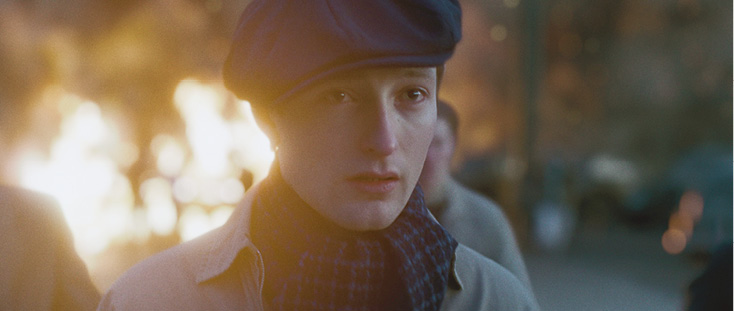
Your ‘War on Film’ series never fails to stimulate, and I especially enjoyed Taylor Downing’s review of the new film Number 24, about resistance to the wartime German occupation of Norway (MHM April/May 2025).
Norway’s experience of World War II was neglected for many years after the entertaining but not particularly accurate 1965 film The Heroes of Telemark, about the sabotaging of the German atomic bomb programme. The same subject was covered half a century later in a TV miniseries called The Saboteurs, also known as The Heavy Water War.
Recent years have seen the Norwegian experience of war attract growing attention from film-makers. The 12th Man retold the real-life escape of a lone resistance fighter over Norway’s icy landscape.
In 2022 came Narvik and then Gold Run, based on the true story of how the resistance prevented the capture of Norway’s bullion reserves, while War Sailor, also released that year, focused on the experience of merchant sailors pressed into service in the Allied cause.
With a budget of $11 million, it was reportedly the most expensive Norwegian film ever made. Its harrowing depiction of what it was like to be torpedoed at sea, and the impact of war on family ties and friendships, long stays in the mind.
Don Ford, Scunthorpe, North Lincolnshire
Presidential veterans
The infographic on the American Civil War (MHM February/March 2025) stated incorrectly that only three future presidents – Ulysses S Grant, Rutherford B Hayes, and William McKinley – fought in the conflict.
In fact, James Garfield and Benjamin Harrison were also veterans. It should be noted, too, that Chester Arthur, although he did not see combat, was quartermaster general for the state of New York early in the war. Perhaps he could be added as a footnote.
Mark Prescott, via email
Remembering Grant
Fred Chiaventone’s articles on the American Civil War (MHM February/March 2025) were excellent in providing a brief but comprehensive overview of a conflict that changed the history of the nation and the world. This was no easy task. But I feel that he does not give General Ulysses S Grant the credit he deserves for being the military leader of the team – along with Lincoln and William Tecumseh Sherman – that ultimately won the war.
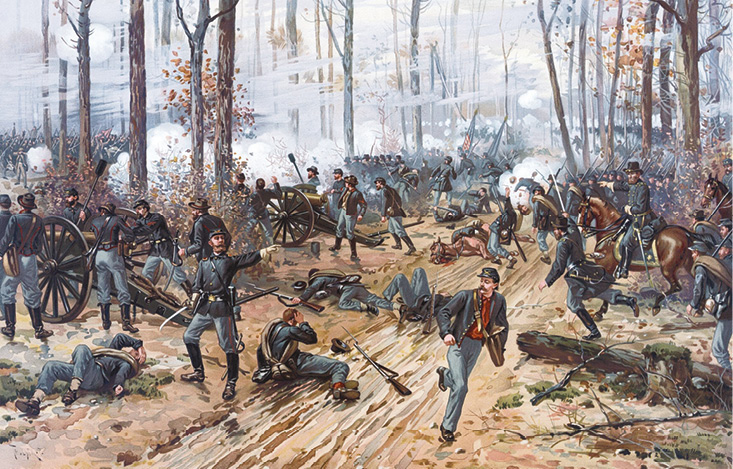
Grant’s leadership would create a perfect storm for the Confederacy, one which they could not defeat. For instance, the Battle of Shiloh on 6 April 1862 (pictured below) was nearly a disaster, but Chiaventone seems to give General Sherman the credit for saving the army by preparing defences at the Hornet’s Nest. In fact, it was Grant, after assessing the situation, who ordered a defensive line along that sunken road to be held ‘at all hazards’. It was one of a number of steps Grant took that day to forestall a Union defeat.
Chiaventone and MHM are to be thanked for giving those not familiar with this aspect of America’s history such an otherwise thorough study.
John Mason, Huntsville, Alabama
All images: Wikimedia Commons/Netflix