
Subscribe now for full access and no adverts
World’s oldest waterworks?
Chris Catling, in his excellent piece on those temples of engineering, the waterworks (CA 421), refers to a Boulton and Watt beam engine at Kew dated 1820 as being the oldest working beam engine in the world. Crofton, on the Kennet and Avon Canal, claim theirs dates to 1812 and is actually the oldest working beam engine. You can see it run on open days: http://www.croftonbeamengines.org/engines/no-1-engine-boulton-and-watt.
Mike Williams, Swindon
Roman recycling strikes again
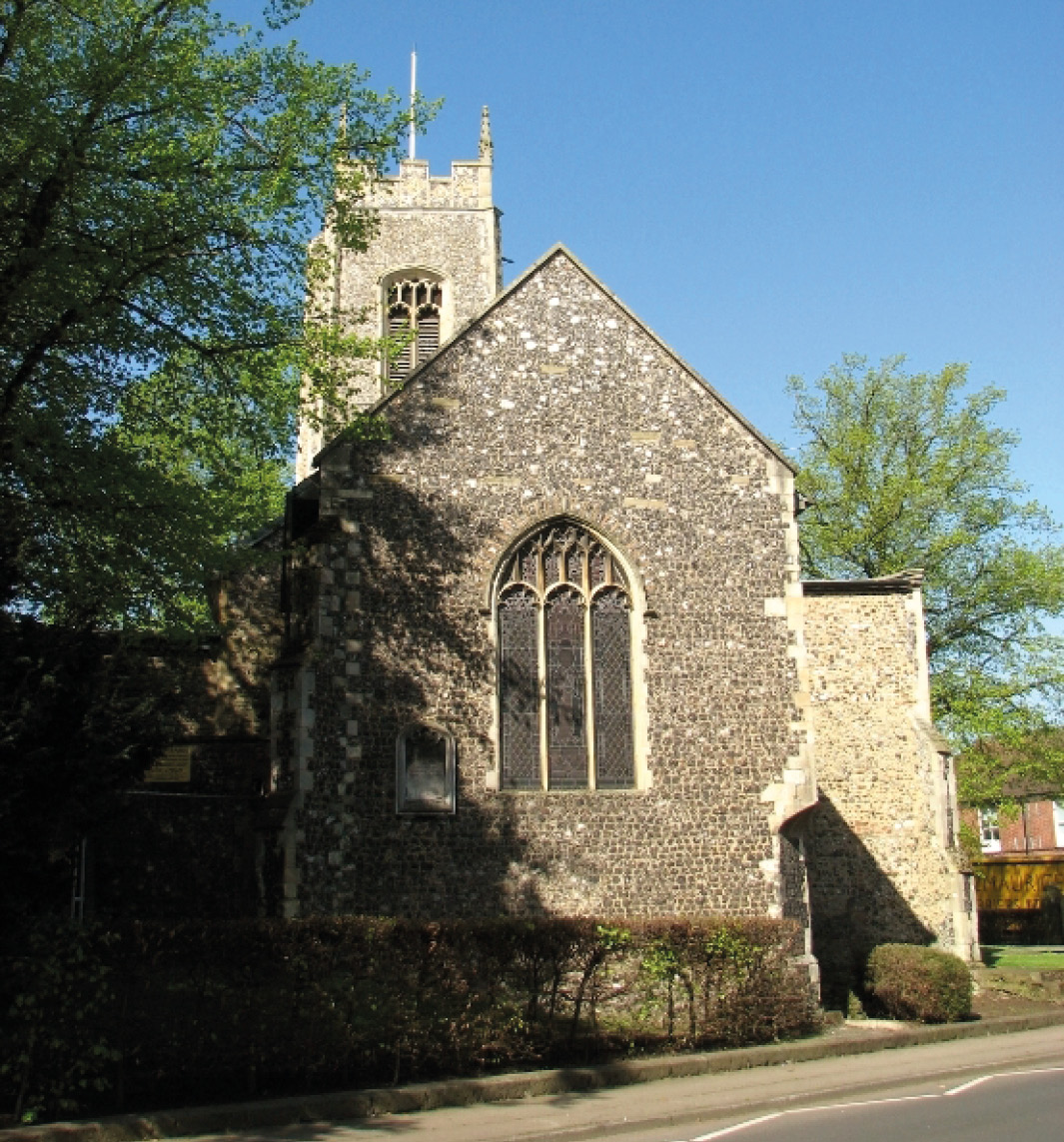
The evidence of a Roman signal station at Reedham (CA 420) is possibly supported by evidence further upstream at the church of St John de Sepulchre in Norwich (below). The church is in a prominent location near the confluence of the rivers Wensum and Yare, and the possible Iron Age precursor to Ber Street. Roman bricks appear to have been reused in the Saxon transepts (as noted in In Search of Norfolk’s First Stone Churches by Peter Wade-Martins, Taylor and Taylor’s Anglo-Saxon Architecture, and in personal observations from the 1980s having grown up in Norwich). It is quite plausible that a Roman signal station or watchtower would have been located near the site of the church, possibly constructed during the era of the Saxon Shore forts to improve the defences of nearby Venta Icenorum (Caistor). As far as I am aware, there is no other compelling evidence of Roman occupation in Norwich, so a similar excavation and study at St John de Sepulchre would be very worthwhile.
Richard Stanaway, Northcote, Australia
More on maltings
Thank you for Chris Catling’s excellent article on the build- ings associated with the production of malted grain used for the production of beer (CA 420). He name- checks Old Sleaford as the potential site of a Romano-British corn drier or potential malting kiln.
However, his survey of malting buildings, existing and demolished, did not mention the iconic Bass Maltings (below), which still dominates the south-eastern approaches to Sleaford. Completed in 1907, this massive Edwardian complex provided malted barley to the Bass Brewery at Burton on Trent for a relatively short time of 50 years. It still stands but, I’m afraid, is now very sadly falling into decay. Your readers may wish to know that, while a visit to the site itself is not possible due the to the dangerous condition of the building, the Sleaford Museum has a small exhibition that tells the story of the Bass Maltings.
Mark Bamford, Chairman, Sleaford Museum Trust

A brewing eruption?
An Icelandic volcanic eruption in AD 934 produced around 20 cubic kilometres of lava and vast amounts of sulphur dioxide. The cooling effect and the deposition of acid on already acid soils must have been devastating for the grain harvest in Scotland and upland Britain. There would have been nothing else available for brewing. Perhaps the multinational attack on the Saxons at Brunanburh in AD 937 was a result of anger at the lack of beer.
Richard Durrant, Poole
Inspiring archaeology
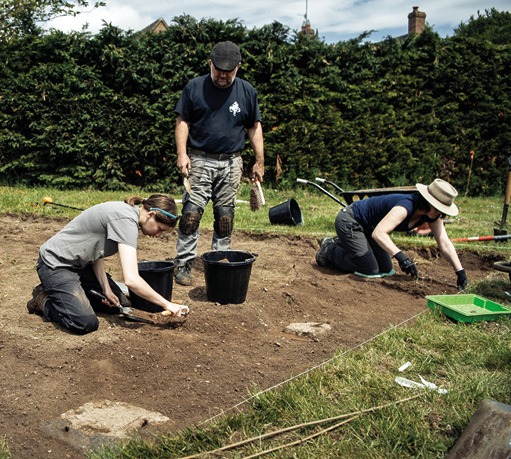
Thank you for another interesting issue of CA – always lovely to look at, with a good mix of topics covered. I found John Schofield’s article ‘Can archaeology save the world?’ particularly thought-provoking, especially his discussion of how getting involved with heritage can be good for our mental and physical wellbeing. I have to agree. Though my own archaeological endeavours are limited to the sofa, I find settling down with an episode of Time Team (old or new!) wonderfully cosy and comforting after a bad day – how inspiring, then, to read about how participating in fieldwork can benefit people facing much bigger challenges! I have always enjoyed following the work of Operation Nightingale and its veteran volunteers (pictured at Aldbourne, right; see CA 354) through your pages, and I was really glad to read (in CA 416) about a similar scheme, Operation Phoenix, being set up for firefighters and other ‘blue light’ personnel. I remember, too, reading about the late Tim Darvill’s ‘Human Henge’ initiative (CA 329), where people with mental ill-health were encouraged to immerse themselves in the Stonehenge landscape, but it had never occurred to me that similar projects might benefit homeless communities, as Professor Schofield describes. It really is amazing how archaeology can touch so many lives in so many ways. I note that one of the projects mentioned in CA 422 is called ‘Archaeology on Prescription’ – it certainly should be!
Sarah Coleshill, Liverpool
Edible Archaeology
At a recent memorial afternoon tea at the Balmoral Hotel, Edinburgh, for my father, Emeritus Professor Keith Rutter – an eminent expert in ancient Greek history and coinage – the chef took considerable time and care to create an appropriate numismatic element to enhance the range of cakes that were served.
The chef comments: ‘We looked online to see if there were any existing moulds that could be used to create a replica coin, but there was nothing ready-made, so we looked into a bronze stamp used for wax seals that could be utilised for stamping into chocolate.’
‘As long as it was used straight from the freezer, the stamp worked well, but only about six coins at a time can be made before the chocolate starts to stick. We found a company online and had a stamp made especially to recreate an ancient coin, and once the stamped coins were made, we brushed them with edible gold powder to give the final effect and set them on top of Black Forest gateaux [on the far left of the bottom image].’
‘As an alternative, we also ordered some specially made edible rice paper, chose another ancient coin image, and got the rice paper printed to the size of one of our macarons. We prepared the macarons as usual, but then cut out a round of the coin from the rice paper and stuck it on top of the macarons using a sticky sugar syrup [main image].’
Catherine Rutter, Edinburgh

CA ONLINE: What you shared with us this month
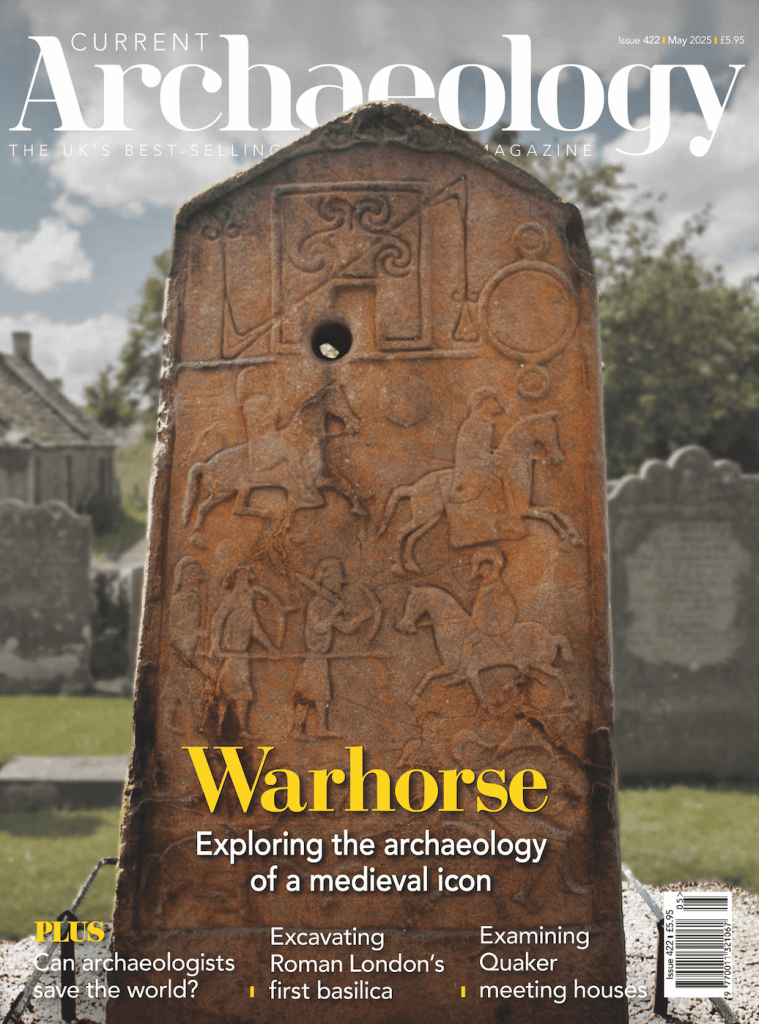
Medieval Warhorse @AHRC_Warhorse
We have a Medieval Warhorse feature article in the latest edition of Current Archaeology magazine, and have the front cover! @CurrentArchaeo
Ben Paites @benpaites.bsky.social
My book isn’t even out yet and I’ve received this wonderful review from Harriet who has reviewed it for @currentarchaeology.bsky.social
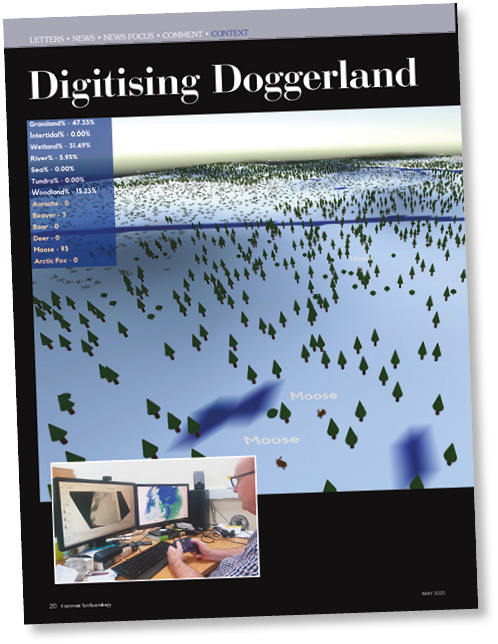
Submerged Landscape Research @Submerged_Lands
The simulations produced as part of the Unpath’d Waters project are featured in this month’s Current Archaeology @CurrentArchaeo @BradArcForensic
Write to us at: CA Letters, Current Publishing, Office 120, 295 Chiswick High Road, London, W4 4HH, or by email to: letters@archaeology.co.uk For publication: 300 words max; letters may be edited.