
Subscribe now for full access and no adverts
TEAM OF RIVALS
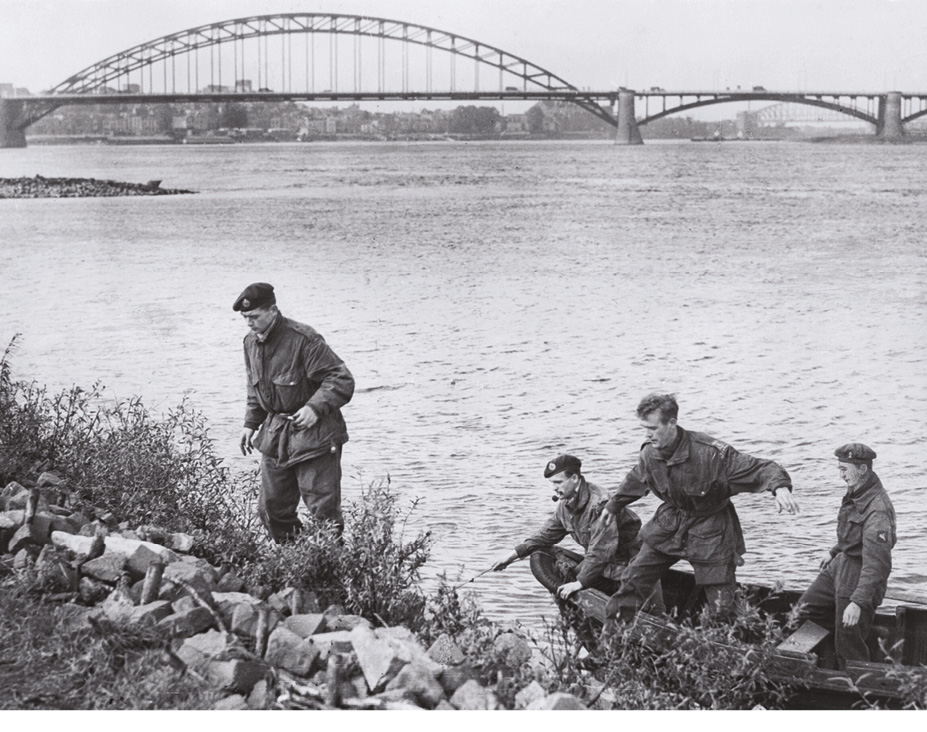
Taylor Downing’s article asking whether the Allies could have won in 1944 (MHM December 2024/January 2025) raises an interesting point regarding Operation Market Garden, the ambitious plan proposed by the normally cautious General Montgomery.
Downing attributes this plan to the mood of euphoria in Allied headquarters at the perceived collapse of the German army after the Allies crossed the Seine in August 1944. However, there was perhaps another factor involved in Montgomery’s proposal, namely the competition among the Allies to take credit for victory.
The United States was quickly becoming the senior partner in the alliance, with General Eisenhower assuming command of all land forces on 1 September 1944, taking over from Montgomery. There were now four US armies in Western Europe, alongside one British, one Canadian, and one French. British resources were stretched to the limit. Time was running out for Montgomery to take credit for victory, hence his proposal to leapfrog German defences, cross the Rhine, and ultimately drive to Berlin.
Eisenhower’s more modest objective for Market Garden was to gain a bridgehead over the Rhine and then open the port of Antwerp. He considered this imperative for the advance into Germany, which was to be made on a broad front. He never supported Montgomery’s single thrust to Berlin, which he deemed unacceptable militarily and politically.
Simon Davidson, London
LESSONS FROM FLASHMAN
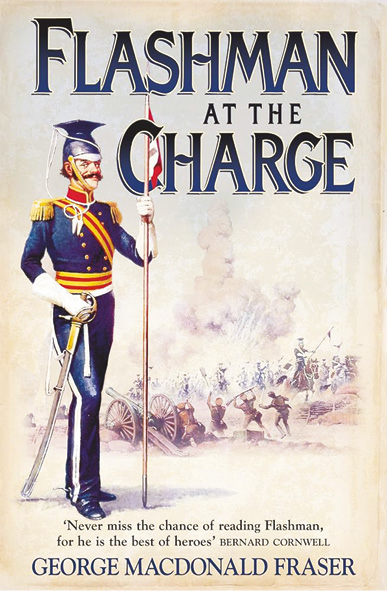
I greatly enjoyed the profile by Nick Spenceley of George MacDonald Fraser’s Flashman books in the most recent issue (MHM December 2024/January 2025). I discovered Fraser’s fourth book in the series, Flashman at the Charge, when I was in my senior year of the Naval Reserve Officers Training Corps. I was hooked on Fraser’s ability to create detailed and accurate historical tales that were also funny and exciting, and complete with detailed footnotes.
Four months later, I was on an aircraft carrier on Yankee Station off North Vietnam and discovered the first Flashman book in the ship’s library. Over the next 20 years of my career as a naval aviator, I read every Flashman book when they came out.
As Spenceley points out, Fraser’s books are full of valuable lessons for military situations. Flashman’s descriptions of how units function is spot on. And, unfortunately, I also found the reality of dangerously incompetent individuals, like the intelligence officer briefing my crew for a combat mission into the Persian Gulf, who didn’t grasp the difference between Iranian Shia and Arab Sunni.
So thank you to Nick Spenceley for his article, and a belated thanks to George MacDonald Fraser for over 50 years of reading pleasure.
Mike Barton, Commander, US Navy (ret’d), Kaysville, Utah
CROSSING SWORDS
I read with interest your article on the samurai sword found in Berlin (MHM October/November 2024) and immediately thought of a similar story regarding the German auxiliary cruiser Atlantis.
In November 1940, off the coast of Sumatra, Atlantis encountered the British cargo ship SS Automedon, engaging her and causing her surrender. On boarding, the Germans broke into the strong room and found 15 bags of top-secret mail for the British Far Eastern Command. Further searching uncovered a weighted green bag marked ‘Highly Confidential’ containing the latest assessment of Japan’s military strength along with a gloomy report which stated that Britain was too weak to risk war with Japan.
The captain of Atlantis, Bernhard Rogge, delivered the report directly to the German embassy in Kobe, Japan. A copy was also given to the Japanese. For his discovery, Rogge was rewarded with an ornate katana, a standard sized samurai sword. The only other Germans so honoured were Hermann Göring and Erwin Rommel.
John C Kelly, via email
WORTHY SUCCESSOR
Congratulations on the new look for the magazine. I feel somewhat honoured that my article on the British Civil Wars (MHM December 2024/January 2025) was part of this special issue.
I particularly enjoyed reading the interview with James Holland on the back page. I was someone who was inspired by historians such as Peter Young and David Chandler, and then by Richard Holmes (whom I was privileged to know), and Holland is a worthy successor to them all.
He is a genuine military historian and one of the best currently around, as opposed to a TV personality who writes the occasional book.
David Flintham, via email
All images: Wikimedia Commons