Subscribe now for full access and no adverts
Dear Editor,
I always enjoy Geoffrey Lenox-Smith’s articles. He takes us on a journey to some of the more remote but interesting places in Egypt. In particular, he talks about some of the practicalities involved in getting to certain places and about the people he meets en route. His visit to Serabit el-Khadim is no exception.
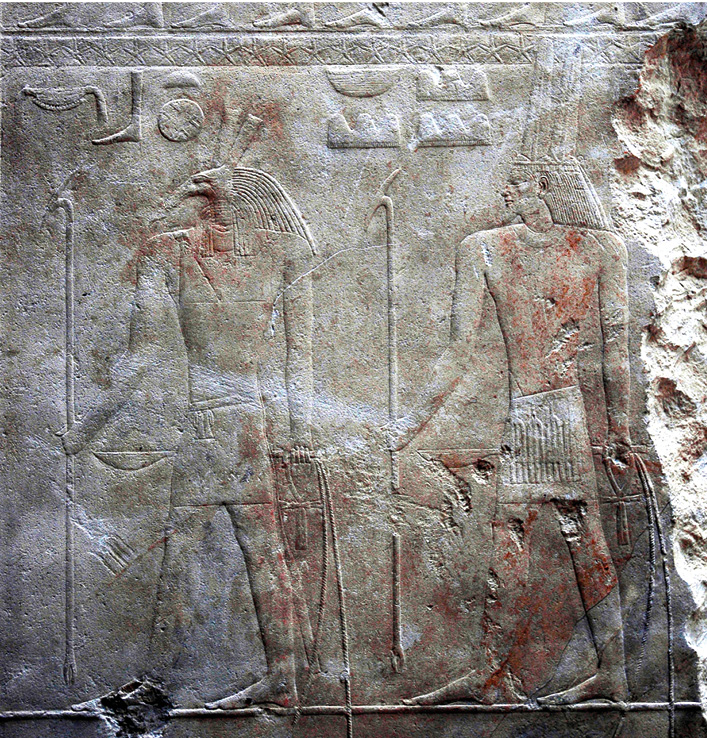
One of the places mentioned is the Cave of Sopdu (named as such by Petrie and shown on his plan), which is believed by some researchers to be dedicated to Ptah. Sopdu was the god of the eastern nome (no.20 in Lower Egypt) whose capital was called Per-Sopdu (‘House of Sopdu’). This is located a few kilometres east of the Delta city of Zagazig, under the village of Saft el-Hinna. Here, in 1885, Édouard Naville found a naos dedicated to Sopdu. This area was clearly important, not only as being on the eastern frontier of Egypt, but also giving access to the turquoise mines of Sinai – hence the dedication of a shrine or cave to Sopdu in the mining area, in addition to the temple dedicated to Hathor, the lady of turquoise. The Tomb of Tutankhamun contained a gilded wooden statue of Sopdu, who was clearly important to the king. Whether this was because of the turquoise mines, or because of the frontier, or for some other reason is not clear.
Andrew Fulton
Erratum
In the article ‘The Egyptian Collection of the Museum of Mediterranean Archaeology (MAM) in Marseille’ in AE 145, there is an error in the date given in the picture caption on p.40. The Château Borély served as the location for the pharaonic collection until 1989, and not 1993 as stated. With apologies to Simone Petacchi.
Dear Editor,
The recent publication of a paper ‘On the possible use of hydraulic force to assist with building the Step Pyramid of Saqqara’ in the online journal PLOS ONE (https://journals.plos.org/plosone/article?id=10.1371/journal.pone.0306690), as mentioned in ‘News’ in AE 145, has led to a flurry of activity in the press. Given my interest in Saqqara in general, and more particularly in several of the features that are discussed, I wish to offer a critique of the paper and the theories that have been put forward.
The authors of the paper claim that the people of pharaonic Egypt prior to about 2600 BC, designed and implemented an intricate hydraulic system across a large part of the Saqqara necropolis. The aim of this system was to raise the blocks of stone used to build the Step Pyramid. As I understand from their published paper, the proposed system appears to have had three main components: a large walled enclosure – known to Egyptologists as the Gisr el-Mudir – which was used to contain water that drained out of an extensive wadi system to the west of Saqqara; a series of deep rock-cut basins close to the south of the Step Pyramid – part of a larger rock-cut feature referred to as the Dry Moat – which were used to store water and allow sediment to settle out before it was discharged towards the Step Pyramid; and the chambers underlying the Step Pyramid, which were flooded to raise masonry through the core of the pyramid as the structure was built.
My general view is that this proposed system relies far too much on conjecture. The authors of the paper suggest that the main elements were connected by a series of underground tunnels and passageways, essential for the transfer of the large volumes of water that were required. Although some of the proposed elements have been suggested by geophysical survey, no further investigation has been undertaken. Without the necessary ‘ground-truthing’, the exact form and function of these geophysical anomalies cannot be confirmed. There is no evidence whatsoever to confirm the existence of several of the other key components of the system that are discussed in the PLOS ONE paper. The whole theory, therefore, remains far too speculative.
Looking at the paper in more detail, I have issues with each of the main elements of their proposed system.

Gisr el-Mudir
The Gisr el-Mudir is a walled enclosure built from stone masonry – it is probably one of ancient Egypt’s earliest large-scale stone structures (Reader 2023: 159). The Gisr follows on from a long-standing tradition of building similar enclosures in Egypt, although the earlier versions were built in mud brick.
The authors of the PLOS ONE paper claim that the Gisr el-Mudir was built across the mouth of a wadi with the deliberate intention of controlling the flow of surface water along the wadi system. The fact that the Gisr el-Mudir was built across the mouth of a wadi, however, does not prove that it was built to store water, as they suggest. There are examples of important structures at Giza that were built in the mouth of a wadi and were damaged by flowing water when it rained. The reason Tutankhamun’s tomb survived largely undisturbed was that, soon after the tomb was sealed, its entrance was buried in debris that washed through the Valley of the Kings, during a storm flood (Cross 2008: 3-8). There are many examples of places where ancient Egyptian builders failed to recognise the potential implications of the sites they chose for key monuments. I believe the location of the Gisr el-Mudir is yet another example.
There is one site where the ancient Egyptians did build a large structure to control storm-water flows in a major wadi. This is the Sadd el-Kafara Dam, east of Cairo (Reader 2023: 175). Unlike the Gisr el-Mudir, with its rectangular arrangement of four walls, the Sadd el-Kafara Dam is a single linear structure that has many features we find in modern dams. The very different configurations of the Gisr el-Mudir and the Sadd el-Kafara Dam indicate to me that the two structures were intended to serve very different purposes.
Finally, there is one feature of the Gisr el-Mudir that confirms that the structure never held standing water, as the authors of the PLOS ONE paper claim. During the investigations of the Gisr by Ian Mathieson, an area of ancient mud-brick pavement was found within the enclosure (see Reader 2017). This mud-brick feature would not have survived being scoured by surface water flow or being submerged under a vast reservoir of stored water as the authors of the PLOS ONE paper suggest (see their Figure 7b).
Water Movement
Figure 3 of the PLOS ONE paper gives a simplified model of proposed water movement, showing among other things how they propose water from the Gisr el-Mudir was delivered to the deep rock-cut basins to the south of the Step Pyramid enclosure. The caption of the figure refers to ‘topography’, so it initially seemed reasonable to conclude that this was their model of surface-water flow. If so, however, there is a major problem – in several locations (for example, close to the south-east corner of the Step Pyramid enclosure) their model appears to show water flowing uphill.
I have challenged the authors of the paper to clarify this issue, and they have suggested that their model indicates flow in general, which can be either surface flow or subsurface flow. They have not, however, provided any indication of how their subsurface flow is transmitted – whether along the natural limestone bedding, along fissures in the limestone strata, or along a specifically built ancient tunnel. As drafted, readers are presented with the rather vague concept that groundwater will move in the general direction indicated, without being provided with any of the associated and essential details.
‘Compartment 0’
As part of the deep rock-cut basins south of the Step Pyramid enclosure, the authors propose the presence of what they label ‘Compartment 0’, and on Figure 10 cite some of my work to support their conjecture. In a published paper I wrote in 2017, I did indeed refer to the potential for further deep chambers in this general area of the Dry Moat. I made it clear, however, that there is no evidence that this compartment exists. This is not the only example where the PLOS ONE authors have read far too much into conjecture put forward by other researchers.
Flooding of Chambers
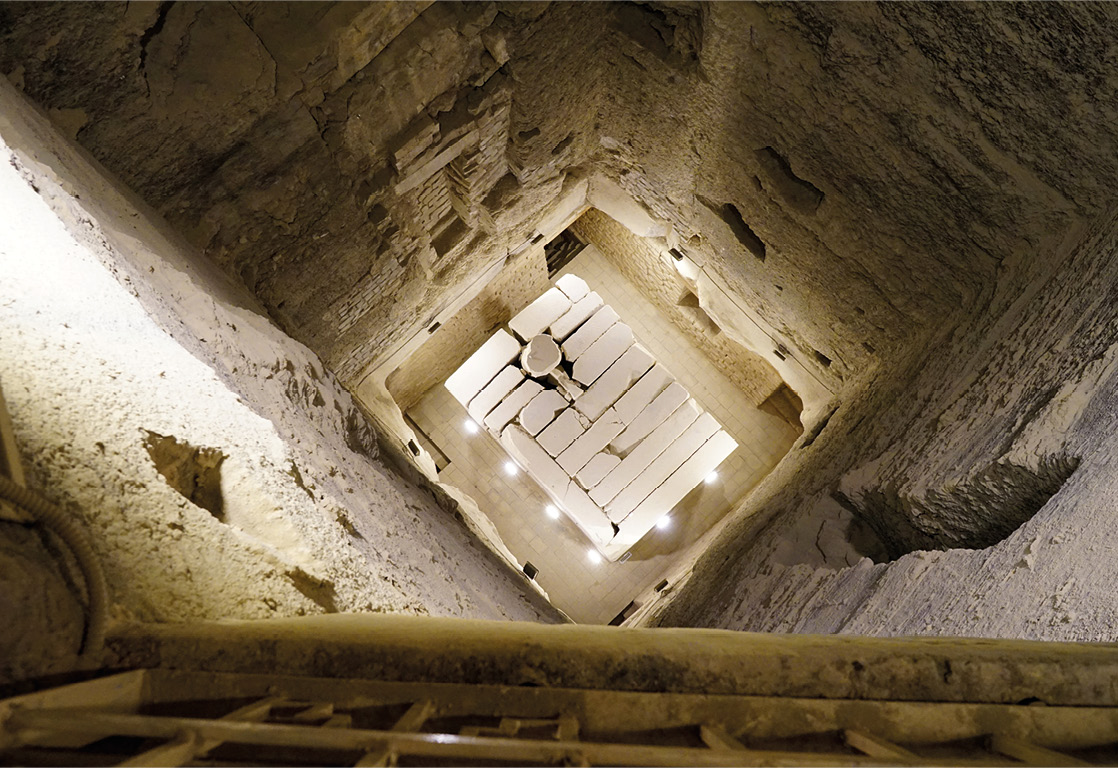
Finally, there are my objections to the proposed flooding of the chambers beneath the Step Pyramid. The authors of the PLOS ONE paper provide no evidence for widespread flooding of the Step Pyramid’s substructure, nor do they provide any discussion of the sequence of construction they have assumed. The sequence of construction is a vital consideration. They might argue, for example, that some chambers were built only after the pyramid was complete and, therefore, these chambers were never flooded. But this is unlikely to apply in all cases. There is abundant evidence that several deep passages were present beneath the Step Pyramid during its construction. Some of these chambers may have been excavated at a very early stage, when the Djoser’s tomb was planned to be a relatively simple stone-built mastaba. Some researchers also consider that some of the chambers beneath the Step Pyramid pre-date the reign of Djoser, and their discussions focus on the hundreds (perhaps thousands) of stone vessels from Egypt’s earliest reigns that were discovered in these chambers. If the hydraulic system was used to build the Step Pyramid as the authors propose, it would have been necessary to flood these early chambers. I have read no account of the archaeology of the Step Pyramid that provides any evidence for such widespread flooding.
Overall, this is a highly speculative paper that reaches conclusions the available evidence simply cannot support. I am not in any way persuaded that the system the authors propose represents a viable method of ancient construction.
Colin Reader, Liverpool, August 2024
References:
• C D Reader (2017) ‘An early dynastic ritual landscape at North Saqqara: an inheritance from Abydos?’, Journal of Egyptian Archaeology 103(1): 71-87.
• C D Reader (2023) A Gift of Geology (Cairo: AUC Press).
• S Cross (2008) ‘The hydrology of the Valley of the Kings’, JEA 94: 303-310.

Email the Editor: peter@ancientegyptmagazine.com with your comments.