
Subscribe now for full access and no adverts
Grave matters
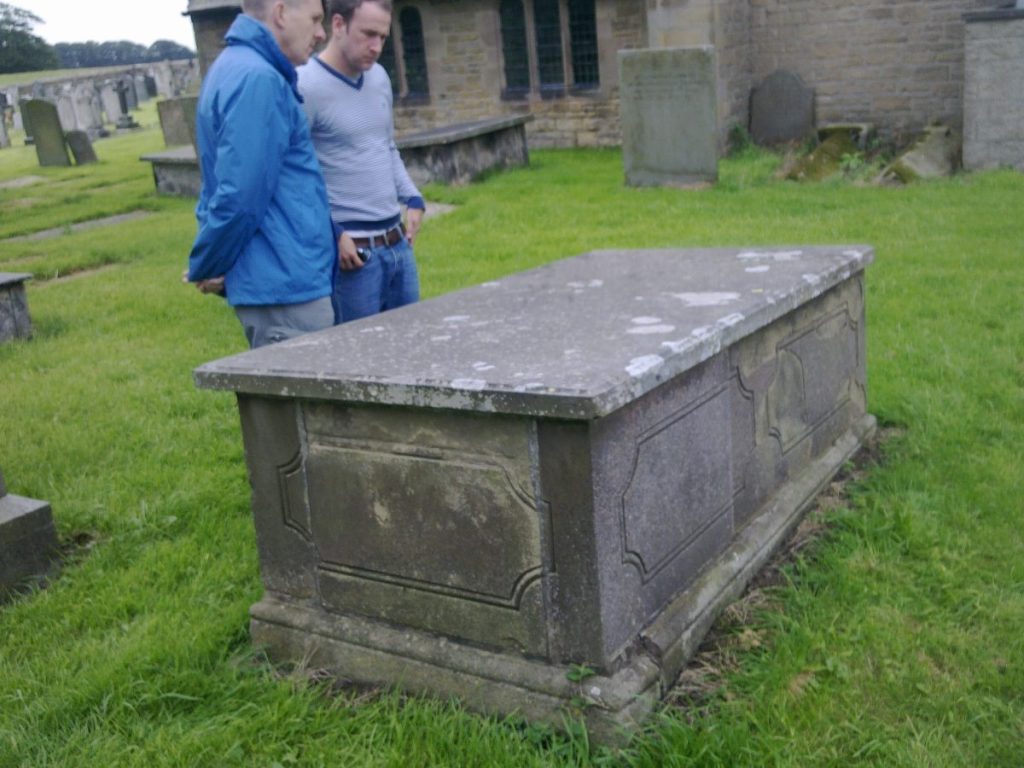
I enjoyed Chris Catling’s report on the work of Brent Elliott and Roger Bowdler on the British cemetery (CA 439). There is a further dimension to cemeteries not considered in that article, though: their value to the student of family history. Gravestones often provide information on family relationships that is not otherwise easily obtained. I must confess a thrill in entering a graveyard and discovering the tombstone of a forebear, and through it learning more about my ancestry.
David J Breeze, Edimburgh
Building up the Ness of Brodgar
Having driven across the Ness of Brodgar more than once in recent years, and looking at aspects of the archaeological work being undertaken, we welcomed being well brought up to date by ‘Statements in Stone’ in CA 440.
What seems to us to be missing, though (unless we have simply not known where to look for it), is a summary assessment of the ‘state of the community’ required for such a development to have taken place. It clearly required a relatively large, and adequately skilled, workforce, and there simply had to have been stable management (or ‘ruling’ – at least by acceptance, and probably largely by agreement) of the community over an extended period of years. It speaks, too, of the probable absence of active enmity (or, very much less likely, of the presence of a strong defence force). Above all, there had to be an ample and managed supply not only of building materials and expertise (and ‘tools’?), but also of food and accommodation – because at least some (perhapsmost) of the building team had to be well-fed and housed.
The obvious comparable example (in ‘type’ if not in detail or scale) is of much of the ‘public’ building work along the Nile in the days of Egypt’s greatness – albeit that, in that case, we have the support of at least some surviving writings. Something of the same sort, on a smaller scale, must have existed in and around Brodgar.
John and Pat Bevan, Appleby, Cumbria
Diplomatic descendants
I was amused to notice that the photograph of a Roman discharge diploma illustrating the article ‘Following the Eagle’ in CA 439 features a king, no less! Top of the bronze batting order is none other than C[aius] Julius Sampsigeramus, ‘Regis f[ili] Sampsigerami’ (‘son of King Sampsigeramus’). It’s not often one gets kings featuring in Roman history in the earlier empire!
In this case, the father, Sampsigeramus, was a descendant of the ancient Arab kings of Emesa, Syria, later reduced by Rome to the rank of Arab phylarchs (tribal leaders), but enfranchised by Augustus (hence the ‘C Julius’ in the nomenclature of the son) and raised again to regal status as Kings of Emesa in AD 38 by Caligula. The family were ancestors of the Severan empresses Julia Domna and Julia Soaemias – not to mention the latter’s son Emperor Elagabalus (r. AD 218-222). In fact, there were a number of mediatised princes
in the 2nd-century senate who proudly added elements of their regal descents to their nomenclature, their number swelled in the later 3rd century by the alleged descendants of Zenobia of Palmyra, herself possibly kin to Sampsigeramus.
Yet not only does the diploma illustrated feature a senator of princely rank but also, on the next line after Sampsigeramus, is the name of C Nymphidius Lupus, P[rimus] P[ilus], a senior centurion (WO1/RSM in British army terms) and friend of Pliny the Younger from their days of military service, and later his assessor in Bithynia (Pliny, Epistulae x.87), whose son of the same name he commended to the Emperor Trajan.
It’s certainly clear that this sort of unlikely connection is by no means confined to more recent times!
Max Craven, Derby
Edible archaeology
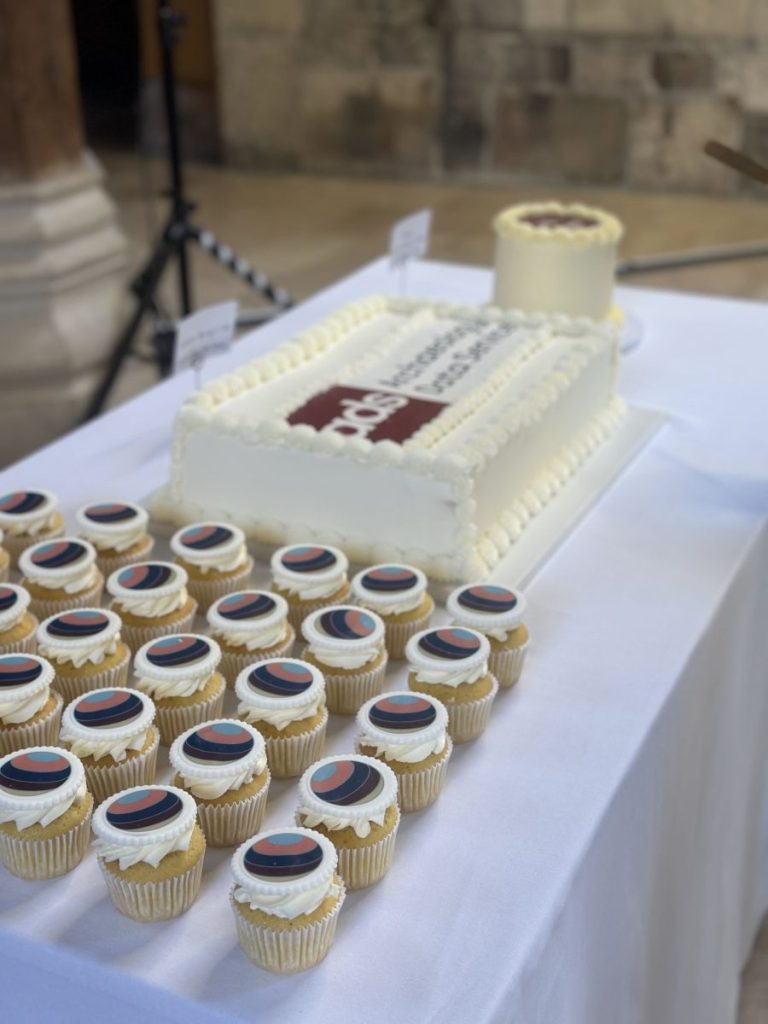
The digital journal Internet Archaeology passed its 30th anniversary recently and held a joint birthday celebration with the Archaeology Data Service in the splendid surroundings of York’s Guildhall. The bakes were made by Jessica from Cakerbells in York, and the 30 journal cupcakes were each decorated with an edible logo. They looked and tasted wonderful, proving that if it works on a webpage and tastes great on a cupcake, then it’s a winner!
Judith Winters, Editor, Internet Archaeology
CA ONLINE: What you shared with us this month
NTS Archaeology @nts-archaeology.bsky.social
Back from holiday to find copies of @currentarchaeology.bsky.social magazine on the doormat with our Staffa article on the front cover.

Ann Wilkinson @AnnWilk88393665
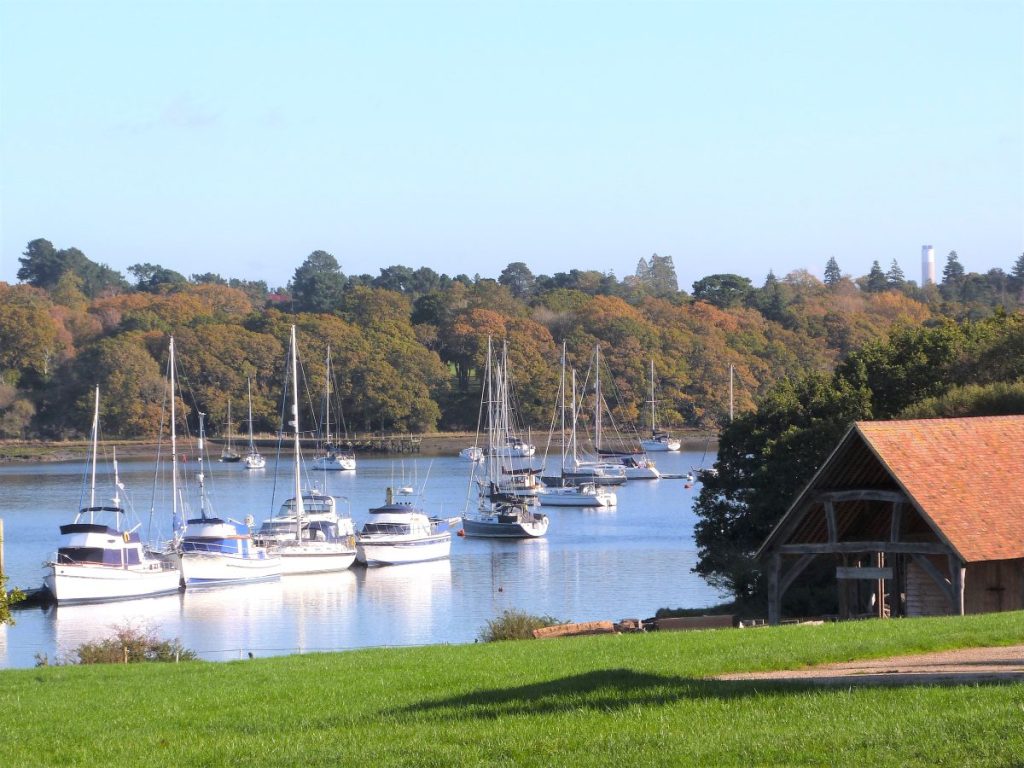
A beautiful as well as historic place: ‘A second excavation season at Buckler’s Hard, private ship-building hub on the River Beaulieu in the New Forest, has fully revealed the wooden slipway where 55 ships for the Royal Navy were built during the 18th and 19th centuries [CA 440].’
We asked: Which archaeological discovery completely changed how you understand the past?
Phil Weston: I was at uni 1998 to 2002 and we were taught that the Beaker phenomenon was likely the result of the movement of a few people with the rest of the population adopting the material culture of the new arrivals. We were taught the same for the adoption of Anglo-Saxon culture. First isotope analysis then DNA has shown these assumptions to be very wrong.