
Subscribe now for full access and no adverts
While today the health impacts of lead exposure are well documented, in the past its hazards were unknown, a silent killer that had an impact on potentially millions of people over the the millennia in which it has been mined. Although lead production has been well-studied historically, little has been done to assess the impact it had on the people who extracted and processed the ore. Recently, however, a team led by Professor Christopher Loveluck from the University of Nottingham examined the lead concentrations and isotope levels preserved in the remains of individuals buried in and around Castleton in the Derbyshire Peak District – one of the largest lead-producing regions in medieval Europe – providing one of the first assessments of lead contamination in a population directly affected by the industry. The results were published in Antiquity (https://doi.org/10.15184/aqy.2026.10416).

During the medieval period, Castleton was an administrative centre of lead mining in the ‘High Peak’ region of Derbyshire. Contemporary historical evidence suggests that lead production in the area reached a peak c.1180-1215, followed by a smaller number of ‘booms and busts’ between the late 13th and 15th centuries. This is corroborated by ice-core evidence from the Colle Gnifetti in the Swiss-Italian Alps, which points towards a high in lead pollution c.1180-1215 followed by a decline in the mid-13th century, as well as by dated Swedish lake sediments (see ‘Science Notes’ in CA 347 for a discussion of the evidence for silver production from Colle Gnifetti).
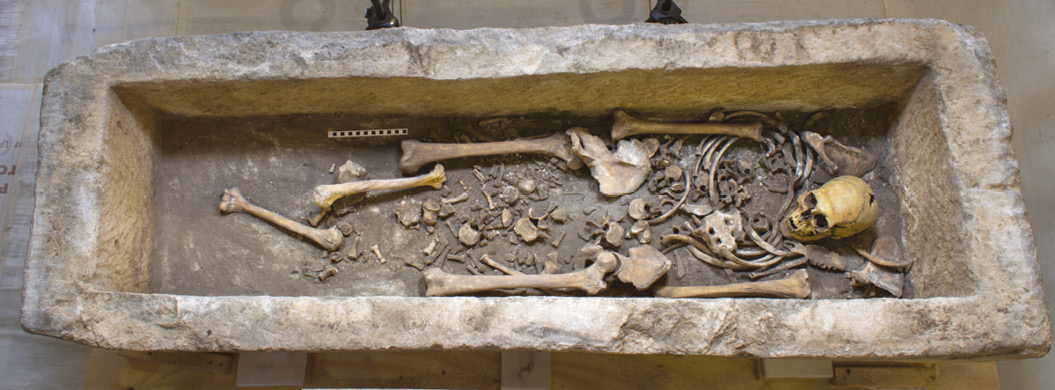
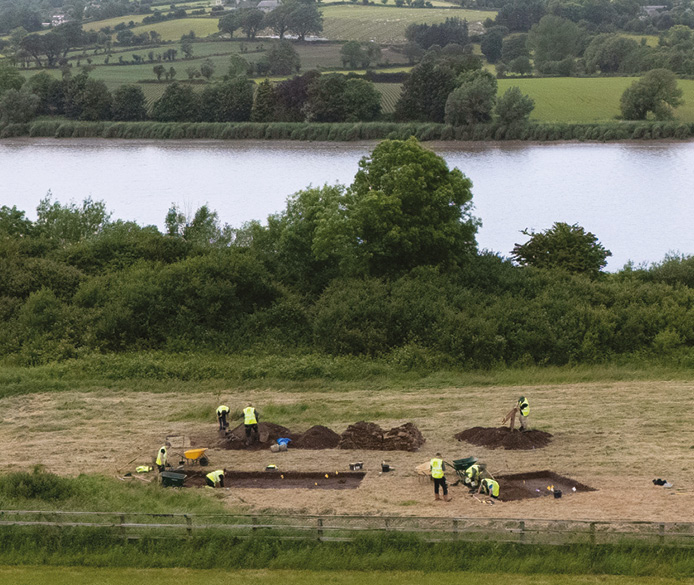
Between 2009 and 2026, a team from the University of Sheffield and the Castleton Historical Society excavated two medieval cemeteries in the village: the first at Joule Yard, with burials from the 7th to 11th centuries AD, and the second at Spital Field, a medieval hospital dating from the 12th to late 15th centuries. During the mining and smelting process, if lead is either inhaled as a gas or ingested as a dust, it is deposited in the hard tissues of the body – that is, bone, dentine, and enamel. By analysing the levels of lead (by concentration in parts per million) present within an individual’s enamel, the team hypothesised that it might be possible not only to assess the potential health implications of this contamination but also, by comparing the levels present in the Castleton communities, to ascertain peaks and troughs in lead production over time.
For the study, ten burials from Castleton were selected: five from Joule Yard and five from Spital Field. As a point of comparison, five individuals from the nearby cemetery at Wigber Low, dating from the early to mid-7th century, were also analysed to assess regional differences, while two individuals from the nearby Iron Age site of Eldon Hole were sampled to provide a reference for the period before large-scale lead mining. Samples were taken from either a premolar, second molar, or third molar, providing evidence of lead concentrations during childhood, approximately between four and12 years old, depending on the type of tooth sampled (as each forms at a different age). The samples were analysed for strontium and oxygen isotopes, too, to determine if the person had migrated during childhood or if they were local to the area. The results showed that, while both Iron Age individuals appear to have been non-local, all but one of the medieval people were probably raised in the Peak District.
Text: Kathryn Krakowka / Image: C Merrony and A Darlington, published in Loveluck et al. (2026) Antiquity