
Subscribe now for full access and no adverts
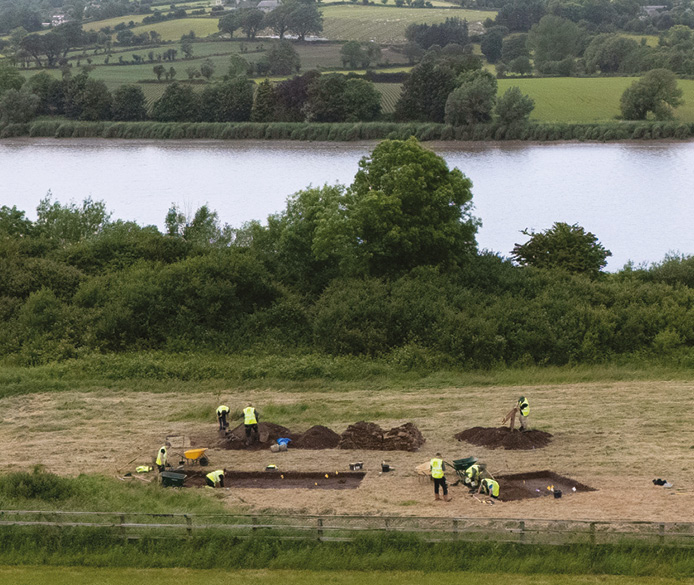
Cotswold Archaeology’s excavations on the outskirts of Gloucester continue to reveal illuminating evidence: having previously uncovered a large Bronze Age waterhole (see CA 435), the team have now discovered traces of what is believed to be one of the few examples of an Anglo-Saxon hall found in western England.
Excavations to the south-east of where the large waterhole was found uncovered the remains of a small Anglo-Saxon settlement comprising six post-built structures and one sunken-featured building, as well as evidence of a fence, corral, or funnel that may have been used for controlling the movement of livestock. The settlement dates to the early to mid-7th century AD, when this area was occupied by the Hwicce, a smaller kingdom primarily encompassing parts of modern Gloucestershire, Worcestershire, and Warwickshire, which was eventually subsumed by its larger and more powerful neighbour, Mercia.
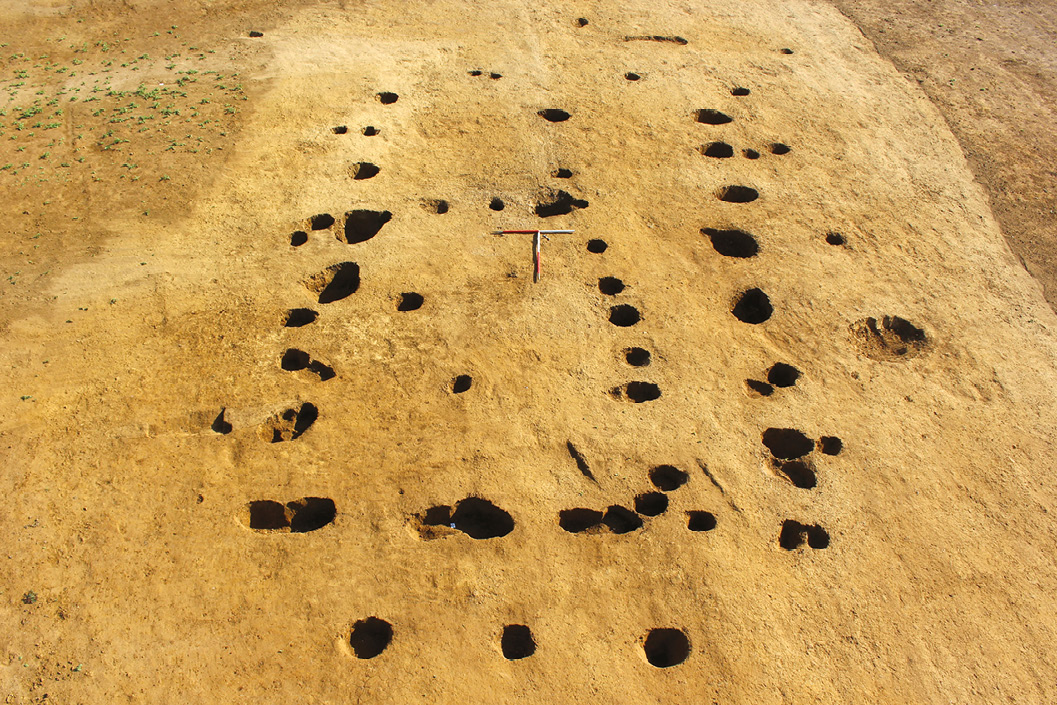
While the size of most of the structures described above suggest a domestic function, the team also discovered the outline of a larger post-built hall which appears to have undergone at least two phases of construction (below). In its initial incarnation, the building measured 4m by 5m (13ft by 16ft) and stood on a not-quite north–south alignment. It was then expanded to 5.6m by 9m (18ft by 30ft), and appears to have gained a porch and veranda, while changing its orientation to more north-east–south west. Finds from within the structure include slag, hinting at metalworking; Anglo-Saxon pottery; and quantities of animal and charred plant remains, suggestive of food preparation.
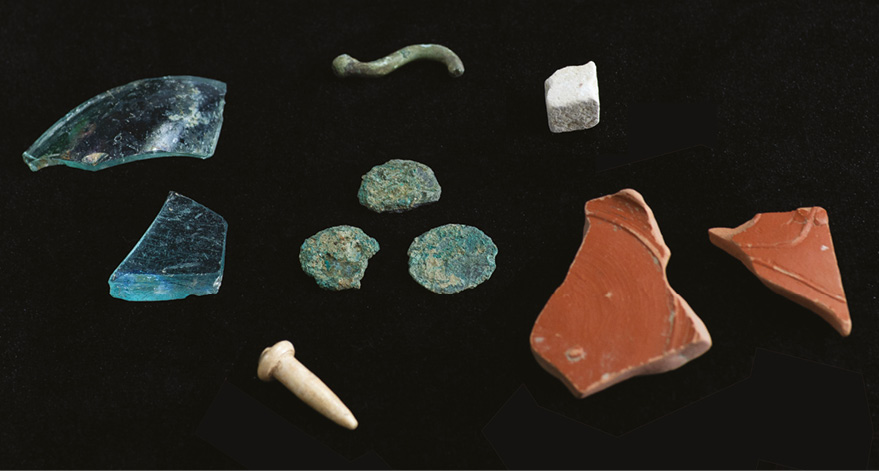
In addition to the early medieval remains, this area of the site produced a second Bronze Age waterhole, smaller than the one previously reported on, and there was also extensive evidence of nearby Roman activity, largely agricultural in nature, reflected by enclosure ditches and a trackway. A number of pits, post-holes, and the remains of possible stone foundations, meanwhile, have been interpreted as a settlement dating to between the 1st and 4th centuries AD. Roman pottery was found in many of the Anglo Saxon features, too, suggesting that, although the site was not continuously settled, the early medieval population may have chosen it specifically – either in order to reuse Roman building materials or as a way of connecting with previous occupiers of the land.
Text: Kathryn Krakowka / Image: Cotswold Archaeology