Subscribe now for full access and no adverts
Saving literary homes and cooling towers
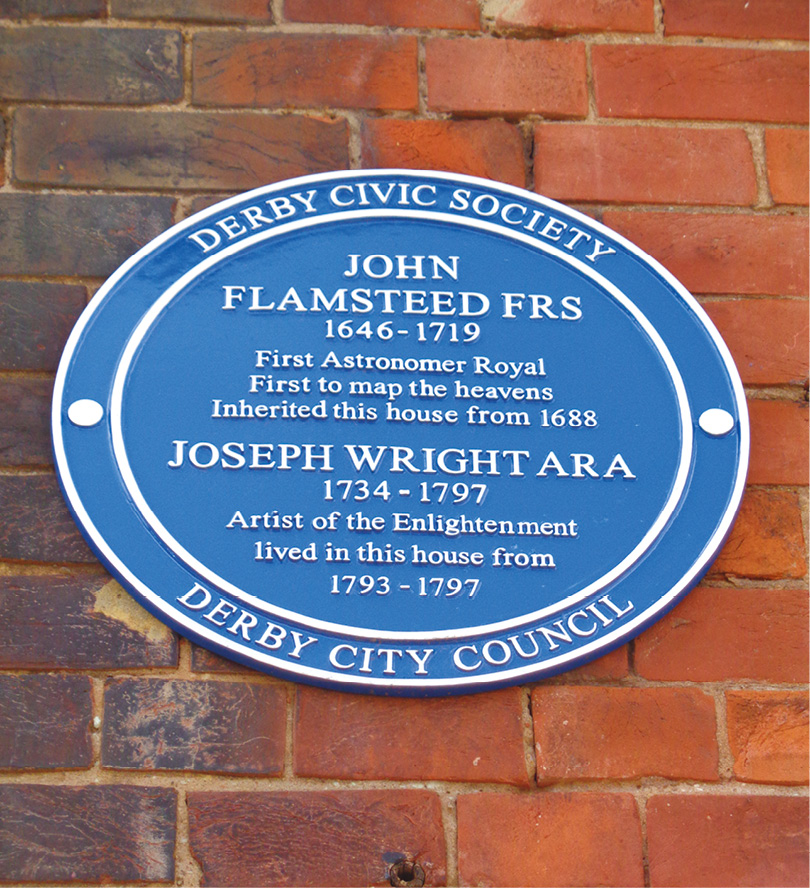
Chris Catling’s piece about threats to literary homes (CA 431) is nothing new to those of us in Derby. In 1906, we lost the birthplace of Joseph Wright ARA (1734-1797) – replaced by a minuscule plaque on the new construction – and in 1933 we lost the home, for the last 22 years of his life, of Lunar Society co-founder Dr Erasmus Darwin FRS (originator of his grandson’s ‘Survival of the Fittest’ theory). In 1952, the birthplace of philosopher Herbert Spencer went, and in 1964 his childhood home was also knocked down. We have only just managed to get the family home of England’s first Astronomer Royal, John Flamsteed FRS listed (after 24 years of trying), which, although much mauled and reduced, was also home to Erasmus Darwin’s close friend John Whitehurst FRS (1713-1788), as well as having been the home of Joseph Wright until his death (below).
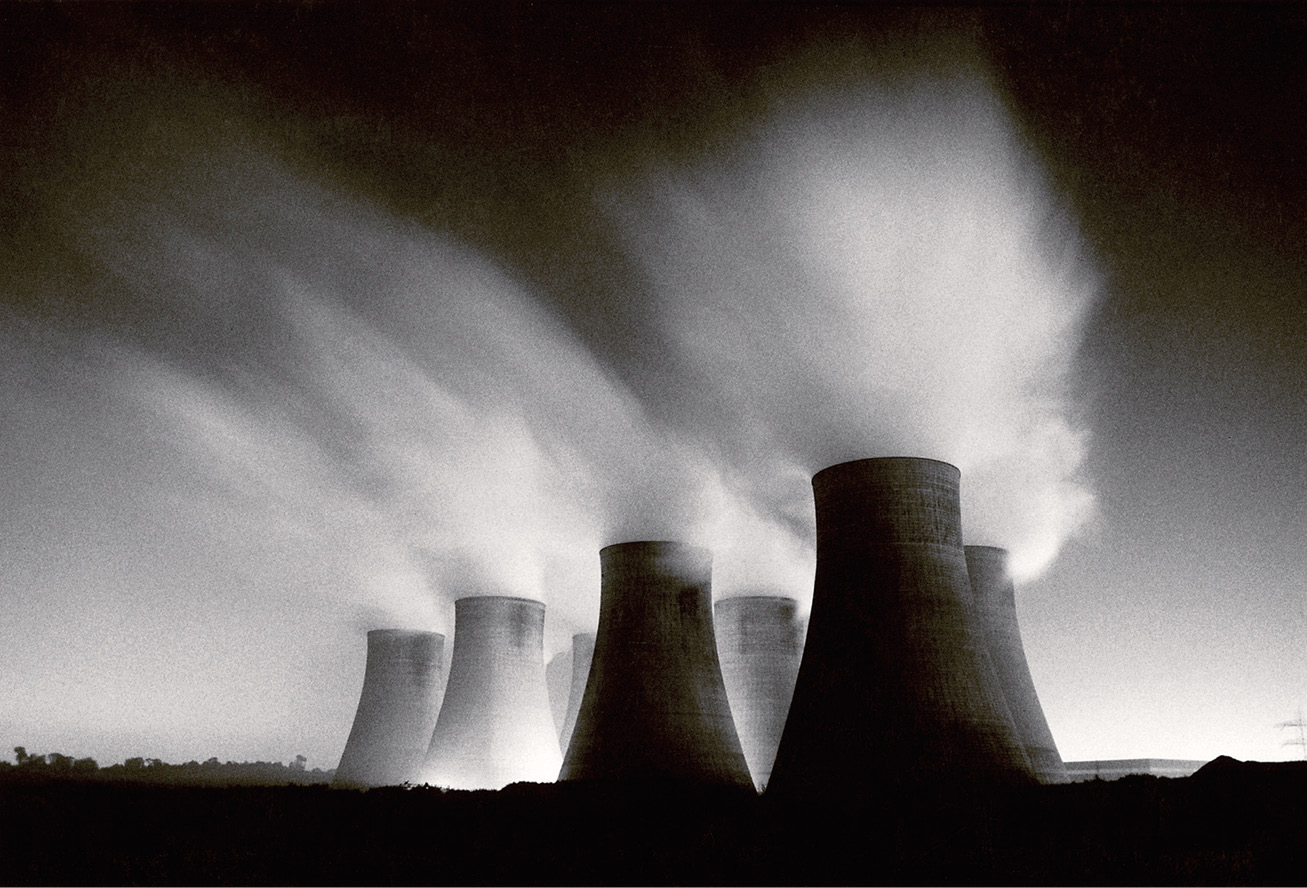
On another topic entirely, mention of the Cooling Tower Appreciation Society (also in CA 431) reminded me and my wife of her keen addiction to those structures. During my time as Keeper of Antiquities at Derby Museum, in the 1980s we worked closely with Professor Martin Biddle, his late wife Birthe, and their team, who were excavating at Repton, visiting weekly during each season. Over dinner at the excavation sponsor’s house in 1984, Carole mentioned her interest in cooling towers, with the result that the Biddles became unexpectedly enthused over the subject. Consequently, she organised a visit for them to the now-closed Ratcliffe power station (below) under the aegis of the Friends of Derby Museum and which, to my astonishment, they much enjoyed, the occasion terminating in a jolly evening in a nearby pub (inevitably, now also closed). Of course, the cooling towers are in their turn about to become potential archaeology!
Maxwell Craven, Derby
Cross-legged effigies
In CA 430, Sherds mentions the myth that cross-legged medieval effigies represent crusaders. This used to infuriate my father, Claude Blair, an authority on arms and armour. He once described to me a childhood tour of Gloucester Cathedral (probably around 1930), when they were shown the 13th-century wooden effigy of Duke Robert of Normandy. The guide explained that the figure is mechanical, so that if you press his big toe he will jump up and draw his sword (except that, of course, the mechanism was broken). Even at seven, my father didn’t believe that!
John Blair, North Leigh, Oxfordshire
Dodecahedra and plato
I read with great interest your article in CA 429 on the Norton Disney dodecahedron and its archaeological contextualisation, especially the European distribution of its cognates. It might prove interesting for your readers to explore the intellectual context of the dodecahedron. Probably originating with the Pythagoreans around the 6th century BC, the dodecahedron was included among Plato’s five perfect polyhedral solids. These were perfect because each is formed with faces of equal size and identical form. The dodecahedron has 20 identical pentagonal faces.
This is a complex form to create. As a poor stone sculptor, I have struggled to carve dodecahedra in solid stone and the calculation of the external angles require measurements to the nearest half degree. The formation of the 108° internal angles of the pentagons is quite challenging enough, undertaken in the round.
Was the metal dodecahedron created as a didactic instrument used to teach non-literate students Greek geometry? The intelligentsia of the northern Celtic peoples probably welcomed the arcana of polyhedral geometries and their embedded layers of knowledge. Johannes Kepler in 1595 published his Mysterium Cosmographicum (his cosmological model). He embedded spheres in nested polyhedra, and each sphere contained the orbit of one of the planets (six were then known); the dodecahedron was placed between the orbits of Earth and Mars.
Given the late Greek interest in topological studies, could the knobs at each apex have served to demonstrate propositions in, for example, interlace design or ‘edge and node’ topological calculations? Dodecahedrons could also have been used in ‘rituals,’ but I share your writers’ tacit belief that we should avoid reversion to this lowest of all common denominators, and, even then, only when we have explored their actual and self-contextualising burden of knowledge and, not least, worked out how the master-metallurgist would have been instructed in their production.
Dr John Barber, Edinburgh
Speaking of dodecahedra
My copy of the December issue (CA 429), with its fine photo of the mysterious dodecahedron, has been lying on the kitchen table for visitors to come up with ideas as to its purpose: but it was my wife Susanne who has come up with (perhaps) a novel suggestion. She has put forward the idea that these were used as the centrepiece for discussions, similar to the conch in Golding’s Lord of the Flies. The person holding the conch – or here the dodecahedron – has the floor and structured discussion is enabled. The fact that when rolled or thrown it always lands on three of its vertices might suggest that the person nearest when it is rolled has the right to speak and be heard.
Dr Peter B Baker, Prestwood
Of diameters and dodecahedra
In your article on the Norton Disney dodecahedron in CA 429, I was struck that the illustrations of the dodecahedron seem to show that the circular holes in its sides each have a different diameter. In an object that is otherwise so geometrically regular, this feature must surely be of functional or conceptual significance and not merely accidental.
Simon Eccles, Carrickfergus
Edible Archaeology
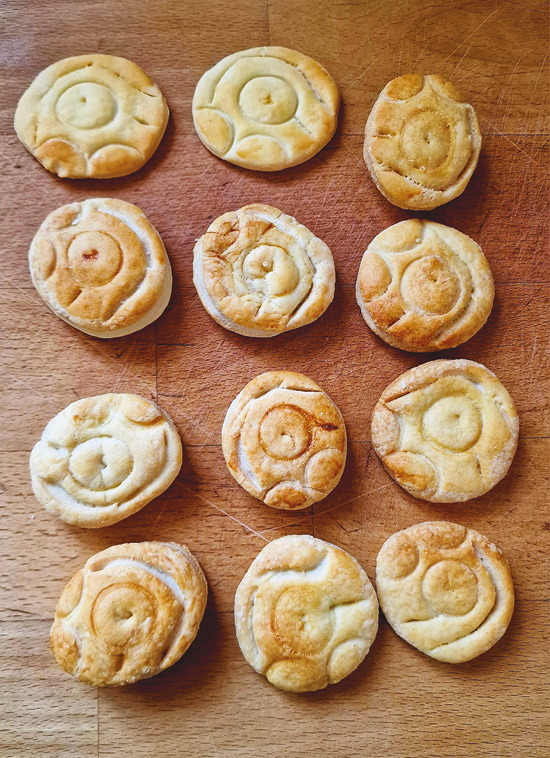
Dover Archaeological Group’s Celtic coin specialist David Holman has developed the ‘Pastry Potin’, inspired by those curious cast-bronze coins discovered on late Iron Age sites across the south-east. These simple, solid bites can sustain diggers throughout the harshest of winter excavations. They may be eaten hot or cold, plain (preferred) or with a range of toppings. Those pictured are based on the Flat Linear series, broadly Holman Groups D to F, provisionally dated c.95-55 BC. The stylised head of Apollo has been recreated by impressed and incised lines, each finished by hand.
Keith Parfitt, Director, Dover Archaeological Group
CA ONLINE
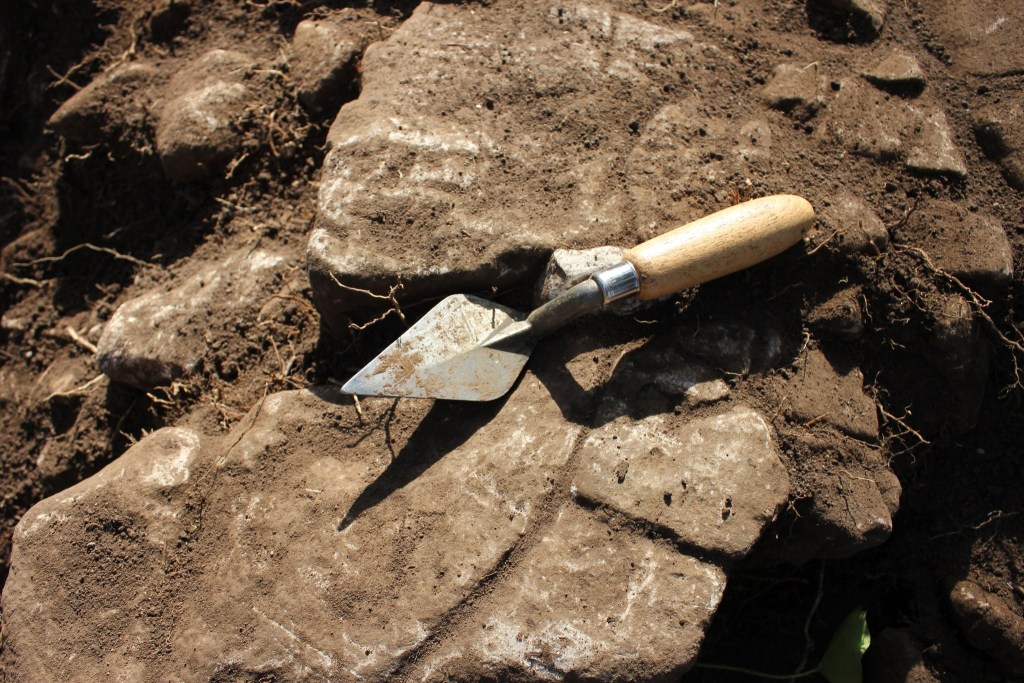
We asked: With the Winter Olympics about to start, this got us thinking that if archaeology were in the Olympics, what would the events be?
Angelo Faccini:
Trowelling and note-taking!
D Richard Walsh:
100m2 geophys survey.
D Richard Walsh:
Skeleton assembly (competitors are given a disarticulated skeleton, and see how long it takes to arrange the bones correctly).
Mark Housby:
Distance shovelling: how far can you shovel a load of spoil into a barrow without any missing? We used to have competitions: 10 feet is easily achievable.
Andrew Peachey:
Half-pipe wheelbarrow (marks for style, difficulty, execution, and amplitude).
Eniko Hudak-Vadasz:
Add speed jigsaw pottery sherds to this list.
Jim Harriss:
Tent-pegging. Using survey flags, a ranging pole, and a Hilux…
Images: The Roaming Picture Taker CC BY-SA 2.0; Michael Kenna; HeritageDaily CC BY-SA 3.0
Write to us at: CA Letters, Current Publishing, Office 120, 295 Chiswick High Road, London, W4 4HH, or by email to: letters@archaeology.co.uk
For publication: 300 words max; letters may be edited.