Subscribe now for full access and no adverts
Workhouses and welfare
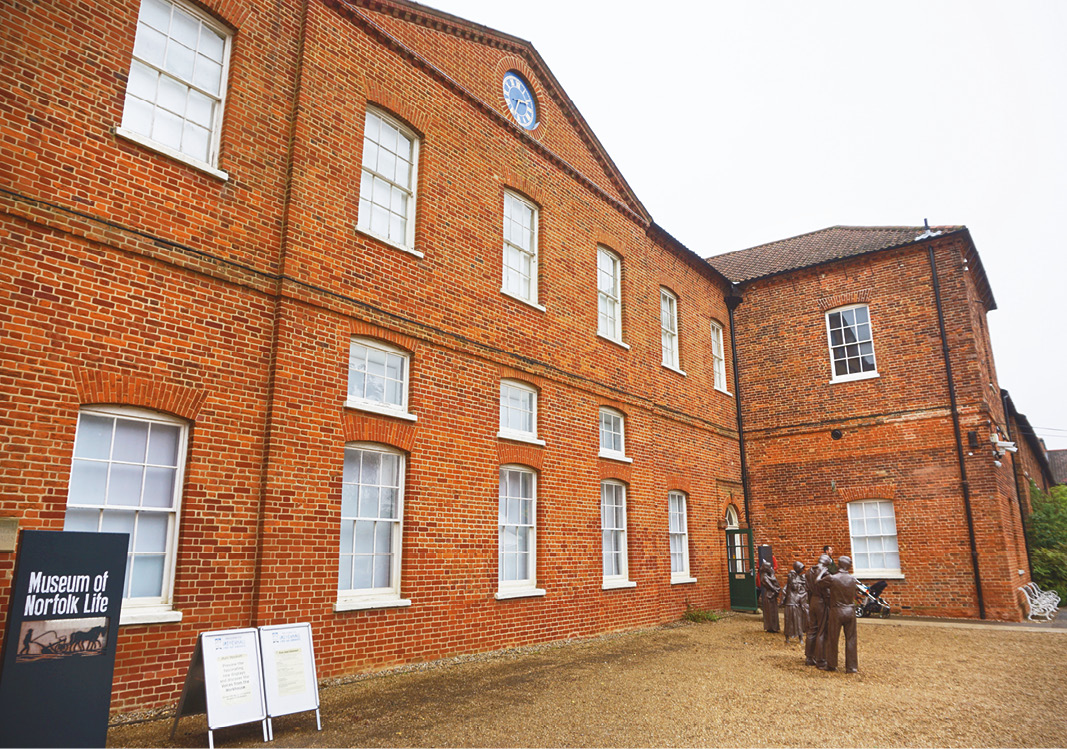
I have read with interest your recent article on the excavations of a workhouse near St Pancras in London (see CA 406), and the subsequent letters [in CA 407, 410, and 411]. My first comment would be that there is no such thing as ‘the workhouse’. They were all different, and just like our modern care homes or hospitals, some were better than others. A lot depended on those in charge.
Volunteers at Gressenhall Farm and Workhouse have spent some years now researching life in this one institution, which served an area of some 60 parishes in central Norfolk. To do this, we have been looking at the minutes of the Guardians’ meetings and their correspondence with the Poor Law Commission [later Board] in London. This information shows that children were educated [when it would have cost parents outside], there was maternity care for unmarried mothers, and there was medical care for the elderly or infirm. The homeless [tramps/vagrants] could get food and shelter for the night, which is rather more than many today. We would not like the food, but it was considered adequate, and at least you knew you would get three meals a day where you probably couldn’t guarantee that outside.
Gressenhall had its own medical officer. The area it served had ten other medical officers, who treated those not in the workhouse for ailments or injuries that stopped them working. Have you heard of ‘Out-relief’? Probably not, as it is rarely mentioned in tales of the workhouse. This was payment of money and/or food in your own home. More people here got Out-relief than were ever in the workhouse.
Although not perfect (what is?), the workhouse was an attempt to finance and care for those in society who could not look after themselves. I would ask: have we solved the problem today?
Gressenhall Farm and Workhouse, near East Dereham in Norfolk, is open to the public from March through October; see http://www.museums.norfolk.gov.uk/gressenhall-farm-and-workhouse for more details.
Rose Sheen, Swaffham
Facing the past
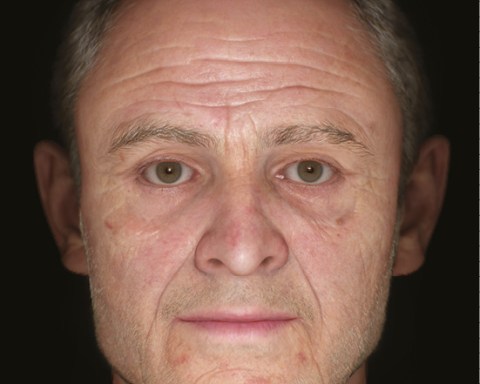
Of the many aspects of facial recognition, those related to archaeology intrigue me the most.
I would imagine that manual application of modelling clay to skull casts has now been superseded by computer techniques. That being so, tests will have been conducted to verify that computer-generated soft tissue and hair applied to a scanned skull does indeed produce a reasonable likeness. However, I for one am sceptical that that can be done without knowledge of the subject.
Furthermore, even if the technique could be refined to approach photographic images, what value is there in creating a likeness of, say, William the Conqueror, other than to illustrate textbooks?
J P Craddock, Stevenage
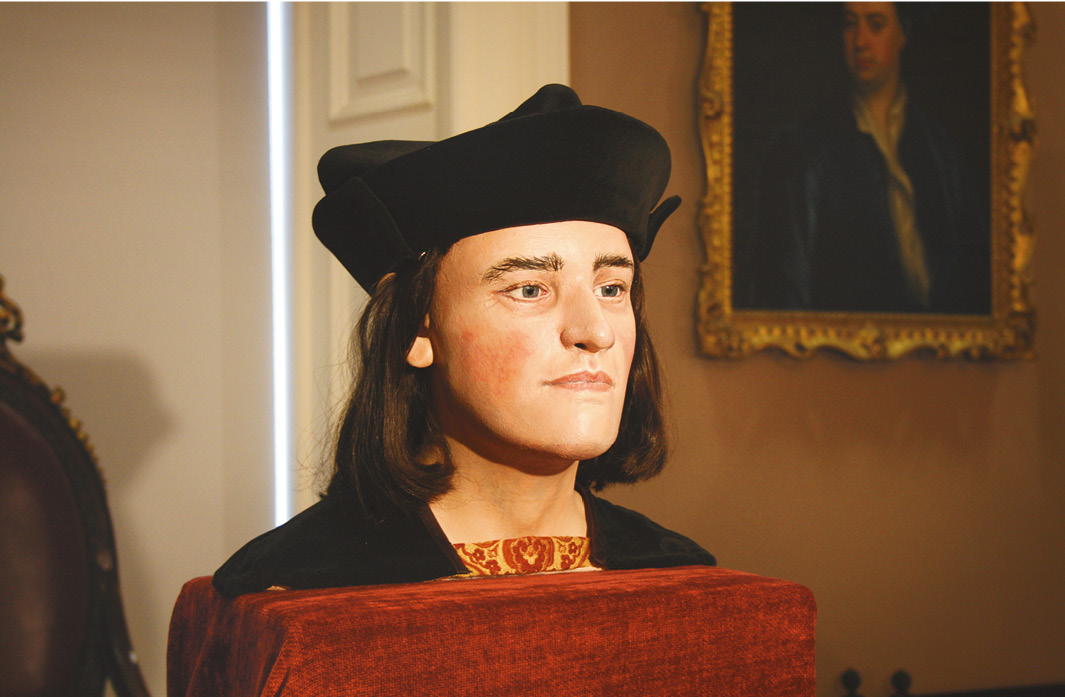
Image: Glen Bowman, CC BY 2.0 DEED
Looming errors
While I am delighted to see your report on the early medieval excavations in the Coquet Valley at Felton (CA 410), as an ancient ceramic technology specialist, I am somewhat perplexed by the terminology used in describing what appears to be a kiln at the site.
Clay loom weights are not ‘baked’, they are either unfired or fired – that is, either raw clay or heated above 550°C, permanently convert- ing the clay into a ceramic state. If the latter is the case, it is not done in an oven, but in a kiln. If it is a kiln – and, having seen other images of it, I believe it is – it is a rare find indeed and I am very disappointed not to have seen the structure during excavation.
Graham Taylor, Potted History, https://potted-history.co.uk
Recommended reading
The question posed in the penultimate paragraph of your news story on new evidence about migrant women in 7th-century England (CA 409) has a very obvious answer: slavery. The sites listed on the south and west coastlines are conveniently located for slave raids, and the east coast had the money to buy the slaves.
As an illustration of how this might have worked, Nicola Griffith’s 2013 novel Hild (a superb reimagining of the early life of Hilda of Whitby), meticulously researched from archaeological reports among many other sources, has an outstanding reimagining of a slave market at King Raedwald’s vill in present-day Suffolk, where an enslaved woman from present-day Cornwall is bought by the adolescent Hild, niece of Edwin of Deira. In Griffith’s 2023 sequel Menewood, that slave woman is living near present-day Leeds. Highly recommended.
Kate Macdonald, Bath
Embroidered Archaeology
I have come a long way since starting Episode 1 of my #DrawingDiggingForBritain embroidery project in January [as featured in CA 408]. With each new panel, I began experimenting with different stitches and techniques. All the finds from Episode 5 were interesting, but the sea of little flags at the medieval shipyard at Smallhythe [see CA 410] took the spot for this episode, and of course I had to include an actual archaeologist.
Catherine Hutchings, Wiltshire


CA ONLINE: What you shared with us this month
Lauren @lenofi
I always wanted my work to be featured in @CurrentArchaeo but so far it’s just a flyer I designed for our post-ex programme @brparchaeology! I AM GONNA BOAST ABOUT IT ANYWAY!!! Get your grubby hands on the newest issue right now. And then sign up for one of our sessions.

Dr Tom Horne @HorneSupremacy
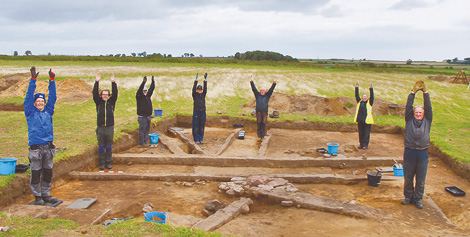
Our early medieval Near Felton site, with its early Anglo-Saxon Northumbrian and later Great Army presence, makes it into @CurrentArchaeo! [CA 410]
Dr Joe Flatman @joeflatman
Wonderful to see @southeastNT @NatTrustArch #Archaeology feature on the front cover of @CurrentArchaeo magazine [CA 410], sharing the news of fieldwork from @SmallhytheNT #Kent – a great site, project and team alike. https://the-past.com/feature/romans-royal-ships-and-a-rural-retreat exploring-the-archaeology-of-smallhythe-place/
Write to us at: CA Letters, Current Publishing, Office 120, 295 Chiswick High Road, London, W4 4HH, or by email to: letters@archaeology.co.uk. For publication: 300 words max; letters may be edited.